

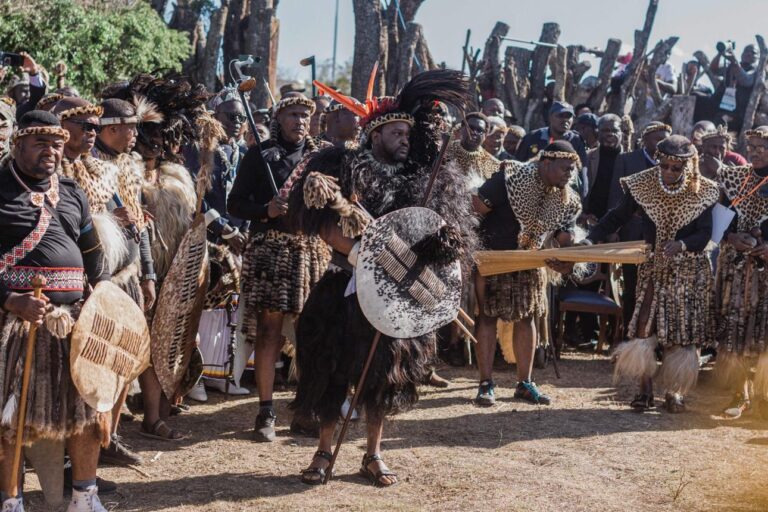
The History, Political Transformation, and Cultural Legacy of the Zulu People
The history of the Zulu people is one of the most powerful chapters in southern African history. It is a story of political transformation, military organization, migration, leadership, cultural identity, and resistance to external conquest. The Zulu Kingdom rose to prominence in the nineteenth century under a rapidly changing political environment and eventually became one of the most recognized African states of the colonial era. Yet the history of the Zulu cannot be reduced to warfare.
The image of the Zulu warrior has become famous around the world, particularly because of dramatic encounters between the Zulu Kingdom and the British Empire. Battles such as Isandlwana and Rorke’s Drift have become deeply embedded in military history. But behind those battles was a complex society with agricultural communities, political institutions, family structures, spiritual traditions, artistic practices, and systems of authority.
The Zulu were also not a people who suddenly appeared in southern Africa during the nineteenth century. They developed from communities that had been part of the broader history of the southeastern African region for generations. The formation of the Zulu Kingdom was connected to wider political changes among Nguni-speaking societies during the late eighteenth and early nineteenth centuries.
The reign of Shaka kaSenzangakhona, usually known as Shaka Zulu, became a major turning point. Through military reforms, political consolidation, and the expansion of Zulu authority, Shaka helped transform a relatively small political community into a powerful kingdom. But even Shaka’s story needs to be understood within its wider historical context. The rise of the Zulu Kingdom involved many people, communities, and political processes; it was not simply the achievement of one extraordinary warrior. The story of the Zulu is therefore a story of nation-building through political organization, cultural identity, and military power.
Who Are the Zulu?
The Zulu are a major ethnolinguistic group in southern Africa, concentrated particularly in the South African province of KwaZulu-Natal. The Zulu language, isiZulu, belongs to the Bantu language family and is one of South Africa’s most widely spoken languages. Zulu identity today encompasses people living in rural communities, towns, and major cities.
Many Zulu people maintain strong connections with traditional ceremonies, family structures, language, music, and cultural practices while participating fully in contemporary South African society. This combination of historical continuity and modern adaptation is essential to understanding the Zulu.
The Wider Nguni World
The Zulu emerged within a broader cultural environment associated with Nguni-speaking peoples of southeastern Africa. The term Nguni encompasses several related groups, including the Zulu, Xhosa, Swazi, and Ndebele, although each developed its own political and cultural history.
They shared linguistic relationships and some cultural characteristics, but they were never simply one undifferentiated people. Interactions among these communities included trade, migration, marriage, political alliances, and warfare. The emergence of the Zulu Kingdom therefore occurred within an already dynamic regional landscape.
Before the Zulu Kingdom
Before the rise of the Zulu Kingdom, the region contained numerous chiefdoms and political communities. Political authority was often organized around chiefs and royal lineages. Communities cultivated crops, raised livestock, and maintained local trade networks.
Cattle were particularly important economically and socially. They could provide food, represent wealth, and play roles in marriage arrangements and other social relationships. Land, cattle, family relationships, and political authority were closely connected.
The Formation of the Zulu Kingdom
The Zulu Kingdom emerged during a period of major political change in southeastern Africa. The late eighteenth and early nineteenth centuries witnessed the consolidation of political power among several regional states, one of which was the Zulu chiefdom. Under Shaka, Zulu political authority expanded dramatically:
- Territorial Integration: Surrounding communities were progressively incorporated into a larger, centralized kingdom.
- Institutional Overhaul: Military and administrative systems were entirely restructured to enforce state cohesion.
- Regional Shift: The kingdom’s growing power fundamentally altered the geopolitical balance of the entire region.
Shaka Zulu
Few African historical figures have become as famous internationally as Shaka kaSenzangakhona. Born around the late eighteenth century, Shaka became ruler of the Zulu kingdom in the early nineteenth century. Later accounts often portray him almost exclusively as a military genius, and while there is truth behind his reputation for military innovation, popular representations have sometimes exaggerated or simplified his role.
Shaka’s importance also came from political organization. He helped transform military service into an important instrument of state formation, reorganized communities, and strengthened royal authority. His reign must be understood as a period of political transformation rather than simply military conquest.

The Military System
One of the most famous aspects of Shaka’s reforms was the development of a highly organized military system based on age-set groupings:
- Amabutho (Regiments): Young men were organized into age-based regiments serving both military and state-building functions.
- National Loyalty: Regimental service fostered direct loyalty to the monarch over local chiefdom ties.
- Mobilization: The system enabled the rapid mobilization of large, highly disciplined standing forces.
The Short Spear and Close Combat
Traditional accounts frequently associate Shaka with the introduction or widespread adoption of the short stabbing spear known as the iklwa. The idea behind the weapon was that warriors would fight at relatively close range rather than relying primarily on throwing spears from a distance, encouraging aggressive close-quarter tactics.
However, historians caution against accepting every traditional story about Shaka’s military reforms literally, as weapon technologies and military practices developed over time. Nevertheless, the Zulu military became renowned for discipline, organization, and close-combat tactics.
The Cow-Horn Formation
The Zulu army became particularly associated with the “horns of the buffalo” (izimpondo zenyathi) formation. This tactical deployment divided attacking forces into distinct components:
- The Chest (Isifuba): The central, primary force that engaged the enemy directly head-on.
- The Horns (Izimpondo): Flanking units that swept around the sides to completely encircle the opposing force.
- The Loins (Inhlonhlo): A strong reserve force positioned behind the main body, seated facing away from battle to stay calm until committed.
The tactic aimed to create overwhelming pressure from multiple directions and gained worldwide military fame during nineteenth-century conflicts.
Discipline and Training
Military organization required extreme discipline. Warriors trained together, and regimental identity encouraged intense solidarity. The military system also created lasting bonds between men who might otherwise have belonged to separate, rival communities, reinforcing the central political authority of the king. The army was therefore not simply a battlefield institution—it was a primary vehicle for nation-building.
The Role of Cattle
Cattle were central to Zulu society, providing milk (amasi) and meat while serving as the primary metric of wealth. Cattle were essential in securing bridewealth (ilobolo), directly influencing family formation and social ties. Because of this economic and social weight, control over herds directly affected political power, and cattle imagery remains deeply embedded in Zulu symbolism, royal regalia, and ceremonial life.
Family and Community Structure
Zulu society traditionally organized people through families, lineages, and rural settlements. The homestead, or umuzi, served as the foundational social unit, comprising an extended family network headed by a family head (umnumzane). Family relationships established lifelong obligations of mutual support, connecting individual households to the broader political fabric of the chiefdom.
The Homestead (Umuzi)
Traditional Zulu homesteads were constructed in a distinctive circular layout built on a slight incline:
| Element | Position & Description | Cultural Significance |
| Kraal (Isibaya) | Central circular enclosure, built of branches or stone | Houses cattle; acts as a sacred site for ancestral communion and burial of family heads |
| Great House (Indlu Nkulu) | Positioned at the top of the complex, directly facing the entrance | Residence of the primary mother/head; central point for family rituals |
| Residential Huts | Arranged along the sides of the perimeter fence | Assigned to different wives, children, and relatives according to rank |
Zulu Spiritual Traditions
Traditional Zulu religious thought recognized a spiritual world closely connected with family and ancestry. Ancestors, often referred to as amadlozi or abaphansi (“those below”), are understood as continuing to influence and protect the living. Respect for ancestors is an essential component of traditional religious life, maintained through offerings and rituals to ensure harmony between physical and spiritual realms.
The Supreme Being
Zulu traditional belief recognizes uNkulunkulu as the creator figure, though interpretations of the concept have evolved and interacted with Christian theology over time. Traditional Zulu spirituality was not an isolated system of deity worship, but an interconnected network linking the living, ancestral spirits, natural forces, and the cosmological order.
Diviners and Healers
Spiritual specialists hold vital positions within traditional Zulu communities:
- Sangoma (Diviner): Focuses on spiritual communication, diagnosing the underlying ancestral or metaphysical causes of illness, misfortune, and social imbalance.
- Inyanga (Healer): Specializes in medicinal knowledge, utilizing plant, animal, and mineral preparations to treat physical ailments.
While their roles can overlap in practice, the distinction remains culturally significant, and traditional healing continues to be an integral part of South Africa’s modern healthcare landscape.

Music and Dance
Music and dance are foundational to Zulu cultural identity. Traditional songs accompany life-cycle ceremonies, weddings, and community gatherings. Dance acts as a physical archive of history, identity, and collective pride.
The indlamu dance is particularly famous—a high-kicking, powerful athletic dance executed in full traditional attire, historically tied to warrior training and today performed during major cultural celebrations.
Zulu Beadwork
Zulu beadwork is one of the most recognizable visual art forms in southern Africa. Beaded garments, necklaces, and ornaments use distinct color combinations and geometric patterns to communicate social messages, including marital status, regional origin, and affection. Far from decorative craft, beadwork functions as a complex visual language of identity and cultural heritage.
Clothing and Identity
Traditional Zulu clothing varies precisely according to age, gender, marital status, and social occasion. Animal skins (isidwaba leather skirts for married women, amabeshu skin aprons for men) historically provided primary materials. Today, modern traditional dress blends historic skin garments with vibrant textiles, serving as a powerful declaration of heritage during festivals, weddings, and state occasions.
The Zulu Kingdom and Regional Expansion
During the nineteenth century, Zulu political influence expanded across vast areas of southeastern Africa through a combination of conquest, diplomacy, strategic alliance, and population incorporation. While many chiefdoms were absorbed directly into the kingdom, others fled the expanding state, driving complex regional migrations that transformed the political geography of southern Africa.
The Mfecane Debate
The period of intense political upheaval and population displacement across southern Africa in the early nineteenth century was historically termed the Mfecane (or Difaqane).
- Traditional View: Attributed the widespread warfare and disruption almost exclusively to Shaka’s aggressive military expansion.
- Modern Scholarship: Re-evaluates the era as a multi-causal crisis driven by severe droughts, competition for trade routes (including Portuguese trade at Delagoa Bay), European colonial encroachment, and complex internal state formation.
The Anglo-Zulu War of 1879
As British colonial interests expanded in southern Africa during the late nineteenth century, the independent Zulu Kingdom came to be seen as an obstacle to imperial federation plans. In December 1878, British authorities issued an unacceptable ultimatum to King Cetshwayo kaMpande, demanding the disbandment of the military system. The rejection of these terms led to the British invasion of Zululand in January 1879.
The Battle of Isandlwana
On January 22, 1879, at the Battle of Isandlwana, a Zulu force of approximately 20,000 warriors overwhelmed a major British field column:
- Tactical Execution: Utilizing the cow-horn formation and superior speed over terrain, the Zulu encircled the camp.
- Outcome: Over 1,300 British troops and colonial allies were killed in one of the worst defeats ever inflicted on a modern European army by an indigenous force.
- Symbolic Impact: Isandlwana remains an enduring global symbol of indigenous military brilliance and anti-colonial resistance.
The Battle of Rorke’s Drift
On the same afternoon as Isandlwana, a force of roughly 3,000–4,000 Zulu warriors attacked a fortified British border post at Rorke’s Drift. Defended by roughly 150 British soldiers, the post held out through nightlong close-quarters fighting. eleven Victoria Crosses were awarded to the defenders, making the engagement famous in British military history as a counterweight to the disaster at Isandlwana.
The Fall of the Kingdom and Colonial Conquest
Despite early Zulu victories, the British Empire brought vastly superior industrial resources and firepower to bear. In July 1879, British forces captured the royal capital of Ulundi and defeated the main army. King Cetshwayo was captured and exiled, and the kingdom was divided into 13 separate sub-territories under British-appointed chiefs—a deliberate policy of political fragmentation that brought an end to independent Zulu sovereignty.
Leadership Under Colonial Rule
Following King Cetshwayo’s eventual return from exile and subsequent death, his son Dinuzulu kaCetshwayo navigated an increasingly fractured political landscape dominated by British colonial oversight, Boer land annexations, and internal civil conflict. The eventual incorporation of Zululand into the Colony of Natal fundamentally transformed the monarchy from a sovereign political state into a traditional authority operating within a colonial system.
Adaptation under Colonial Rule and Apartheid
Colonial rule imposed systemic land dispossession, hut taxes, and forced participation in the migrant labor economy, drawing Zulu men into urban mines and industrial centers. Christianity expanded rapidly through mission schools, giving rise to syncretic religious forms like the Nazareth Baptist Church (AmaNazaretha or Shembe Church), which synthesized biblical teachings with traditional Zulu cosmology.
During the Apartheid era, the regime established the “KwaZulu” Bantustan, attempting to isolate Zulu political rights within an ethnically segregated homeland. This period saw intense political conflict between different political movements, particularly between the Inkatha Freedom Party (IFP) and the African National Congress (ANC) during the transition to democracy in the early 1990s.
The Zulu Monarchy in Democratic South Africa
In contemporary, constitutional South Africa, the Zulu monarchy holds a recognized, highly influential cultural and ceremonial role:
- Constitutional Status: The King functions as the traditional leader of the Zulu nation under the South African Constitution, divorced from direct state executive power.
- Land & Tradition: Through institutions like the Ingonyama Trust, the monarchy plays a role in traditional land administration and cultural preservation across KwaZulu-Natal.
- Communal Leadership: The monarch serves as a unifying symbol of cultural identity, hosting major annual ceremonies that bridge ancient custom with modern national life.
Praise Poetry and Oral History
Oral traditions form the historic backbone of Zulu heritage. Praise poetry, or izibongo, is a sophisticated literary form performed by professional bards (imbongi). Izibongo document the deeds, character, and flaws of kings, chiefs, and prominent individuals. Far from blind adulation, praise poetry serves as a dynamic historical record and a recognized medium for political commentary and critique.
Cultural Ceremonies Today
Traditional ceremonies remain vibrant expressions of modern Zulu identity:
- Umkhosi woMhlanga (Reed Dance): An annual festival held at Enyokeni Royal Palace where thousands of young women participate in a celebration of womanhood, cultural pride, and moral values.
- Umkhosi Wokweshwama (First Fruits Festival): A traditional harvest ritual led by the King, marking agricultural renewal and spiritual blessing.
- Royal Anniversaries: Annual commemorations of historical events, such as the Battle of Isandlwana, attracting global visitors.
Conclusion: Beyond the Warrior Stereotype
The history of the Zulu people is often introduced through the iconic image of the nineteenth-century warrior. While that military legacy—highlighted by the victory at Isandlwana—is a factual pillar of their history, it represents only one dimension of a much broader civilization.
Behind the regiments were families, complex agricultural networks, artistic innovations in beadwork and architecture, rich oral literature, and sophisticated systems of governance. Though colonial conquest stripped the Zulu Kingdom of its political sovereignty, it could not erase its cultural memory. Today, the Zulu people remain a central force in South Africa’s modern identity, demonstrating how cultural resilience can survive the collapse of political empire and continue to thrive in the contemporary world.
