


Ashanti / Asante: Gold, Power, and Living Identity
Few African civilizations have developed such a powerful relationship between wealth, political authority, craftsmanship and symbolism as the Ashanti, more accurately known in historical and cultural contexts as the Asante. Centered historically in what is now southern Ghana, the Asante developed one of the most powerful states in West Africa during the eighteenth and nineteenth centuries. Their rise was connected to political organization, military strength, agriculture and, particularly, the wealth generated through gold and regional commerce.
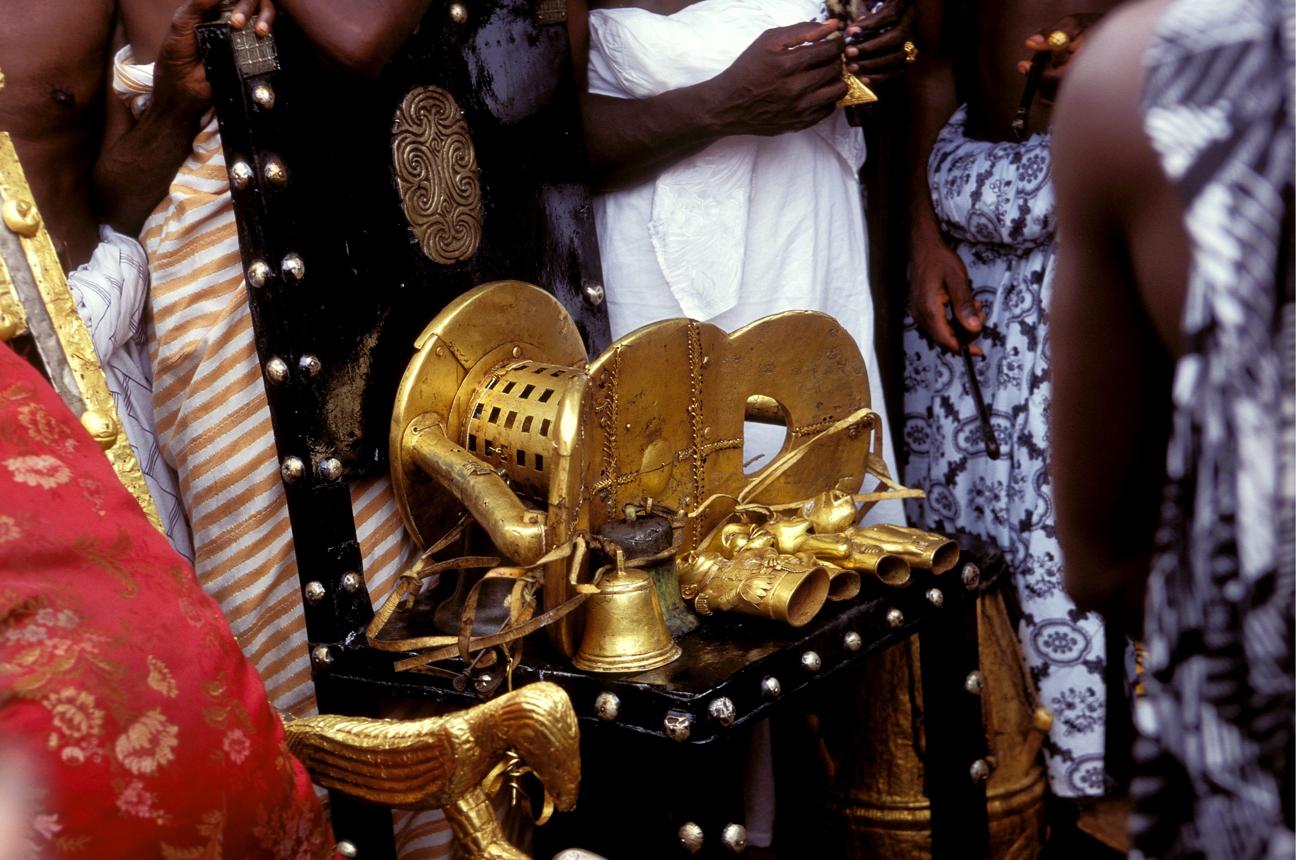
But gold meant much more to the Asante than simple wealth. Gold became associated with royal authority, spiritual significance, prestige and political power. It appeared in crowns, ornaments, ceremonial swords, stools, staffs and other objects associated with leadership. At the Asante court, gold could communicate a person’s position and relationship to authority.
The most famous symbol of this tradition is the Golden Stool, known as Sika Dwa Kofi. According to Asante tradition, the Golden Stool became the spiritual embodiment of the Asante nation and a central symbol of unity.
The history of the Ashanti is therefore not simply a story about gold. It is a story about how a society transformed natural resources into economic power, economic power into political authority, and political authority into a sophisticated system of cultural symbolism. It is also a story of resistance. The Asante Kingdom confronted British imperial expansion repeatedly during the nineteenth century. Those conflicts eventually resulted in the weakening and incorporation of Asante territories into the British colonial system. Yet political conquest did not erase Asante identity. The Golden Stool remains an important cultural symbol.
The Asantehene continues to hold traditional significance. Kumasi remains a major center of Asante cultural life. Traditional festivals, Kente textiles, goldsmithing, stools, drums, proverbs and oral traditions continue to connect contemporary communities with their historical heritage.
To understand the Ashanti, therefore, we must look beyond the gold itself and examine the people, institutions and ideas that gave the gold its meaning.
Who Are the Ashanti?
The Ashanti, or Asante, are an Akan people whose historical homeland is centered in the forest region of present-day Ghana. Their language is Asante Twi, a major variety of the Akan language continuum. The modern Ashanti Region takes its name from this historical connection. The Asante identity developed through relationships among several Akan communities and political states. The Asante Kingdom eventually became a powerful centralized political formation with its capital at Kumasi. The National Commission on Culture describes the Ashanti Region as the heartland of the Ashanti Kingdom and identifies Asante Twi as the dominant language of the region.
Before the Asante Kingdom
The Asante Kingdom did not emerge from an empty political landscape. Before its formation, the forest and savanna zones of what is now Ghana contained numerous Akan states and communities. These societies engaged in agriculture, trade, craftsmanship and political competition. Gold was already being mined and traded in the region before European colonialism. The development of the Asante Kingdom therefore built upon economic and cultural foundations that existed before the kingdom itself. Gold mining in the region predates European colonial rule by many centuries, and indigenous communities developed methods for extracting and trading gold long before European powers established coastal settlements.
The Rise of the Asante Kingdom
The emergence of the Asante Kingdom is closely associated with Osei Tutu I and the priest and statesman Okomfo Anokye. According to Asante historical tradition, they played central roles in uniting several Akan political communities around Kumasi. The political transformation took place toward the end of the seventeenth century and continued into the early eighteenth century. The new political structure created a stronger centralized authority than existed among the previously independent states. The Asante Kingdom subsequently expanded its influence over surrounding territories.
The National Commission on Culture places the establishment of the empire around the beginning of the eighteenth century and emphasizes the importance of political unification, military organization and spiritual foundations.
Osei Tutu and Political Unification
Osei Tutu became one of the most important figures in Asante history. His significance lies not only in territorial expansion but in the political structures associated with his reign.
The formation of a larger political union required communities to accept a shared authority while maintaining elements of their individual identities. The Asante political system therefore had to balance central authority with the continued importance of local chiefs. This became one of the defining features of Asante political organization.
Okomfo Anokye and Spiritual Authority
Okomfo Anokye occupies an equally important place in Asante historical tradition. He is remembered as a spiritual leader and political adviser who helped establish the ideological foundations of the new kingdom.
The most famous tradition associated with him concerns the Golden Stool. According to Asante tradition, Okomfo Anokye caused a golden stool to descend from the sky before Osei Tutu and the assembled chiefs. The story gave the new political union a powerful spiritual foundation.
The Golden Stool
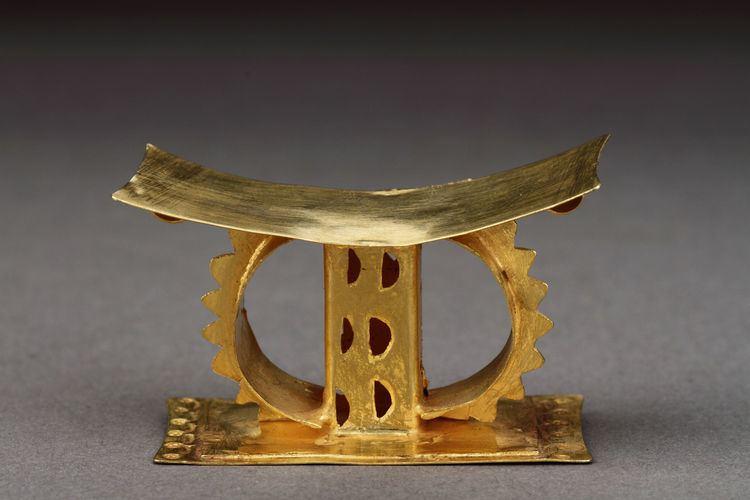
The Golden Stool, or Sika Dwa Kofi, is perhaps the most famous symbol associated with the Asante. According to tradition, the stool embodies the spirit or soul of the Asante nation. It therefore represents much more than royal furniture. The British Museum describes it as a symbol that embodied the soul of the entire nation and notes that it continues to occupy a central place in Asante history. The Golden Stool became a symbol of unity. A chief could possess his own stool as a symbol of authority, but the Golden Stool represented the collective political identity of Asanteman.
Why the Stool Matters
To understand the Golden Stool, it is important to understand the broader importance of stools in Akan political culture. A stool can symbolize the authority and identity of a chief. When a ruler dies, the stool can remain as a representation of the political institution and lineage. The Golden Stool elevated this symbolism to the level of the entire Asante political community. It represented continuity between generations. It could therefore be understood as connecting the living with ancestors and future generations.
Gold as Power
Gold became deeply connected with political authority in Asante society. The metal’s rarity and visual brilliance made it an obvious material for royal regalia. But its importance was not simply aesthetic. According to the Metropolitan Museum of Art, gold in Asante courtly culture had political, spiritual and artistic significance. It could represent life force and purity while also communicating the political dominance of the kingdom. Gold therefore occupied a unique position. It was wealth. It was art. It was symbolism. It was political communication.
Gold and the Sun
Asante understandings of gold included spiritual associations with the sun. The Metropolitan Museum notes that gold was regarded as an earthly counterpart to the sun and connected with the concept of kra, or life force. This helps explain why gold appeared so prominently in royal objects. Its brilliance was not merely decorative. It could communicate vitality, authority and sacred significance.
Gold Dust as Currency
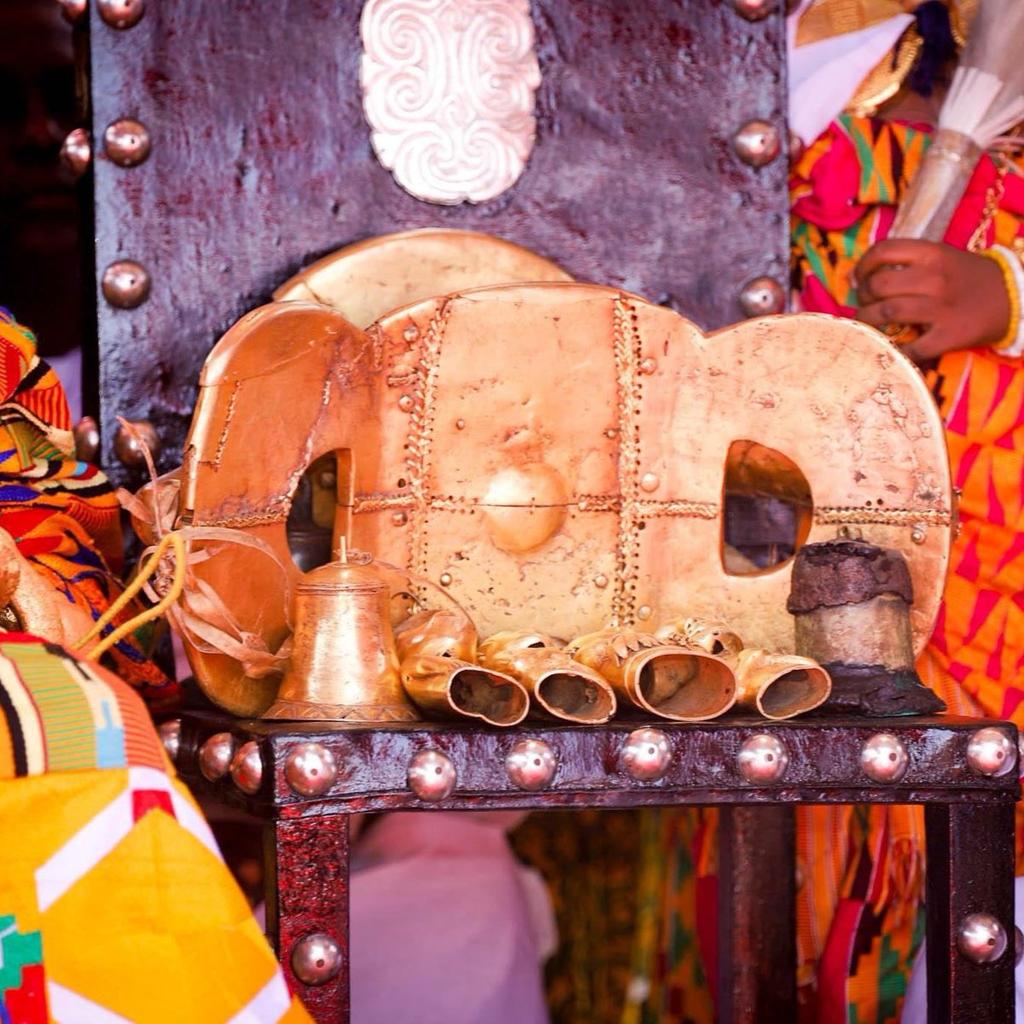
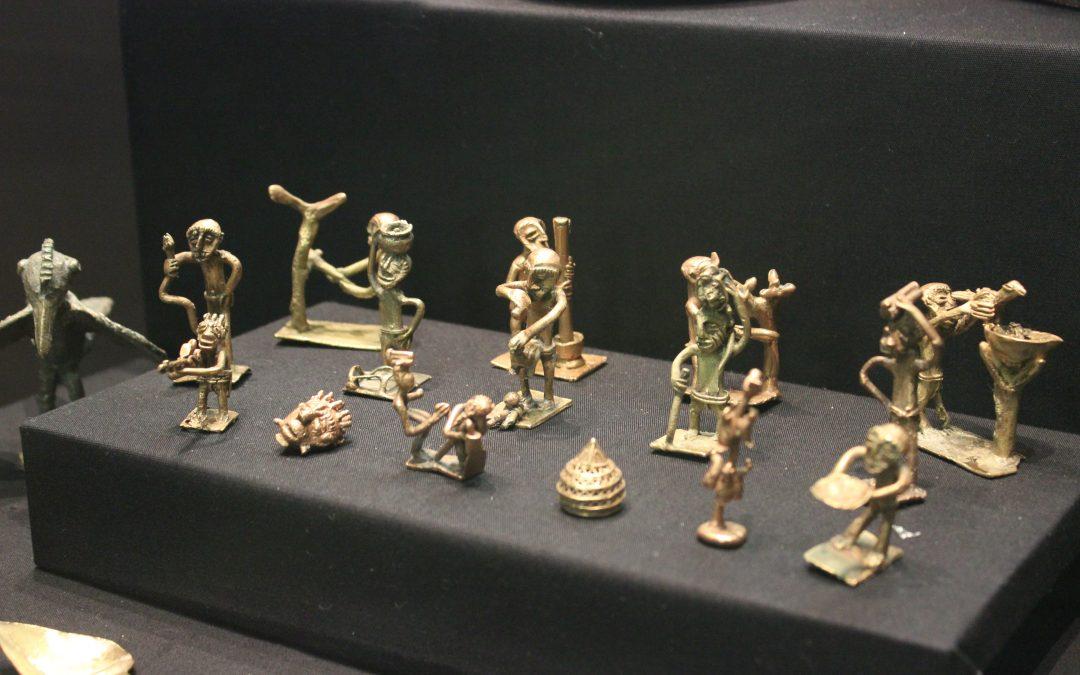
Gold was also economically important. Gold dust was used as a form of currency within the Asante economic system. Specialized brass weights were used to measure quantities of gold dust. These weights are themselves remarkable examples of Asante artistic traditions. Some represent animals, people, objects and symbols. Others communicate ideas through visual forms connected to proverbs. The Metropolitan Museum notes that the Asante used abramo weights to measure gold dust and that the designs eventually included naturalistic and proverbial imagery.
 Goldweights and Visual Language
Asante goldweights demonstrate that art and commerce were closely connected. A merchant needed an accurate way to measure gold dust. The weight itself could also communicate cultural ideas. Some weights depicted animals. Others represented objects or human figures. Some embodied proverbs. This transformed a practical economic tool into a miniature work of art. The gold weight tradition shows that Asante artisans could combine measurement, commerce, storytelling and philosophy in a single object.
The Goldsmiths
Goldworking required specialized knowledge. Royal goldsmiths produced ornaments and objects associated with political authority. Their craft required considerable technical skill. Gold could be cast, shaped and decorated into intricate forms. The lost-wax casting technique became especially important in Akan metalworking. The Metropolitan Museum notes that royal gold ornaments were produced by specialized guilds associated with the Asante court.
The Lost-Wax Technique
The lost-wax technique allows artisans to create highly detailed metal objects. An object is first modeled in wax. A mold is then formed around it. When heated, the wax melts away. Molten metal is poured into the resulting cavity. Once the mold is removed, the metal retains the shape of the original design. This technique allowed Asante artisans to produce sophisticated ceremonial objects with complex details.
Gold Regalia
Asante royal regalia could include crowns, necklaces, pendants, ornaments, swords, staffs and other objects. These objects were not merely decorative. They could communicate rank, authority and political relationships. Patterns and motifs could carry specific cultural meanings. The Victoria and Albert Museum notes that Asante gold regalia contains motifs associated with concepts such as loyalty, honesty, cultural bonds and family mottos.
The Asantehene
The Asantehene is the traditional ruler of the Asante people. Historically, the position was at the center of the Asante political system. The Asantehene’s authority was connected with the Golden Stool and the network of chiefs forming Asanteman. Royal ceremonies provide an opportunity for the display of traditional regalia, music, textiles and political symbolism. The institution continues to have cultural significance in modern Ghana.
The Queen Mother
Asante political culture also recognizes the important role of the Asantehemaa, commonly translated as queen mother. The queen mother is not simply the wife of the king. The institution has its own political and social significance. Asante society has historically emphasized matrilineal descent, meaning that lineage and inheritance can be traced through the mother’s line. This made women important participants in political and social structures.
Matrilineal Heritage
Asante social organization has historically been strongly matrilineal. Lineage could influence inheritance, political office, land rights and social identity. This meant that women played significant roles in maintaining family continuity.
The importance of matrilineal relationships also helps explain why the queen mother could occupy an influential position within the political system.
Kumasi: The Heart of Asante Power
Kumasi became the capital of the Asante Kingdom. Its location was strategically important. It was connected to agricultural production, trade routes and access to gold-producing areas. The city became a major political and cultural center. Royal institutions, artisans, merchants and religious authorities all contributed to its development. The British Museum notes that Kumasi became increasingly central as Asante rulers consolidated political authority and that the city reached substantial importance during the kingdom’s period of power.
Kumasi and the Gold Trade
Gold helped connect Kumasi with regional and international commerce. Gold moved through networks linking the interior with coastal trading centers.
European merchants became increasingly interested in West African gold. The Asante benefited from this trade while also using commercial wealth to strengthen its political and military institutions. Gold therefore contributed to the kingdom’s ability to maintain its power.
Trade Beyond Gold
Gold was not the only commodity important to the Asante economy. Agricultural products, kola nuts, textiles and other goods were also traded. The National Commission on Culture identifies gold and kola nuts among the important commodities contributing to Asante development. Trade encouraged contact with neighboring societies. It also brought the Asante into increasingly complex relationships with European coastal powers.
Agriculture and Economic Foundations
Gold alone could not sustain a kingdom. Agriculture provided food for the population. Farmers cultivated crops within the forest environment. The economic strength of the kingdom depended on the interaction between agriculture, trade, craftsmanship and political administration. This is important because it demonstrates that Asante wealth was not simply a consequence of possessing gold. It required a society capable of extracting, processing, trading and governing valuable resources.
Military Power
The Asante Kingdom developed a powerful military organization. Military strength helped the kingdom expand its territory and protect important economic interests.
Control over trade routes and access to resources contributed to the kingdom’s political influence. Asante military power became particularly important during conflicts with neighboring states and later during wars against Britain.
Expansion of the Kingdom
During the eighteenth and early nineteenth centuries, Asante authority expanded over large parts of what is now Ghana. The kingdom became one of the most powerful states in West Africa. Its expansion involved warfare, diplomacy, political alliances and the incorporation of territories. By the height of its power, Asante influence extended far beyond the immediate area around Kumasi.
The Asante Court
The royal court was an important center of political and cultural life. Chiefs, royal officials, artisans, musicians and religious authorities participated in courtly activities. Royal ceremonies displayed the wealth and authority of the kingdom. Gold regalia, Kente cloth, stools, drums and ceremonial objects communicated political hierarchy. The court therefore functioned as both an administrative center and a stage for cultural expression.
The Language of Symbolism
Asante political culture developed a rich visual language. A stool could represent authority. A sword could represent office. A gold ornament could communicate status. A staff could carry a proverb. A cloth could express identity. A drum could communicate messages. These objects transformed political ideas into visible forms.
Linguistic Symbolism
The Asante also used proverbs extensively. Proverbs could communicate complex ideas in concise forms. Royal spokespersons and officials could use symbolic objects to express these ideas publicly. The design of objects could therefore function almost like a written language. This was especially important in societies where oral communication played a central role.
Royal Linguists and Spokespersons
The okyeame, often translated as royal linguist or spokesperson, held an important position. The okyeame could speak on behalf of a chief or ruler.
The role required knowledge of etiquette, history and proverbs. The linguist’s staff could contain symbolic imagery. The visual design reinforced the spoken message. This demonstrates the close relationship between art and communication in Asante society.
Kente and Royal Identity
Kente cloth is one of Ghana’s most internationally recognized textiles. Historically, Kente became strongly associated with royalty and high-ranking individuals in Asante culture. The textile is produced by weaving narrow strips that are later assembled into larger cloths. Patterns and colors can carry meanings. The National Commission on Culture notes the association of Kente with royalty, ceremonial occasions and symbolic communication.
Gold and Kente Together
Gold regalia and Kente textiles could work together during royal ceremonies. The brilliance of gold communicated wealth and sacred authority. The woven cloth communicated identity, history and status. Together they created a visual representation of political power. This is one reason Asante royal ceremonies are so visually distinctive.
Festivals and Ancestral Memory
Festivals remain important to Asante cultural life. Akwasidae is particularly significant. During such occasions, royal ceremonies, drumming, dancing, libations and the display of regalia can connect contemporary communities with their ancestors and historical institutions. The National Commission on Culture describes Akwasidae as a recurring ceremony in which chiefs pay homage to the Asantehene and ancestral spirits are honored.
The Sound of the Drums
Drumming is central to Asante ceremonial life. The Fontomfrom drums are particularly associated with royal ceremonies. The Atumpan, or talking drums, can communicate messages and proverbs. This demonstrates that music is not simply entertainment. It can function as communication, historical memory and political ceremony.
Ananse and Asante Folklore
Asante cultural heritage also includes a rich tradition of storytelling. One of the most famous figures is Ananse, the spider trickster. Ananse stories often explore intelligence, greed, deception, humility and human weaknesses. The stories can entertain while teaching moral lessons. They demonstrate how oral literature functions as an educational institution.
Spiritual Traditions
Traditional Asante religious thought recognizes Nyame as the Supreme Being. The spiritual world also includes deities and ancestral spirits. Libations may be offered to ancestors during important ceremonies. Religious practices historically interacted closely with political authority. The spiritual legitimacy of the kingdom was connected to the idea that political institutions existed within a wider sacred order.
Ancestors and Political Continuity
Ancestors were important to the concept of social continuity. The living were connected to those who came before them. This idea can be seen in the symbolism surrounding stools. A stool could represent the continuing existence of a lineage and political institution even after an individual ruler died. The Golden Stool extended this concept to the entire Asante nation.
The Golden Stool and National Unity
The Golden Stool became particularly important because it symbolized collective identity. The Asante Kingdom contained many communities and chiefs. Political unity therefore required a symbol that represented something larger than an individual ruler. The Golden Stool fulfilled this role. It represented Asanteman as a collective political and spiritual community.
The Asante and European Powers
European powers had established coastal trading relationships with West African societies before the Asante reached the height of its power. The Asante eventually became deeply involved in trade with European merchants. Gold was among the most important commodities. However, these relationships also involved the trade in enslaved people. The British Museum notes that from the early eighteenth century, Asante trade with British and Dutch merchants included gold and enslaved people, alongside imports such as firearms and luxury goods. This aspect of Asante history is important and should not be omitted from discussions of the kingdom’s wealth.
The Complexity of Asante Wealth
The history of wealth in the Asante Kingdom is complex. Gold contributed substantially to the kingdom’s economic power. But the kingdom also participated in systems of warfare, tribute and enslavement. European merchants were themselves deeply involved in the Atlantic slave trade. The historical reality cannot therefore be explained as a simple story of one society exploiting another. It was a complex network involving African states, European merchants and Atlantic economic systems.
The Anglo-Asante Wars
Asante relations with Britain eventually deteriorated. British imperial expansion increasingly threatened Asante sovereignty. The two sides fought several conflicts during the nineteenth century. These became known as the Anglo-Asante Wars. The conflicts were not one single war but a series of confrontations spread across decades.
The 1874 Invasion of Kumasi
One of the most significant moments occurred in 1874. British forces invaded Kumasi and destroyed parts of the city. The event demonstrated the growing military power of Britain and the increasing pressure on Asante sovereignty.
The British Museum records the destruction of part of Kumasi during the 1874 British invasion.
Resistance and Sovereignty
Asante resistance did not end with the destruction of Kumasi. The kingdom continued to resist British attempts to establish complete political control.
The conflicts reflected a fundamental disagreement. The British sought to expand imperial authority. The Asante sought to preserve political independence. The struggle was therefore about much more than trade. It was about sovereignty.
The War of the Golden Stool
In 1900, another major conflict erupted after British colonial authorities attempted to exert authority over the Golden Stool. The resulting resistance became known as the War of the Golden Stool. The conflict is particularly significant because the Golden Stool represented Asante political and spiritual identity. The resistance demonstrated that an object could become the focal point of an entire political struggle because of what it symbolized.
Yaa Asantewaa
One of the most famous figures associated with the War of the Golden Stool is Yaa Asantewaa, the queen mother of Ejisu. She emerged as a prominent leader in the resistance. Her role has made her one of the most celebrated female figures in African anti-colonial history. Her story also demonstrates that Asante resistance was not exclusively a male political or military phenomenon. Women held important political positions within the society.
Colonial Rule
Eventually, Britain succeeded in incorporating Asante territory into its colonial system. The political independence of the kingdom was severely weakened. Traditional institutions were reorganized under colonial authority. The Asante state ceased to function as an independent sovereign kingdom. Yet the cultural institutions associated with Asante identity survived.
Gold Regalia and Colonial Looting
The colonial period also had a profound impact on Asante cultural heritage. British troops removed numerous objects from the Asante royal palace during military campaigns. Some objects were taken as military loot. Others entered collections through auctions, sales and donations. The British Museum acknowledges that many Asante objects in its collection were connected with British military campaigns and indemnity payments.
The Meaning of the Regalia Today
Asante gold regalia are therefore more than museum objects. For museums, they may be historical works of art. For the Asante, they can also represent identity, political history, spirituality and cultural continuity. The Victoria and Albert Museum has emphasized that Asante gold objects carry cultural significance far beyond their material value. This difference in perspective is central to modern debates about cultural heritage.
Repatriation and Cultural Heritage
The movement to return African cultural objects taken during colonial campaigns has become an important international issue. Asante regalia are part of this broader conversation. The question is not simply where an object should be physically located. It also concerns who has the authority to interpret, preserve and determine the future of cultural heritage. These debates have encouraged museums and African communities to reconsider the history and ownership of collections.
Asante Heritage Today
Modern Asante culture remains vibrant. The Asante Region continues to be a major center of Ghanaian cultural heritage. Traditional festivals continue. Kente remains internationally recognized. Goldsmithing continues. Woodcarving and stool-making remain important artistic traditions. Asante Twi remains widely spoken. Royal institutions continue to have cultural significance. The past therefore remains visible in contemporary life.
Kumasi as a Cultural Center
Kumasi continues to serve as an important center of Asante identity. Historic sites, royal institutions, museums, markets and craft traditions connect the modern city to its historical role. The city demonstrates how an ancient political capital can become a modern urban center without completely losing its cultural identity.
Goldsmithing as Living Heritage
Traditional goldworking continues to influence Ghanaian craftsmanship. Modern artisans inherit techniques and design traditions from earlier generations. Although contemporary goldsmithing operates within a modern commercial economy, historical motifs continue to inspire designs. The survival of these techniques demonstrates that heritage can remain economically productive.
The Meaning of Gold Today
Gold continues to symbolize wealth in modern Ghana. But within Asante culture, its historical meaning extends beyond financial value. It can represent continuity, prestige, authority and spirituality. This is why gold remains prominent in traditional royal ceremonies. Its significance has been built over centuries.
The Ashanti and Modern Ghana
The history of the Asante Kingdom is inseparable from the broader history of Ghana. The region’s gold resources contributed to the country’s historical identity. The name Gold Coast, used during the colonial period, reflected the importance of gold to the region’s international reputation. Modern Ghana continues to be one of Africa’s major gold-producing countries, while gold remains connected to cultural heritage.
Beyond the Gold
It is tempting to define the Ashanti entirely through gold. But doing so would overlook much of their cultural heritage. The Asante developed sophisticated political institutions. They maintained oral traditions. They created remarkable textiles. They produced extraordinary metalwork. They developed symbolic communication systems. They preserved philosophical ideas through proverbs. They created powerful musical traditions. They built a political identity that survived the end of their independent kingdom. Gold is therefore an entry point into Asante history, not the entire story.
Why Asante Symbolism Matters
The Asante provide an excellent example of how societies can communicate complex ideas without relying exclusively on written text. A stool can communicate sovereignty. A gold weight can communicate a proverb. A royal staff can communicate political authority. A cloth can communicate identity. A drum can communicate a message. A ceremony can communicate historical continuity. The entire cultural system functions as a language of symbols.
Gold, Power and a Living Identity
The story of the Ashanti, or Asante, is one of Africa’s clearest examples of the relationship between resources, political power and cultural symbolism.
Gold helped create economic opportunities. Trade helped expand political influence. Military organization helped protect and extend the kingdom. Political institutions helped organize diverse communities. Religion provided spiritual foundations. Art transformed wealth into symbolic objects. And traditions preserved the memory of the kingdom long after colonial conquest ended its sovereignty. At the center of this history stands the Golden Stool. Its importance cannot be understood by looking only at its material value. It represents unity. It represents authority. It represents continuity. And within Asante tradition, it represents the spiritual identity of the nation. The Asante Kingdom eventually lost its independence under British colonial expansion. But the cultural system built around the kingdom survived. The Asantehene remains a significant traditional institution. Kumasi remains a major cultural center. Asante Twi continues to be spoken. Kente continues to be woven. Goldsmithing continues. Festivals continue. Drums continue to communicate. Stories continue to be told. And the symbolism of stools, gold, textiles and proverbs continues to connect contemporary generations with the past.
The history of the Ashanti therefore teaches an important lesson about African civilization. Power does not always survive in the form of political territory. Sometimes it survives in memory, language, art, ceremony and symbols. The Asante Kingdom may no longer exist as an independent empire, but the identity it created continues to shape the cultural landscape of Ghana. That is why the history of the Ashanti is not simply a story about a kingdom that once possessed great wealth. It is a story about how a people transformed gold into symbolism, symbolism into unity, and historical memory into cultural resilience.
