
There is a Nubian saying, still repeated in various forms among communities along the Nile in northern Sudan, that translates roughly to:
the river does not forget those who drank from it first.
It is a fitting sentiment for a civilization that has, for centuries, existed largely in the shadow of its more famous northern neighbour, despite having built more pyramids than Egypt itself. Rising from the desert plains of what is today Sudan, the pyramids of Meroë, numbering well over two hundred across several ancient cemetery sites, stand as the most visible surviving legacy of the Kingdom of Kush, one of Africa’s longest-lived and most historically significant civilizations, and one whose achievements remain strikingly underrecognised relative to their genuine scale and importance. This article, the eighth in a ten-part series on Africa’s heritage sites, tells the story of Meroë and the Kushite civilization that built it: a kingdom that at one point ruled Egypt itself, developed its own writing system, and constructed a pyramid tradition that, while directly influenced by its northern neighbour, evolved into something architecturally and culturally distinct in its own right.
The Kingdom of Kush: A Civilization in Egypt’s Shadow
The Kingdom of Kush developed along the Nile River in the region historians refer to as Nubia, encompassing territory in what is today southern Egypt and northern Sudan, emerging as a significant independent civilization from at least the second millennium BCE onward, with its power and influence fluctuating over the following centuries in close, often tense relationship with ancient Egypt to its north. For long stretches of its early history, Kush existed as a rival, trading partner, and occasional subject state of its more powerful northern neighbour, with Egyptian pharaohs periodically extending direct control over Nubian territory to access the region’s abundant gold deposits and control lucrative trade routes connecting Egypt to the interior of Africa.
This relationship dramatically reversed during the eighth century BCE, when Kushite rulers, having built a powerful and increasingly sophisticated independent kingdom centred first at the city of Napata, took advantage of a period of Egyptian political fragmentation and weakness to invade and conquer Egypt itself, establishing what historians refer to as Egypt’s Twenty-Fifth Dynasty, sometimes called the Kushite or Nubian Dynasty, under which Kushite pharaohs ruled over a unified Egyptian and Nubian realm stretching from deep in the Sudanese interior to the Mediterranean coast. This period represents one of the most historically significant yet popularly underappreciated chapters in ancient African history: an African kingdom from further south along the Nile conquering and ruling ancient Egypt, rather than the reverse relationship more commonly assumed in popular understanding of ancient Nile Valley history.
Kushite rule over Egypt ultimately ended following an Assyrian invasion in the seventh century BCE, which forced Kushite rulers to retreat southward back into their Nubian heartland, but the kingdom itself continued to flourish as an independent and powerful state for well over a thousand years afterward, eventually shifting its primary political and ceremonial centre southward from Napata to the city of Meroë, a transition generally dated to sometime around the fourth or third century BCE and marking the beginning of what historians refer to as the Meroitic period of Kushite civilization.
Meroë: Capital of a Nile Valley Empire
The city of Meroë, located near the Nile in present-day Sudan considerably further south than Egypt’s traditional heartland, developed into a major urban, religious, and industrial centre during this later Meroitic period, benefiting from a location that, unlike the more arid regions further north, received sufficient seasonal rainfall to support savanna vegetation capable of sustaining significant iron production, a resource and industry that would become central to Meroë’s economic importance within the wider ancient world.
Archaeological excavations at Meroë have revealed substantial evidence of large-scale iron smelting activity, with extensive slag heaps surrounding the ancient city leading some historians to describe Meroë as an important, if not the primary, centre of iron production in ancient sub-Saharan Africa, a status that led the early twentieth-century archaeologist Arkell to describe the city, in a phrase later widely repeated, as the “Birmingham of Africa,” referencing the industrial significance of the English city renowned for its own iron and steel production. This industrial capacity, combined with Meroë’s continued control over lucrative trade routes connecting the wider Nile Valley to the African interior and, via Red Sea ports, to the broader Indian Ocean trading world, sustained the kingdom’s prosperity and political significance for many centuries following the shift of its capital away from Napata.
The Pyramids of Meroë
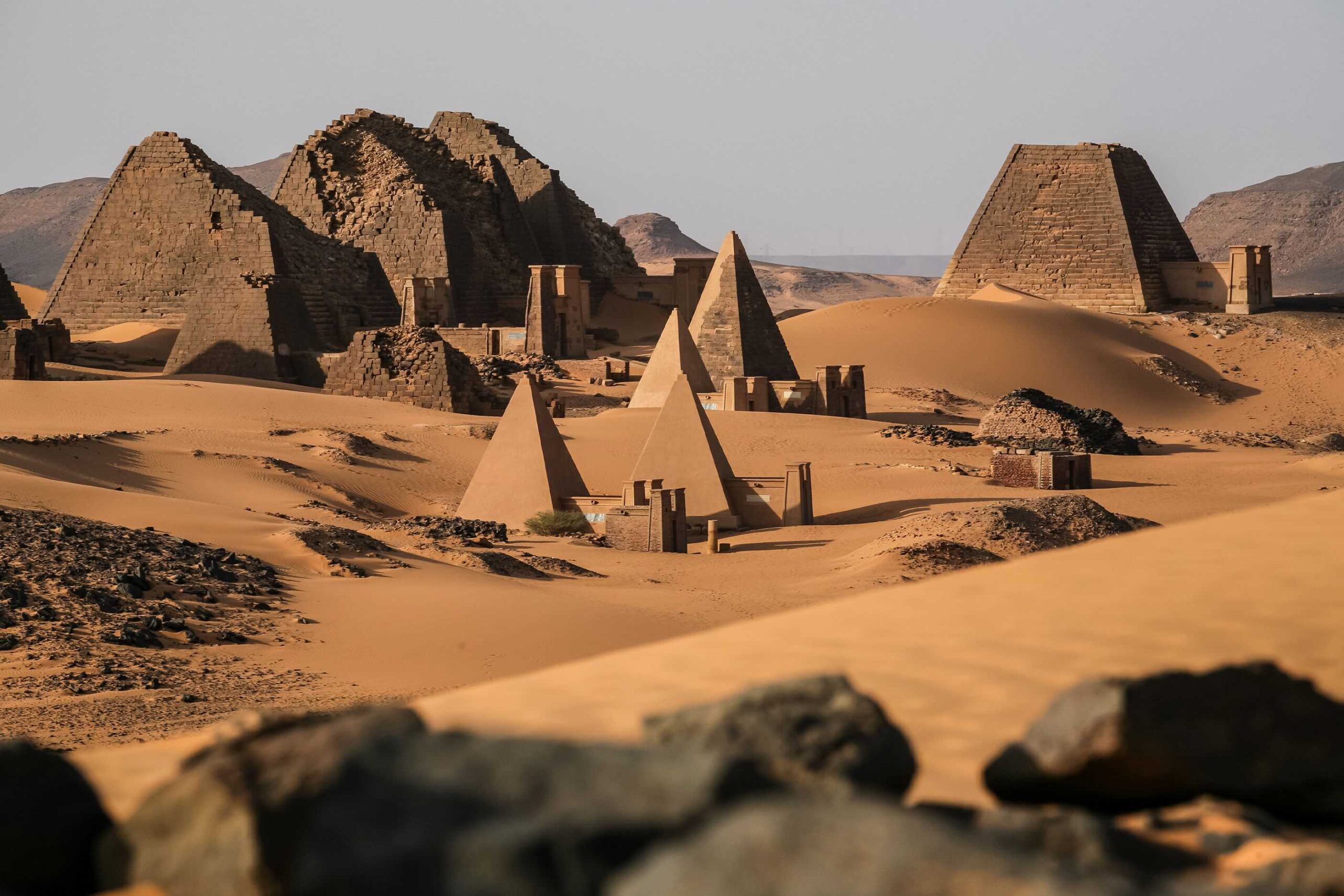
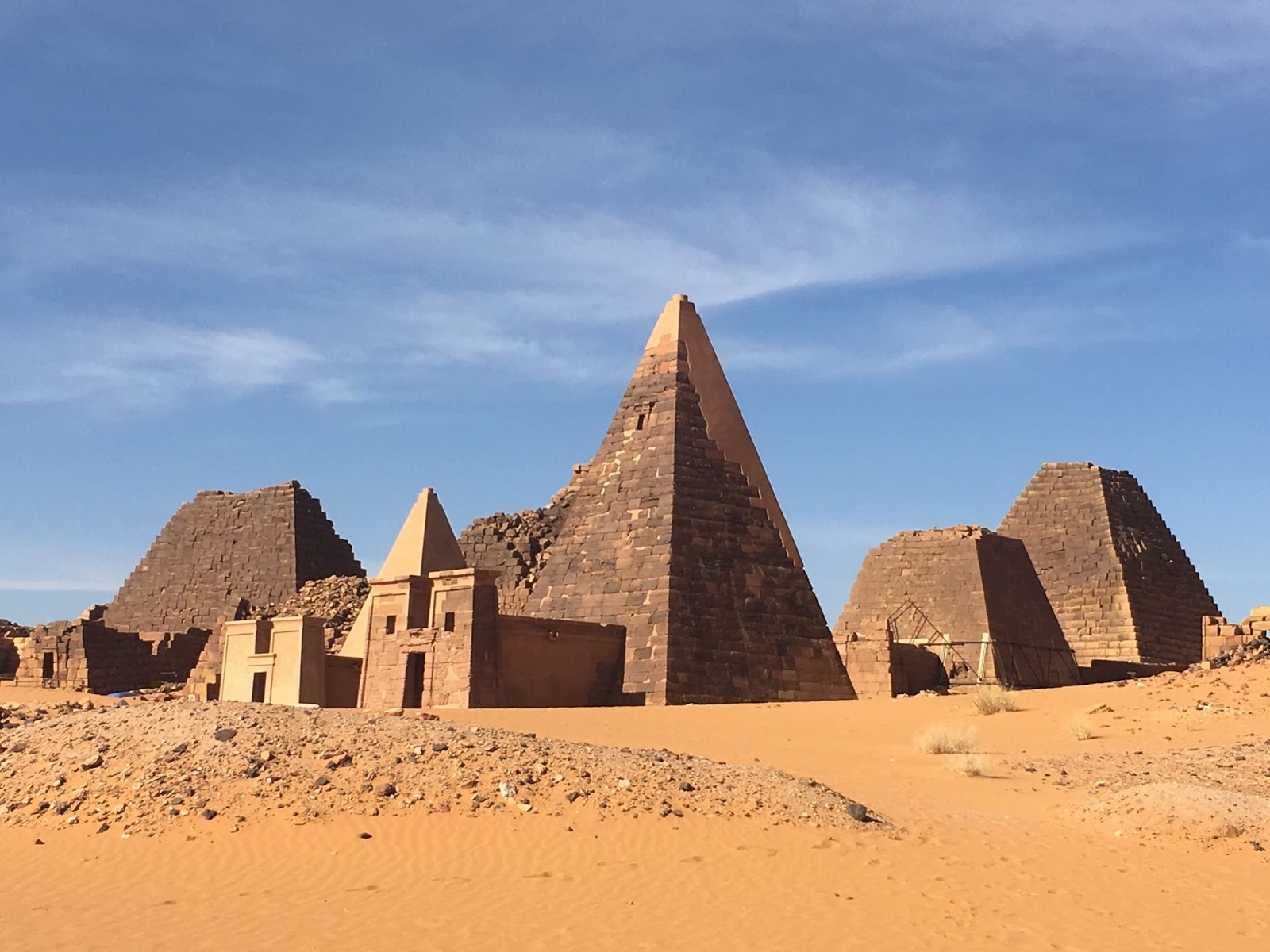
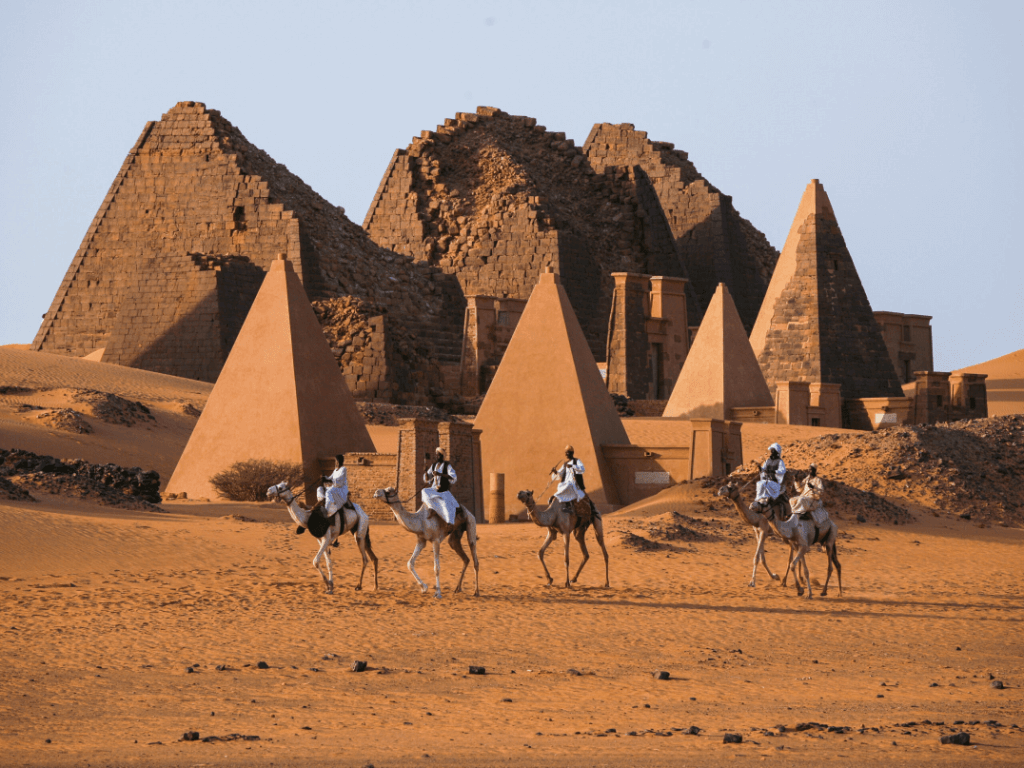
The most visually striking and internationally recognisable legacy of the Kushite civilization is the extensive collection of pyramids constructed as royal tombs across several cemetery sites associated with the kingdom, with the largest and most significant concentration located near Meroë itself. In total, well over two hundred Kushite pyramids have been identified across these various royal cemetery sites, a figure that substantially exceeds the number of pyramids built in ancient Egypt, despite Meroë’s pyramids remaining far less internationally famous than their northern counterparts, a disparity in recognition that many historians and heritage advocates consider one of the more striking examples of uneven global attention toward comparably significant African heritage sites.
Kushite pyramids differ noticeably in scale and proportion from their Egyptian counterparts, generally standing considerably smaller, typically ranging from around six to thirty metres in height, and featuring notably steeper sides that give them a distinctively narrower, more angular silhouette compared to the broader, more gradually sloping profile of the Great Pyramids at Giza. This steeper design reflects both a distinct architectural tradition that evolved over centuries of Kushite pyramid-building and practical adaptations related to the different construction materials and techniques employed by Kushite builders, who typically constructed their pyramids from small sandstone blocks rather than the massive stone blocks characteristic of Old Kingdom Egyptian pyramid construction.
Kushite pyramids were typically built not as solid tomb structures in the manner of the Great Pyramids, but rather as monuments marking the location of a separate underground burial chamber cut into the bedrock beneath or adjacent to the pyramid itself, with an attached chapel structure, generally built against the pyramid’s eastern face, serving as the site for mortuary rituals and offerings dedicated to the deceased ruler. These chapels were often decorated with relief carvings depicting the deceased, religious deities, and ceremonial scenes, executed in a distinctive Kushite artistic style that, while clearly influenced by Egyptian artistic conventions absorbed during the centuries of close cultural and political contact between the two civilizations, developed its own recognisable stylistic characteristics over time, including distinct approaches to royal iconography and the increasingly prominent depiction of powerful Kushite queens, known as Kandakes, who held significant political and religious authority within Meroitic society.
The Meroitic Script and an Undeciphered Legacy
Among the most historically significant and, in important respects, still frustratingly mysterious aspects of Kushite civilization at Meroë is the development of the Meroitic script, an indigenous writing system that emerged during the Meroitic period, representing one of the earliest known written scripts developed in sub-Saharan Africa. This writing system, which appears in both a hieroglyphic form used primarily for religious and monumental inscriptions and a cursive form used more widely for everyday administrative and commercial purposes, was used to write the Meroitic language, itself distinct from ancient Egyptian and generally believed by linguists to belong to a language family with connections to other languages historically spoken in the wider Nile Valley and Sudanese region.
 While the Meroitic script’s individual symbols have been successfully identified and can be transliterated with reasonable confidence, the underlying Meroitic language itself remains only partially understood, and a substantial number of surviving Meroitic inscriptions cannot yet be fully translated or interpreted with confidence by modern scholars, a significant ongoing gap in the historical record that continues to limit full scholarly understanding of many aspects of Kushite religious belief, political history, and daily life during the Meroitic period. This incomplete decipherment stands in notable contrast to the situation in ancient Egypt, where the successful nineteenth-century decipherment of hieroglyphics, achieved substantially through study of the Rosetta Stone, opened Egyptian civilization to detailed textual study in a manner not yet fully available for Kushite civilization, contributing significantly to the persistent imbalance in popular and even scholarly attention between the two closely related but historically distinct Nile Valley civilizations.
Decline and Rediscovery
The Kingdom of Kush and its capital at Meroë entered a period of gradual decline beginning around the third century CE, with the kingdom’s final collapse generally dated to sometime in the fourth century CE, a decline whose precise causes remain debated among historians but which likely involved some combination of environmental pressures related to overexploitation of local resources supporting the kingdom’s substantial iron industry, disruption of the long-distance trade routes upon which Meroë’s prosperity had long depended, and increasing military pressure from the rising Kingdom of Aksum to the southeast, whose own ruler claimed credit for Meroë’s final destruction in a surviving Aksumite royal inscription.
Following this collapse, the region’s monumental heritage, including the extensive pyramid fields, gradually receded from wider international awareness for many centuries, remaining known primarily to local communities and, eventually, to the successor kingdoms and states that arose across the region in subsequent centuries. European awareness of Meroë’s pyramids developed gradually from the early nineteenth century onward as European travellers and, later, archaeologists documented the site in increasing detail, though this period of external engagement, as with so many other African heritage sites discussed throughout this series, also brought with it a troubling legacy of looting and damage, most notoriously associated with the Italian explorer and adventurer Giuseppe Ferlini, who in the 1830s deliberately demolished the tops of numerous pyramids in a destructive search for buried treasure, causing substantial and irreversible damage to a significant number of the site’s structures in the process.
Meroë Today
The pyramids and archaeological remains of Meroë, along with related Kushite heritage sites including Napata, Jebel Barkal, and various associated temples and royal cemeteries, were collectively inscribed as a UNESCO World Heritage Site in 2011 under the designation “Archaeological Sites of the Island of Meroë,” recognising the outstanding universal value of this substantial and historically significant collection of Kushite civilization remains.
Despite this international recognition, Meroë continues to receive dramatically fewer international visitors than the pyramids of Egypt, a disparity attributable to a combination of factors including Sudan’s more limited tourism infrastructure, the country’s periods of political instability and international isolation over recent decades, and the persistent global imbalance in popular awareness between Egyptian and Kushite civilization discussed throughout this article. Ongoing conflict and political instability within Sudan in recent years have further complicated both tourism access and international conservation support for the site, raising renewed concerns among heritage organisations regarding the long-term protection of a site whose archaeological and historical significance, by most objective scholarly measures, rivals that of its far more internationally celebrated northern counterpart.
The Kandakes: Powerful Queens of Kush
Among the most historically remarkable aspects of Kushite civilization at Meroë, and one that continues to draw significant scholarly and popular interest today, is the prominent political and religious authority exercised by Kushite royal women, known by the title Kandake, often rendered in English as “Candace,” a title that Roman historical sources occasionally, and somewhat confusingly, mistook for a personal name rather than a royal title comparable to king or queen. Unlike the situation in ancient Egypt, where powerful female rulers such as Hatshepsut and Cleopatra represented notable but comparatively rare exceptions within a predominantly male succession tradition, Meroitic Kush developed a sustained and well-documented tradition of female rulers who governed the kingdom independently, commanded military forces, and were depicted in official royal iconography with the same symbols of authority, including regalia and ceremonial weaponry, traditionally associated with male kings.
Several Kandakes are known to have ruled Kush as sole monarchs rather than merely as consorts or regents, and Kushite royal women are frequently depicted in pyramid chapel relief carvings and other official monuments occupying positions of authority equal to or, in a number of documented cases, exceeding that of contemporary male rulers. One of the most historically significant recorded Kandakes led Kushite military forces in a notable conflict against Roman Egypt around 24 BCE, ultimately negotiating a favourable peace settlement with Rome that secured favourable trading terms for the kingdom, an episode that stands as one of the relatively rare instances in ancient history of an African civilization successfully negotiating from a position of strength directly with the Roman Empire. This sustained tradition of female political authority represents a distinctive and historically significant feature of Kushite civilization that continues to attract growing scholarly attention as an important corrective to historical narratives that have sometimes overlooked or understated the political authority exercised by women in various pre-colonial African societies.
Religion and the Blending of Traditions
Kushite religious practice at Meroë reflects a complex and evolving blend of indigenous Nubian religious traditions and elements absorbed from ancient Egyptian religion during the many centuries of close political and cultural contact between the two Nile Valley civilizations. The Egyptian god Amun continued to hold major religious significance throughout much of Kushite history, with substantial temple complexes dedicated to his worship constructed at Napata, Meroë, and other significant Kushite religious centres, reflecting the deep and lasting influence Egyptian religious tradition exercised over Kushite spiritual life even long after the kingdom had established full political independence from its northern neighbour.
Alongside this Egyptian religious influence, however, Kushite civilization maintained and developed distinctly indigenous religious traditions of its own, most notably centred on the lion-headed deity Apedemak, understood within Kushite religious tradition as a powerful war god and a central figure of specifically Kushite, rather than Egyptian-derived, religious worship, with dedicated temples constructed in his honour at Meroë and other major Kushite sites. This religious blending, combining substantial Egyptian influence with distinctly indigenous Nubian spiritual traditions and deities, offers historians valuable insight into the complex, evolving cultural identity of Meroitic civilization: a kingdom clearly shaped by centuries of proximity to and interaction with ancient Egypt, yet one that maintained and continued to develop a religious and cultural identity distinctly and recognisably its own, refusing to be reduced to a mere derivative or provincial extension of Egyptian civilization.
Conclusion
The pyramids of Meroë stand as one of the clearest and most striking examples found anywhere on the African continent of a heritage site whose scale and historical significance dramatically exceed its level of international recognition. A kingdom that once ruled Egypt itself, developed its own indigenous writing system, and built more pyramids than its famous northern neighbour remains, for most of the wider world, a footnote to Egyptian history rather than the independently significant African civilization the archaeological and historical record clearly demonstrates it to have been. As the Nubian saying reminds us, the river does not forget those who drank from it first, and as ongoing archaeological research, translation efforts, and renewed international attention gradually work to restore Kush and Meroë to their rightful place in the broader story of African and world civilization, that ancient memory, carried for centuries along the same Nile waters that once sustained the kingdom itself, is slowly, if belatedly, being recovered by the wider world.
In the meantime, the pyramids themselves continue their long, patient wait, standing in far greater numbers and far greater silence than their famous northern counterparts, still holding the undeciphered names, titles, and stories of the Kandakes, priests, and ironworkers who built and were buried beneath them, in a language the world has not yet fully learned to read.