

There is a saying, often repeated by guides and survivors of historical trauma across the African diaspora, that goes:
those who do not know their history are condemned to repeat it.
On no stretch of African coastline does that warning feel more physically immediate than on Gorée Island, a small outcrop of volcanic rock lying just off the coast of Dakar, Senegal, whose gentle pastel-coloured buildings and quiet, narrow streets conceal a history as brutal as any place on the African continent. For several centuries, Gorée served as one of the key points along the West African coast through which captured Africans were held, processed, and forced aboard ships bound for the Americas as part of the transatlantic slave trade. This article, the seventh in a ten-part series on Africa’s heritage sites, examines Gorée Island’s history, its physical heritage, the ongoing debates surrounding its precise role in the broader slave trade, and its evolution into one of the most visited sites of historical memory and reconciliation anywhere on the continent.
Geography and Early History
Gorée Island sits roughly three kilometres off the coast of Dakar, occupying a small area of only about eighteen hectares, its modest size belying the outsized role it would come to play in the historical memory of the transatlantic slave trade. The island’s strategic position, offering a naturally defensible anchorage close to the West African mainland yet positioned advantageously for departing ships to catch prevailing winds and currents toward the Americas, made it an attractive location for successive European powers seeking to establish a foothold along this stretch of the Senegalese coast.
The Portuguese were the first Europeans to establish a presence on the island, arriving in the mid-fifteenth century and using it initially as a provisioning stop and minor trading post. Over the following three centuries, control of Gorée changed hands repeatedly among competing European colonial powers, including the Dutch, who gave the island its current name, derived from the Dutch word “Goeree,” and the French and British, who fought over control of the island multiple times, reflecting its recognised strategic and commercial value within the broader competition for West African coastal trade during the height of the transatlantic slave trade era.
Gorée and the Transatlantic Slave Trade
Gorée Island’s central place in global historical memory stems from its role, alongside numerous other points along the West African coast, in the transatlantic slave trade that forcibly transported an estimated twelve to fifteen million captured Africans across the Atlantic Ocean between the sixteenth and nineteenth centuries. Various European trading companies and slave-trading operations established facilities on the island where captured individuals, seized or purchased through complex networks extending deep into the West African interior, were held in often severely overcrowded and inhumane conditions prior to being loaded onto ships for the transatlantic crossing, a journey now generally referred to as the Middle Passage, notorious for its extraordinarily high mortality rates and the horrific conditions endured by those forced to undertake it.
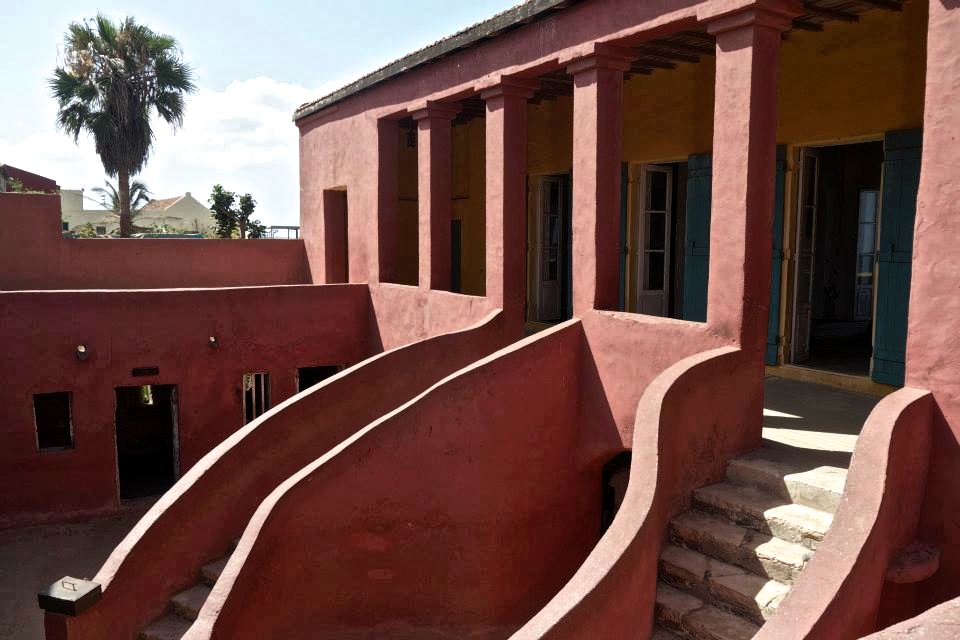
The most iconic structure associated with this history is the Maison des Esclaves, or House of Slaves, a building constructed in the late eighteenth century that has become, particularly since the mid-twentieth century, the most visited and internationally recognised physical symbol of Gorée’s connection to the slave trade. The building’s most famous architectural feature, its so-called “Door of No Return,” a narrow doorway facing directly out to the open ocean, has become one of the most powerful and widely reproduced images in the entire iconography of transatlantic slave trade memory, symbolically representing the final threshold through which captured Africans were said to have passed from their homeland into a life of enslavement from which the overwhelming majority would never return.
Historical Scholarship and Ongoing Debate
It is important, in any honest and thorough treatment of Gorée’s history, to acknowledge an ongoing and at times contentious scholarly debate regarding the precise scale and nature of the slave trade actually conducted through the island specifically, as distinct from its broader symbolic significance in global historical memory. A number of historians, examining detailed shipping and trading records from the period, have argued that the volume of enslaved Africans actually processed and transported directly from Gorée Island itself was considerably smaller than the numbers often popularly associated with the site, with larger-scale slave trading operations having been concentrated at other points along the West African coast, including locations further south along the coast of present-day Ghana and in the Senegambia region’s mainland ports.
This scholarly debate, while academically significant and worth acknowledging honestly, has not diminished Gorée’s profound symbolic and commemorative importance, and it is worth noting that this apparent tension reflects a broader and important distinction between a site’s precise, documented historical role and its accumulated symbolic function as a place of collective memory and mourning. Gorée has, over the course of the twentieth century, come to serve as a representative site, standing in the global historical imagination for the experience of the many thousands of coastal trading points, large and small, through which the transatlantic slave trade was conducted across West and Central Africa, a role it fulfils regardless of the precise volume of individuals who passed through this particular island specifically. For the millions of descendants of enslaved Africans who visit Gorée each year, many undertaking what has become known as a heritage or “roots” pilgrimage, the island’s symbolic weight as a site of memory, mourning, and reflection carries a significance that operates independently of, even as it intersects with, the ongoing academic debate over precise historical statistics.
Architecture and Physical Heritage
Beyond its association with the slave trade, Gorée Island possesses a distinctive architectural character shaped by the successive waves of Portuguese, Dutch, French, and British colonial occupation it experienced over more than three centuries. The island’s built environment reflects a blend of European colonial architectural styles adapted to the West African coastal climate, characterised by pastel-coloured buildings, wrought-iron balconies, narrow cobbled streets, and a general absence of motor vehicles that gives the island a notably quiet, contemplative atmosphere quite distinct from the bustling energy of nearby Dakar.
Alongside the Maison des Esclaves, the island contains numerous other historically significant structures, including several colonial-era forts reflecting the military competition among European powers for control of the site, churches and mosques reflecting the island’s diverse religious history, and residential buildings, some dating back to the eighteenth century, that continue to house a small local population alongside the substantial numbers of tourists and heritage visitors who travel to the island daily by ferry from Dakar.
UNESCO Recognition and Global Significance
Gorée Island was among the very first African sites inscribed on the UNESCO World Heritage List, receiving this designation in 1978, reflecting early international recognition of the island’s exceptional significance as a site of memory relating to the transatlantic slave trade, described by UNESCO as a powerful symbol representing, for the whole of humanity, the tragedy of the slave trade on one hand, and the values of human dignity and reconciliation on the other.
This dual symbolic function, representing both historical atrocity and the possibility of contemporary reconciliation, has made Gorée a significant site of visitation for political and religious leaders from around the world, with numerous heads of state, including several serving and former United States presidents, Pope John Paul II, and Nelson Mandela, having made high-profile visits to the island, each occasion generating substantial international media attention and reinforcing the site’s role as a global symbol of reflection on the historical legacy of slavery and its continuing relevance to contemporary conversations about racial justice, historical memory, and reconciliation.
Gorée in the African Diaspora
For many members of the African diaspora, particularly in the Americas and the Caribbean, Gorée Island holds a deeply personal significance that extends well beyond its role as a conventional heritage tourism destination. The island has become an important site for what is sometimes termed heritage or ancestral tourism, in which individuals whose ancestors were forcibly removed from the African continent during the slave trade era travel to sites such as Gorée seeking a tangible physical connection to a history that, for most descendants of enslaved Africans, left behind no specific documented record of precisely which coastal community or point of departure their own ancestors passed through.
In this context, Gorée functions less as a precisely documented historical archive and more as a site of collective, representative memory and pilgrimage, offering diaspora visitors a physical space in which to process and mourn a history that is, for the overwhelming majority, otherwise represented only by absence, silence, and the incomplete historical record left behind by those who conducted and profited from the slave trade. This function, while distinct from the site’s documented historical statistics discussed earlier, is no less significant, and arguably represents Gorée’s most important and enduring contribution to the broader global reckoning with the history and legacy of transatlantic slavery.
Conservation Challenges
Like several other coastal heritage sites discussed throughout this series, Gorée Island faces significant environmental challenges related to its exposed coastal location, including erosion, rising sea levels associated with broader climate change, and the general structural stresses faced by aging colonial-era buildings exposed for centuries to a humid, salt-laden coastal climate. Ongoing conservation efforts, supported by UNESCO, the Senegalese government, and various international heritage organisations, work to preserve the island’s historic buildings, including the Maison des Esclaves itself, which has required periodic structural restoration to remain safely open to the millions of visitors who have toured the building since it was first opened to the public as a memorial site in the mid-twentieth century.
Balancing the practical demands of heavy tourist visitation, which brings essential revenue supporting both conservation work and the livelihoods of the island’s small resident population, against the need to preserve the site’s physical fabric and maintain an atmosphere of appropriate solemnity and reflection given its historical significance, represents an ongoing management challenge for Senegalese heritage authorities, one shared in various forms by numerous other heritage sites of atrocity and memory around the world.
The Wider Network of Slave Trade Sites
To fully understand Gorée’s place within the broader history of the transatlantic slave trade, it is important to situate it within the much larger network of coastal trading points, forts, and holding facilities that European powers established along the West and Central African coastline over more than three centuries. Major installations such as Elmina and Cape Coast Castle, both located along the coast of present-day Ghana and each considerably larger in documented trading volume than Gorée according to most historical shipping records, alongside numerous other ports stretching from present-day Senegal down through the Bight of Benin and the Angolan coast, together formed an extensive commercial infrastructure specifically built to facilitate the forced transportation of millions of captured Africans across the Atlantic.
This wider context matters for understanding Gorée not as an isolated anomaly but as one node, albeit an especially symbolically resonant one, within an extensive and deliberately constructed system of coastal infrastructure that spanned thousands of kilometres of African coastline and involved the active participation of multiple competing European colonial powers over a period of more than three hundred years. Understanding this fuller geographic and historical context, rather than treating Gorée in isolation, allows visitors and researchers alike to grasp both the specific significance of the island itself and the almost unimaginable scale of the broader system of which it formed a part.
Restoration to Memorial: The Twentieth-Century Transformation
Gorée’s transformation from a relatively obscure former colonial trading post into one of the world’s most recognised sites of slave trade memory occurred substantially during the mid-twentieth century, driven significantly by the efforts of Senegalese curator Joseph Ndiaye, who served as the long-time custodian of the Maison des Esclaves beginning in the 1960s and became one of the site’s most passionate and internationally recognised advocates, dedicating decades of his life to researching, preserving, and interpreting the building’s history for the millions of visitors who would eventually pass through its doors during his tenure.
Ndiaye’s work, alongside broader efforts by Senegalese heritage authorities and international organisations including UNESCO, played a crucial role in transforming Gorée from a little-visited colonial-era curiosity into a globally significant site of pilgrimage, reflection, and reconciliation, illustrating how dedicated individual custodianship, much like the family manuscript keepers of Timbuktu discussed elsewhere in this series, can prove decisive in determining whether a heritage site’s full historical significance is ultimately recognised, preserved, and communicated to the wider world, or allowed to fade quietly from public memory and understanding.
Reconciliation, Diplomacy, and the Politics of Memory
Gorée’s dual symbolic role, representing both historical atrocity and the possibility of reconciliation, has made the island a recurring site for formal acts of diplomatic and moral reckoning with the legacy of slavery. Beyond the high-profile individual visits by world leaders noted earlier, the island has hosted numerous formal ceremonies, commemorative ceremonies, and international gatherings addressing themes of historical memory, racial reconciliation, and the ongoing legacy of the slave trade in shaping contemporary global inequality, positioning Gorée alongside a small number of other sites worldwide, such as Auschwitz-Birkenau in Poland, that have come to function as globally recognised physical spaces for confronting and processing the memory of historical atrocity on an international diplomatic stage.
This role has not been without controversy or complexity. Some scholars and commentators have raised concerns that the intense international focus on Gorée specifically, sometimes described as risking an oversimplified or overly symbolic treatment of a vastly complex and geographically dispersed historical phenomenon, may inadvertently overshadow the significance of other slave trade sites along the African coast with considerably larger documented historical trading volumes, a concern connected to but distinct from the narrower historiographical debate over Gorée’s own precise statistics discussed earlier in this article. Senegalese heritage authorities and international partners have increasingly sought to address this concern by contextualising Gorée within the broader network of slave trade sites discussed above, presenting the island not as the singular or definitive site of the transatlantic slave trade, but as one especially significant and symbolically powerful entry point into a much larger and more geographically dispersed history.
Everyday Life on a Site of Global Memory
One of the more striking aspects of Gorée Island for many visitors is the ongoing presence of a small, living residential community amid a site so heavily defined by its historical weight. Several hundred residents continue to live on the island today, many in homes and buildings dating back to the eighteenth and nineteenth centuries, sustaining local craft traditions, small businesses catering to the substantial daily tourist traffic arriving by ferry from Dakar, and a distinct island community identity that exists alongside, rather than being wholly subsumed by, the site’s globally recognised historical significance.
This coexistence of ordinary daily life with an atmosphere of historical solemnity is not unique to Gorée among the world’s most significant memorial heritage sites, but it does present particular challenges and considerations for heritage management, requiring a careful balance between supporting the practical needs and economic livelihoods of the resident community, preserving an appropriate atmosphere of reflection for visitors engaging with the site’s historical significance, and managing the physical pressures that substantial daily tourist visitation places on a small island with a limited and historically fragile built environment. Senegalese authorities and local community representatives continue to navigate this balance, recognising that Gorée’s function as a living community, rather than a purely static memorial frozen in historical time, is itself an important part of what gives the island its distinctive character and ongoing resilience.
Conclusion
Gorée Island occupies a singular and profoundly important place among Africa’s heritage sites, a place where the physical beauty of pastel-coloured colonial architecture and quiet cobbled streets sits in permanent, uneasy tension with the historical weight of the atrocities associated with the location, whatever the precise statistical scale of those atrocities as conducted through this specific island. It stands, in the words of UNESCO’s own description, as a symbol of both tragedy and reconciliation, a place where the warning that those who do not know their history are condemned to repeat it takes on a particularly vivid and physical form, offering visitors from across the African continent and its global diaspora a space in which to confront, mourn, and ultimately begin to reckon with one of the most consequential and devastating chapters in the shared history of Africa and the wider Atlantic world.
Whatever conclusions ongoing historical scholarship ultimately reaches regarding the island’s precise documented trading volume, Gorée’s true and lasting significance may lie less in statistics than in the millions of individual footsteps that have crossed its Door of No Return in reflection rather than in chains, each visitor carrying forward, in their own way, the responsibility the opening proverb of this article describes: to know this history clearly enough, and to feel its weight honestly enough, that its darkest chapters are never allowed to repeat.
