

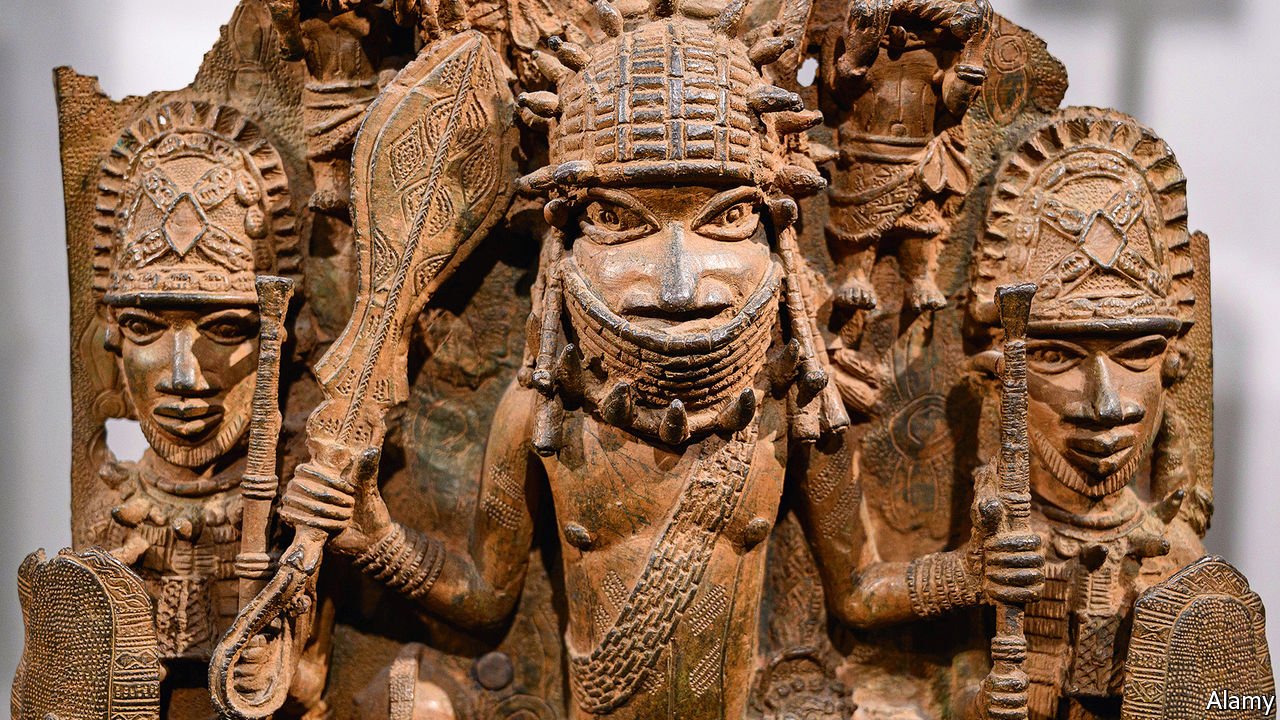
There is an Edo proverb that says,
“Ise ẹsẹ okhian rre iyeke ọkpa”
A single log cannot build a house. It is a saying about the necessity of collective effort, of many contributions coming together to raise something no single person could build alone. Nowhere in African urban history is this idea better illustrated than in the ancient city of Benin, whose earthen walls, once the largest man-made earthworks on the planet before the era of mechanised construction, encircled a sophisticated royal capital renowned across the medieval and early modern world for its urban planning, its craftsmanship, and the power of its ruling dynasty, the Oba. This article, the sixth in a ten-part series on Africa’s heritage sites, tells the story of Benin City: its rise as the capital of one of West Africa’s most formidable kingdoms, the extraordinary scale of its earthworks, its sophisticated system of governance and artistry, and the devastating 1897 British invasion that destroyed the physical city even as it inadvertently introduced the wider world to the astonishing artistic achievement Benin had produced over the preceding five centuries.
The Kingdom of Benin: Origins and Rise
The Kingdom of Benin, not to be confused with the modern Republic of Benin located further west, developed in what is today Edo State in southern Nigeria, emerging as a significant regional power from around the thirteenth century onward under the Oba dynasty, whose founding is traditionally credited to a prince named Oranmiyan, sent from the neighbouring Yoruba kingdom of Ife to establish a new royal line following a period of political instability under the previous ruling dynasty, known as the Ogiso. This dynastic connection to Ife, itself a major centre of political and artistic achievement in the wider Yoruba world, would prove artistically significant, as early Benin bronze casting is widely understood by historians to have developed from techniques and traditions introduced from Ife.
From these origins, the Kingdom of Benin expanded steadily over the following centuries, reaching its greatest territorial extent and political power during the fifteenth and sixteenth centuries under a succession of particularly capable rulers, most notably Oba Ewuare, credited with major military expansion, extensive urban development, and significant reform of the kingdom’s governmental and ceremonial institutions. By this period, Benin had grown into one of the most powerful and centralised states in West Africa, controlling extensive territories and trade networks stretching across a significant portion of what is now southern Nigeria.
The Walls of Benin: An Engineering Marvel
Perhaps the single most underappreciated aspect of Benin’s heritage, particularly relative to its far more widely known bronze artistry, is the sheer scale of the earthwork fortifications that once surrounded and structured the city. The Benin Walls, also known as the Benin Iya, or Benin moat-and-wall system, consisted of an extensive network of ditches and accompanying earthen ramparts that, according to estimates derived from aerial surveys and archaeological research conducted primarily in the twentieth century, extended across a combined length variously estimated at somewhere between eleven thousand and sixteen thousand kilometres when accounting for the full network of walls surrounding not only the capital itself but numerous satellite towns and settlements throughout the wider kingdom.
This staggering figure, if accurate, would make the Benin earthworks considerably longer in total combined length than the Great Wall of China, and among the largest single archaeological or engineering constructions undertaken anywhere in the world prior to the era of mechanised earth-moving equipment, a fact that remains strikingly underrecognised in most global accounts of pre-modern monumental construction. The walls immediately surrounding Benin City itself, generally referred to as the Inner City Wall, consisted of a substantial ditch paired with an earthen rampart reaching heights of up to seventeen metres in places, representing an enormous undertaking of coordinated labour, engineering planning, and sustained construction effort across multiple centuries of the kingdom’s development, as the walls were expanded and reinforced by successive Obas rather than built in a single continuous project.
Beyond their defensive function, protecting the capital and satellite settlements from external threat, the walls also served important administrative and symbolic purposes, physically demarcating the boundaries of different city wards and settlements, reinforcing the kingdom’s highly organised system of territorial and social administration, and visibly projecting the scale of the Oba’s authority and the kingdom’s organisational capacity to visitors and subjects alike.
Urban Planning and the Structure of the City
Contemporary accounts from European visitors who reached Benin City during the sixteenth and seventeenth centuries, at a time when the city stood at the height of its power, consistently describe a remarkably well-organised and impressive urban centre, one that frequently drew direct and favourable comparison to major European cities of the period. Dutch visitors in the early seventeenth century described broad, straight streets considerably wider than those found in most contemporary Dutch cities, along with orderly residential compounds and a scale of urban organisation that visibly impressed observers accustomed to the often haphazard street layouts of many European urban centres of the same era.
At the heart of the city stood the royal palace complex, itself an extensive walled compound containing numerous courtyards, ceremonial spaces, and residential quarters for the Oba, his wives, and the substantial administrative and ceremonial staff required to support the functioning of the royal court. The palace walls and interior spaces were extensively decorated with cast bronze plaques, an artistic tradition explored in greater depth elsewhere in this blog’s coverage of African art and craft heritage, depicting historical events, courtly ceremonies, and images of past Obas and military victories, effectively functioning as a form of visual historical record documenting the kingdom’s political and military history across successive reigns.
Beyond the palace, the city was organised into distinct wards, each associated with particular craft guilds, administrative functions, or social groups, reflecting a highly structured system of urban and social organisation in which specific quarters of the city were dedicated to particular occupational communities, including the bronze-casters’ guild, ivory carvers, and various other specialised craft traditions that together produced the artistic wealth for which the kingdom would later become internationally renowned.
Governance and the Institution of the Oba
Central to understanding Benin’s political and cultural achievement is the institution of the Oba, the kingdom’s hereditary ruler, who held both significant political authority and a deeply sacred, semi-divine status within Benin’s religious and cosmological worldview. The Oba’s authority was reinforced through an elaborate court system, an extensive network of chiefs and title-holders occupying clearly defined positions within a structured administrative hierarchy, and a rich tradition of court ceremony and ritual designed to reinforce both the practical governance of the kingdom and the spiritual legitimacy of royal authority.
This governmental structure allowed the kingdom to maintain remarkable political stability and administrative continuity across many centuries, coordinating the substantial resources and labour required for projects such as the extensive earthwork fortifications described above, while also sustaining the specialised craft economies, particularly bronze-casting and ivory carving, that produced Benin’s most celebrated artistic achievements. The Oba’s court also maintained active diplomatic and commercial relationships with Portuguese traders from the late fifteenth century onward, exchanging ivory, pepper, and other goods for European commodities including brass, which the kingdom’s celebrated bronze-casters incorporated into their metalworking traditions, and firearms, which would later feature significantly in the kingdom’s military engagements, including its ultimately unsuccessful resistance to British imperial expansion in the late nineteenth century.
The 1897 Punitive Expedition
Benin City’s long history as an independent, sophisticated West African kingdom came to a violent and abrupt end in February 1897, when a British military force, dispatched in what colonial authorities termed a “punitive expedition” following the killing of a group of British officials during a diplomatic mission that had defied local ceremonial restrictions, invaded and captured the city. The resulting assault involved substantial British firepower against Benin’s defenders and resulted in extensive destruction across the city, including a fire that consumed a significant portion of the urban area, including large sections of the royal palace complex that had stood, in various forms, for centuries.
In the aftermath of the conquest, British forces looted an enormous quantity of the kingdom’s accumulated artistic and cultural treasures, including thousands of cast bronze and brass plaques and sculptures, carved ivory objects, and other royal regalia, much of which was subsequently sold at auction in London to help offset the costs of the military expedition, dispersing what had been centuries of accumulated royal artistic patronage across museum and private collections throughout Britain, continental Europe, and North America. The Oba at the time, Ovonramwen, was captured and exiled to Calabar, where he lived out the remainder of his life, while the kingdom itself was formally absorbed into the expanding British colonial territory that would eventually become part of Nigeria.
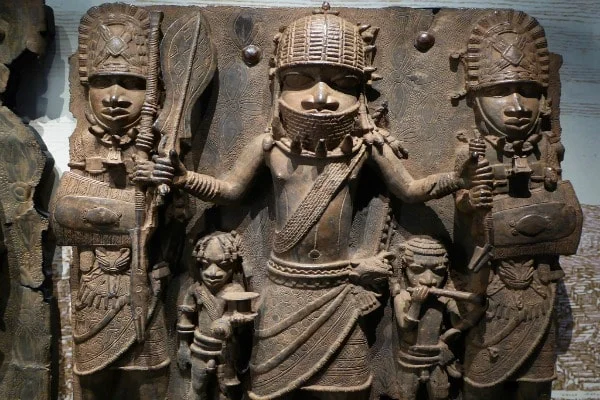 The scale and manner of this looting, now generally referred to using the artistic objects’ collective popular name as the “Benin Bronzes,” would go on to become one of the most prominent and consequential case studies in the broader modern debate over the restitution of looted African cultural heritage, a debate explored in greater depth elsewhere in this series and in this blog’s dedicated coverage of Benin’s bronze-casting tradition.
Physical Destruction and What Remains
Beyond the loss of its portable artistic treasures, the 1897 invasion inflicted severe and largely irreversible physical damage on Benin City’s built heritage. The extensive fire that swept through the city during the conquest destroyed significant portions of the royal palace and surrounding urban structures, while the subsequent decades of British colonial administration and, later, rapid urban development within modern Benin City, the present-day capital of Edo State, have resulted in the loss or significant degradation of large sections of the once-extensive earthwork wall system that had made Benin’s fortifications one of the largest engineering achievements of the pre-modern world.
Substantial sections of the walls do still survive today, both within the boundaries of modern Benin City and, in somewhat better-preserved form, in surrounding rural areas where subsequent urban development has been less intensive, though ongoing urban expansion, inadequate legal protection, and limited conservation funding continue to pose serious threats to the walls’ long-term survival, a preservation challenge that has drawn increasing attention from heritage organisations and Nigerian cultural authorities in recent years, alongside sustained advocacy from local historians and community groups seeking greater legal protection and public awareness for what remains of this extraordinary but chronically underappreciated engineering legacy.
Restitution and Renewed Recognition
In recent years, the story of Benin’s cultural heritage has entered a significant new chapter, as sustained advocacy from the modern Nigerian government, the current Benin royal court, and international heritage and human rights organisations has led to a growing wave of restitution commitments from museums and governments across Europe, with several institutions, including major German and British museums, having agreed in principle or in practice to return significant portions of their Benin Bronze collections to Nigeria in recent years.
This restitution movement has been accompanied by renewed local and international interest in Benin City’s broader heritage beyond the bronzes specifically, including growing calls for expanded archaeological research, wall conservation initiatives, and the eventual development of the site’s UNESCO World Heritage nomination, a designation the Benin earthworks have not yet received despite meeting many of the criteria applied to comparably significant fortification systems recognised elsewhere in the world, a gap that reflects the broader pattern, discussed throughout this series, of African heritage sites remaining under-documented and under-recognised on the global stage relative to their genuine historical and architectural significance.
Craft Guilds and the Economics of Artistic Production
The extraordinary artistic output for which Benin became internationally celebrated did not emerge spontaneously but was the product of a highly organised and economically supported guild system operating under direct royal patronage and control. Bronze and brass casting, the craft most closely associated with Benin in the popular imagination today, was the exclusive prerogative of a hereditary guild known as Igun Eronmwon, whose members lived together in a dedicated quarter of the city, still known today as Igun Street, continuing a craft tradition in the same physical location for well over five centuries. Membership in this guild, and the specialised knowledge of the lost-wax casting technique it employed, was passed down strictly through hereditary lines, with guild members working exclusively for the Oba, producing plaques, sculptures, and ceremonial objects that could not, under normal circumstances, be sold or commissioned by anyone outside the royal court.
This tight royal control over artistic production served multiple functions simultaneously: it ensured a reliable, high-quality supply of the ceremonial and commemorative objects central to court ritual and historical documentation, it concentrated economic and social prestige around royally sanctioned craft production, and it reinforced the broader system of centralised authority that characterised Benin’s governance more generally, in which access to specific resources, technologies, and forms of artistic production were carefully regulated as expressions of royal power rather than freely available commercial commodities. Beyond bronze-casting, other specialised guilds within the city similarly organised ivory carving, wood carving, and leatherworking, each occupying its own dedicated quarter and each contributing to the material and ceremonial culture that made Benin’s royal court one of the most artistically accomplished in the pre-colonial African world.
Benin’s Place in Regional Trade and Diplomacy
Benin’s political and economic power was reinforced by its position within extensive regional and, eventually, transatlantic trade networks. Prior to European contact, the kingdom maintained trade relationships with numerous neighbouring West African states, exchanging goods including textiles, foodstuffs, and craft products across a wide regional network that extended the kingdom’s economic influence well beyond its immediate political borders. Following the arrival of Portuguese traders in the late fifteenth century, Benin became one of the earliest and most consistent African trading partners of European merchants along the West African coast, exchanging pepper, ivory, and, in a chapter of the kingdom’s history that must be acknowledged honestly alongside its artistic and architectural achievements, enslaved people, for European goods including textiles, metal goods, and firearms.
This sustained, centuries-long engagement with European trading powers distinguished Benin from many other African kingdoms of the period, providing the court with direct access to imported brass, a material the kingdom’s guild casters incorporated extensively into their bronze-casting tradition, supplementing more limited local copper alloy sources, while also exposing the kingdom over time to the shifting and increasingly aggressive imperial ambitions of European powers that would ultimately culminate in the destructive events of 1897.
Oral Tradition and Historical Memory
Much of what is known about Benin’s earlier history, particularly the events and rulers of the centuries preceding sustained European contact, derives not from written documentation but from a rich and carefully maintained oral historical tradition, preserved and transmitted by court historians, chiefs, and specialised praise-singers whose formal responsibility included the accurate recitation of royal genealogies, military campaigns, and significant historical events across successive reigns. This oral tradition, while naturally shaped over time by the particular perspectives and political interests of the court context in which it was maintained, has been corroborated to a striking degree by archaeological findings and by the physical and artistic evidence embedded in the bronze plaques themselves, many of which appear to have functioned as a form of visual archive, commemorating specific historical events and rulers in a manner that closely parallels and reinforces the oral historical record.
This convergence between oral tradition, physical archaeology, and artistic documentation offers modern historians an unusually rich and mutually reinforcing body of evidence for reconstructing Benin’s pre-colonial history, standing in useful contrast to many other African historical contexts where oral tradition must be evaluated with comparatively less corroborating physical evidence. It also underscores a theme recurring throughout this series: that the absence of a written documentary tradition in the European sense does not equate to an absence of rigorous, carefully maintained historical memory, but rather reflects a different, equally sophisticated system for preserving and transmitting knowledge across generations.
Conclusion
The ancient city of Benin stands as a powerful reminder that African heritage extends well beyond the individually celebrated artistic masterpieces, such as the bronze plaques now slowly returning home from museums around the world, to encompass entire systems of urban planning, engineering, and governance whose scale and sophistication continue to be only partially understood and recognised outside the region itself. The earthen walls that once stretched further than the Great Wall of China, built not by a single ruler or a single generation but by centuries of accumulated collective labour, embody precisely the wisdom of the proverb that opened this article: no single log built this house. Benin City was raised, wall by wall and generation by generation, through the combined effort of an entire kingdom, and as restitution efforts and renewed archaeological attention slowly restore both its physical remains and its rightful place in the global understanding of pre-colonial African achievement, that collective legacy is, at last, beginning to receive the recognition it has always deserved.
For a city whose very name has, for over a century, called to mind primarily its scattered bronzes sitting in glass cases in foreign museums, the walls that once encircled and structured Benin’s daily life stand as an equally vital, if far less visible, part of its heritage. They remain, in their surviving fragments, the physical trace of that single log’s worth of labour multiplied across countless generations, still waiting, much like the bronzes now slowly making their way home, for the wider world to finally recognise the full scale of what was built.
