

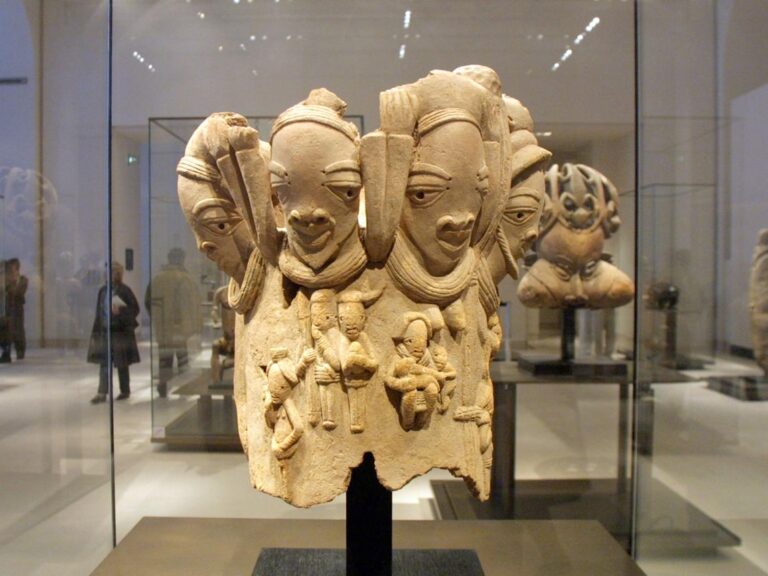
The History, Art, Kingship, and Philosophical Legacy of the Yoruba People
Among the many cultural communities that make up Africa’s extraordinary ethnic diversity, the Yoruba occupy a particularly important place in the history of West Africa. The Yoruba are predominantly associated with southwestern Nigeria, but Yoruba-speaking communities and people of Yoruba heritage can also be found in parts of Benin and Togo, while Yoruba cultural influence extends much farther through migration and the African diaspora.
Their historical significance cannot be reduced to population size alone. Yoruba civilization has produced remarkable traditions of political organization, urban development, sculpture, textile production, architecture, music, literature, philosophy, and religious thought. The history of the Yoruba is therefore not simply a story about an ethnic group—it is a story about a civilization that developed sophisticated ideas about leadership, community, morality, destiny, artistic representation, and the relationship between the visible and spiritual worlds.
Three themes are particularly important when exploring Yoruba heritage: art, kingship, and philosophy. Yoruba art has produced some of Africa’s most celebrated sculptural traditions. Yoruba kingship developed complex institutions surrounding the ọba, or ruler, and the political organization of towns and kingdoms. Yoruba philosophy developed through oral traditions, proverbs, poetry, religious literature, and systems of thought concerning human character, destiny, and responsibility. Together, these traditions provide a window into a culture that has continued to evolve while maintaining strong connections with its historical foundations.
 Who Are the Yoruba?
The Yoruba are one of the major ethnolinguistic groups of West Africa. Most Yoruba-speaking populations are concentrated in southwestern Nigeria, particularly across areas of present-day Oyo, Osun, Ogun, Ondo, Ekiti, Lagos, and parts of Kwara and Kogi states. Yoruba communities also exist across the border in neighboring Benin and Togo. The Yoruba language belongs to the Niger-Congo language family and contains several regional varieties.
Although Yoruba people share a broad cultural identity, Yoruba society has never been completely uniform. Different towns and kingdoms developed their own histories, political traditions, dialects, artistic styles, and local customs. This diversity is important because the word “Yoruba” today can sometimes give the impression of a single centralized historical kingdom.
Historically, Yoruba-speaking societies consisted of numerous political centers and communities. Some were powerful kingdoms, while others were smaller towns or settlements connected through cultural, economic, and political relationships.
The Historical Homeland of the Yoruba
Yoruba historical traditions associate the origins of their civilization strongly with the ancient city of Ile-Ife, which occupies a special position in Yoruba history and cultural memory. Ile-Ife, located in present-day Osun State in Nigeria, became one of the most important centers of Yoruba civilization.
Archaeological discoveries demonstrate that Ife was a major urban and artistic center centuries ago. Its extraordinary metal and terracotta sculptures are particularly famous. Yoruba traditions also regard Ife as a sacred and foundational center. The city’s importance therefore exists at both historical and cultural levels, representing a place where political traditions, artistic production, religious ideas, and stories of origins became deeply connected.
Ile-Ife and the Origins of Yoruba Civilization
Yoruba oral traditions contain numerous accounts concerning the origins of the Yoruba people and the establishment of human society. One of the best-known traditions involves Oduduwa, who is regarded in many Yoruba traditions as an ancestral founder associated with the establishment of the Ife dynasty.
Different Yoruba communities preserve different versions of these traditions, so they should not be treated as a single historical account in the modern sense. Instead, they form part of a wider body of cultural memory. These traditions help explain why Ife became such an important symbolic center within Yoruba identity.
Archaeology and the Ancient City of Ife
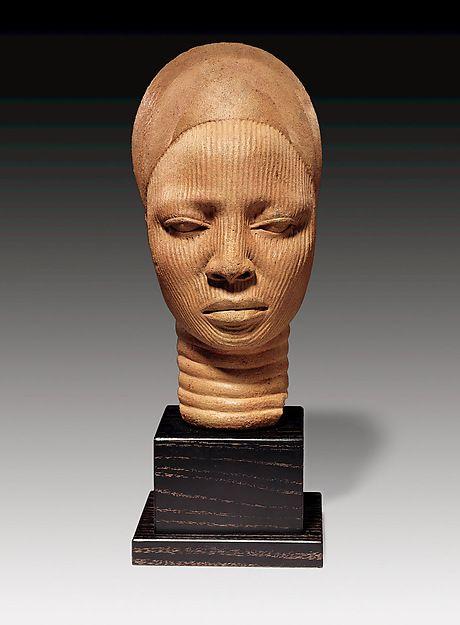
Archaeology provides another way of understanding Ife. Excavations have revealed evidence of substantial urban development and sophisticated artistic production. The famous Ife heads and other sculptures demonstrate extraordinary technical skill. Many of these works are associated with the period between approximately the twelfth and fifteenth centuries, although the development of Ife civilization extends across a much longer period.
The naturalistic quality of some Ife sculptures attracted considerable international attention when they became known to European audiences in the early twentieth century. Their sophistication directly challenged racist colonial assumptions about African artistic and technological capabilities.
Yoruba Art and the Human Form
One of the defining characteristics of classical Yoruba art is the importance placed on the human figure. Ife artists produced remarkably detailed representations of human faces and bodies. The sculptures are not merely beautiful objects; they can provide clues about ideals of appearance, status, and identity.
Some works may have represented rulers or important individuals, while others had religious or ceremonial significance. The exact purpose of individual sculptures can be difficult to determine, particularly when their original contexts have been lost. Nevertheless, their technical quality remains remarkable.
The Ife Heads
The famous Ife heads are among the best-known works of African art. Produced using materials including terracotta and copper-alloy technology, some demonstrate an extraordinary attention to facial detail.
Their realistic proportions and carefully rendered features distinguish them from many stereotypical European expectations of what “traditional African art” was supposed to look like. The works helped force international recognition of the sophistication of precolonial West African artistic traditions, and they remain vital symbols of Yoruba cultural heritage.
Yoruba Art Beyond Ife
Yoruba artistic traditions extend far beyond Ife. Wood carving has historically been particularly important, with artists creating masks, figures, architectural decorations, ritual objects, and ceremonial sculptures. Beadwork, textiles, metalwork, pottery, and body adornment also developed distinctive forms.
Art was often connected to social and spiritual life rather than existing simply for decoration. An object could have political significance, religious importance, historical meaning, or ceremonial function.
Yoruba Masks and Performance
Masks occupy an important place within several Yoruba ceremonial traditions. One of the best-known examples is the Egungun tradition, associated with ancestral remembrance. Egungun masquerades can involve elaborate costumes, movement, music, and performance.
The masked performer becomes part of a ceremonial representation of ancestral presence. The specific meaning and practice of Egungun vary between communities. Nevertheless, the tradition demonstrates an important feature of Yoruba culture: art, religion, music, and community life can exist within the exact same cultural event.
Art as a Language
Yoruba artistic traditions often communicate ideas that go beyond visual beauty:
- Crowns: Communicate political authority and ancestral legacy.
- Bead Patterns: Indicate social status, spiritual connection, and lineage.
- Carved Figures: Represent complex spiritual concepts and moral principles.
- Masks: Connect performance directly with living ancestral memory.
- Textiles: Communicate cultural identity and community standing.
Art functions as a living language, communicating complex ideas about the community and its understanding of the world.
Yoruba Beadwork and Royal Regalia
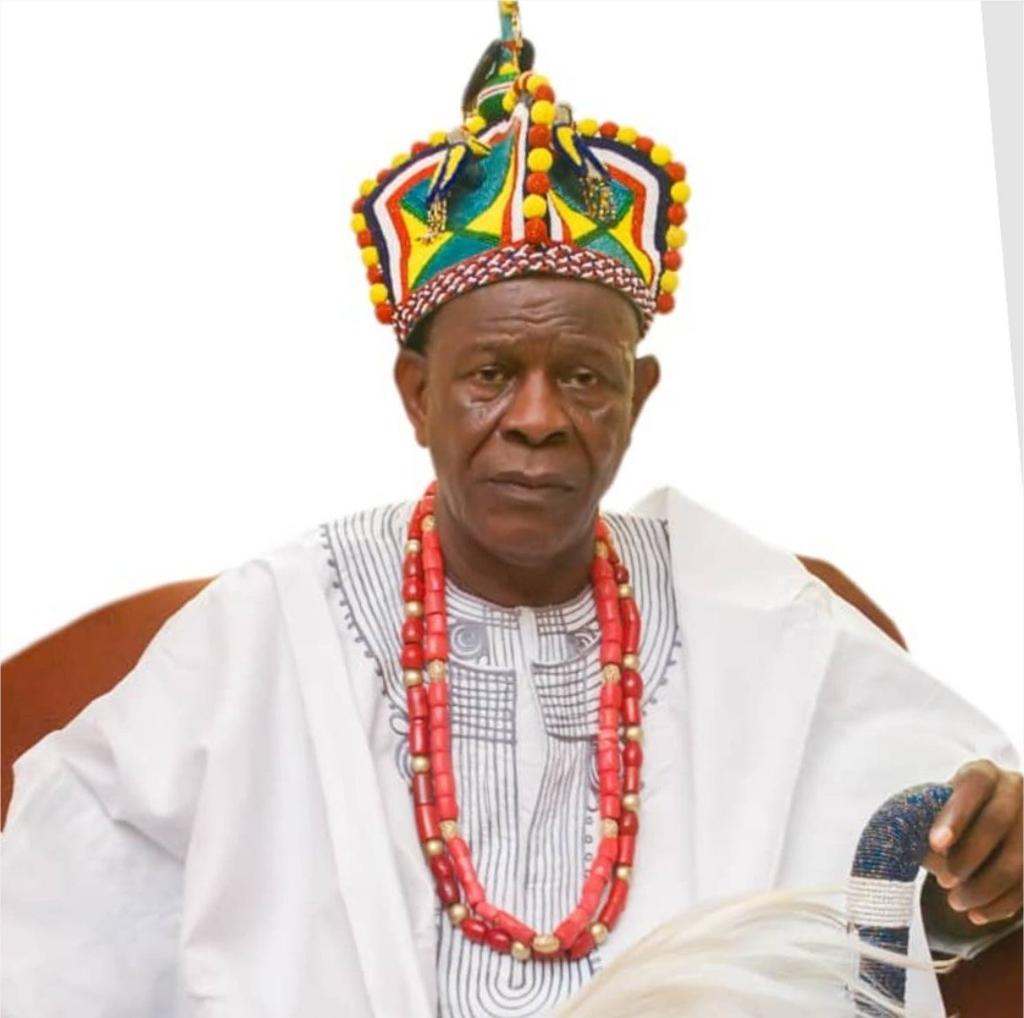
Beads are especially important within Yoruba royal traditions. Royal crowns, known as adé, can be highly elaborate. The veil of beads associated with some Yoruba crowns has profound symbolic significance.
The ruler’s face becomes partially hidden behind the beaded veil, emphasizing the transformation of the individual ruler into a representation of divine royal authority. The crown is therefore not simply a piece of clothing—it is a political, spiritual, and cultural symbol.
 The Meaning of the Ọba
The Yoruba word ọba generally refers to a king or ruler. Yoruba kingdoms traditionally had rulers who occupied important political, ceremonial, and cultural positions. However, Yoruba kingship was not identical everywhere.
Different kingdoms developed different political arrangements, and the authority of an ọba could vary considerably depending on the kingdom and historical period. This internal diversity prevents us from treating Yoruba kingship as a single standardized institution.
The Oyo Empire
One of the most influential Yoruba political systems was the Oyo Empire. Oyo became a major regional power in West Africa, particularly during the period before the nineteenth century. Its influence extended across significant parts of present-day southwestern Nigeria and neighboring regions.
Oyo’s strength was connected to political organization, agriculture, trade, cavalry, and military power. Its historical importance demonstrates that Yoruba political institutions could operate on a large regional scale.
The Alaafin of Oyo
The ruler of Oyo was known as the Alaafin. The Alaafin was an important political authority, but the political system contained institutions that placed clear limits on royal power.
One important institution was the Oyo Mesi, a council of senior political figures. This arrangement demonstrates that Yoruba political thought did not equate kingship with unrestricted personal authority. The relationship between the ruler and political institutions was complex and balanced.
Checks on Royal Power
The existence of councils and political offices within Yoruba kingdoms demonstrates that governance involved more than a king issuing commands. Political legitimacy depended heavily on tradition, consultation, and institutional relationships:
- The Oyo Mesi: Served as a prime council of state in Oyo to balance the monarch’s decisions.
- Town Councils: Local elders and chiefs checked executive authority in smaller kingdoms.
- Chieftaincy Houses: Distributed administrative responsibility across key lineages.
These arrangements illustrate the sophistication and variety of Yoruba political organization.
Kingship as Responsibility
Yoruba kingship was traditionally associated with responsibility toward the community. A ruler was expected to protect the kingdom, maintain order, and preserve important traditions.
Royal ceremonies reinforced the relationship between the ruler, the community, and the spiritual world. This concept of leadership is connected to broader Yoruba ideas about ìwà, or character. A person’s quality is not determined simply by their position—how they behave matters immensely.
The Importance of Ìwà
The Yoruba concept of ìwà can broadly be translated as character, being, or conduct, although no single English word captures all of its nuances. Character is foundational within Yoruba philosophical thought.
A person can possess wealth, intelligence, or high social status, but poor character will undermine these qualities. This idea appears repeatedly in Yoruba proverbs and moral teachings, illustrating how philosophy is embedded within everyday language.
Yoruba Proverbs as Philosophy
Yoruba philosophy does not exist only in written academic texts; it is deeply embedded in proverbs (òwe), stories, poetry, songs, and everyday conversations:
| Context | Application of Philosophical Proverbs |
| Elderly Guidance | Used by elders to advise younger generations on moral dilemmas |
| Parenting | Applied by parents to teach children character (ìwà) and discipline |
| Political Discourse | Employed by leaders to communicate wisdom and resolve community disputes |
| Storytelling | Integrated into folklore to frame moral lessons and cultural values |
Through this daily usage, philosophy becomes a living part of ordinary life.
Oral Tradition and Intellectual Heritage
For generations, Yoruba intellectual traditions were preserved through oral transmission. Specialists memorized long bodies of poetry, religious practitioners preserved ritual knowledge, praise singers remembered genealogies and historical traditions, and elders transmitted proverbs and community histories.
This does not mean Yoruba intellectual traditions lacked sophisticated systems of knowledge. It simply means much of that knowledge was preserved through indigenous forms rather than the European academic institutions that later became dominant.
Ifá and Yoruba Knowledge
One of the most significant Yoruba intellectual and religious traditions is Ifá. Ifá is associated with a complex system of divination and an extensive corpus of oral verses known as Odù Ifá.
These verses contain stories, proverbs, philosophical ideas, ethical teachings, and reflections on human behavior. The Ifá tradition has been transmitted through generations of trained specialists known as babaláwo (and ìyánífá). Its importance extends far beyond divination—it represents a highly sophisticated system of preserving and transmitting encyclopedic knowledge.
Orunmila and Wisdom
Within Yoruba religious tradition, Orunmila is strongly associated with wisdom, intellect, and the Ifá corpus. Stories surrounding Orunmila contribute directly to Yoruba understandings of knowledge, destiny, and human responsibility.
Different local traditions describe these relationships in unique ways, but what remains consistent is the central importance of wisdom. Knowledge is not merely valuable for its own sake—it should help people navigate life responsibly.
Destiny and Human Choice
Yoruba philosophical traditions contain complex ideas about destiny. The concept of orí, often translated as “head,” has spiritual and philosophical meanings that go far beyond the physical head.
Orí is associated with personal destiny and an individual’s spiritual identity. However, Yoruba thought also recognizes human effort and moral responsibility. The relationship between destiny and personal action is therefore far more nuanced than the idea that everything is strictly predetermined.
Character and Destiny
The relationship between orí (destiny) and ìwà (character) is particularly significant. A person’s destiny does not eliminate the importance of character—a person must still conduct themselves properly to fulfill their potential.
Wisdom involves understanding one’s circumstances while making responsible choices. This provides an important philosophical lesson: identity is connected not only to what a person possesses or inherits, but also to how that person lives.
Yoruba Religion and Philosophy
Yoruba traditional religion contains a large network of concepts involving Olódùmarè (the Supreme Being), òrìṣà (deities), ancestors, and the ongoing relationship between human beings and the spiritual world.
The òrìṣà are associated with different divine powers, natural elements, and aspects of human existence. Because the religious system developed alongside political and artistic traditions, Yoruba religion cannot be separated completely from Yoruba philosophy and culture.
Olódùmarè and the Supreme Being
In Yoruba religious thought, Olódùmarè is widely understood as the Supreme Being, the ultimate source of life and creation. Different interpretations exist concerning the relationship between Olódùmarè, the òrìṣà, and humanity.
The òrìṣà occupy important roles as intermediaries and custodians of natural and social forces. This worldview contributed directly to artistic traditions, annual festivals, naming conventions, oral literature, and philosophical ideas.
The Òrìṣà and Cultural Expression
The òrìṣà are among the most recognizable elements of Yoruba religious heritage globally. Traditions associated with prominent figures have deeply influenced regional practice and art:
- Ògún: Associated with iron, metalwork, war, and technological innovation.
- Ṣàngó: Associated with thunder, lightning, justice, and royal power.
- Yemoja: Associated with motherly care, waters, and fertility.
- Ọ̀ṣun: Associated with rivers, sweet waters, beauty, wealth, and diplomacy.
The cultural importance of the òrìṣà extends far beyond religion, continually shaping literature, music, theater, and contemporary visual art.
Ṣàngó and Royal Power
Ṣàngó is particularly significant in Yoruba history and religious tradition. Historical traditions connect Ṣàngó directly with the Oyo royal system as an early Alaafin, while religious traditions understand him as an òrìṣà associated with thunder and lightning.
The combination of historical and spiritual traditions surrounding Ṣàngó demonstrates how Yoruba culture preserves different layers of historical and spiritual meaning around the same figure.
Ọ̀ṣun and the Osun-Osogbo Tradition
Ọ̀ṣun is associated with rivers, fertility, beauty, and healing. The Osun-Osogbo Sacred Grove in Osun State remains one of the most important surviving sacred landscapes associated with Yoruba heritage.
The grove demonstrates how religion, art, environmental conservation, and community identity exist together. Its monumental sculptures and sacred shrines provide crucial living evidence of continuing Yoruba cultural traditions.
Yoruba Architecture and Urban Life
Yoruba civilization was historically urban as well as rural. Cities such as Ife, Oyo, Ibadan, and numerous other settlements became major centers of political, commercial, and cultural life at different points in history.
Traditional Yoruba urban organization often included extended family compounds, bustling markets, royal palaces (àfin), shrines, and public gathering spaces. The city was not simply a collection of houses—it was a dynamic social and political environment.
The Compound System
Traditional Yoruba residential compounds (agbo ilé) accommodated large extended families. The compound served as a center for daily residence, economic activity, family gatherings, and cultural transmission.
Older generations lived alongside younger relatives, allowing children to grow up surrounded by grandparents, aunts, uncles, and cousins. This spatial arrangement reinforced the central importance of extended family relationships and communal accountability.
Markets and Economic Life
Markets have historically been essential to Yoruba communities, with women playing exceptionally prominent roles in regional and local commerce.
Markets provided places where goods, information, and ideas circulated continuously. Traders connected different towns and regions, meaning economic activity contributed directly to cultural exchange. The commercial vitality of Yoruba societies helps explain the historical growth of major urban centers.
Women in Yoruba Society
Yoruba women have historically occupied critical roles across economic, social, political, and spiritual life:
- Economic Power: Dominated trade networks and organized powerful market women associations (Ìyálọ́ja).
- Spiritual Leadership: Served as priestesses, diviners, and custodians of sacred traditions.
- Political Influence: Held key royal and chieftaincy titles, influencing community decision-making.
The historical picture is considerably more complex than a simple division in which men controlled every aspect of public life—Yoruba women held real institutional authority.
Yoruba Festivals
Festivals remain among the strongest expressions of Yoruba heritage. Different communities celebrate events associated with specific deities, historical events, royal lineages, and town identities.
Festivals feature music, drumming, dancing, masquerades, elaborate processions, traditional attire, feasts, and religious ceremonies. While some festivals remain deeply sacred, others increasingly attract international tourists and cultural audiences.
Music and Drumming
Music is central to Yoruba cultural expression. Traditional drums communicate complex rhythms for ceremonies, rituals, and performances.
The talking drum (gángan) is particularly famous because experienced performers can manipulate pitch and tension to imitate the tonal contours of the Yoruba language. Music becomes more than entertainment—it communicates direct messages, recites praise poetry, and accompanies pivotal ceremonies.
Yoruba Textiles
Yoruba textile traditions are world-renowned for their technical creativity. Adire, a resist-dyed textile tradition associated particularly with southwestern Nigeria, uses indigo dyes and intricate stencil or wax patterns to produce distinctive visual effects.
Today, Adire has expanded beyond traditional settings to become highly influential in contemporary Nigerian and global fashion. This serves as a primary example of tradition being continuously transformed rather than remaining static.
Yoruba Heritage in the Diaspora
Yoruba culture traveled far beyond West Africa through historical migration and, tragically, through the transatlantic slave trade. Enslaved Yoruba people were taken in large numbers to the Americas and the Caribbean.
Despite the unspeakable violence of enslavement, core elements of Yoruba language, spiritual concepts, names, music, and cultural practices survived. They contributed directly to major diaspora religious traditions:
- Candomblé: Developed in Brazil, preserving Yoruba deities, chants, and rituals.
- Santería (Lucumí): Developed in Cuba, synthesizing Yoruba òrìṣà traditions with local influences.
- Orisha Movement: Practiced across Trinidad and Tobago and parts of the wider Caribbean.
These traditions developed in new historical environments and represent resilient adaptations rather than exact copies, testifying to the enduring strength of Yoruba heritage.
Yoruba Culture in the Modern World
Yoruba culture is not confined to history books or museums—it remains dynamic and visible across modern society:
- Cinema: A vibrant Yoruba-language film industry produces popular movies for global audiences.
- Music: Contemporary Afrobeats and world music artists integrate Yoruba rhythms, language, and instruments.
- Fashion: Designers incorporate Adire and traditional beadwork into modern haute couture.
- Literature: Authors incorporate Yoruba mythology, folklore, and philosophy into award-winning novels.
Traditional rulers continue to perform essential cultural roles, demonstrating that the heritage remains actively alive.
Yoruba Language in the Digital Age
Technology is creating new opportunities for Yoruba language preservation and expansion. Yoruba-language content now appears across social media, film, streaming platforms, educational apps, and digital archives.
Young people communicate in Yoruba through modern digital tools while participating in global tech culture. This creates an environment where indigenous language and modern technology coexist and reinforce each other.
The Yoruba Diaspora Today
Yoruba communities and people of Yoruba heritage are now settled throughout the world. Migration has established vibrant populations across Europe, North America, and other African nations.
Diaspora organizations host annual cultural festivals, language classes, religious gatherings, and heritage preservation projects. Digital tools make it easier than ever for diaspora communities to maintain strong cultural connections with their homeland in West Africa.
Protecting Yoruba Heritage
Preserving Yoruba heritage requires more than protecting physical monuments. It involves safeguarding living languages, oral traditions, historical knowledge, traditional crafts, music, sacred sites, and community institutions.
While museums and formal archives fulfill important functions, families and communities are equally vital. A language spoken daily at home is just as crucial to cultural survival as an artifact displayed behind glass.
The Importance of Ethical Preservation
Cultural preservation must respect the communities whose heritage is being documented. Sacred objects and restricted religious knowledge should not automatically be treated as ordinary museum material.
Certain ritual practices and knowledge systems belong to specific lineages or initiated practitioners. Researchers, museums, and cultural institutions have a fundamental responsibility to approach Yoruba heritage collaboratively, ethically, and respectfully.
A Civilization Still Evolving
Perhaps the most important lesson from Yoruba history is that culture is dynamic. The Yoruba have navigated major political transformations, colonialism, Christianity, Islam, globalization, urbanization, and international migration.
Yet Yoruba cultural identity continuously adapts. Traditional kingship survives in modified administrative forms, Yoruba art inspires modern movements, Yoruba philosophy informs academic scholarship, and the language remains widely spoken. History has brought change, but change has not erased the culture.
Conclusion: A Heritage of Art, Authority, and Thought
The Yoruba represent one of West Africa’s most influential cultural traditions. Their history demonstrates that African civilization developed complex systems long before European colonial intervention.
Cities like Ile-Ife became major centers of artistic production, while empires like Oyo demonstrated a capacity for large-scale political governance. Yoruba kingship balanced executive power with institutional councils, artists created masterpieces that transformed global perspectives on West African art, and philosophers preserved deep ethical systems concerning destiny, character, and human choice through Ifá and oral literature.
These traditions continue to shape contemporary Nigeria and the global diaspora. The Yoruba language remains vibrant, Yoruba music and film command global audiences, and Yoruba philosophy continues to offer profound insights into what it means to live a meaningful life. The story of the Yoruba is not merely the story of an ancient culture—it is the living narrative of an enduring civilization.
