

“A tree that forgets its roots will not stand long against the wind.”
Across the nine articles that came before this one, a single thread has run through every trickster tale, every origin myth, every legend of a warrior king or spirit of the forest: these stories were never meant to sit still. They were built for movement — passed from mouth to mouth, adjusted by every storyteller who told them, carried across borders and oceans, reshaped by each new generation of listeners who needed them to answer new questions. That restless, adaptive quality is precisely what has allowed African folklore to survive centuries of disruption that might have silenced a more brittle tradition. But survival has never been automatic, and it is not automatic now. Urbanization, formal schooling systems that rarely make room for oral tradition, the global reach of foreign media, and the sheer pace of technological change all place genuine pressure on a tradition that depended, for most of its history, on grandmothers and evening fires. The question this final article in the series asks is not whether African folklore has value — that has been established many times over in the pages before this one — but how, concretely, it is being kept alive today, and what stands in the way of that effort.
What Is Actually at Risk
It is worth being precise about what exactly is threatened when people speak of African folklore being “lost,” because the picture is more specific, and in some ways more hopeful, than a simple story of disappearance. The core narratives themselves — the trickster tales, the creation myths, the hero legends — are, for the most part, reasonably well documented at this point, thanks to a century of transcription efforts, however imperfect, along with the more recent wave of African-led documentation, publishing, and digital archiving described in earlier articles in this series. The plots are not, on the whole, in danger of vanishing entirely from the historical record.
What is genuinely at risk is something harder to preserve: the living context in which these stories were originally told, and the specific languages, performance techniques, and community relationships through which they were transmitted. A transcribed tortoise story, sitting in a printed anthology or a digital archive, preserves the plot but not the storyteller’s particular voice, the specific songs woven into a specific community’s version of the tale, or the call-and-response rhythm that made the audience active participants rather than passive readers. Every African language that falls out of daily use, and there are languages across the continent currently spoken by shrinking numbers of elderly speakers, takes with it not just vocabulary but the specific idioms, wordplay, and proverbs embedded in that language’s particular folkloric tradition, much of which resists clean translation into other tongues. And every generation that grows up without regular exposure to intergenerational storytelling loses not just a set of stories but a set of skills — the ability to tell a story well, to hold an audience, to use narrative as a tool for teaching and processing experience — that formal schooling, however valuable in other respects, was never designed to replace.
This more precise picture of what is at risk points toward a more precise picture of what preservation actually requires. It is not simply a matter of writing the stories down once and filing them away; it is a matter of keeping the practice of telling, adapting, and actively using these stories alive across generations, in whatever forms each new generation finds workable.
The School as Battleground and Opportunity
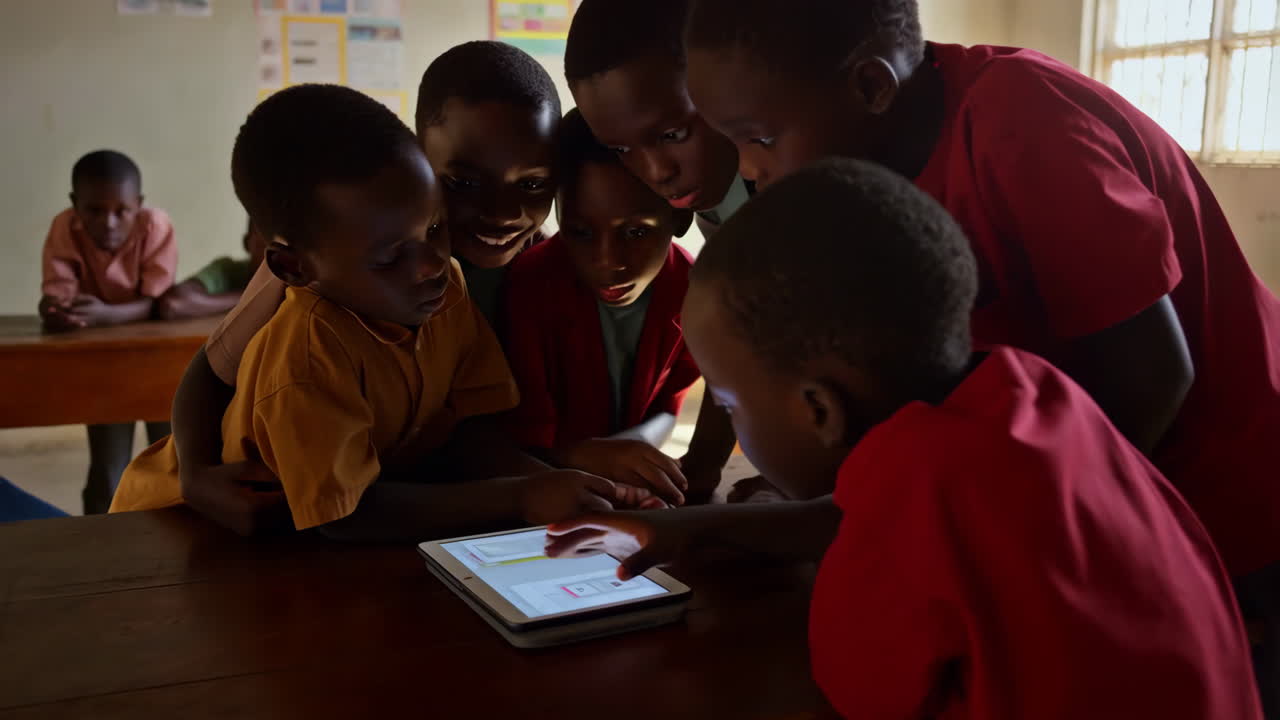
Formal education systems across much of Africa were, for much of the colonial and immediate post-colonial period, actively hostile to oral tradition, built on curricula imported wholesale from European educational models that treated indigenous storytelling as, at best, irrelevant to real learning and, at worst, an obstacle to be overcome on the path toward a more “modern” education. Generations of African children passed through schools that taught them a great deal about European history and literature while teaching them comparatively little, if anything, about the storytelling traditions their own grandparents carried.
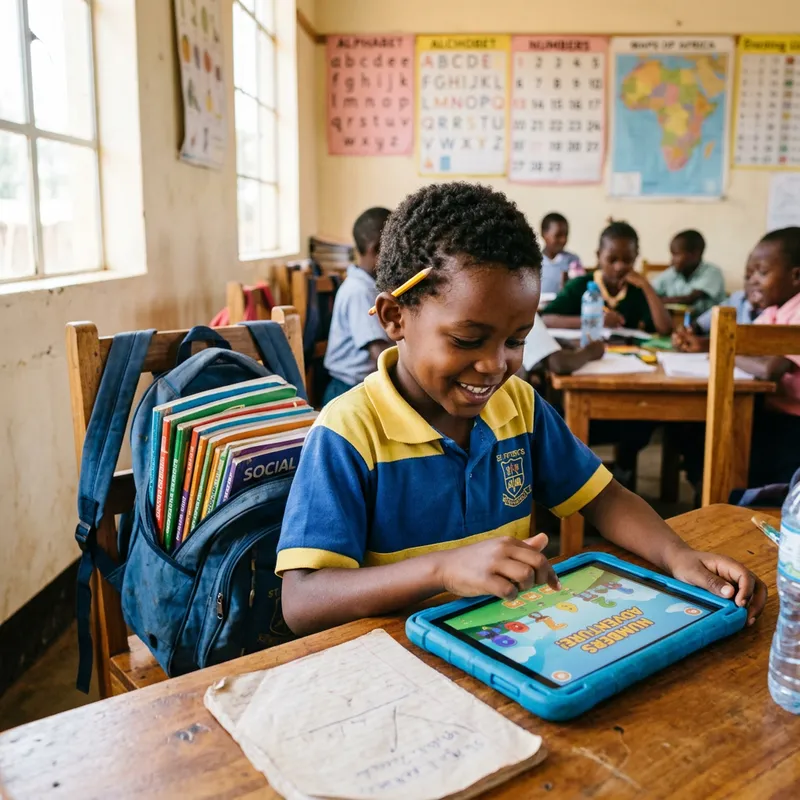
This picture has shifted meaningfully in recent decades, as education ministries, curriculum developers, and individual teachers across the continent have increasingly pushed to incorporate indigenous oral literature into formal schooling, recognizing folklore not as a quaint distraction from serious education but as a legitimate literary and philosophical tradition deserving the same curricular seriousness long extended to European literary canons. Language and literature curricula in several African countries now explicitly include the study of local folktales, proverbs, and oral poetry, sometimes taught in the local language itself as a way of simultaneously reinforcing indigenous language skills and cultural literacy.
The opportunity here is significant, because schools reach children systematically, at scale, in a way that depends less on the accident of whether any individual child happens to have a grandmother nearby with time and inclination to tell stories in the evening. A curriculum that formally teaches folklore reaches every child in the classroom, including those growing up in urban environments increasingly disconnected from the rural, extended-family contexts in which oral storytelling traditionally thrived. But the challenge is equally real: a folktale taught as an item on a curriculum, to be read silently from a textbook and tested on afterward, risks losing precisely the performative, participatory qualities that made the original oral tradition so effective as both entertainment and moral instruction. The most thoughtful educational approaches have tried to preserve something of the original performance context even within formal schooling — inviting community elders into classrooms as guest storytellers, encouraging students to perform tales aloud rather than simply read them silently, and treating the proverb and the call-and-response not as historical curiosities but as living rhetorical techniques still worth practicing.
Digital Archives and the New Griots
Where formal education offers systematic reach, digital technology offers something oral tradition never previously had: near-permanent, searchable, endlessly reproducible storage, combined with distribution channels that can carry a story from a single narrator to audiences scattered across the entire globe in an instant. Cultural organizations, universities, and independent digital archivists across Africa and its diaspora have spent recent years building online repositories of transcribed and audio-recorded folktales, often working directly with elderly storytellers in specific communities to capture not just the plot of a tale but the actual voice, cadence, and performance style of a particular teller before that knowledge is lost with its keeper.
This digital preservation work carries obvious value, but it has also given rise to something more dynamic than simple archiving: a new generation of digital storytellers using podcasts, YouTube channels, and social media platforms to actively retell, rather than merely record, African folktales for contemporary audiences. These creators function, in a real sense, as a digital-era continuation of the griot tradition — professional oral historians and storytellers who, across West Africa in particular, have long held formal social roles as keepers and performers of community history and legend. Where a traditional griot might have performed for a physical audience gathered in one place, a contemporary digital griot can reach listeners across an entire diaspora scattered over several continents, often specifically targeting young people who may have limited access to elder storytellers in their immediate family or community but who carry smartphones capable of streaming a well-produced retelling recorded thousands of miles away.
This digital continuation has proven particularly significant for diaspora communities, whose members frequently lack the direct, ongoing contact with grandparents and extended family in Africa that would traditionally have carried folklore forward through direct oral transmission. A young person of African descent growing up in London, Toronto, or Atlanta, disconnected by distance and generations from the specific village or community their ancestors came from, can nonetheless access a rich and growing body of digitally preserved and actively retold folklore, allowing a form of cultural reconnection that would have been far more difficult to achieve even a generation ago.
Festivals, Performance, and the Persistence of Live Tradition
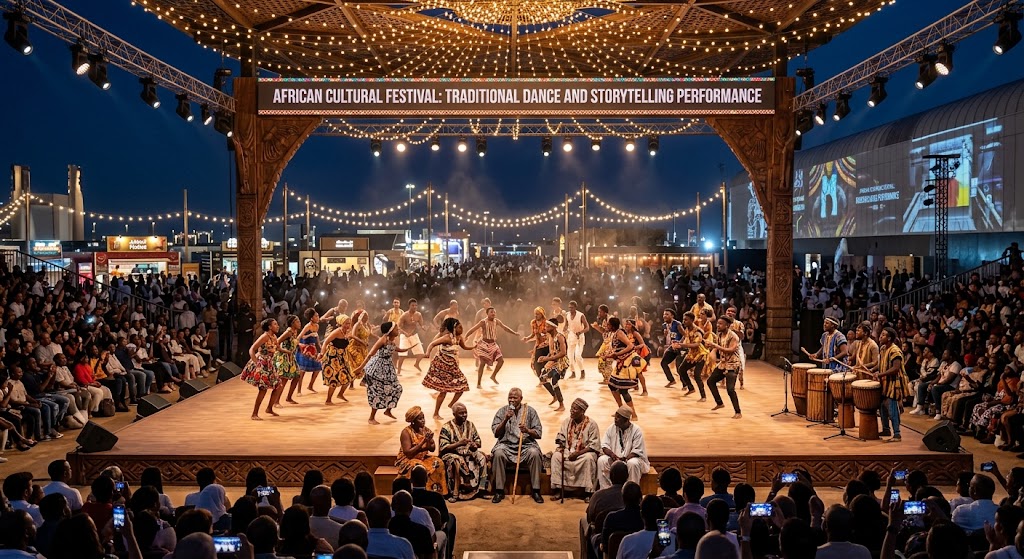
Even as digital and educational channels expand, live performance has not disappeared, and in some respects has been deliberately revived and celebrated through cultural festivals specifically organized to showcase traditional storytelling, dance, and oral performance to contemporary audiences. Storytelling festivals held across various African countries and diaspora communities bring together professional and community storytellers, often spanning multiple generations, to perform traditional tales for audiences that include both elders seeking to reconnect with familiar material and younger attendees, sometimes encountering certain tales in a full, embodied oral performance for the first time in their lives.
These festivals matter for reasons beyond simple entertainment or cultural tourism. They provide practicing storytellers, particularly older tradition-bearers whose skills might otherwise go unused and unrecognized in an increasingly urbanized, screen-oriented society, with a genuine audience and a renewed sense of the social value of their craft. They also create direct, face-to-face contact between elder storytellers and younger audience members, sometimes leading to informal mentorship relationships in which a young person with genuine interest in the oral tradition can learn performance techniques directly from an experienced practitioner — precisely the kind of intergenerational, embodied transmission that no archive or textbook, however well designed, can fully replicate.
Traditional festivals and ceremonies that have always incorporated storytelling, dance, and oral history as integral components, rather than as separate cultural performances, continue as well, particularly in rural communities where these practices remain more tightly woven into the fabric of community life. These occasions, whether harvest celebrations, coming-of-age ceremonies, or commemorations of significant community history, continue to function as they always have: moments when a community deliberately gathers to reaffirm shared identity and values through story, dance, and collective memory, refreshed and renewed with each occasion rather than treated as a fixed, unchanging relic of the past.
The Family Remains the First Classroom
For all the value of schools, digital archives, and public festivals, virtually every serious effort to sustain African folklore eventually returns to the same fundamental unit: the family, and specifically the relationship between grandparents and grandchildren, parents and children, in which stories were originally, and in countless households still are, transmitted through direct, intimate, repeated oral contact. No institutional effort, however well funded or thoughtfully designed, fully replaces a grandmother telling her own grandchild the same tortoise story she once heard from her own grandmother, adjusted in small, personal ways that make it theirs alone, delivered with the specific warmth, humor, and attention that only a close family relationship can provide.
Recognizing this, many contemporary preservation efforts have deliberately focused on supporting and encouraging family-level transmission rather than attempting to replace it. Community programs that bring elders and children together specifically for storytelling sessions, published collections explicitly designed to be read aloud by parents and grandparents to young children rather than consumed silently, and public awareness campaigns encouraging families to maintain evening storytelling traditions even amid busy, technology-saturated modern schedules all represent attempts to strengthen this foundational, family-level channel rather than substitute for it with institutional alternatives.
This emphasis reflects a broader, important truth about oral tradition that runs through every article in this series: these stories were never merely entertainment or historical curiosity. They were, and remain, a vehicle for relationship — a way for an older generation to pass not just plot and moral lesson but attention, warmth, and a sense of belonging to a specific family and community lineage down to a younger generation. Any preservation effort that captures the plots of African folktales while losing this relational, intergenerational dimension has preserved only half of what made the tradition valuable in the first place.
The Diaspora’s Particular Stake
For African diaspora communities scattered across the Americas, Europe, and elsewhere by the historical forces of slavery and more recent migration, the project of keeping African folklore alive carries a particular urgency and a particular set of challenges. Many diaspora families are separated by generations and thousands of miles from the specific communities and storytelling traditions their ancestors carried, and the direct chain of oral transmission that sustained these tales for centuries was, for many such families, violently and deliberately broken by the conditions of enslavement and forced displacement.
And yet, as earlier articles in this series have explored, this chain was never entirely severed. Anansi survived the Middle Passage in the memories of enslaved Africans who had nothing else to carry with them, and trickster tales, proverbs, and fragments of larger mythological traditions persisted, adapted, and took new root in Caribbean, North American, and South American soil, evolving into distinctly diaspora traditions that remain, nonetheless, recognizably connected to their African origins. Contemporary diaspora communities have increasingly turned deliberate attention toward recovering and strengthening this connection, through cultural organizations specifically dedicated to African and African diaspora storytelling, educational programs designed to reconnect diaspora children with ancestral folklore, and a growing body of diaspora-authored literature and media explicitly engaging with African mythological material as a means of cultural reclamation rather than mere historical interest.
This diaspora dimension of the preservation effort matters not only for the communities directly involved but for the broader health of the tradition as a whole, because it represents proof, hard-won across centuries of extraordinary adversity, that African folklore’s essential resilience — its capacity to adapt, survive disruption, and take root in new soil while retaining its core character — remains genuinely intact, even under conditions far more severe than anything the tradition faces today.
What Continuity Actually Requires
Drawing together the threads from across this entire series — the evening fires and grandmothers of the earliest articles, the tricksters and animal casts of the middle sections, the migration into literature, film, and digital media explored most recently — a consistent picture emerges of what genuine continuity for African folklore actually requires, as opposed to what merely looks like preservation on the surface.
It requires more than archiving, though archiving matters enormously as a safety net against outright loss. It requires more than curriculum inclusion, though formal education provides essential systematic reach. It requires more than festivals and public celebration, though these occasions provide vital visibility and renewed social value for practicing storytellers. What genuine continuity requires, beneath and beyond all of these individual efforts, is the ongoing, living practice of actually telling these stories to actual children, in whatever setting and through whatever medium proves workable for a given family or community — around a fire where that remains possible, through a picture book at bedtime, via a podcast on a car ride, in a classroom with a visiting elder, at a festival stage before a gathered crowd. The specific delivery mechanism has changed dramatically across the tradition’s long history and will surely continue changing; what must not change, if the tradition is to remain genuinely alive rather than merely documented, is the ongoing act of one generation choosing to hand these stories to the next, and that next generation choosing, in turn, to receive them, live inside them for a while, and eventually pass them onward again.
That is, in the end, precisely what every tale explored across this entire ten-part series was always secretly about, beneath its surface plot of tricksters and heroes, spirits and origins, kings and warriors: the simple, essential, endlessly renewable act of a community teaching its children who they are, where they came from, and who they might yet become. As long as that act continues, in whatever form each new generation finds to carry it forward, African folklore will remain not a preserved relic of the past but exactly what it has always been — a living, breathing inheritance, still being written, one telling at a time.
“However far the river has traveled, it still carries the taste of its spring.”
