

“A child who is not embraced by the village will burn it down to feel its warmth.”
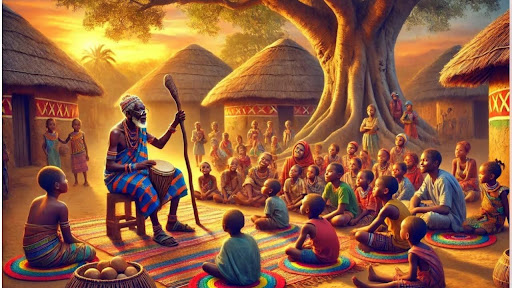
Long before the first classroom was built on African soil, before chalk touched slate or pencil touched paper, children were already being taught. Their teachers were grandmothers with cracked, gentle hands and voices that could turn into a hyena’s cackle or a river’s murmur without warning. Their classrooms were courtyards lit by dying cooking fires, the undersides of baobab trees, and the wide verandas where the day’s work had finally been laid down. Their textbooks were stories — invented, borrowed, reshaped a thousand times over — about tortoises who outwit lions, girls who defy wicked stepmothers, boys who forget their promises and pay dearly for it, and spirits who reward humility and punish greed. These were not idle entertainments to fill an evening. They were the moral architecture of entire societies, built one tale at a time, passed from a grandmother’s mouth to a grandchild’s memory, generation after generation, without a single page ever being printed.
To understand African folktales only as fiction is to miss what they actually are: a curriculum. They taught children how to behave toward elders, how to treat strangers, why greed destroys the greedy, what happens to those who break their word, and how the weak can outthink the strong. In a continent of extraordinary linguistic and cultural diversity, this much remained astonishingly consistent — the story was the primary vehicle through which children learned who they were expected to become.
The Evening Fire as Classroom
Across much of the continent, storytelling followed an almost universal rhythm. It happened after dark, after the day’s labor in the fields or the market had ended, after the evening meal had been eaten and the dishes cleared away. Daylight hours belonged to work; darkness belonged to the imagination. Among many peoples, telling a folktale during the day was even considered inappropriate, sometimes believed to invite misfortune, sometimes simply seen as wasteful of hours better spent working.
The setting mattered as much as the story itself. Children gathered close, often around a fire whose light threw long shadows against compound walls, turning ordinary rocks and trees into the very forests and rivers the tale described. A grandmother, an aunt, or an elder — though men told stories too, the role of chief narrator very often fell to women — would settle into a seat that marked her as the keeper of the evening’s ritual, and the room, such as it was, would quiet.
Many storytelling traditions opened with a formula, a call-and-response that signaled the ordinary world was about to be suspended. Among the Akan of Ghana, the storyteller might announce a tale was coming, and the children would respond in unison, granting permission for the fiction to begin. Among the Yoruba, a similar exchange opened the way for the world of Ijapa the tortoise and his endless schemes. These openings were not decoration. They marked a threshold — a formal boundary between the world where a child was expected to fetch water and mind younger siblings, and the world where that same child could imagine themselves outwitting a leopard or catching a talking fish.
This threshold mattered because what happened on the other side of it was serious business dressed as play. A story that seemed to be purely about a greedy hyena losing his tail was, underneath, a lesson about restraint that a child would carry into adulthood, recalled every time temptation to take more than their share arose.
Why Animals Do the Talking
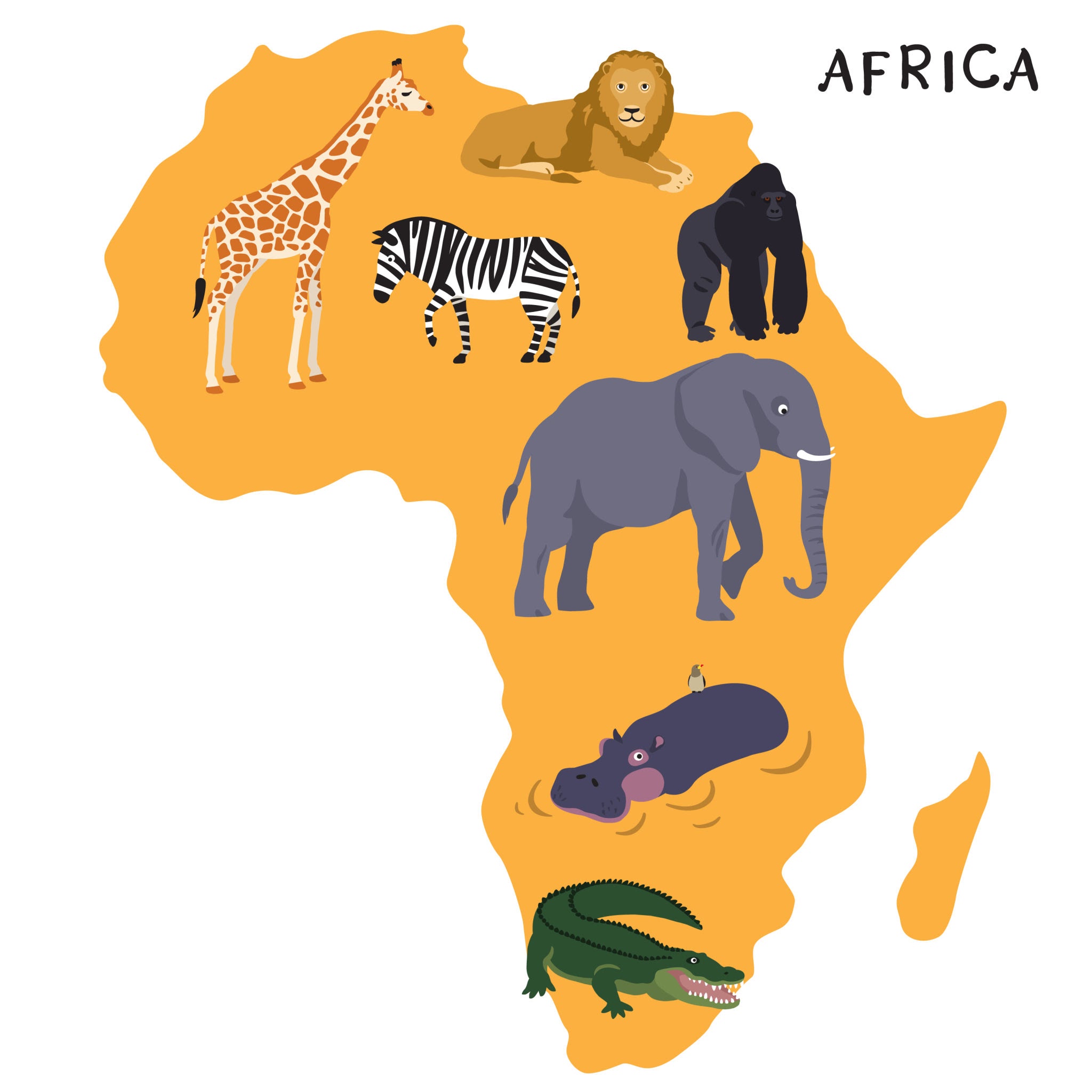
One of the most recognizable features of African folktales is how frequently animals stand in for people. The tortoise, the hare, the spider, the hyena, the elephant, and countless others appear again and again, each carrying a personality so consistent across regions and generations that a child could predict, almost from the first line, what kind of trouble a particular character was about to cause or cleverness he was about to display.
This was not a coincidence of imagination but a deliberate pedagogical choice, refined over centuries of retelling. Animal characters allowed storytellers to address delicate matters — pride, betrayal, cruelty, cowardice, the abuse of power — without directly accusing any real person in the audience. If a story about a foolish, boastful lion embarrassed a chief who happened to be listening, no one could rightly claim the tale was about him; it was, after all, only a lion. This distance gave storytellers extraordinary freedom to critique behavior, including the behavior of the powerful, while keeping the peace of the community intact.
Animals also allowed for a kind of moral shorthand that children could absorb quickly and remember easily. A hyena did not need to be introduced with a long description of his character flaws; the audience already knew, from a hundred prior tales, that a hyena stood for greed and stupidity dressed up as cunning. A tortoise’s slow, deliberate movements became symbolic of patience and unglamorous persistence rewarded over flashier but shallower strength. An elephant’s size became a lesson in how physical power, unaccompanied by wisdom, is easily undone by a smaller creature who thinks carefully. Children internalized these associations early, and the associations did real work: when a child later encountered a boastful, bullying peer, the cultural memory of every boastful lion or foolish elephant who had ever been humbled in a story gave that child a ready framework for understanding — and quietly resisting — that behavior.
Because these animal characters recurred across so many distinct tales, they functioned almost like a shared cast of actors performing in different plays. A child who had grown up hearing dozens of tortoise stories did not need each new one explained from scratch; they already understood the rules of the tortoise’s world, which made each new story faster to absorb and its lesson easier to extract.
The Trickster’s Double Lesson
No figure looms larger in African children’s folktales than the trickster — Anansi the spider among the Akan, Ijapa the tortoise among the Yoruba, various clever hares and jackals across East and Southern Africa. Tricksters occupy an unusual moral position: they are neither straightforwardly good nor straightforwardly bad. They lie, scheme, and manipulate, and yet children are taught to admire, even love, them.
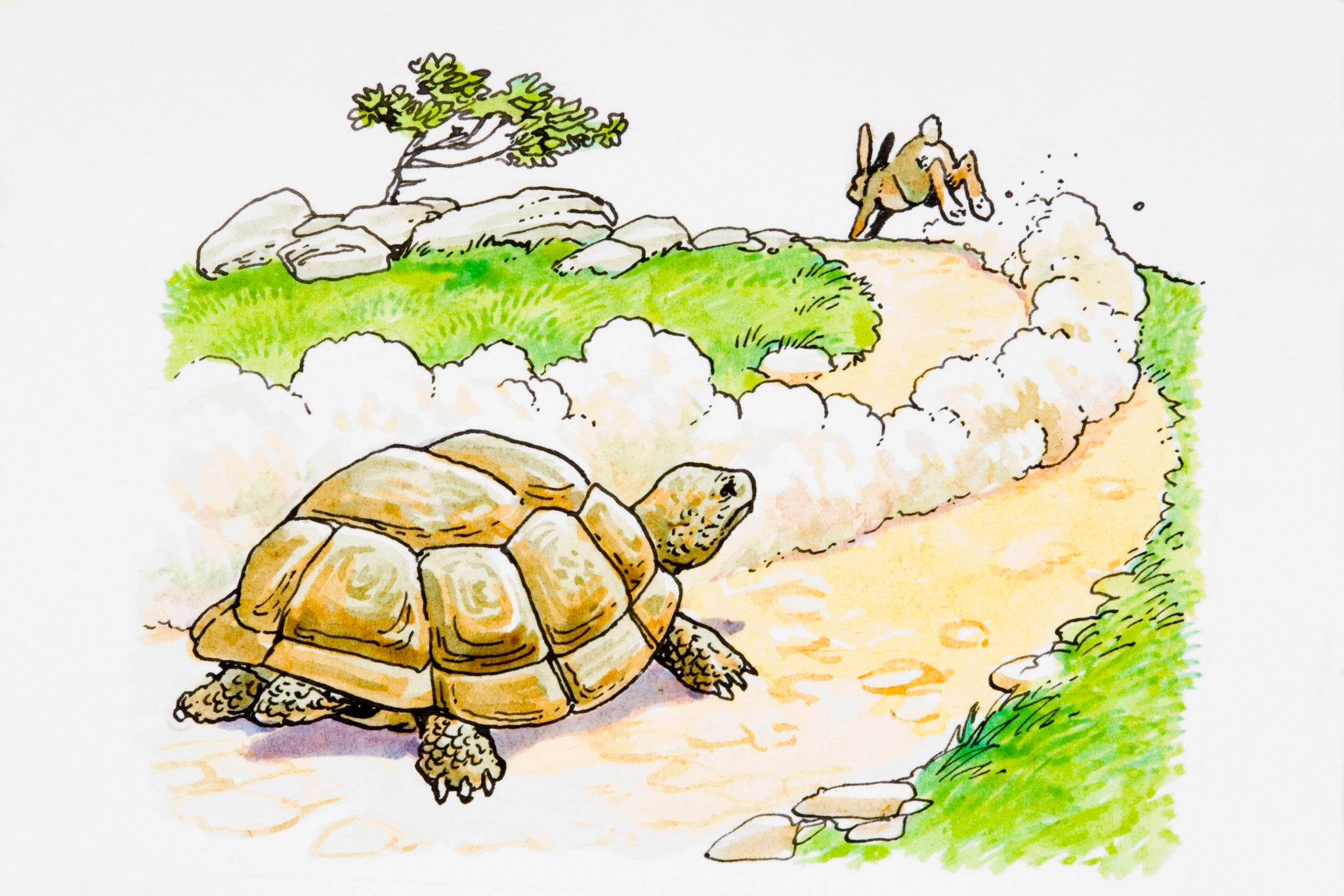
This apparent contradiction is in fact the trickster’s greatest teaching gift. Trickster tales rarely offer a single, simple moral; instead, they offer two lessons braided together. On one hand, they celebrate intelligence, resourcefulness, and the ability of the physically weak to outmaneuver the powerful — an especially important message in societies where children, like all children everywhere, experienced themselves as small and relatively powerless in a world run by adults. A tortoise defeating an elephant through wit rather than strength told every small child listening that cleverness was a resource available to them regardless of size or status.
On the other hand, trickster tales almost never let their hero escape consequence entirely. Anansi’s schemes frequently backfire on him in the tale’s final movement; Ijapa’s cunning often earns him not triumph but humiliation, hunger, or a permanently cracked shell — which, in some Yoruba tellings, explains why the tortoise’s shell looks the way it does to this day. This second half of the trickster’s story delivers the counterbalancing lesson: cleverness used purely for selfish gain, without regard for others, eventually collapses on itself. Children absorbed both halves of the message simultaneously — be clever, but do not be only clever; there is a point at which cunning curdles into greed, and greed always finds its bill come due.
This duality gave trickster tales a durability that purely moralistic stories often lack. A tale that simply says “greed is bad” risks becoming a lecture children tune out. A tale that lets them delight in the trickster’s cleverness first, and only afterward shows them the cost of taking it too far, teaches the same lesson while keeping the child engaged, invested, and — crucially — willing to hear the same story again next season, absorbing the lesson a little more deeply each time.
Obedience, Warning, and the Wages of Disregard
A second major current running through African children’s folktales concerns obedience — specifically, the consequences that follow when children or young people ignore the warnings of their elders. This theme appears with remarkable consistency across the continent’s storytelling traditions, and its persistence reflects something real about how these societies organized the transfer of survival knowledge from old to young.
In many such tales, a young character is given a clear instruction: do not go into a particular forest, do not speak to a particular stranger, do not eat a particular fruit, do not wander past a particular boundary after dark. The story’s tension builds entirely around whether the young protagonist will heed this instruction. Almost invariably, curiosity, boredom, or stubbornness wins out, the boundary is crossed, and misfortune follows — sometimes comic, sometimes genuinely frightening, occasionally fatal within the logic of the tale.
These stories were doing double duty. On the surface, they entertained with suspense and often supernatural danger — a forest that turns out to be inhabited by a shape-shifting spirit, a stranger who is not what she appears to be, a fruit that binds the eater to an unbreakable, unwanted obligation. Underneath, they were quietly reinforcing a practical social truth that every community needed its children to absorb: elders’ instructions, even when unexplained and seemingly arbitrary, usually encoded accumulated experience about real dangers — wild animals, poisonous plants, treacherous terrain, or simply the risks of unsupervised wandering in communities without modern safety infrastructure. A tale was a far more memorable way to install caution in a child’s mind than a flat prohibition ever could be. Children forget rules; they remember stories, especially frightening or strange ones, and the caution embedded in the story travels along with the memory of the plot.
It is worth noting that these tales rarely punished curiosity itself as evil. Many protagonists who broke the rule were not condemned as wicked children but portrayed sympathetically, their disobedience understandable, even relatable. The lesson was less “curiosity is sinful” and more “the world contains real dangers that elders, through hard experience, already know about — so weigh your curiosity against that inherited wisdom before you act on it.” This nuance mattered: these were not tales designed to frighten children into blind obedience for its own sake, but tales designed to teach respect for accumulated communal knowledge, a subtly different and more sustainable lesson.
Kindness, Hospitality, and the Fate of the Selfish
If disobedience tales taught children to respect inherited wisdom, another enormous category of folktales taught them to extend generosity to others, particularly to strangers, the poor, and those who appeared to have nothing to offer in return. This theme recurs so frequently across so many distinct cultures that it stands as one of the closest things African folklore has to a shared moral center.
A common pattern involves a disguised figure — often a spirit, sometimes an ancestor, occasionally a deity — who approaches two different characters in the same tale, usually siblings or neighbors, one kind-hearted and one selfish. The kind character, without knowing who or what they are truly dealing with, offers food, shelter, or assistance despite having little to spare themselves. The selfish character refuses, mocks the visitor, or offers only grudging, minimal help. By the tale’s end, the disguise falls away, and the visitor’s true identity and power are revealed. The generous character is rewarded, often extravagantly, while the selfish character faces consequences ranging from simple loss of opportunity to outright punishment.
Variations of this basic structure appear across an enormous geographic range, retold with local textures — different animals, different spirits, different settings — but the underlying architecture holds remarkably steady: hospitality extended without expectation of reward is eventually repaid, often by forces the giver could never have anticipated, while selfishness, even when it seems to cost nothing in the moment, eventually finds its own reckoning.
The practical function of these tales in resource-scarce agrarian and pastoral societies is not hard to see. Communities that depended on mutual aid to survive droughts, illnesses, and lean seasons needed their members, from the youngest age, to understand hospitality not as an optional virtue but as a kind of social insurance — the stranger you feed today may be the connection who saves you tomorrow, and even where no literal repayment ever arrives, a community bound together by habits of generosity was simply more resilient than one that was not. Folktales encoded this hard-won social knowledge into a form gripping enough that children absorbed it as entertainment long before they were old enough to understand it as economics.
Humility Before Strength
A closely related but distinct thread running through many African children’s tales concerns the danger of pride, particularly pride in physical strength, beauty, or social status. Where the trickster tales complicate cleverness, these tales are usually more direct: they take a character defined almost entirely by one impressive quality — the strongest animal in the forest, the most beautiful girl in the village, the wealthiest man in the region — and systematically strip away the advantages that quality was assumed to guarantee.
A common shape for these tales involves a public boast. A character, confident in some form of superiority, declares themselves unbeatable, unmarriageable-to-anyone-lesser, or simply above the ordinary rules that govern everyone else. The remainder of the tale exists to prove that boast wrong, usually through the intervention of a smaller, humbler, or seemingly insignificant character who the boastful figure had dismissed or mocked. The moral weight of these stories rarely falls on the winner’s cleverness alone; it falls just as heavily on the loser’s arrogance, framed as the true cause of their downfall rather than any particular brilliance on the other side.
For children, especially those growing into an awareness of comparison and status among their peers, these tales offered a counterweight to the ordinary human impulse toward pride. They suggested, repeatedly and in many different costumes, that visible advantages — strength, beauty, wealth — were never a secure foundation for treating others with contempt, because the story always seemed to be watching, waiting for the moment that advantage would prove insufficient.
The Storyteller’s Craft: Repetition, Rhythm, and Participation
None of these lessons would have taken root as deeply as they did without the particular performance techniques African storytellers developed to make their tales memorable and, just as importantly, enjoyable enough that children asked to hear them again and again.
Repetition sat at the very center of this craft. Many folktales built their structure around threefold or fourfold repeated actions — three attempts to solve a riddle, three characters who each try and fail before a fourth succeeds, a phrase repeated with small variations each time a new obstacle appears. This repetition was not filler; it was a memory device, allowing children to anticipate what came next and, over multiple hearings, to begin reciting portions of the tale along with the storyteller. A child who could predict the pattern felt a small thrill of mastery, and that thrill kept them engaged through tales that might otherwise have felt long for a young attention span.
Songs and chants were frequently woven directly into the narrative, giving children moments to actively participate rather than simply listen. A storyteller might sing a short verse in a character’s voice — the sly line a trickster used to lure his victim, or the plaintive call of a lost child searching for home — and the audience would join in, sometimes clapping a matching rhythm. This participatory structure transformed storytelling from a one-directional transmission of information into a shared communal performance, and the physical, musical engagement made the moral content of the tale stick in memory far more effectively than passive listening ever could.
Storytellers also frequently used voice, gesture, and exaggerated physical performance to distinguish characters — a booming, slow voice for the powerful but foolish lion, a quick and wheedling voice for the trickster, a trembling voice for the frightened victim. Children did not just hear these differences; skilled storytellers often invited the youngest listeners to try imitating a character’s voice or sound effect themselves, turning the child briefly into a co-performer of the very lesson being taught.
Perhaps most importantly, many tales closed with a direct address to the audience — a proverb, a rhetorical question, or an explicit statement of the moral, inviting discussion rather than simply delivering a verdict. Storytellers frequently asked children what they thought a character should have done differently, or what they themselves would do in a similar situation. This closing ritual turned every tale into the beginning of a conversation rather than the end of one, ensuring that the lesson was not merely received but actively reasoned through by the very children it was meant to shape.
<!– IMAGE: African elder telling a story to children under a tree at dusk –>
Lessons for a Changing World
Formal schooling, television, and now smartphones have inevitably reshaped how African children spend their evenings, and the fire-lit gathering that once reliably produced an audience of eager young listeners is far less universal today than it was even a few generations ago. And yet the core function these folktales once served — teaching children how to live well among others, how to weigh cleverness against conscience, how to extend generosity even when it costs something, how to receive the accumulated caution of those who came before them — has not disappeared as a human need, even where its original delivery mechanism has weakened.
Many communities and cultural organizations across the continent have responded by adapting rather than abandoning the tradition: illustrated children’s books built directly from oral tales, radio and podcast programs that recreate the storyteller’s cadence for a new generation, and school curricula that formally incorporate folktales as literature worth studying rather than mere nostalgia. What survives across every one of these adaptations is the underlying structure that made the originals work in the first place — a clever but flawed protagonist, a test of character disguised as adventure, and a closing moment that turns back to the listener and asks, gently but insistently, what they themselves have learned.
That closing gesture may be the single most important inheritance of this entire tradition. African folktales were never designed merely to entertain children into silence before bedtime. They were designed to make children think, to make them weigh a trickster’s cleverness against his eventual downfall, to make them feel the sting of a selfish character’s comeuppance and the warmth of a generous one’s reward, and in doing so, to quietly, patiently, story by story, build the kind of person a community needed each child to grow into. That work continues today, in classrooms, in illustrated books, in podcasts streaming from a phone rather than crackling from a fire — proof that a good story, once it has found its true purpose, rarely needs the original fire to keep burning.
“The child who is taught by story does not forget the lesson; only the lecture is forgotten.”
