

A religious tradition is often remembered through its beliefs,
stories and rituals, but sacred places can be equally important.
Across Africa, communities have traditionally identified particular
forests, rivers, mountains, caves, rocks, trees, springs and constructed
shrines as places of special spiritual significance.
These locations can serve as places of prayer, ritual, remembrance,
community gathering and interaction with the spiritual world.
A sacred site is therefore more than simply a physical location.
It can be a place where religion, history, nature and
community identity meet.
For generations, people may have associated a particular location
with a deity, ancestor, spirit, historical event or sacred tradition.
Stories connected to the location can be transmitted from parents to
children, while religious specialists and community elders may preserve
the rules governing the site.
This has created an extraordinary cultural landscape across the
African continent.
From the Ọ̀ṣun-Ọ̀ṣogbo Sacred Grove in Nigeria to
sacred mountains, forests and springs in different parts of Africa,
these places demonstrate that traditional African spirituality has often
been deeply connected to the physical environment.
Understanding them requires more than asking what happens at a
shrine.
We must also ask:
Why is this place sacred? Who protects it? What stories are
attached to it? What rules govern it? And what does its survival tell us
about the community that created it?
What Is a Sacred Site?
A sacred site is a location that a particular community considers
spiritually, religiously, historically or culturally significant.
The site may be natural or constructed.
It could be:
a forest;
a river;
a spring;
a mountain;
a cave;
a particular tree;
a rock formation;
a burial ground;
a shrine;
a temple;
or a combination of natural and constructed features.
The designation “sacred” comes from the meaning assigned to the place
by a community.
Two forests may look identical to an outside visitor.
One may simply be woodland.
The other may be regarded by a community as the dwelling place of a
spiritual being and therefore subject to strict restrictions.
The physical environment may be similar, but the cultural meaning is
completely different.
Sacred Does Not Always Mean
Worship
A common misunderstanding is that if Africans regarded a forest,
river or mountain as sacred, they necessarily believed that the physical
object itself was God.
That conclusion is often inaccurate.
A sacred place may be associated with a spiritual being without being
considered the spiritual being itself.
A river may be associated with a deity.
A forest may be regarded as the dwelling place of spirits.
A mountain may be connected to ancestral stories.
A shrine may be a place where people communicate with or honor a
particular spiritual power.
The physical location therefore becomes sacred because of its
relationship to the spiritual world.
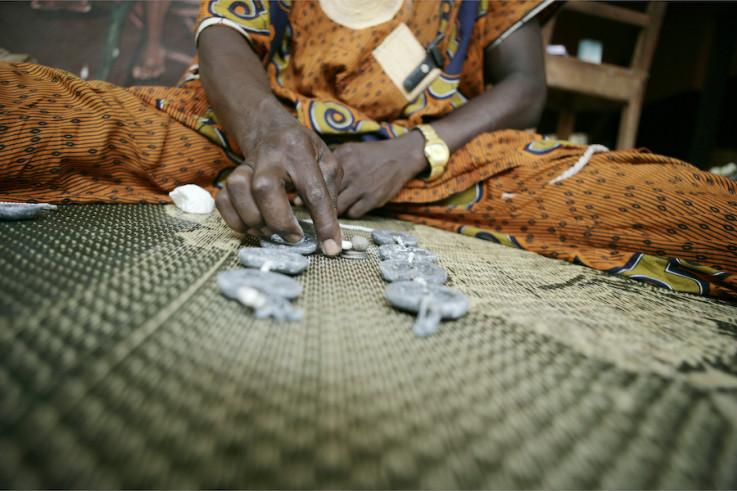
Shrines as Centers of
Spiritual Practice
Shrines are among the most recognizable sacred spaces in many African
traditional religious systems.
A shrine may contain objects associated with a deity, ancestor or
spiritual force.
It may be located inside a home, within a village, beside a river or
deep inside a forest.
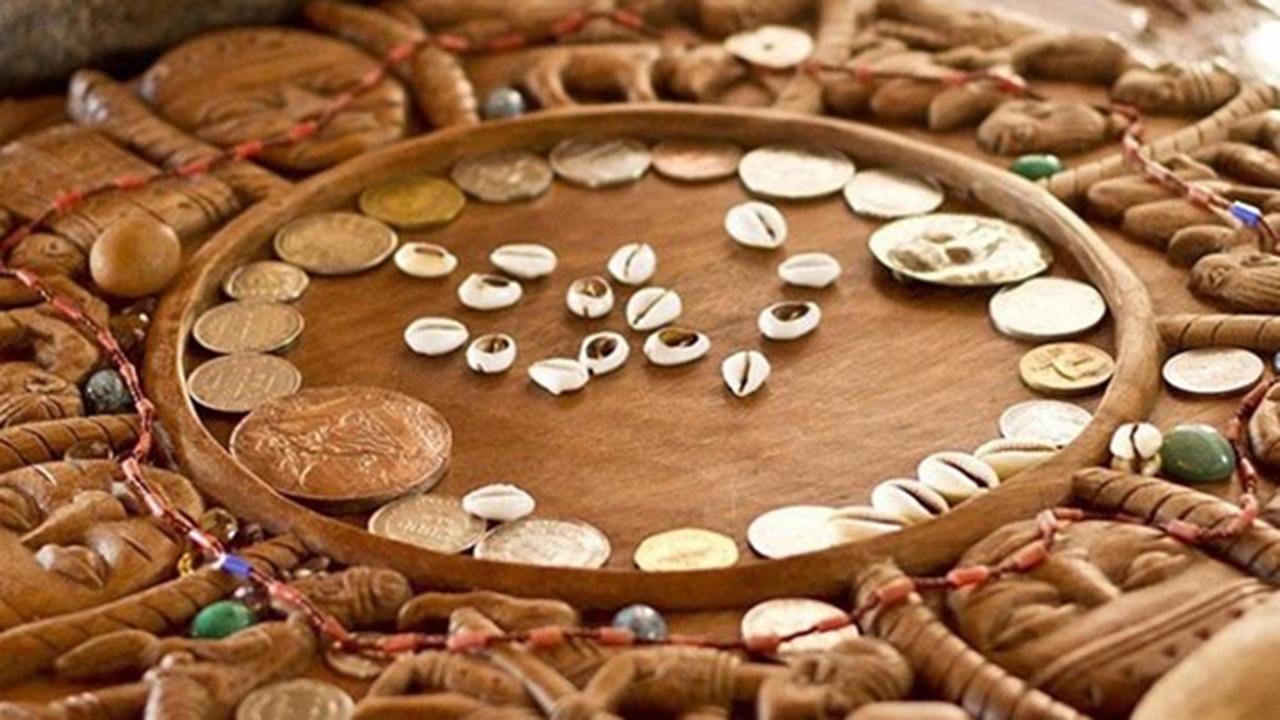
Some shrines are relatively simple.
Others may contain sculptures, pots, carved objects, ritual materials
or architectural structures.
Their appearance depends entirely on the tradition.
The important feature is not necessarily the size or beauty of the
shrine.
It is the relationship between the shrine, the community and the
spiritual tradition it represents.
Who Maintains a Shrine?
Sacred sites are often maintained by particular people.
These may include priests, priestesses, diviners, elders, traditional
leaders, hereditary custodians or members of a particular lineage.
The responsibilities can include cleaning the site, organizing
ceremonies, preserving sacred objects and ensuring that visitors follow
traditional rules.
Knowledge about the shrine may also be passed down through
generations.
This means that custodians are not simply caretakers of a physical
structure.
They can also be guardians of cultural knowledge.
 Sacred Groves
One of the most fascinating categories of African sacred sites is the
sacred grove.
A sacred grove is a naturally wooded area protected because of
religious or cultural significance.
The forest may be associated with a deity, spirit, ancestor or
important community tradition.
Rules governing the grove may prohibit certain activities.
People may be forbidden from cutting trees.
Hunting may be restricted.
Some areas may only be entered during specific ceremonies.
Certain sections may be reserved for religious specialists.
These rules can preserve the grove for generations.
The Ọ̀ṣun-Ọ̀ṣogbo Sacred Grove
One of the best-known examples is the Ọ̀ṣun-Ọ̀ṣogbo Sacred
Grove in Osun State, Nigeria.
The grove is associated with Ọ̀ṣun, a major figure in Yoruba religious
tradition, and the Ọ̀ṣun River.
It is significant not only as a religious location but also as a
major cultural and artistic landscape.
The grove contains sculptures and other artistic elements that have
developed through generations.
It demonstrates how religion, environmental protection and artistic
expression can exist together within a single landscape.
The site has also received international recognition as a UNESCO
World Heritage Site.
Sacred Forests and
Environmental Protection
Sacred groves can have an important environmental dimension.
Traditional restrictions may prevent trees from being cut and limit
activities that could damage the ecosystem.
Over time, a protected sacred forest can become an important refuge
for plants and animals.
This does not mean that traditional religious communities invented
modern conservation in the contemporary scientific sense.
The motivations were different.
The primary reason for protecting the site may have been spiritual
and cultural.
Nevertheless, the environmental consequences can be significant.
Sacred Rivers
Rivers are among the most important natural features associated with
sacred traditions.
Their importance is easy to understand.
Rivers provide water.
They support agriculture.
They sustain fish and other food sources.
They create transportation routes.
They define territories.
They bring communities together.
Because of these essential functions, rivers naturally became
important in many African cultural traditions.
Some rivers also acquired direct spiritual associations.
The Sacred Meaning of Water
Water can symbolize life, renewal and fertility.
It is necessary for human survival.
It cleanses.
It nourishes crops.
It supports animals.
It connects communities.
Consequently, water can have both practical and spiritual
significance.
In some traditions, ritual washing or bathing may be associated with
purification.
In others, particular rivers or springs are connected with spiritual
beings.
The meaning differs from culture to culture.
Springs and Sacred Water
Sources
A spring can become sacred because of its unusual
characteristics.
Perhaps it flows throughout the year.
Perhaps local tradition associates it with an important ancestor.
Perhaps a story describes a spiritual event that occurred there.
Perhaps a deity is believed to have a connection with the
location.
Whatever the origin, the spring can become an important cultural
landmark.
Its physical water and cultural meaning reinforce one another.
Sacred Mountains
Mountains can also become holy places.
Their height can give them an imposing presence.
They may be associated with creation stories, ancestors, spirits,
prophets, rulers or important historical events.
Some mountains are places of pilgrimage.
Others may be approached only by certain people.
Some contain caves or other locations associated with ritual
traditions.
The mountain becomes part of the community’s sacred geography.
Caves and Hidden Sacred
Spaces
Caves have long fascinated human communities.
They are dark, enclosed and physically separated from the ordinary
environment.
In different African traditions, caves can become associated with
spirits, ancestors, initiation or religious activity.
Their isolation can reinforce their sacred character.
A cave may also preserve evidence of much older human activity,
connecting contemporary cultural traditions with deep archaeological
history.
Sacred Trees
Particular trees can become important sacred landmarks.
An ancient tree may be associated with an ancestor or spiritual
being.
It may mark a place where ceremonies traditionally occurred.
It may represent continuity because generations of people have
gathered beneath it.
The tree’s age can itself become symbolic.
It has survived while generations of humans have come and gone.
In this way, a sacred tree can become a living monument.
Sacred Rocks and Stones
Rocks and unusual geological formations can also have religious
significance.
A particular stone may be associated with a historical story.
Another may be connected to a spiritual being.
A large rock may mark an important location.
The meaning is not necessarily contained within the stone itself.
It comes from the stories, beliefs and relationships that the
community attaches to it.
Burial Grounds as Sacred
Places
Burial grounds can also function as sacred spaces.
The dead are placed there.
Families may visit.
Ceremonies may take place.
Names and histories can be preserved.
In traditions that recognize ancestral relationships, burial places
can become important points of connection between generations.
Even outside traditional religion, cemeteries often carry deep
emotional and cultural significance.
Sacred Sites and Ancestral
Memory
Sacred locations can preserve memories of previous generations.
A shrine may have been maintained by the same lineage for
centuries.
A forest may be associated with the founder of a community.
A river may appear in migration stories.
A mountain may feature in oral traditions.
The landscape becomes a form of historical record.
Instead of history existing only in books, it can exist in
places.
Oral History and Sacred
Geography
Traditional stories often explain why a particular place is
sacred.
A story may describe how a deity arrived.
Another may explain why a river has a particular name.
Another may tell how an ancestor established a settlement.
These stories are passed down orally.
The landscape therefore becomes easier to remember because people can
physically see the locations associated with the stories.
A child can hear a story and later visit the place where the event
supposedly occurred.
Sacred Sites and Community
Identity
Sacred places can become symbols of collective identity.
A community may identify strongly with a particular grove or
shrine.
People living elsewhere may return during annual ceremonies.
The site can remind members of their shared origins.
This becomes especially important when migration has separated
families and communities.
A sacred site can function as a cultural anchor.
Festivals at Sacred Sites
Some sacred places become the centers of annual festivals.
People may travel from different regions to participate.
Music, dance, prayer, processions and traditional performances may
form part of the event.
Festivals can renew relationships between people and the sacred
landscape.
They can also provide opportunities for younger generations to learn
traditions from elders.
Sacred Sites and Initiation
Some traditional societies have used particular locations for
initiation ceremonies.
Young people may be introduced to adult responsibilities, cultural
knowledge or community institutions.
The process can involve secluded areas such as forests or designated
sacred spaces.
Because the information transmitted may be restricted, some
initiation sites have rules governing access.
This demonstrates that sacred places can also function as educational
environments.
Restricted Access to Sacred
Places
Not every sacred site is open to everyone.
Some locations may be accessible to the general public.
Others may only be entered by religious specialists.
Certain areas may be reserved for men or women within a particular
cultural tradition.
Some may only be visited during festivals.
These restrictions are part of the site’s religious structure.
Visitors should therefore avoid assuming that cultural heritage
automatically means unrestricted access.
Sacred Sites and Gender
Gender can influence access and responsibility.
In some traditions, particular sacred spaces may be associated with
women.
Others may have male religious specialists.
Some sites are shared by everyone.
The rules depend on the culture.
This diversity is important because African religious traditions
cannot be reduced to a single set of rules concerning gender and sacred
space.
Sacred Sites and Political
Authority
Sacred places can sometimes intersect with traditional political
institutions.
Kings, chiefs and elders may have responsibilities connected with
particular sites.
A royal shrine may symbolize the history of a dynasty.
A community shrine may reinforce the authority of a traditional
institution.
Religious and political responsibilities can therefore overlap.
However, this relationship differs widely between societies.
Sacred Sites and Traditional
Law
Sacred places can also support community rules.
If a forest is believed to be protected by a spiritual force,
restrictions against entering it or exploiting its resources can become
powerful social rules.
Breaking them may be interpreted as both a social and spiritual
violation.
This demonstrates how traditional religion can influence behavior
without requiring a modern legal institution.
Belief, morality and community regulation can operate together.
Sacred Places as
Environmental Archives
An old sacred grove can preserve information about the historical
environment.
Trees that disappeared elsewhere may survive inside protected
groves.
Animal populations may remain.
Traditional plant knowledge may also be preserved.
Researchers can therefore study sacred landscapes for both cultural
and ecological information.
The site can become an archive of environmental history.
Colonialism and Sacred Sites
Colonial rule had significant consequences for African sacred
places.
Missionaries sometimes attempted to destroy or discourage traditional
shrines.
Colonial administrators could redefine sacred land as government
property.
Traditional custodians could lose authority.
Sacred forests could be opened for agriculture, logging or other
commercial activities.
These changes disrupted relationships between communities and their
sacred landscapes.
Missionary Criticism of
Shrines
Christian missionaries frequently interpreted traditional African
shrines through their own religious framework.
Some described indigenous religious objects as idols.
Traditional priests could be portrayed negatively.
Ceremonies were sometimes prohibited.
This contributed to the destruction or abandonment of some sacred
sites.
However, many traditions survived despite these pressures.
Sacred Sites and Cultural
Resilience
The survival of sacred sites demonstrates the resilience of African
cultural traditions.
Even after major religious and political changes, communities
continued to preserve certain locations.
Some sites were adapted.
Others became cultural heritage locations.
Some continue to function as active religious spaces.
Their survival demonstrates that cultural change does not always mean
complete cultural disappearance.
Modern Christianity and
Sacred Places
Today, some African communities are predominantly Christian.
Yet traditional sacred places may still remain culturally
significant.
A community may celebrate a festival associated with a traditional
site while most participants practice Christianity.
Some people may distinguish between participating in a cultural event
and practicing traditional religion.
Others may reject the traditional religious meaning entirely.
The modern reality is therefore complex.
Modern Islam and Sacred
Heritage
Similar complexity exists within Muslim communities.
Islamic religious teachings have their own approach to sacred
space.
Nevertheless, African Muslim societies can retain cultural traditions
associated with particular landscapes and historical locations.
The interaction between Islamic identity and local cultural heritage
varies significantly by region.
Tourism and Sacred Sites
Sacred sites increasingly attract tourists.
Visitors may be interested in architecture, history, art, festivals
or natural scenery.
Tourism can generate income.
It can support conservation.
It can create employment.
It can help publicize cultural heritage.
But tourism can also create problems.
Large crowds may damage fragile environments.
Visitors may photograph restricted ceremonies.
Commercialization may alter traditional practices.
Sacred sites therefore require careful management.
The Difference
Between Tourism and Pilgrimage
A tourist may visit a sacred site because of its historical or
cultural importance.
A pilgrim may visit because of religious commitment.
These are not necessarily the same experience.
For local communities, the location may remain an active spiritual
environment even when outsiders view it primarily as a heritage
attraction.
Recognizing this difference helps prevent sacred places from becoming
reduced to tourist scenery.
Protecting Sacred Sites
Preserving sacred places requires more than repairing buildings.
A site can lose its meaning if the community that traditionally
protects it is excluded.
Effective preservation may therefore require cooperation among:
local communities;
traditional custodians;
religious leaders;
historians;
archaeologists;
environmental specialists;
governments; and
heritage organizations.
The objective should be to protect both the physical site and its
cultural meaning.
Threats Facing Sacred
Landscapes
African sacred sites face numerous pressures.
These include:
Urban expansion: Cities continue to grow into areas
that were once relatively isolated.
Agricultural pressure: Forests may be cleared for
farming.
Mining: Mineral extraction can threaten mountains,
forests and sacred landscapes.
Pollution: Rivers and springs can be
contaminated.
Climate change: Changing rainfall and temperatures
can affect ecosystems.
Illegal logging: Sacred forests can be damaged when
enforcement is weak.
Neglect: Traditional knowledge may decline when
younger generations move away.
Commercialization: Excessive tourism can transform
sacred traditions into performances designed primarily for visitors.
The Role of Young Africans
Young people have an important role in the future of sacred
heritage.
As education, migration and technology change African societies,
younger generations may become less familiar with traditional religious
knowledge.
However, digital tools also provide new opportunities.
Young Africans can document oral histories.
They can record elders telling traditional stories.
They can photograph sacred landscapes where appropriate.
They can create documentaries.
They can build digital archives.
They can promote heritage awareness through social media.
Technology can therefore become an instrument for cultural
preservation.
Sacred Sites in the Digital
Age
A sacred grove that once existed primarily within local oral
tradition can now appear in global databases, documentaries and
educational websites.
This can increase awareness.
But digital exposure also raises questions.
Should every sacred object be photographed?
Should restricted rituals be recorded?
Should sacred locations be promoted to mass tourism?
Communities should have a voice in deciding how their heritage is
represented.
Preservation should not mean removing local control.
UNESCO and African Sacred
Heritage
International heritage organizations have recognized several African
sites that combine cultural, historical, environmental and religious
significance.
The Ọ̀ṣun-Ọ̀ṣogbo Sacred Grove, for example,
demonstrates how a sacred landscape can be recognized simultaneously as
a cultural heritage site and an important natural environment.

But international recognition should complement—not replace—the role
of the communities whose traditions created and preserved the site.
Sacred Sites as Living
Heritage
One of the most important concepts in heritage preservation is the
difference between a dead monument and living heritage.
A monument can be preserved physically even when its original
community has disappeared.
A living sacred site is different.
Its traditions continue.
People visit it.
Ceremonies may occur.
Stories are still told.
Rules remain meaningful.
The objective should therefore not simply be to freeze the location
in time.
It should be to preserve the cultural relationships that give the
place meaning.
Why Sacred Places
Matter Beyond Religion
Even people who do not practice traditional African religions can
recognize the historical importance of sacred places.
They can teach us about:
African environmental history;
architecture;
sculpture;
oral traditions;
traditional leadership;
community organization;
indigenous knowledge;
artistic expression;
migration;
religious change; and
cultural resilience.
A sacred site is therefore simultaneously a religious, historical and
cultural resource.
Learning From Sacred
Landscapes
Modern society often separates environmental protection from cultural
heritage.
Traditional sacred landscapes can demonstrate how these concerns can
overlap.
A forest can be protected because it is spiritually important.
A river can be preserved because it is culturally sacred.
A mountain can remain undisturbed because of traditional beliefs.
These examples do not mean traditional systems should simply be
copied into modern environmental policy.
But they demonstrate that cultural beliefs can influence
environmental behavior in powerful ways.
Conclusion:
Places Where Memory and Spirituality Meet
Sacred shrines, groves and holy sites are among the most important
physical expressions of African traditional religious heritage.
They demonstrate that spirituality has often been embedded directly
into the landscape.
A forest could become sacred.
A river could become a spiritual landmark.
A mountain could preserve ancestral stories.
A shrine could connect a community with a deity or spiritual
force.
A burial ground could connect generations.
These places were not merely locations where ceremonies happened.
They could function as centers of memory, identity, morality,
environmental protection and community life.
Their importance also challenges simplistic descriptions of African
traditional religion.
To understand a sacred grove, for example, one must understand not
only the trees but also the stories, rituals, people and spiritual
traditions surrounding them.
Likewise, a shrine cannot be understood simply by examining its
physical objects.
Its true meaning comes from the relationships maintained around
it.
Today, some sacred sites remain active religious spaces.
Others have become primarily cultural heritage locations.
Some face serious threats from development, environmental degradation
and declining traditional knowledge.
Their future will depend partly on whether communities, governments
and heritage organizations can protect both the physical landscapes and
the cultural traditions that give them meaning.
Ultimately, Africa’s sacred places remind us of an important
principle:
heritage is not always something kept inside a museum.
Sometimes heritage is a forest, a river, a mountain, a shrine or a place
where generations of people have remembered who they are.
And when such places survive, they preserve more than buildings or
landscapes.
They preserve stories.
They preserve memory.
They preserve identity.
And they preserve a living connection between people, nature and the
generations that came before them.
