

African traditional religions are sometimes described as religions of
the past.
That description is misleading.
Although Christianity and Islam have become the dominant religions
across much of Africa, indigenous African religious traditions have not
simply disappeared.
Some continue as active religious systems.
Others survive through cultural practices, festivals, traditional
institutions, oral traditions, family customs, sacred landscapes, music,
art and ideas about ancestors and community.
In some places, traditional religion is practiced openly.
In others, its practices are private or limited to particular
ceremonies.
Some people identify primarily as Christian or Muslim while still
participating in cultural traditions inherited from indigenous religious
systems.
This makes contemporary African religious life considerably more
complicated than simple categories of “traditional” and “modern.”
The survival of African traditional religion is often quiet.
It may not always appear in formal religious statistics.
It may not have large buildings or highly visible institutions.
It can instead exist within families, communities and cultural
practices that have been passed from one generation to another.

What Does “Survival” Mean?
When discussing the survival of traditional African religions,
survival does not necessarily mean that every ancient ritual remains
unchanged.
Traditions evolve.
Some ceremonies disappear.
Others are modified.
Some practices become cultural rather than explicitly religious.
New generations may reinterpret older beliefs.
Religious conversion may change the way families understand
traditional customs.
Therefore, survival can take several forms.
A tradition can survive as an active religious practice.
It can survive as cultural heritage.
It can survive through language and storytelling.
It can survive through festivals.
It can survive through traditional leadership.
Or it can survive as knowledge preserved by families and elders.
Traditional Religion
Is Not One Religion
Africa contains thousands of cultural communities with different
histories and religious systems.
There is no single African traditional religion.
Different societies have different understandings of:
God or a Supreme Being;
ancestors;
deities;
spirits;
sacred places;
morality;
ritual;
divination;
healing;
death;
and the relationship between humans and nature.
This diversity remains important when discussing contemporary
survival.
A practice that continues strongly in one community may have
disappeared elsewhere.
From Religion to Cultural
Heritage
One of the most interesting forms of survival occurs when religious
practices become understood as cultural heritage.
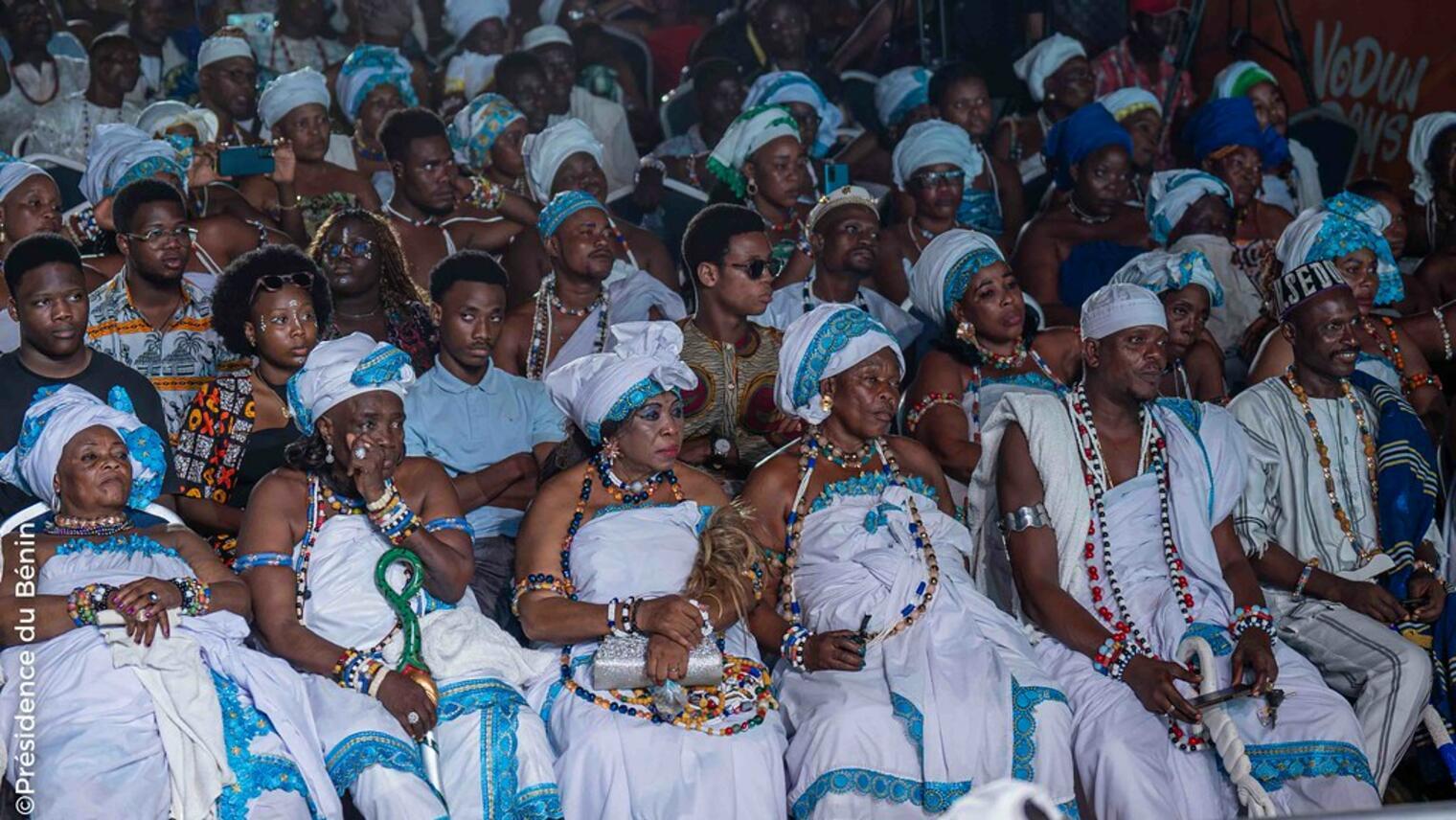
original spiritual meaning.
Traditional clothing may remain popular.
A naming ceremony may preserve elements of older customs.
A masquerade may be performed as part of a cultural festival.
Traditional music may be performed on stages for audiences.
In these situations, the original religious meaning may be reduced,
transformed or reinterpreted.
But the tradition itself remains alive.
 Festivals as Living Heritage
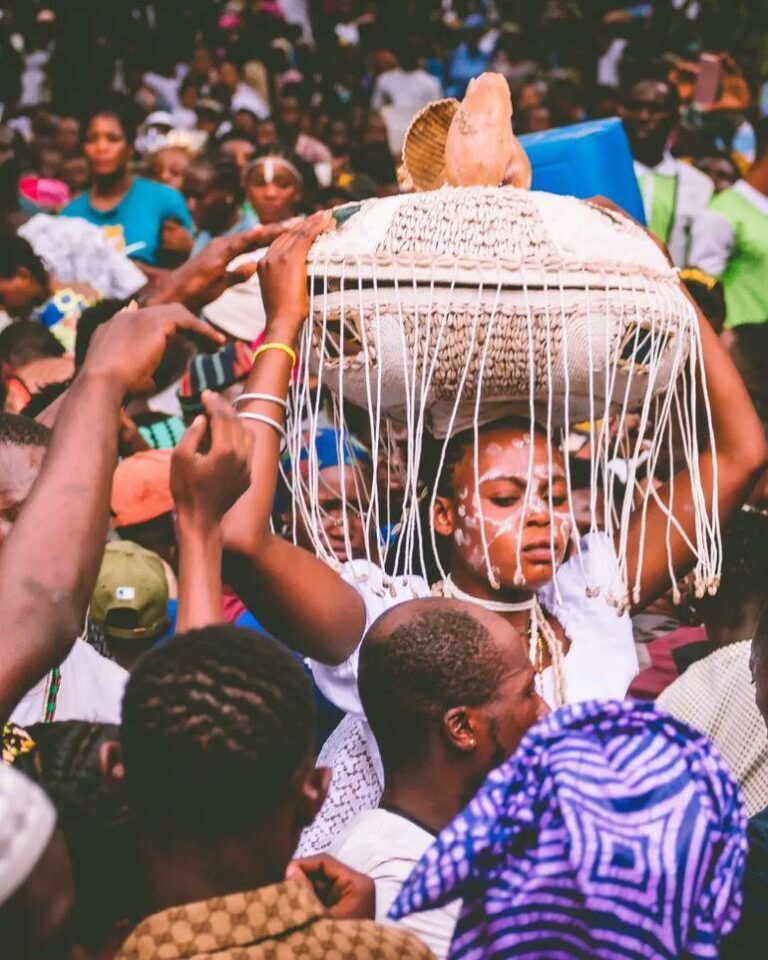
Festivals are among the most visible ways traditional African
heritage survives.
Across the continent, communities continue to organize festivals
connected with:
harvests;
ancestors;
royal traditions;
historical events;
masquerades;
music;
dance;
and community identity.
Some festivals retain strong religious meanings.
Others are now primarily cultural celebrations.
Many combine both.
Masquerades and Spiritual
Traditions
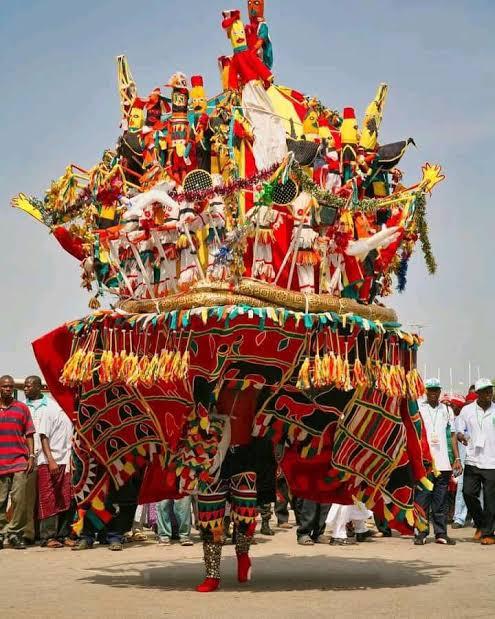
Masquerade traditions provide another example.
In several African societies, masks and masquerade performances
historically had religious, ancestral or social meanings.
Today, some masquerades continue to perform ceremonial roles.

Their meanings can therefore exist at several levels
simultaneously.
A masquerade can be an artistic performance, cultural symbol and
religious institution depending on the community.
Ancestor Traditions
Beliefs concerning ancestors also continue to influence African
societies.
Not everyone who follows an Abrahamic religion considers themselves
an ancestor worshipper.
However, respect for deceased family members can remain an important
cultural value.
Families may preserve:
ancestral names;
family histories;
burial traditions;
memorial ceremonies;
genealogies;
and stories about previous generations.
These practices keep relationships with the past alive.
Naming Traditions
Traditional names remain particularly powerful.
A person may have a Christian or Muslim name while also carrying a
traditional African name.
The traditional name may communicate:
family history;
circumstances surrounding birth;
aspirations;
gratitude;
ancestry;
or cultural identity.
Names therefore provide a simple but powerful mechanism through which
older cultural traditions survive.
Traditional Marriage Customs
Marriage provides another important example.
Modern African weddings may combine several traditions.
A couple might have a civil wedding, a church or mosque ceremony and
a traditional family ceremony.
Traditional clothing may be worn.
Family introductions may take place.
Traditional foods may be served.
Customary gifts may be exchanged.
Even when the religious beliefs surrounding an old practice have
changed, the cultural ceremony can survive.
Funeral Traditions
Funerals often preserve particularly strong elements of cultural
heritage.
Families may combine religious services with traditional customs.
Music, clothing, food, burial practices and family gatherings can
reflect indigenous traditions.
Funerals also provide an opportunity for younger generations to learn
family history.
The deceased person’s life becomes a bridge connecting different
generations.
Traditional Religious
Specialists
In some communities, traditional priests, diviners, healers and other
religious specialists continue to operate.
Their roles vary considerably.
Some work primarily within indigenous religious institutions.
Others are consulted for cultural or spiritual reasons.
Some traditions have experienced significant decline.
Others have adapted to modern conditions.
The continued existence of religious specialists demonstrates that
traditional religious institutions have not disappeared everywhere.
Traditional
Healing and Indigenous Knowledge
Traditional healing is another area where indigenous knowledge
remains influential.
African communities have developed extensive knowledge of:
medicinal plants;
herbs;
preparation techniques;
environmental resources;
and traditional approaches to wellbeing.
Traditional healing should not automatically be equated with
traditional religion.
They can overlap, but they are not identical.
Some healing traditions are strongly spiritual.
Others focus primarily on herbal or practical knowledge.
The Importance of
Indigenous Plants
Traditional knowledge about plants represents a significant form of
cultural heritage.
Elders may know which plants were traditionally used for particular
purposes.
This knowledge can be transmitted orally.
The loss of indigenous languages and elders can therefore result in
the loss of traditional ecological knowledge.
Preserving such knowledge requires careful documentation and respect
for community ownership.
Sacred Groves and Natural
Sites
Sacred landscapes provide another example of continuity.
Some forests, rivers, mountains and other natural locations remain
culturally or spiritually significant.
Traditional restrictions may continue to protect particular
areas.
In other cases, sacred locations have become heritage or tourism
sites.
This creates an interesting connection between religion, conservation
and cultural identity.
Traditional Religion
and the Environment
Many indigenous African religious traditions have emphasized
relationships between humans and their environment.
Certain places may be considered sacred.
Some animals may have symbolic importance.
Certain trees may be protected.
These ideas can encourage responsible relationships with nature.
However, traditional religions should not be romanticized as
automatically environmentally perfect.
Environmental practices differed between societies and changed over
time.
Oral Tradition as Survival
Perhaps the most important mechanism of survival is oral
tradition.
Before written records became widespread, communities transmitted
knowledge through:
stories;
songs;
proverbs;
praise poetry;
genealogies;
rituals;
and instruction.
These forms of communication continue to preserve historical and
religious knowledge.
The Role of Elders
Elders remain important repositories of cultural knowledge in many
communities.
They may remember:
traditional ceremonies;
family histories;
community laws;
songs;
proverbs;
sacred places;
and stories about ancestors.
When this knowledge is passed to younger generations, cultural
continuity becomes possible.
The Problem of Knowledge
Loss
Modernization can make cultural transmission more difficult.
Young people may move from rural communities to cities.
Traditional languages may be used less frequently.
Some ceremonies may no longer be practiced.
Religious conversion can change attitudes toward indigenous
traditions.
Older generations may die before passing on specialized
knowledge.
Consequently, some traditions are disappearing even while others
experience renewed interest.
Urbanization and
Traditional Religion
Cities have transformed African religious life.
People from different ethnic backgrounds live together.
Traditional community structures can become weaker.
However, urbanization can also create new opportunities.
People may form ethnic associations.
Cultural organizations can organize festivals.
Social media can connect people with cultural communities.
Traditional practices can therefore move from villages into urban
spaces.
Social Media and Cultural
Revival
The internet has created new opportunities for cultural
preservation.
Young Africans can publish:
traditional stories;
historical information;
indigenous-language content;
traditional music;
cultural documentaries;
festival footage;
and educational materials.
Social media allows traditions that were once limited to particular
communities to reach global audiences.
Digital Storytelling
Digital storytelling is particularly important for oral
traditions.
A traditional story can now be recorded as:
a podcast;
a video;
an animation;
a blog;
an audiobook;
or an educational series.
This creates new possibilities for preserving knowledge.
However, communities should retain control over sacred or restricted
knowledge.
Not everything should automatically be published online.
Young Africans and
Cultural Rediscovery
Many young Africans are becoming increasingly interested in
indigenous history and culture.
This interest can be seen in:
traditional fashion;
indigenous-language projects;
cultural festivals;
African history content;
traditional music;
documentaries;
literature;
and academic research.
For some young people, this represents a search for identity.
For others, it is simply an interest in history.
Traditional Religion
and Popular Culture
Traditional African religious imagery increasingly appears in popular
culture.
Films, music, novels and visual art may draw upon:
deities;
spirits;
ancestors;
mythology;
masks;
traditional priests;
sacred objects;
and folklore.
This has introduced indigenous religious concepts to audiences who
may never have encountered them through formal religious practice.
The Risk of
Misrepresentation
Popular culture can also distort traditional religions.
Complex spiritual systems can be reduced to stereotypes.
Traditional priests may be portrayed as mysterious or dangerous.
African spiritual traditions may be presented as supernatural
entertainment.
Sacred symbols may be removed from their cultural context.
This can create misconceptions.
Responsible cultural storytelling should explain traditions rather
than simply sensationalizing them.
Traditional Religion and
Tourism
Cultural tourism has created new opportunities for traditional
festivals and heritage sites.
Visitors may attend cultural celebrations.
Museums may exhibit traditional objects.
Tour guides may explain indigenous history.
Communities may generate income from heritage activities.
But commercialization can also create problems.
A sacred ceremony can lose meaning if it becomes purely a performance
for tourists.
Cultural Ownership
One of the most important questions surrounding cultural tourism
is:
Who controls the representation of the
tradition?
Communities should have meaningful involvement in decisions about how
their religious and cultural heritage is presented.
Sacred objects should be treated with appropriate respect.
Restricted ceremonies should not automatically be opened to
outsiders.
Cultural preservation should benefit the communities whose heritage
is being represented.
Museums and Indigenous
Heritage
Museums around the world contain African religious and cultural
objects.
Some were acquired during colonial periods.
Others were collected under unequal circumstances.
Today, questions about ownership and repatriation have become
increasingly important.
African communities and governments have called for the return of
cultural objects taken during colonial and earlier periods.
Reclaiming Religious
Heritage
The return of cultural objects can have significance beyond the
objects themselves.
A mask, sculpture or ritual object can represent a community’s
history.
Its absence may mean that younger generations cannot experience an
important part of their heritage.
Repatriation can therefore contribute to cultural revitalization.
Traditional Religion and
Education
Education can either weaken or strengthen indigenous traditions.
A school curriculum that ignores African religious history may leave
students with limited understanding of their own cultural heritage.
Conversely, culturally informed education can teach students about
traditional religions without requiring them to practice them.
Studying a religion academically is different from following that
religion.
Teaching Traditional
Religion Responsibly
Education should avoid two extremes.
The first is dismissing indigenous religions as primitive or
irrational.
The second is romanticizing every traditional practice without
acknowledging historical complexity or harmful practices.
A responsible approach examines traditions historically and
respectfully while allowing room for critical discussion.
Religious
Conversion and Cultural Continuity
Religious conversion does not necessarily erase cultural
identity.
A Christian can remain deeply connected to an indigenous culture.
A Muslim can preserve traditional family customs.
A person who does not practice an indigenous religion can still value
indigenous history.
Culture can therefore survive independently of religious belief.
Christianity and
Traditional Culture
Christianity has become deeply rooted in African societies.
African Christian communities have developed their own music,
theology, worship styles and institutions.
At the same time, traditional cultural practices continue in many
Christian families.
The relationship is therefore not always one of complete
rejection.
It can involve negotiation and adaptation.
Islam and Traditional
Culture
The same principle applies to African Muslim communities.
Islam has become deeply embedded in many African cultures.
African Muslim societies have developed distinctive clothing,
architecture, literature, scholarship and social traditions.
Some indigenous cultural practices continue alongside Islamic
identity.
Again, cultural continuity does not necessarily mean continued
traditional religious belief.
Traditional Religion
and National Identity
Indigenous heritage can also contribute to national identity.
National festivals may celebrate precolonial history.
Traditional rulers may participate in national ceremonies.
Governments may promote cultural heritage.
Museums and monuments may highlight indigenous traditions.
This can transform local traditions into symbols of national
history.
The African Diaspora
Traditional African religions have also survived outside Africa.
Communities descended from Africans carried cultural and spiritual
traditions across the Atlantic.
In the Caribbean and the Americas, these traditions interacted with
Christianity and local cultures.
The resulting religious systems include traditions such as Vodou,
Candomblé and Santería.
These are distinct religions with their own histories, but they
demonstrate the resilience and adaptability of African-derived spiritual
traditions.
Global Interest
in African Spiritual Heritage
Interest in African traditional religions has expanded
internationally.
Researchers study them.
Artists draw inspiration from them.
Diaspora communities explore ancestral heritage.
Documentaries introduce them to global audiences.
Online communities discuss indigenous African spirituality.
This creates opportunities for education.
It also creates risks of cultural appropriation and
misinformation.
Cultural
Appreciation Versus Appropriation
African spiritual traditions should be approached carefully by
outsiders.
Learning about a religion is different from claiming authority over
it.
Using sacred symbols as decoration without understanding their
meaning can be disrespectful.
Commercializing rituals without community consent can also create
problems.
Cultural exchange can be valuable when it is based on knowledge,
respect and appropriate attribution.
The Future of
Traditional African Religions
The future of indigenous African religions will not necessarily
involve simply returning to the past.
Instead, their survival may involve adaptation.
Traditional knowledge may appear in digital formats.
Festivals may become larger cultural events.
Young people may rediscover indigenous languages.
Researchers may document oral traditions.
Communities may preserve sacred landscapes.
Traditional religious institutions may coexist with Christianity and
Islam.
New forms of African spirituality may also emerge.
Preservation Through
Documentation
Documentation can help preserve endangered traditions.
Researchers and communities can record:
oral histories;
songs;
ceremonies;
languages;
genealogies;
traditional knowledge;
sacred-site histories;
and cultural practices.
However, documentation should involve informed community
participation.
Sacred or restricted knowledge should not automatically be made
publicly available.
Indigenous
Languages and Religious Survival
Language preservation is particularly important.
Many traditional concepts are difficult to translate perfectly into
another language.
Names of spirits, religious concepts, proverbs and ritual expressions
may carry meanings connected to specific cultural histories.
When a language disappears, some of the conceptual framework
surrounding its traditional religion may disappear with it.
Cultural Festivals as
Living Classrooms
Festivals can teach younger generations without requiring formal
classrooms.
Children can observe:
traditional clothing;
dance;
music;
storytelling;
food preparation;
historical ceremonies;
and community leadership.
Participation turns culture into lived experience.
The Quiet Nature of Survival
The word quiet is particularly appropriate when
describing the survival of many traditional religious traditions.
Their continued existence may not always be obvious.
There may be no large institution announcing their presence.
Instead, a tradition can survive in a grandmother’s story.
It can survive in a family name.
It can survive in a festival.
It can survive in a sacred grove.
It can survive in a song.
It can survive in a traditional marriage ceremony.
It can survive in the memory of an elder.
And it can survive in the curiosity of a young person asking:
“Where did this tradition come from?”
Conclusion: A
Tradition That Continues to Adapt
African traditional religions have experienced enormous changes.
The expansion of Christianity and Islam, colonialism, urbanization,
globalization, formal education and modern state institutions have
transformed the religious landscape.
Yet indigenous traditions have not simply vanished.
They survive in different forms.
Some remain active religions.
Some exist through festivals and ceremonies.
Some survive through family customs.
Others continue through oral traditions, indigenous languages, sacred
landscapes, traditional leadership, art, music and cultural memory.
Their survival demonstrates that culture is rarely destroyed simply
because society changes.
Instead, traditions can adapt.
They can move from sacred spaces into cultural festivals.
They can move from oral storytelling into books and digital
media.
They can move from village ceremonies into urban communities.
They can become subjects of academic study.
They can influence modern African art, literature, fashion and
film.
Most importantly, they can continue to provide communities with
connections to history and identity.
Understanding traditional African religions today therefore requires
looking beyond the question of whether people still perform every
historical ritual.
The more important question is:

continue to influence the way people understand themselves, their
communities, their ancestors and their heritage?
The answer can be found throughout contemporary Africa.
It exists in names.
In festivals.
In stories.
In sacred places.
In family traditions.
In music.
In art.
In language.
And in the continuing effort of new generations to understand and
preserve the heritage inherited from those who came before them.
Traditional African religion has changed.
But change is not necessarily disappearance.
In many places, it is the very mechanism through which tradition
survives.
