

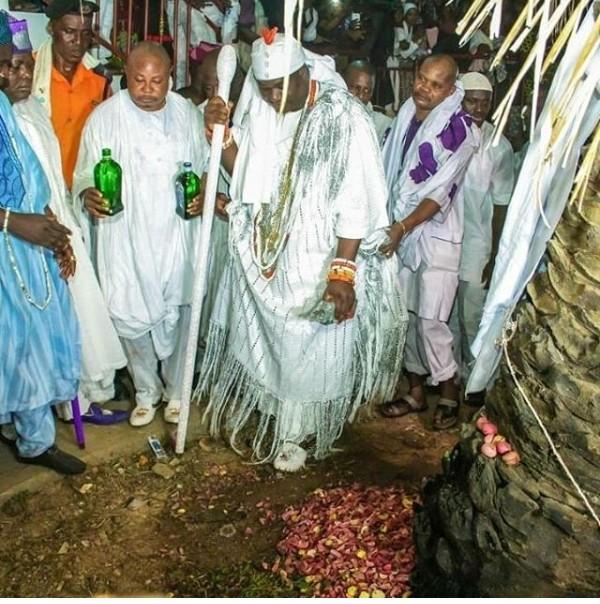
Understanding Africa’s Spiritual Worldview
To understand traditional African religions, it is important to begin
with a simple observation: there is no single traditional
African religion.
Africa is a vast continent containing thousands of communities,
languages and cultural traditions. The spiritual beliefs of a Yoruba
community in West Africa are not identical to those of an Akan community
in Ghana, a Maasai community in East Africa, an Igbo community in
southeastern Nigeria or a traditional community in southern Africa. Each
society developed its own names for spiritual beings, its own rituals,
sacred places, religious specialists and explanations of the world.
Yet despite this enormous diversity, historians and scholars of
religion have identified certain broad themes that appear repeatedly
across many African traditional religious systems.
One of the most important is the idea that human existence is
connected to a reality that extends beyond the immediately visible
world.
Life is not understood only in terms of what can be physically
seen.
The natural environment can possess spiritual significance. Ancestors
may remain important to the living. Moral behavior can be connected to
spiritual consequences. Rituals can mark important transitions in life.
Community relationships can have religious significance. Sacred places
can become centers of communication, memory and worship.
For many traditional African societies, therefore, religion was not
necessarily separated from everyday life in the way modern people
sometimes imagine religion as an activity restricted to a church, mosque
or temple.
Spiritual ideas could be woven into family life, agriculture,
politics, healing, festivals, marriage, birth, death, leadership and
community relationships.
This makes the African spiritual worldview especially important to
understanding African history and culture.
A World Where the Visible and Invisible Interact
A recurring feature of many African religious traditions is the
recognition of both a visible and an invisible dimension of
existence.
The visible world consists of human beings, animals, plants, rivers,
mountains and other physical realities.
The invisible or spiritual dimension may include a Supreme Being,
deities, spirits, ancestors and other supernatural forces, depending on
the particular cultural tradition.
The relationship between these dimensions varies from one society to
another.
Some traditions describe spiritual beings as closely involved with
human affairs.
Others emphasize the role of ancestors or intermediary spiritual
beings.
Some traditions place particular importance on sacred natural
features.
The important point is that these ideas should not be treated as a
single continental doctrine.
Rather, they represent different cultural interpretations of
the relationship between humanity, nature and the spiritual
world.
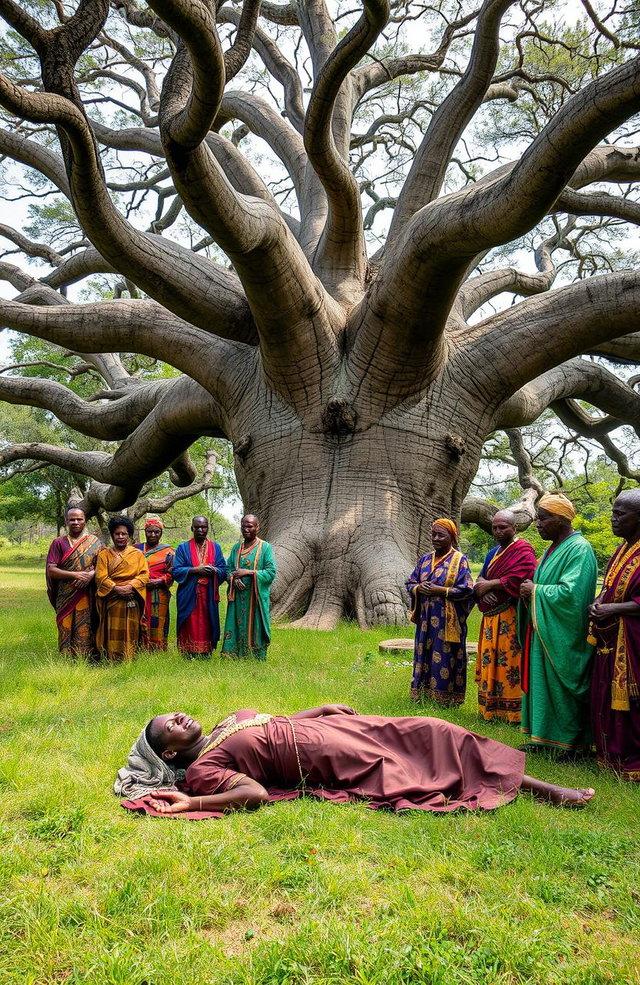
The Sacred Was Often Part of Ordinary Life
In many traditional African societies, there was no sharp division
between what modern people might call “religious life” and “ordinary
life.”
Planting crops could have spiritual significance.
Marriage could involve religious obligations.
The birth of a child could be accompanied by ceremonies.
Funerals could involve elaborate rituals concerning the relationship
between the deceased and the community.
A king or chief might have religious responsibilities in addition to
political authority.
A particular forest, river or mountain could have sacred
significance.
This does not mean every activity was considered a religious
ceremony.
Rather, spiritual ideas could provide a framework through which
people understood important aspects of existence.
The Supreme Being
Many African traditional religions recognize a Supreme Being or
creator.
However, the understanding of this Supreme Being differs considerably
between cultures.
Different societies have different names and concepts.
Among the Yoruba, for example, Olódùmarè is
associated with the Supreme Being.
Among Akan-speaking peoples, Nyame is a major name
associated with God.
Among Igbo communities, Chukwu is traditionally
associated with the Supreme Being.
Other African cultures possess their own names and
understandings.
The existence of different names does not mean these traditions are
simply versions of one religion.
Each developed within its own cultural and historical
environment.
The similarities and differences are both important.
The Supreme Being and Creation
In many traditions, the Supreme Being is associated with the creation
or ordering of the universe.
Creation stories differ widely.
Some describe how the earth was formed.
Others explain the origin of human beings.
Some include divine beings or spiritual agents who participate in the
creation process.
These stories served purposes beyond explaining how the world
began.
They could also communicate ideas about morality, responsibility,
human relationships and the proper order of society.
Creation narratives therefore form an important part of traditional
African philosophical thought.
Why the Supreme Being Was Sometimes Less Directly
Approached
One interesting feature found in some African traditions is that the
Supreme Being may be understood as distant or beyond ordinary human
interaction.
Instead of approaching the Supreme Being directly in every
circumstance, people may interact through spiritual beings, ancestors or
religious specialists.
However, this pattern is not universal.
Different communities understand the relationship differently.
In some traditions, prayers and appeals may be directed directly
toward the Supreme Being.
In others, intermediary spiritual beings play a more prominent
role.
This diversity reminds us why it is important to avoid presenting
African traditional religion as one standardized system.
Deities and Spiritual Beings
Many African religious systems recognize spiritual beings other than
the Supreme Being.
Their roles differ between cultures.
Some may be associated with particular natural forces.
Others may have relationships with particular communities or social
institutions.
Some traditions describe them as powerful spiritual beings who can
influence human affairs.
The Yoruba religious tradition, for instance, includes the
òrìṣà, a diverse group of revered spiritual beings
associated with different aspects of existence.
Other African cultures have entirely different systems of spiritual
beings.
The terminology and theological structures should therefore be
understood within their individual cultural contexts.
Nature as More Than Physical Environment
Another recurring feature of African spiritual traditions is the
importance of nature.
Rivers, forests, mountains, trees, animals and other natural features
can hold spiritual meaning.
This does not necessarily mean that every natural object is
considered a god.
Rather, particular natural locations may be regarded as sacred
because of their cultural, historical or spiritual associations.
A river may be connected to a spiritual tradition.
A forest may be protected because of its sacred status.
A particular tree may have ceremonial importance.
This relationship between spirituality and nature also influenced
traditional approaches to environmental responsibility.
Sacred Groves and Protected Spaces
Sacred groves provide a particularly interesting example.
In some African societies, particular areas of forest were protected
because of their religious significance.
Certain activities, such as hunting or cutting trees, could be
restricted.
These restrictions were not necessarily created as modern
environmental policies.
Their primary purpose was religious and cultural.
Nevertheless, they could have environmental consequences by
protecting areas of biodiversity.
The sacred grove therefore demonstrates how spiritual beliefs could
influence people’s physical relationship with their environment.
Rivers, Mountains and Sacred Landscapes
Sacred geography appears in many parts of Africa.
Certain rivers may have religious significance.
Mountains can become associated with spiritual traditions.
Caves, rocks, forests and springs can also become important sacred
locations.
These places can serve as sites for rituals, pilgrimage, offerings,
prayer or community ceremonies.
Their importance is often connected to stories passed from one
generation to another.
A sacred landscape is therefore both a physical environment and a
cultural memory.
Ancestors and the Continuity of Life
Perhaps one of the most widely discussed features of African
traditional religion is the importance of ancestors.
Many communities have traditions in which deceased family members
remain connected in some way to the living.
This does not mean that all Africans understand ancestors in exactly
the same way.
Different cultures have different beliefs about death, the afterlife
and the status of deceased relatives.
But in many traditions, respected ancestors can remain part of the
community’s spiritual imagination.
They can be remembered during ceremonies.
Families may honor them.
Their names may be preserved through generations.
Their lives can provide examples of family history and moral
behavior.
The Idea of the Living and the Dead
In some African philosophical traditions, death does not necessarily
represent the complete disappearance of a person’s relationship with the
community.
The deceased may continue to have significance through memory,
lineage and spiritual belief.
This contributes to the idea that a community consists not only of
people who are physically alive.
It also includes generations who came before.
This understanding can strengthen family continuity.
A person’s identity becomes connected to parents, grandparents,
ancestors and descendants.
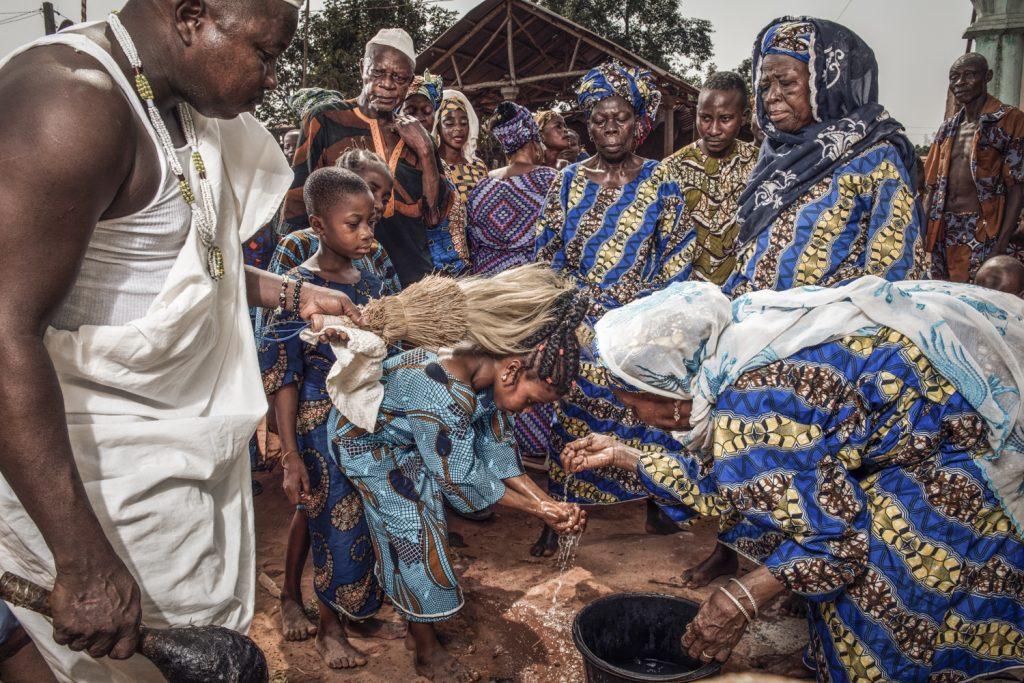
Community Is Central
Many African traditional religious systems place enormous importance
on community.
The individual exists within relationships.
Family members have responsibilities toward one another.
Elders have social responsibilities.
Children are raised within extended networks of relatives and
community members.
Religious ceremonies often involve groups rather than isolated
individuals.
This communal orientation is one reason why many traditional
religious practices are closely connected to social life.
Religion is not simply about an individual’s private beliefs.
It can also concern the well-being and harmony of the entire
community.
Personhood and Relationships
In many African philosophies, identity is understood
relationally.
A person is not viewed only as an isolated individual.
Family, ancestry, community and social responsibilities contribute to
one’s identity.
This does not mean individuality is absent.
Rather, individual identity exists alongside a strong awareness of
social relationships.
This worldview can influence concepts of responsibility.
A person’s actions may affect not only themselves but also their
family and wider community.
Morality and Spiritual Responsibility
Traditional African religions often contain strong moral systems.
Values such as honesty, respect, hospitality, responsibility toward
family, respect for elders and concern for community welfare can have
spiritual dimensions.
Wrongdoing may be understood not simply as breaking a social rule but
as disturbing relationships between individuals, families, communities
or spiritual forces.
The exact moral framework varies by culture.
But the broader principle is common:
human behavior has consequences beyond the
individual.
Harmony and Social Balance
In many traditional belief systems, maintaining harmony is
important.
Harmony can refer to relationships between people.
It can also involve relationships between humans, ancestors,
spiritual beings and the natural environment.
When serious wrongdoing occurs, rituals may be used to restore
balance.
Again, practices differ widely.
But the idea that social and spiritual disorder can be connected
appears in multiple African traditions.
This helps explain why religious ceremonies could sometimes serve
both spiritual and social purposes.
Ritual as a Way of Connecting Worlds
Rituals are among the most visible expressions of traditional African
religions.
They may include prayer, songs, dances, offerings, symbolic objects,
processions, storytelling or other ceremonial practices.
The meaning of a ritual depends entirely on the culture in which it
occurs.
A ceremony marking birth will have a different purpose from one
associated with marriage or death.
A harvest ceremony will differ from a healing ritual.
A royal ceremony may have different meanings from a family
ritual.
Rituals therefore provide communities with structured ways of
expressing important beliefs and relationships.
Birth and the Beginning of Life
Birth can have profound spiritual importance.
In some communities, ceremonies welcome a newborn into the family and
wider community.
Naming can be particularly significant.
A child’s name may connect them to ancestors, circumstances
surrounding their birth, hopes for their future or family history.
The exact customs differ from one culture to another.
But naming demonstrates how identity can be understood as something
that begins within a network of relationships rather than existing
independently.
Marriage as a Community Institution
Traditional African marriage ceremonies can also have religious
dimensions.
Marriage may involve not only two individuals but their families and
communities.
Families may exchange gifts.
Elders may provide blessings or advice.
Traditional ceremonies can acknowledge the joining of two family
networks.
The specific practices vary enormously across Africa.
But the broader principle of marriage as a social institution is
widespread.
Death and Burial
Death is another area where traditional spiritual beliefs become
particularly visible.
Funeral ceremonies can involve mourning, storytelling, music, prayer,
symbolic clothing, communal gatherings and rituals.
The purpose may be to honor the deceased, support the family and
recognize the transition from life to death.
In traditions involving ancestor veneration, funeral practices may
also contribute to the deceased person’s continuing relationship with
the community.
The enormous diversity of African burial traditions reflects
different understandings of death and the afterlife.
Religious Specialists
Traditional African communities developed different categories of
religious specialists.
These could include priests, diviners, healers, custodians of sacred
places and ritual experts.
Their responsibilities varied greatly.
Some interpreted signs or consulted spiritual systems.
Some maintained shrines.
Some conducted ceremonies.
Some possessed knowledge of traditional medicinal plants.
These roles were often based on specialized knowledge and
training.
They should therefore not be reduced to the simplistic image of a
person performing mysterious rituals.
In many communities, religious specialists were important custodians
of cultural knowledge.
Oral Tradition and Spiritual Knowledge
Much traditional African religious knowledge was transmitted
orally.
Elders taught younger generations through stories, songs, proverbs,
ceremonies and direct instruction.
This made memory extremely important.
A community’s religious knowledge could be preserved through
generations without being written in books.
Oral traditions also allowed knowledge to be adapted to changing
circumstances.
The storyteller, elder or ritual specialist could become an important
link between generations.
Proverbs and Wisdom
Proverbs provide another window into African philosophical
thought.
A short proverb can communicate ideas about responsibility, patience,
community, leadership or human behavior.
Because proverbs are often concise, memorable and metaphorical, they
can survive across generations.
They also demonstrate that philosophical thought does not have to
exist only in academic books.
It can be expressed through everyday speech.
Music, Dance and Spiritual Expression
Music and dance have played important roles in many African
ceremonial traditions.
Rhythm can accompany rituals, festivals, funerals, initiation
ceremonies and communal gatherings.
Dance can communicate identity, history and spiritual meaning.
Songs can preserve stories and teachings.
This is another example of how religion, art and community life can
overlap.
A ceremony may simultaneously be an act of worship, a cultural
performance, a historical lesson and a community gathering.
Symbols and Sacred Objects
Traditional African religious systems can also use objects with
symbolic or spiritual significance.
These might include masks, staffs, beads, carved figures, cloth,
vessels or other ritual objects.
Their meanings are not universal.
A mask from one community may have a completely different
significance from a mask used elsewhere.
Understanding the cultural context is therefore essential.
Removing a religious object from its original context can sometimes
make it difficult for outsiders to understand its full meaning.
The Importance of Sacred Authority
In many traditional societies, religious authority could be connected
to political authority.
Kings, chiefs or elders might have ceremonial responsibilities.
This relationship between religion and governance differed
significantly across African societies.
Some political leaders were regarded as having sacred
responsibilities.
Others worked alongside independent religious authorities.
The relationship demonstrates that traditional African societies did
not always separate political and religious institutions in the same way
modern secular states do.
Religion and the Environment
The spiritual worldview also influenced how communities understood
their relationship with the natural world.
If particular forests, rivers or mountains were considered sacred,
people could develop rules concerning how those places should be
treated.
Some animals could have symbolic significance.
Certain seasons could be associated with ceremonies.
Agricultural cycles could become connected to religious
observances.
This demonstrates how spirituality could be integrated with practical
life.
The Importance of Agricultural Cycles
For communities dependent on farming, the success of crops could
determine survival.
Planting and harvesting were therefore major events.
Religious ceremonies could accompany agricultural activities in some
societies.
Such ceremonies might express gratitude, seek favorable conditions or
reinforce community solidarity.
Again, practices varied enormously.
The key point is that spirituality could be connected directly to the
economic and environmental realities of life.
Healing and Spirituality
Traditional healing systems are another area where physical and
spiritual explanations could overlap.
Some communities possessed extensive knowledge of medicinal
plants.
Traditional healers could also incorporate spiritual explanations or
ritual practices into their work.
It is important to distinguish between traditional cultural practices
and modern medical science.
Traditional healing systems should be studied historically and
culturally without automatically assuming that every traditional
treatment is medically effective.
Nevertheless, the existence of traditional healing demonstrates how
African communities developed their own systems of understanding health
and illness.
Dreams, Signs and Divination
In some traditional African religions, dreams, unusual events or
other signs may be interpreted as having spiritual significance.
Divination systems developed in several cultures to seek guidance or
interpret situations.
The methods vary widely.
Some involve symbolic objects.
Others use structured systems of interpretation.
The role of divination could include helping individuals make
decisions, identifying perceived causes of problems or determining
appropriate rituals.
These practices should be understood within their cultural and
religious contexts.
Spirituality and Social Responsibility
An important feature of many African worldviews is the connection
between spirituality and responsibility.
Religious belief was not necessarily separated from ethical
behavior.
A person’s relationship with the community mattered.
Respect for elders mattered.
Family obligations mattered.
Hospitality mattered.
Keeping social harmony mattered.
In this sense, spirituality could function as a framework for
understanding how individuals should behave toward others.
The Impact of Christianity and Islam
African traditional religions have existed alongside Christianity and
Islam for centuries in different parts of the continent.
These encounters have produced complicated histories.
Sometimes conversion involved significant changes to traditional
practices.
Sometimes traditional beliefs continued alongside new religions.
In other cases, elements of different traditions became culturally
intertwined.
This process is often called religious syncretism, although the term
must be used carefully because communities themselves may not describe
their beliefs in those terms.
The important point is that African religious history has involved
continuous interaction and adaptation.
Colonial Missionaries and Traditional Religion
During colonial rule, European missionaries often criticized
traditional African religions.
Traditional religious practices could be described as superstition or
paganism.
Sacred objects were sometimes destroyed or removed.
Religious institutions were challenged.
Missionary education introduced new forms of religious and
intellectual life.
Yet traditional beliefs did not simply disappear.
Many survived through family practices, festivals, oral traditions,
cultural ceremonies and local communities.
Traditional Religion After Independence
African independence brought renewed interest in indigenous history
and culture.
Scholars began documenting traditional religions more
systematically.
Cultural organizations worked to preserve rituals, sacred sites and
oral traditions.
Some Africans also began consciously reclaiming indigenous religious
identities.
Others remained Christian or Muslim while maintaining cultural
practices inherited from traditional societies.
This demonstrates that religious identity in modern Africa can be
complex.
Avoiding the Idea of a Single “African Religion”
Perhaps the most important lesson when studying African traditional
spirituality is to avoid generalization.
There is no single African god with one universally accepted
name.
There is no single African creation story.
There is no single African ritual system.
There is no single African concept of the afterlife.
There is no single African priesthood.
Instead, there are many religious traditions, each
shaped by its own language, history, environment and social
structure.
What can be studied are the recurring themes and the fascinating
differences between them.
Why This Worldview Matters Today
Understanding African traditional spirituality is not simply about
studying ancient beliefs.
It helps explain modern African culture.
It helps explain why ancestors appear frequently in literature and
popular culture.
It helps explain the importance of certain festivals.
It helps explain sacred landscapes.
It helps explain traditional ceremonies surrounding birth, marriage
and death.
It helps explain the symbolic importance of particular animals,
objects, colors and natural environments.
It also provides a deeper understanding of African philosophy.
African Spirituality and Modern Identity
For some Africans today, traditional spirituality is an important
part of religious identity.
For others, it is primarily a cultural inheritance.
For others, traditional beliefs may be viewed as historical
traditions rather than personal religious practices.
There is no single modern African response.
This diversity is important.
Studying African traditional religion should therefore not involve
assuming what Africans believe today.
Instead, it should involve understanding the historical traditions
and allowing contemporary Africans to define their own identities.
Preserving Indigenous Knowledge
Globalization creates both opportunities and challenges for
traditional religious knowledge.
Digital technology can help record oral histories and document
ceremonies.
Museums and universities can preserve artifacts and historical
records.
Younger generations can access information about traditions that
might otherwise be forgotten.
At the same time, commercialization can remove cultural practices
from their original context.
Some communities therefore face the challenge of preserving tradition
while preventing it from being reduced to a tourist attraction or
stereotype.
The Spiritual Worldview as a Philosophy of Life
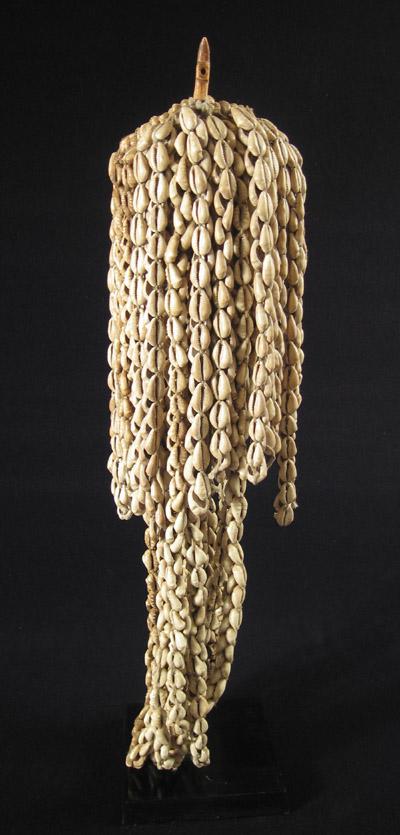
Ultimately, traditional African spirituality can be understood not
merely as a collection of rituals but as a way of interpreting
existence.
It can address questions such as:
Where did humanity come from?
What is the relationship between people and nature?
What happens after death?
What responsibilities do individuals have toward their families?
How should communities maintain harmony?
What makes a person morally responsible?
How should important moments in life be marked?
Different African societies have developed different answers.
But asking these questions demonstrates that African traditional
religions contain philosophical dimensions that deserve serious
historical and academic study.
Conclusion: A Living Heritage
Africa’s spiritual heritage is extraordinarily diverse.
Across the continent, different communities developed their own
explanations of creation, humanity, nature, morality, death and the
relationship between the visible and invisible worlds.
Some traditions emphasize a Supreme Being.
Some give important roles to deities or spiritual beings.
Many place importance on ancestors.
Sacred landscapes appear in numerous cultures.
Rituals mark important stages of life.
Religious specialists preserve specialized knowledge.
Stories, songs and proverbs transmit wisdom across generations.
Most importantly, spirituality has often been closely connected to
community life.
It could influence how people understood family, leadership,
morality, nature and social responsibility.
The arrival and expansion of Christianity and Islam transformed
Africa’s religious landscape, while colonialism created additional
pressure on indigenous religious systems.
Yet traditional spiritual ideas did not simply vanish.
Many survived in ceremonies, cultural practices, oral traditions,
festivals, sacred sites and family customs.
Some continue as living religious traditions.
Others survive primarily as cultural heritage.
The African spiritual worldview should therefore not be placed
entirely in the past.
It remains part of the continent’s complex cultural inheritance.
