

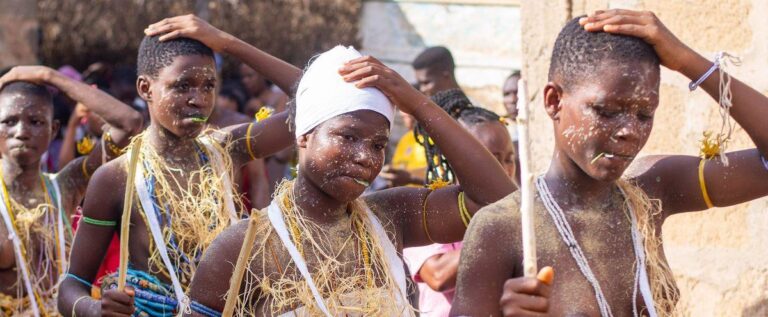
Religion is not only about what people believe.
It is also about what people do.
Across Africa, traditional religious systems have historically
expressed beliefs through ceremonies, prayers, songs, offerings, dances,
initiations, festivals and rites of passage.
These practices provide ways for individuals and communities to
interact with the spiritual world, mark important moments in life,
express gratitude, seek guidance and maintain relationships with
ancestors or spiritual beings.
Rituals can be simple or elaborate.
Some may take place inside a family compound.
Others may involve an entire community.
Some are performed by ordinary family members, while others require
priests, diviners, elders or other religious specialists.
Although practices differ significantly across Africa, a common theme
is the understanding that important moments in human life can carry
social and spiritual significance at the same time.
Birth is not simply biological.
Marriage is not simply a legal arrangement.
Death is not necessarily understood as the complete end of a person’s
existence.
Becoming an adult may require more than reaching a particular
age.
Rituals provide communities with ways of expressing these
transitions.
What Is a Religious Ritual?
A ritual is a structured action performed according to an established
tradition.
It may involve:
prayer;
singing;
dancing;
offerings;
symbolic objects;
food;
water;
clothing;
storytelling;
procession;
bodily markings;
purification;
or other ceremonial actions.
The meaning of a ritual depends on the culture in which it is
performed.
The same action can have different meanings in different
societies.
A ritual involving water, for example, may symbolize purification in
one tradition and renewal or spiritual transition in another.
It is therefore important to understand rituals within their cultural
context rather than assuming that one interpretation applies across
Africa.
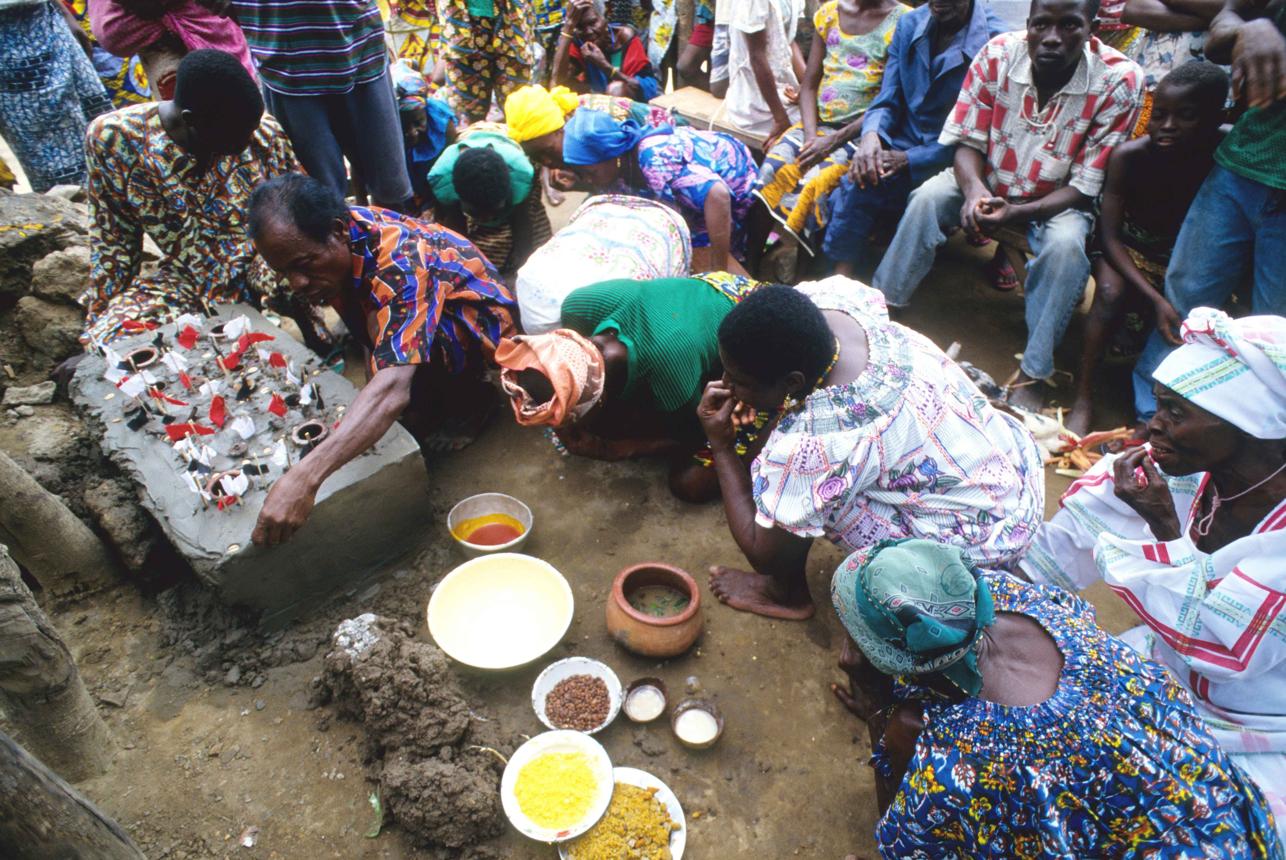 Why Do Rituals Matter?
Rituals can perform several functions simultaneously.
They can strengthen community relationships.
They can preserve history.
They can communicate religious beliefs.
They can mark changes in social status.
They can honor ancestors.
They can seek protection or guidance.
They can provide opportunities for collective celebration or
mourning.
In this sense, rituals are not simply performances.
They are social institutions.
Ritual and Community
Many traditional African ceremonies involve groups rather than
individuals.
Family members may gather.
Neighbors may participate.
Traditional leaders may attend.
Musicians may perform.
Religious specialists may direct the ceremony.
This collective participation reinforces the idea that an
individual’s life is connected to the wider community.
A person’s birth, marriage or death can therefore become a community
event.
Rites of Passage
One of the most important categories of ritual is the rite of
passage.
A rite of passage is a ceremony or process that marks a person’s
movement from one social status to another.
Anthropologists commonly discuss three broad stages:
Separation — the person leaves an earlier
status.
Transition — the person undergoes a period of
learning, preparation or transformation.
Incorporation — the person returns to society with a
new identity or status.
Different African cultures organize these stages in very different
ways.
Birth and Naming Ceremonies
Birth is often an important social and spiritual event.
A newborn may be welcomed through prayers, blessings, naming
ceremonies or family gatherings.
Names can carry considerable significance.
A child may receive a name connected to circumstances surrounding the
birth.
The name might honor an ancestor.
It might express gratitude.
It might communicate a family’s hopes for the child.
It might refer to an important historical event.
The naming process can therefore establish a child’s identity within
the family and community.
Names as Cultural Memory
A name can preserve a story.
When someone asks why a person has a particular traditional name, the
answer may reveal something about the family’s history.
This makes naming an important form of cultural memory.
Names can preserve:
ancestry;
circumstances of birth;
family aspirations;
religious beliefs;
historical events;
and relationships with the wider community.
The practice demonstrates how language and ritual can work
together.
Childhood and Socialization
Growing up involves learning the values of one’s society.
Children learn how to behave toward elders.
They learn community expectations.
They learn traditional stories.
They learn acceptable forms of speech.
They learn responsibilities toward family members.
Religious education can form part of this process.
Rather than occurring only through formal teaching, cultural
knowledge can be transmitted through observation, storytelling,
festivals and participation in family ceremonies.
Initiation and Adulthood
In some African societies, initiation has historically marked the
transition from childhood toward adulthood.
The specific practices differ greatly.
Initiation may involve education, seclusion, instruction, ceremonies
or symbolic transformation.
Participants may learn about responsibilities associated with
adulthood.
They may be taught cultural history, social expectations, marriage
responsibilities or community values.
Initiation therefore serves both religious and educational
functions.
Initiation Is Not the
Same Everywhere
It is important to avoid describing African initiation traditions as
though they were identical.
Some communities have elaborate initiation systems.
Others do not.
The age, duration, symbolism and responsibilities can vary.
Some practices have also changed significantly because of
Christianity, Islam, colonialism, modernization and national laws.
A general description should therefore never be used to claim that
every African community follows the same initiation pattern.
Circumcision and Cultural
Context
Male circumcision has historically formed part of some African
initiation traditions.
In particular societies, it can symbolize movement into adulthood or
membership in a particular social group.
However, circumcision is not inherently a universal African religious
requirement.
It has different meanings in different societies and also exists
outside African traditional religions.
Modern discussions must also distinguish cultural tradition from
medical considerations and recognize that practices involving minors
raise important ethical and legal questions.
Female Initiation Traditions
Various African communities have historically maintained initiation
traditions for girls and young women.
These may involve instruction about adulthood, marriage, social
responsibilities and cultural values.
However, practices grouped together under labels such as “female
initiation” can be extremely different.
Some traditions involve education and celebration.
Others historically included practices that are now widely recognized
as harmful.
It is important to distinguish cultural education from harmful
practices rather than treating them as the same thing.
Marriage as a Rite of
Passage
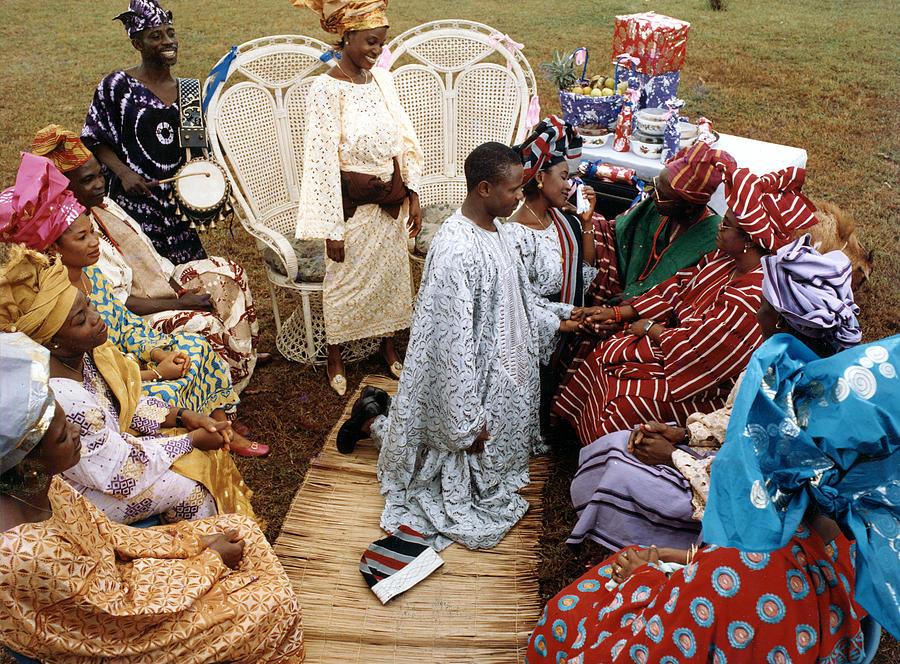
Marriage is another major transition.
Traditional African marriage ceremonies often involve more than the
couple.
Families may become formally connected.
Elders may participate.
Negotiations may occur between families.
Gifts or symbolic exchanges may be made.
Prayers and blessings may be offered.
The ceremony can therefore establish a relationship not only between
two individuals but between wider family networks.
 Marriage and Family Alliance
In many African societies, marriage has historically had social and
economic dimensions.
It could strengthen relationships between families.
It could create new obligations.
It could connect communities.
This is why marriage negotiations could involve parents, elders or
other relatives.
The couple’s relationship was considered part of a wider social
structure.
Wedding Rituals and
Symbolism
Different traditions use different symbols during marriage.
These may include:
special clothing;
food;
kola nuts;
beads;
gifts;
ceremonial drinks;
music;
dance;
prayers;
ancestral blessings;
or public declarations.
The symbolism varies considerably.
A particular object may represent hospitality in one community and
something completely different in another.
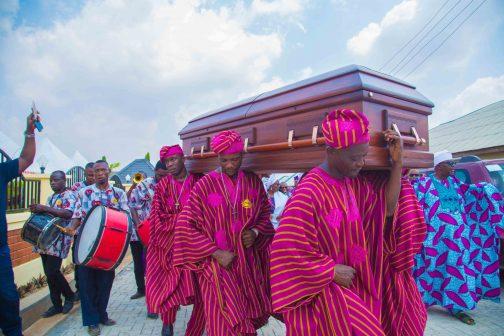 Death and Funeral Rituals
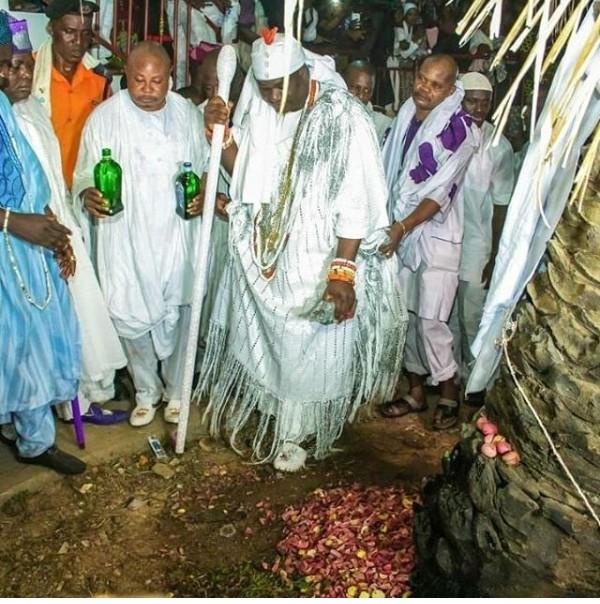
Death is one of the most significant moments addressed by traditional
religious practice.
Funeral rituals can help communities respond to loss.
They may provide opportunities to mourn.
They can honor the deceased.
They can bring families together.
They can acknowledge the person’s place within the lineage.
In traditions where ancestors remain connected to the living, funeral
ceremonies can also mark the person’s transition into the ancestral
realm.
 Understanding
Death in Traditional African Religions
There is no single African doctrine about death.
Beliefs differ.
However, many African traditions have historically recognized some
form of continuing relationship between the living and the dead.
Ancestors may be remembered through names, ceremonies, prayers,
family traditions and ritual observances.
Death can therefore be understood not simply as disappearance but as
a transition in the relationship between the deceased and the
community.
Funeral Rituals and
Community Healing
Funeral ceremonies can have an important social function.
They give people permission to mourn collectively.
Relatives who live far apart may return home.
Community members can offer support.
Stories about the deceased may be shared.
Food may be prepared.
Songs may be performed.
The ceremony can help transform private grief into a communal
experience.
Ancestor-Related Ceremonies
In traditions involving ancestor veneration, rituals may be performed
to honor deceased family members.
Offerings, prayers or commemorative ceremonies may be used.
The objective is not necessarily to worship the ancestor as God.
Rather, ancestors may be respected as members of the extended family
who remain spiritually significant.
The precise understanding differs between traditions.
What Is Sacrifice?
The word sacrifice can create confusion because it
is often used very broadly.
In religious studies, sacrifice generally refers to giving something
of value as part of a religious act.
The offering could historically include:
food;
drink;
agricultural produce;
animals;
or other valuable items.
The meaning depends on the tradition.
Sacrifice should therefore be understood within its cultural and
religious context.
Animal Sacrifice
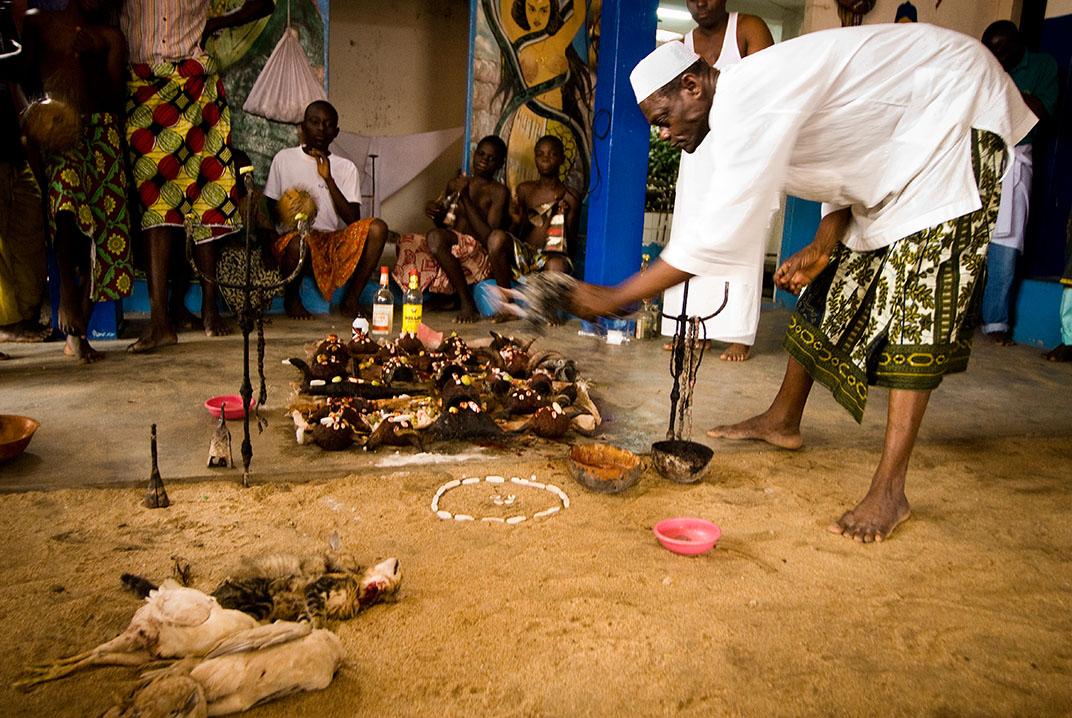
Animal sacrifice has existed historically in some African traditional
religions.
Where practiced, the animal may be offered as part of a ceremony
directed toward a deity, ancestor or spiritual power.
The practice may involve specific rules concerning which animal is
appropriate, who performs the ritual and how the animal is treated.
It is not accurate to assume that animal sacrifice is present in
every African traditional religion.
Many communities do not practice it.
 Why Offerings Matter
An offering can symbolize giving something valuable.
Food may represent gratitude.
Drink may symbolize hospitality.
Agricultural produce can represent the fruits of labor.
An animal may represent a more significant offering within traditions
where animal sacrifice exists.
The underlying concept is often reciprocity: human beings recognize
their relationship with the spiritual world through an act of
giving.
Sacrifice and Gratitude
Not every offering is connected to a crisis.
Offerings can also accompany thanksgiving.
A successful harvest may lead to celebration.
A family may express gratitude after a major event.
A community may hold a festival honoring a deity or spiritual
power.
The offering becomes part of a larger expression of appreciation.
Sacrifice and Crisis
In some traditions, offerings may also be associated with difficult
circumstances.
A person may consult a diviner to determine an appropriate ritual
response.
The recommendation could involve prayer, an offering, a change in
behavior or another culturally recognized action.
This illustrates why divination and sacrifice can sometimes be
connected.
The diviner interprets the situation, while the ritual specialist or
family carries out the prescribed ceremony.
Sacrifice Is Not Simply
“Buying Favors”
A simplistic interpretation describes sacrifice as attempting to
purchase supernatural assistance.
That does not adequately represent the complexity of many traditional
systems.
Offerings can express:
gratitude;
respect;
reconciliation;
remembrance;
commitment;
communal identity;
or restoration of relationships.
Their meaning is determined by the religious worldview of the people
performing them.
Purification Rituals
Purification is another recurring theme in religious traditions.
Water, herbs, smoke, prayer or other symbolic actions may be
used.
The purpose may be to prepare someone for a ceremony or mark a
transition.
Again, practices differ between cultures.
There is no single African purification ritual.
Rituals and Nature
African traditional rituals are often closely connected to the
natural environment.
Ceremonies may occur near:
rivers;
forests;
mountains;
sacred trees;
springs;
caves;
farms;
or other significant landscapes.
This connection reflects the importance of nature in many traditional
worldviews.
The environment is not always treated as a passive background.
It can form part of the sacred relationship itself.
Seasonal and Agricultural
Rituals
Agricultural societies have historically developed ceremonies
connected with farming cycles.
Planting and harvest can become occasions for communal
celebration.
People may express gratitude for rainfall.
They may pray for successful crops.
Harvest festivals can involve food, music, dance and offerings.
These ceremonies connect human survival with environmental
conditions.
Rainmaking Traditions
Rain has enormous importance in agricultural communities.
Consequently, some African societies historically developed
rainmaking traditions involving specialists, ceremonies and prayers.
These practices should be understood as religious and cultural
responses to environmental uncertainty.
They do not mean that all African societies possessed the same
concept of rainmaking.
Different communities developed different approaches.
Ritual Music and Dance
Music and dance are essential elements of many African
ceremonies.
Drums can provide rhythm.
Singers can preserve traditional texts.
Dancers can represent stories or spiritual themes.
Participants can move together as a community.
Music therefore serves both artistic and religious functions.
Ritual Objects
Ceremonies may involve specialized objects.
These can include:
masks;
staffs;
beads;
vessels;
carved figures;
cloth;
bells;
drums;
plants;
or other culturally significant materials.
The object itself does not automatically reveal its meaning.
Its significance must be understood through the tradition in which it
is used.
Ritual Clothing
Clothing can also communicate ceremonial status.
A priest may wear distinctive garments.
Initiates may receive special clothing.
Traditional rulers may appear in ceremonial regalia.
Colors, beads, patterns and accessories can communicate identity or
religious association.
This is another way material culture becomes part of religious
practice.
Ritual Language
Some ceremonies require particular prayers, songs or formulas.
These may be performed in traditional languages.
The words can carry historical meanings that are difficult to
translate.
This makes language preservation especially important for
understanding traditional religious ceremonies accurately.
Secrecy and Sacred Knowledge
Not all ritual knowledge is publicly available.
Some information may be restricted to initiates or religious
specialists.
This is not necessarily evidence of secrecy for its own sake.
Restricted knowledge can help maintain the structure and identity of
a religious institution.
It also means researchers and visitors should respect cultural
boundaries.
Rituals and Social
Discipline
Religious ceremonies can reinforce social values.
A marriage ceremony can emphasize responsibility.
An initiation can communicate adulthood.
A funeral can reinforce family relationships.
A communal festival can strengthen solidarity.
Rituals therefore help societies communicate expectations without
relying exclusively on written laws.
Ritual and Moral Behavior
Traditional religious systems often connect behavior with spiritual
consequences.
Respect for elders may be encouraged.
Hospitality may be valued.
Honesty may be praised.
Violations of community norms may be considered both social and
spiritual problems.
Rituals can reinforce these principles by repeatedly presenting them
to members of the community.
Ritual Change Over Time
Traditional rituals are not frozen in history.
They change.
Some disappear.
Some are modified.
Some become shorter.
Some are combined with Christian or Islamic practices.
Others are transformed into cultural festivals.
This demonstrates that tradition is not necessarily the opposite of
change.
Traditions can survive precisely because communities adapt them to
new circumstances.
Colonialism and Ritual
Suppression
Colonial governments and Christian missionaries frequently criticized
or restricted indigenous religious practices.
Some ceremonies were described as pagan.
Some shrines were destroyed.
Some ritual specialists were marginalized.
Certain forms of sacrifice were prohibited.
These interventions changed religious practices across many African
societies.
Christianity, Islam
and Ritual Adaptation
The arrival and expansion of Christianity and Islam did not produce a
simple replacement of all traditional practices.
In some places, indigenous rituals declined dramatically.
In others, elements of traditional culture survived.
People sometimes retained naming customs, funeral traditions,
marriage practices, music, clothing or festivals even after adopting a
world religion.
This distinction between religious belief and cultural
practice is essential.
Modern Rites of Passage
Many contemporary Africans continue to mark major life transitions
through ceremonies.
Modern naming ceremonies may combine traditional customs with
Christian or Islamic prayers.
Weddings may combine civil, religious and traditional elements.
Funerals may include both church services and indigenous cultural
practices.
Graduations, birthdays and other modern events can also incorporate
traditional clothing, music and food.
This demonstrates how cultural continuity works in modern
society.
The Importance of Respect
When studying African rituals, outsiders should avoid
sensationalism.
Practices involving sacrifice, initiation or spiritual possession can
appear unfamiliar to people outside the culture.
But unfamiliarity is not the same as irrationality.
At the same time, cultural sensitivity does not require ignoring
genuine ethical concerns.
Practices that cause harm should be evaluated according to
contemporary human rights, medical and legal standards.
The best approach combines cultural understanding with
critical thinking.
Preserving Ritual Heritage
Many rituals are endangered because the knowledge required to perform
them is disappearing.
Elders may pass away without transmitting specialized knowledge.
Young people may migrate to cities.
Traditional languages may decline.
Religious conversion can reduce participation.
Some ceremonies may become commercialized.
Documentation can help preserve information, but written records
alone cannot fully replace living cultural practice.
The Role of Young People
Young Africans can play a major role in preserving ritual
heritage.
They can interview elders.
They can record traditional songs.
They can document ceremonies with community permission.
They can study indigenous languages.
They can participate in cultural festivals.
They can create educational content.
They can also critically evaluate harmful practices while preserving
valuable cultural knowledge.
Conclusion:
Ritual as a Bridge Between Generations
Rituals, sacrifices and rites of passage provide some of the clearest
ways to understand African traditional religious life.
They transform beliefs into action.
Through naming ceremonies, communities welcome new members.
Through initiation, some societies mark the movement into
adulthood.
Through marriage ceremonies, families establish new
relationships.
Through funerals, communities mourn and remember the dead.
Through offerings and sacrifices, some traditions express gratitude,
respect, reconciliation or spiritual obligation.
Through festivals, people renew their connection to community,
history and sacred traditions.
The enormous diversity of Africa means that no single ritual system
represents the entire continent.
Yet across this diversity, ceremonies have repeatedly served one
important purpose:
they connect individual lives to something larger than the
individual.
They connect children to families.
Adults to communities.
The living to ancestors.
People to the natural environment.
And the present generation to the generations that came before.
That is why rituals remain important when studying African
traditional religions.
They are not simply ancient ceremonies preserved in history.
They are expressions of identity, memory, spirituality and social
relationships—and in many communities, they continue to evolve in the
modern world.
