

Religion in many African traditional societies was not separated from
everyday life.
It could influence how people understood family, leadership,
morality, marriage, land, death, community responsibilities and
relationships with the natural environment.
This does not mean that every African society had a formal religious
legal system comparable to a modern state constitution.
Instead, religious beliefs were often intertwined with
custom, tradition, social expectations and systems of
authority.
A community’s understanding of right and wrong could therefore have
both social and spiritual dimensions.
An action might be considered wrong because it harmed another person,
violated an established custom, offended an ancestor, disturbed
community harmony or broke a sacred prohibition.
The exact relationship between religion and law differed enormously
across Africa.
Nevertheless, examining this relationship helps explain how many
communities maintained social order before and alongside modern state
institutions.
Religion Was Part of
Everyday Life
One of the biggest differences between many traditional African
societies and modern secular states is the degree to which religion
could be integrated into ordinary activities.
Modern societies often separate institutions into categories such
as:
religion;
government;
law;
education;
medicine;
family;
and economics.
Traditional African societies did not always organize life according
to these same divisions.
A religious ceremony could also be a community gathering.
An elder could be a political adviser and cultural authority.
A traditional ruler could have religious responsibilities.
A family dispute could involve both social negotiation and spiritual
considerations.
This interconnectedness is essential to understanding traditional
African community life.
Custom and Law
The word law requires some explanation when
discussing African traditional societies.
Many communities relied heavily on customary law.
Customary law consists of rules and expectations developed through
long-standing community practice.
These rules could govern:
marriage;
inheritance;
land;
family responsibilities;
leadership;
compensation;
conflict;
property;
and community obligations.
Some customs had religious foundations.
Others were primarily social.
Therefore, customary law and traditional religion should not be
treated as identical.
They could overlap, but they were not necessarily the same thing.
The Importance of Community
Traditional African social organization often emphasized the
community rather than extreme individual independence.
A person’s identity could be connected to family, lineage, village,
clan or ethnic group.
This meant that individual actions could affect other people.
Marriage could connect families.
A dispute between two individuals could become a problem between
their relatives.
A crime could damage community trust.
A person’s responsibilities therefore extended beyond personal
interests.
The Principle of Social
Harmony
Maintaining harmony was an important objective in many traditional
systems of conflict resolution.
Punishment was not always the only concern.
Communities could also seek:
reconciliation;
compensation;
apology;
restoration of relationships;
acknowledgement of wrongdoing;
and reintegration.
This does not mean traditional justice was always peaceful or
forgiving.
Serious offences could result in severe consequences.
But the restoration of social relationships could be considered
extremely important.
 Elders and Community
Authority
Elders often occupied important positions within traditional
governance.
Their authority could come from:
age;
experience;
lineage;
knowledge;
reputation;
traditional titles;
or community recognition.
They might participate in discussions about disputes, marriage
arrangements, inheritance and community decisions.
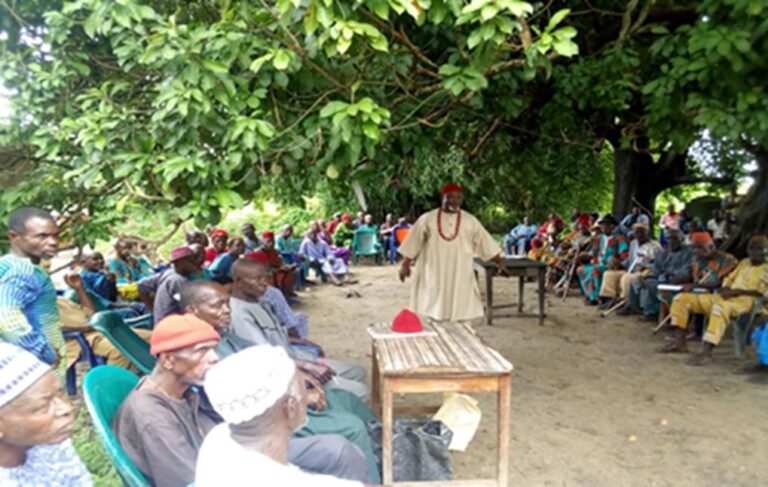
In some societies, councils of elders served as important
decision-making institutions.
Councils and Collective
Decision-Making
Traditional governance was not always based on a single ruler making
every decision.
Some societies used councils, assemblies or groups of elders.
Community members could discuss issues collectively.
Different societies developed different forms of political
organization.
Some had centralized kingdoms.
Others had decentralized systems.
Some combined traditional rulers with councils and other
institutions.
This diversity is one reason it is inaccurate to speak about a single
“African traditional government.”
 Kings and Chiefs
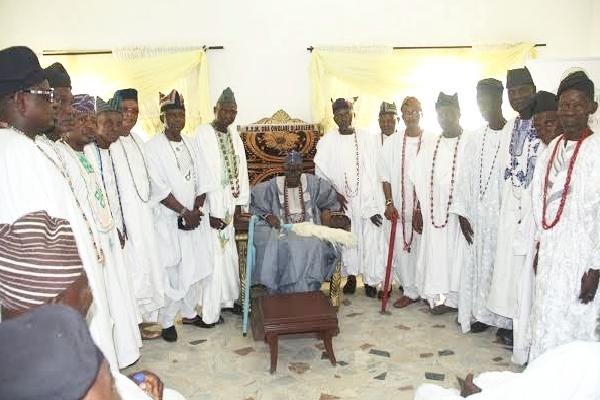
Where centralized political systems existed, kings, chiefs or other
traditional rulers could exercise considerable authority.
Their responsibilities could include:
protecting the community;
overseeing land;
settling disputes;
conducting ceremonies;
maintaining traditions;
and representing the community.
In some societies, political authority was connected with sacred
legitimacy.
The ruler could have religious responsibilities in addition to
political ones.
Sacred Kingship
The concept of sacred kingship appeared in several African historical
societies, although its exact form varied.
A ruler might be regarded as having a special relationship with the
spiritual world.
Royal rituals could emphasize the continuity of the kingdom.
The king might participate in ceremonies associated with ancestors,
fertility, harvest or community welfare.
This did not necessarily mean that the king was considered a god.
The relationship between ruler, ancestors and spiritual authority
varied by society.
Religion and Moral Rules
Traditional religious beliefs could reinforce moral expectations.
Values such as honesty, respect for elders, hospitality,
responsibility and loyalty to family could be strongly emphasized.
A person who violated important social expectations might face
criticism from the community.
In some traditions, the violation could also be interpreted as a
spiritual offence.
Religion therefore provided one source of moral authority.
Taboos
One of the most important mechanisms through which religious and
social expectations could intersect was the taboo.
A taboo is a culturally established prohibition against a particular
action.
Examples might involve:
entering a sacred location;
eating certain foods;
disturbing particular trees;
violating ritual restrictions;
breaking marriage rules;
or disrespecting sacred objects.
The precise taboos differed between societies.
Why Taboos Were Powerful
A taboo could have both social and spiritual consequences.
A person might fear community punishment.
They might also believe that violating the rule could result in
spiritual consequences.
This combination could make the rule highly influential.
Taboos also helped communicate community values.
Children learned what was acceptable by learning what was
forbidden.
Sacred Places and Community
Rules
Sacred forests, shrines, rivers and mountains could have their own
restrictions.
People might be prohibited from cutting trees.
Certain areas might be accessible only during particular
ceremonies.
Hunting could be restricted.
Visitors might be required to follow specific rules.
These regulations could simultaneously protect the sacred character
of the location and preserve the environment.
Religion and Land
Land was extremely important to African communities.
It provided space for:
farming;
settlement;
grazing;
hunting;
burial;
and religious activities.
In many traditional systems, land was not viewed simply as a
commodity that could be freely bought and sold.
Its relationship with ancestors, families and future generations
could also be important.
Ancestral Connections to
Land
In societies where ancestors were deeply connected to community
identity, land could have ancestral significance.
People might regard themselves as custodians rather than absolute
owners.
The land had been inherited from previous generations and would
eventually be passed to future generations.
This created a concept of responsibility extending across
generations.
Marriage and Community Law
Marriage could be regulated by customary rules.
These might address:
eligibility;
family negotiations;
bridewealth;
inheritance;
responsibilities between spouses;
divorce;
and relationships between families.
The exact rules varied significantly.
Religious beliefs could influence some of these practices, but
economic and social considerations were equally important.
Bridewealth and Social
Relationships
In some African societies, bridewealth became part of marriage
arrangements.
It could involve livestock, money or other valuable goods.
It is important not to reduce bridewealth to the idea of “buying a
wife.”
Traditionally, it could represent the establishment of relationships
and obligations between families.
However, its meaning and contemporary interpretation vary
considerably.
Family Responsibilities
Traditional community systems generally placed considerable emphasis
on family obligations.
Adults were expected to contribute to family welfare.
Children had responsibilities toward parents and elders.
Extended family members could assist one another.
These obligations were reinforced by cultural expectations and, in
some cases, religious beliefs.
Respect for Elders
Respect for elders is a widely recognized value across many African
cultures.
However, the exact meaning differs from one society to another.
Elders may be respected because they possess experience and
knowledge.
They may preserve family history.
They may understand customary rules.
They may serve as mediators.
Their authority can therefore be social rather than simply
religious.
 Conflict Resolution
Disputes are inevitable in every society.
Traditional African communities developed numerous mechanisms for
resolving them.
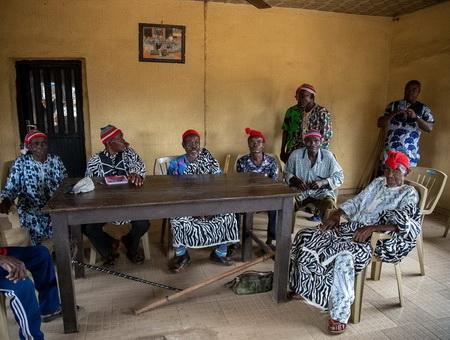
Depending on the society, disputes could be handled by:
family heads;
elders;
chiefs;
kings;
lineage authorities;
councils;
religious specialists;
or community assemblies.
The method depended on the nature of the dispute.
Mediation Rather Than
Punishment
Some traditional systems emphasized mediation.
The parties could be encouraged to explain their positions.
Witnesses might be consulted.
Elders could provide advice.
The goal could be to find an acceptable settlement.
Compensation might be required.
An apology could be demanded.
The parties could then be reintegrated into the community.
This approach reflects the importance of maintaining social
relationships.
Compensation
Compensation has existed in many traditional justice systems.
Instead of focusing exclusively on imprisonment or physical
punishment, the offender could be required to compensate the victim or
their family.
The form and amount depended on the society and the offence.
Compensation could include livestock, agricultural products, money or
other valuables.
Oaths and Truth
Oaths could play an important role in some traditional justice
systems.
A person might swear before a sacred object, shrine or religious
authority.
Because the oath could be believed to involve spiritual consequences,
it might discourage false testimony.
The use of oaths varied considerably.
They should therefore not be assumed to have existed in every African
community.
Diviners and Disputes
In certain societies, diviners could be consulted when ordinary
explanations failed or when the community believed spiritual factors
were involved.
Their role might include identifying the spiritual dimension of a
problem or recommending a ritual response.
This did not necessarily mean that diviners replaced community
authorities.
Their role depended on the particular cultural system.
Crime and Spiritual Offence
Some actions could be understood as both crimes against people and
offences against the spiritual order.
For example, violating a sacred prohibition might harm community
relationships while also being interpreted as spiritually dangerous.
The response could therefore involve both social consequences and
ritual action.
This demonstrates the close relationship between morality, religion
and community life.
Justice and Reconciliation
The ultimate objective of a traditional dispute settlement process
was not always punishment.
In some contexts, restoring peace could be more important.
A successful settlement could allow families to resume normal
relations.
This was especially important in small communities where people had
to continue living and working together.
Religion and Leadership
Traditional religious beliefs could influence perceptions of
legitimate leadership.
A ruler was expected to protect the community.
Traditional leaders could be judged according to whether they
maintained social order.
In some societies, religious ceremonies reinforced political
legitimacy.
Leadership was therefore not necessarily understood as purely
administrative.
The Limits of Traditional
Authority
Traditional authority was not always unlimited.
In many societies, rulers were constrained by customs, councils,
religious traditions or expectations of the community.
A king could have significant power while still being expected to
respect established traditions.
This demonstrates that traditional African governance could contain
checks on authority, even though the specific mechanisms varied.
Women and Community
Governance
Women were also involved in community organization in many African
societies.
Their roles differed considerably.
Women could participate through:
family institutions;
market organizations;
age groups;
religious associations;
councils;
and community movements.
Some societies developed female political institutions that could
influence public decisions.
This challenges simplistic descriptions of traditional African
societies as politically controlled exclusively by men.
Age Grades and Social
Organization
Some African societies organized people into age groups or age
grades.
Members of the same age group could share responsibilities.
These might involve:
community work;
defense;
festivals;
ceremonies;
public projects;
and social duties.
Age-grade systems helped organize community participation.
 Religious Festivals and
Social Unity
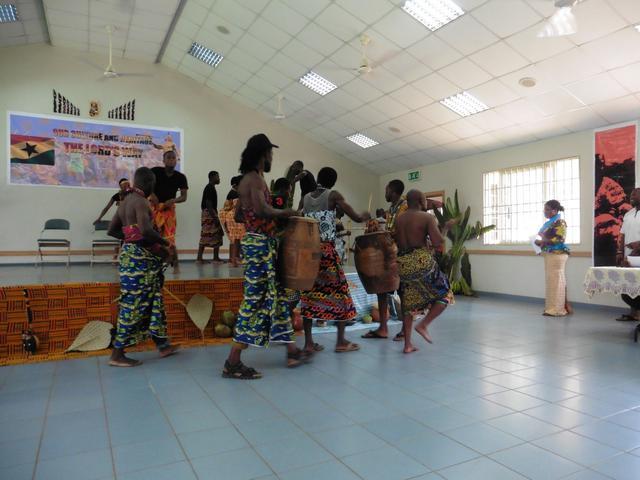
Festivals could reinforce community identity.
People returned home.
Families gathered.
Traditional leaders participated.
Music and dance brought people together.
Religious ceremonies renewed relationships between individuals and
the wider community.
Festivals therefore had both spiritual and social functions.
Religion and Agriculture
Agriculture was central to many African societies.
Religious ceremonies could be connected with planting, rainfall,
harvest and thanksgiving.
These practices reflected dependence on environmental conditions.
A successful harvest affected everyone.
Consequently, agricultural rituals could become community-wide
events.
Religion and
Environmental Responsibility
Sacred traditions could also influence environmental behavior.
A forest protected by religious rules might remain relatively
undisturbed.
A sacred river might be protected from certain activities.
A particular tree might not be cut.
These practices could contribute to conservation even when their
primary motivation was spiritual rather than ecological.
Colonialism and Customary
Law
Colonial rule transformed African systems of law.
European authorities introduced new legal institutions.
They also sometimes incorporated selected customary laws into
colonial administration.
This produced complicated legal systems in which indigenous customs
existed alongside imported legal frameworks.
In some cases, colonial governments recognized traditional
authorities.
In others, they weakened or replaced them.
The Problem of the
“Traditional” Label
It is important to remember that traditions change.
What people call customary law today may not be identical to the
rules practiced centuries ago.
Colonial governments sometimes recorded customs and then treated
those written versions as fixed.
In reality, customary systems could evolve.
Communities interpreted and adjusted their rules according to
changing circumstances.
Christianity and Customary
Law
Christianity influenced many African societies’ understanding of
marriage, family, morality and ritual.
Some traditional practices declined.
Others continued.
Some became cultural rather than explicitly religious.
Modern African families may therefore combine church ceremonies with
customary marriage practices.
This illustrates the complex relationship between religious change
and cultural continuity.
Islam and Customary Law
Islam has also interacted with African customary systems in complex
ways.
In some societies, Islamic law became an important source of legal
authority.
In others, customary law continued to regulate areas of social
life.
Sometimes the two systems influenced each other.
The exact relationship differs by region, historical period and
community.
Modern African Legal Systems
Most contemporary African countries operate under constitutional and
statutory legal systems.
Courts, legislation and government institutions now play central
roles in formal law.
Nevertheless, customary law remains important in various countries,
particularly in areas such as family relationships, land, inheritance
and traditional leadership.
Its legal status differs between jurisdictions.
Traditional Leaders Today
Traditional rulers continue to play cultural and sometimes
administrative roles in many African societies.
They may:
mediate disputes;
preserve cultural traditions;
organize festivals;
represent communities;
advise government officials;
or participate in local development.
Their formal legal authority varies from country to country.
Religion and Modern Identity
Even when people no longer practice traditional religion, traditional
values may continue influencing cultural identity.
People may retain:
respect for elders;
extended-family obligations;
traditional marriage customs;
festivals;
naming traditions;
community associations;
and ancestral histories.
This demonstrates that cultural influence can survive even when
religious beliefs change.
Where
Traditional Law Can Conflict With Modern Rights
Traditional customs are not automatically compatible with
contemporary law or human rights standards.
Some practices historically associated with customary systems may
conflict with modern principles concerning:
gender equality;
children’s rights;
bodily autonomy;
freedom of religion;
property rights;
or protection from discrimination.
This creates difficult questions for modern societies.
How should cultural traditions be preserved while protecting
individual rights?
There is no single answer.
Each practice must be examined in its specific historical and legal
context.
Preserving Culture
Without Freezing the Past
Cultural preservation should not mean treating every historical
practice as automatically acceptable.
A society can preserve its:
languages;
music;
stories;
festivals;
architecture;
art;
traditional knowledge;
and historical institutions
while also reforming practices that cause harm.
Culture is capable of evolving.
Religion, Law and Social
Responsibility
One of the most important lessons from African traditional systems is
the idea that social order depends on responsibility.
Individuals have obligations toward families.
Families have obligations toward communities.
Leaders have obligations toward citizens.
The living have obligations toward the memory of ancestors.
Communities have obligations toward future generations.
These relationships create a moral framework extending beyond the
individual.
Conclusion:
When Religion, Custom and Community Meet
Religion played—and continues to play in various forms—an important
role in shaping community life across Africa.
But it is important not to describe the continent as though all
societies followed one religious legal system.
African communities developed different combinations of:
religion;
custom;
family authority;
traditional leadership;
councils;
customary law;
age groups;
religious specialists;
and community assemblies.
In many cases, these institutions overlapped.
Religion could provide moral authority.
Custom could establish expectations.
Elders could interpret tradition.
Leaders could enforce community decisions.
Religious specialists could address spiritual concerns.
Families could mediate disputes.
Together, these systems helped communities organize social life.
Their influence can still be seen today in traditional leadership,
customary marriage, festivals, family structures, community ceremonies
and cultural identity.
At the same time, modern African societies operate under
constitutional and statutory legal systems, and traditional practices
sometimes need to be reconsidered in light of contemporary rights and
legal standards.
The enduring lesson is therefore not that ancient systems should
simply replace modern law.
It is that African history demonstrates many different ways
communities have attempted to answer fundamental questions:
What is right? What is wrong? Who has authority? How should
disputes be resolved? What does an individual owe the community? And how
should the living maintain relationships with those who came before
them?
The answers varied from one society to another.
But through religion, custom and community institutions, African
societies developed sophisticated systems for creating social order and
preserving collective identity.
Understanding those systems provides a deeper appreciation of African
history—and helps explain why traditional beliefs and customs continue
to influence modern African societies.
