

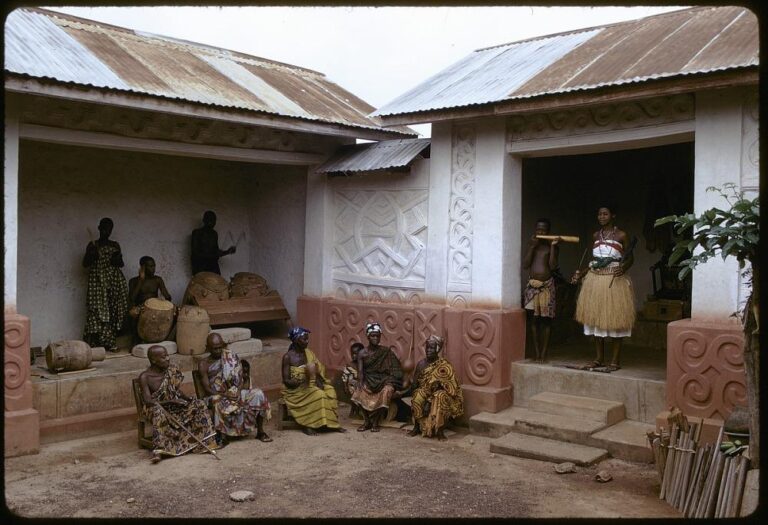
Every religious tradition requires people who preserve knowledge,
conduct ceremonies and help communities maintain their relationship with
the sacred.
In many African traditional religions, these responsibilities have
historically been carried by different categories of religious
specialists.
They may be called priests, priestesses, diviners, healers,
ritual specialists, custodians, elders, mediums or spiritual
leaders, depending on the society.
However, these titles should not be treated as interchangeable.
A diviner does not necessarily perform exactly the same duties as a
priest.
A traditional healer may have responsibilities that are different
from those of a shrine custodian.
An elder may possess extensive spiritual knowledge without belonging
to a formal priesthood.
The roles differ considerably across Africa.
This diversity is important because there is no single African
religious institution that can accurately be described as the equivalent
of a universal priesthood.
Instead, different communities developed their own systems for
preserving sacred knowledge and managing relationships between humans,
ancestors, deities and spirits.
Religious
Specialists in a Diverse Continent
Africa contains thousands of cultural communities with distinct
histories and religious traditions.
Consequently, the person responsible for religious activities in one
society may have a completely different title and role in another.
Among Yoruba communities, for example, Babaláwo
traditionally refers to a specialist associated with Ifá divination.
In other African societies, diviners have completely different titles
and methods.
Some communities have hereditary priests.
Others recognize spiritual specialists through initiation.
Some positions are associated with particular families or
lineages.
Others depend on personal calling, training or recognition by the
community.
Understanding these differences prevents us from treating African
traditional religions as though they were a single organized
religion.
What Is a Traditional Priest?
A traditional priest can broadly be understood as a person
responsible for maintaining a relationship between a community and a
deity, shrine or spiritual tradition.
The precise responsibilities vary.
A priest may:
maintain a shrine;
lead ceremonies;
prepare ritual spaces;
oversee festivals;
offer prayers;
preserve sacred traditions;
train younger specialists;
advise community members;
and participate in rites of passage.
In some societies, the position is hereditary.
A child may inherit responsibility for a particular shrine from a
parent or family lineage.
In others, individuals may undergo initiation or specialized
training.
Priests and Sacred Knowledge
One of the most important responsibilities of religious specialists
is the preservation of knowledge.
Traditional religious knowledge can include:
sacred stories;
prayers;
songs;
ritual procedures;
genealogies;
medicinal knowledge;
taboos;
festival traditions;
sacred language;
and knowledge of particular spiritual beings.
Much of this knowledge was historically transmitted orally.
This means memory was extremely important.
A specialist might spend many years learning the material necessary
to perform religious responsibilities correctly.
The Importance of Oral
Transmission
Before widespread literacy, oral transmission was one of the primary
ways African societies preserved knowledge.
Religious specialists learned through observation, repetition,
participation and instruction.
Songs could preserve historical information.
Proverbs could communicate philosophical ideas.
Stories could explain the relationship between humans and spiritual
beings.
Ritual formulas could be memorized and transmitted between
generations.
This made religious specialists important cultural historians as well
as spiritual practitioners.
Diviners:
Seeking Answers From the Spiritual World
Diviners occupy another important position.
Divination is the practice of seeking information, guidance or
insight through a recognized religious method.
Different African societies developed different systems.
The method may involve symbolic objects, patterns, signs, verses,
dreams, spirit communication or other culturally recognized
processes.
The diviner’s role is not simply to “predict the future.”
In many traditions, divination is concerned with understanding a
person’s circumstances and determining an appropriate course of
action.
Ifá Divination Among the
Yoruba
One of Africa’s most extensively documented divination systems is
Ifá, associated with Yoruba religious tradition.
A specialist known as a Babaláwo traditionally
undergoes extensive training in the Ifá corpus.
The system involves a large body of verses, stories and philosophical
teachings.
During consultation, the diviner uses a prescribed method to produce
a particular configuration.
The resulting pattern is interpreted through the relevant verses and
knowledge.
This means Ifá is not simply a random fortune-telling exercise.
It involves a sophisticated body of memorized knowledge.
Divination as Interpretation
The power of divination depends heavily on interpretation.
A symbol or result does not automatically provide a complete
answer.
The specialist must understand its traditional meaning and apply it
to the circumstances of the person seeking consultation.
This requires experience.
It also requires knowledge of the cultural framework surrounding the
divination system.
The diviner therefore functions partly as an interpreter.
Divination and
Decision-Making
Historically, people might consult diviners about important
matters.
These could include:
marriage;
travel;
agriculture;
illness;
family problems;
business decisions;
community disputes;
political questions;
rituals;
or unusual events.
The importance of consultation varies by culture and individual.
Not every decision necessarily required divination.
Divination and Uncertainty
One reason divination has been important in many societies is that
human beings frequently face uncertainty.
People may not know why a problem has occurred.
They may not know which decision to make.
They may fear an unknown future.
A divination system provides a culturally recognized framework for
interpreting uncertainty.
It can give people a structured way to discuss problems and possible
solutions.
Diviners as Counselors
A diviner may therefore perform a role that extends beyond religious
ritual.
The consultation can involve conversation.
The individual explains a problem.
The specialist asks questions.
The divination process provides a framework for interpretation.
The resulting discussion may produce advice about behavior,
relationships or community obligations.
In this sense, some diviners have historically served functions
resembling counselors or advisers.
The comparison is not exact, but it helps explain the social role
they can occupy.
Traditional
Healers and Spiritual Specialists
Traditional healing is another major area of African indigenous
knowledge.
Traditional healers may have knowledge of medicinal plants, herbs,
roots and other natural materials.
Some healing traditions also involve spiritual practices.
It is important to distinguish these systems from modern clinical
medicine.
Traditional healing knowledge contains valuable ethnobotanical
information, but individual treatments are not automatically
scientifically proven or medically safe.
Historically, however, traditional healers were important sources of
health-related knowledge within their communities.
Healing and the Spiritual
World
In some African traditional systems, illness can be understood
through multiple dimensions.
There may be a physical cause.
There may also be social, psychological or spiritual
interpretations.
A healer may therefore address more than physical symptoms.
The exact understanding varies enormously among cultures.
It would be misleading to suggest that every African community
believed all illness had supernatural causes.
Traditional African societies developed diverse theories of
health.
Priests and Healers
Are Not Always the Same
Another common misconception is that every traditional priest is a
healer.
This is not necessarily true.
A priest may specialize in a shrine or deity.
A diviner may specialize in interpreting signs.
A healer may specialize in medicinal knowledge.
A spiritual medium may specialize in communication with spirits.
In some societies, one person can hold several roles.
In others, the responsibilities are carefully separated.
Spirit Mediums
Some African traditions include individuals believed to serve as
intermediaries through whom spiritual beings communicate.
These individuals may be described as mediums.
The exact practices vary.
In some traditions, altered states of consciousness or possession may
form part of ritual activity.
The community determines how such experiences are understood.
From a historical perspective, these practices provide insight into
how societies conceptualized communication between the human and
spiritual worlds.
Ancestors and Spiritual
Leadership
Ancestors occupy an important position in many African traditional
religions.
Because ancestors are connected to family and lineage, people
responsible for ancestral rituals can have significant authority.
An elder may lead ceremonies honoring ancestors.
A family head may oversee household rituals.
A lineage custodian may preserve ancestral traditions.
This illustrates again that religious authority does not always
belong to a professional priesthood.
Elders as Custodians of
Tradition
Older members of a community can possess extensive knowledge.
They may remember genealogies.
They may know community history.
They may understand traditional laws.
They may preserve rituals and stories.
They may know the correct procedures for important ceremonies.
Their authority can therefore be both social and spiritual.
Age itself does not automatically make someone a religious
specialist, but elders frequently play important roles in maintaining
cultural continuity.
Traditional Leaders
and Religious Authority
Kings, chiefs and other traditional rulers can also have religious
responsibilities.
In some historical African kingdoms, political leadership was
connected to sacred traditions.
A ruler might participate in major ceremonies.
A royal shrine might be associated with the dynasty.
The ruler could have responsibilities relating to ancestors or
community rituals.
However, the relationship between political and religious authority
differed widely across Africa.
Women as Spiritual Leaders
Women have played important roles in many African religious
traditions.
They may serve as:
priestesses;
diviners;
healers;
shrine custodians;
mediums;
ritual singers;
ceremonial leaders;
or keepers of specialized knowledge.
This challenges the assumption that traditional African religious
authority was exclusively male.
Gender roles differed significantly between cultures.
In some traditions, particular religious offices were specifically
associated with women.
Priestesses and
Female Religious Authority
Priestesses could be responsible for shrines associated with
particular spiritual beings.
They might conduct rituals, lead ceremonies and train younger
practitioners.
In some communities, women were particularly associated with
spiritual traditions involving fertility, water, motherhood or
particular deities.
Again, these relationships varied.
There was no universal African model of female religious
authority.
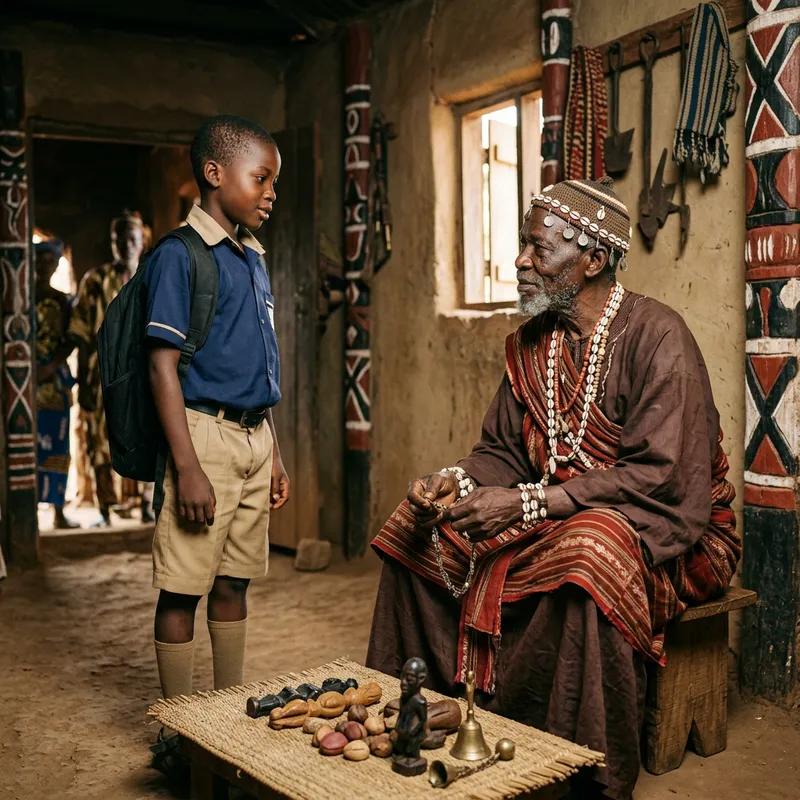
Initiation and Training
Becoming a religious specialist could involve extensive
preparation.
Training might include:
memorizing sacred texts or verses;
learning prayers;
studying rituals;
understanding medicinal plants;
learning sacred songs;
studying genealogies;
learning divination techniques;
observing senior specialists;
and participating in ceremonies.
Some traditions also involve initiation.
Initiation can mark the transition from ordinary community member to
someone entrusted with specialized religious knowledge.
 Hereditary Religious Offices
In some societies, religious responsibilities pass through
families.
A particular lineage may be responsible for maintaining a shrine.
The knowledge is then passed from one generation to another.
This system can preserve continuity.
However, inheritance alone does not necessarily guarantee
expertise.
Training and community recognition may still be necessary.
Calling and Spiritual
Experience
In other traditions, a person may become a religious specialist
because of a perceived spiritual calling.
The community may interpret unusual dreams, experiences or
circumstances as indications that someone has a particular religious
role.
The individual may then undergo training under an experienced
specialist.
Such beliefs should be understood within their cultural context
rather than judged solely through external assumptions.
The Religious
Specialist as a Community Resource
Traditional religious specialists can serve broader social
functions.
People may approach them for advice.
They may help resolve disputes.
They may participate in ceremonies.
They may preserve historical traditions.
They may provide medicinal knowledge.
They may advise families.
Their influence can therefore extend beyond strictly religious
matters.
Conflict Resolution
Traditional institutions have historically played roles in resolving
disputes.
Elders, chiefs, priests or diviners may be consulted.
The process can involve testimony, negotiation, oath-taking,
reconciliation or ritual procedures.
The specific method depends on the society.
The objective may not simply be punishment.
Restoring social harmony can be equally important.
Oaths and Sacred Authority
In some traditional systems, oaths can have religious
significance.
A person may swear before a sacred object or at a sacred
location.
Because the oath is believed to involve spiritual consequences, it
can carry strong psychological and social authority.
Such practices demonstrate how religious belief can reinforce social
agreements.
Priests and Community
Festivals
Religious specialists frequently have important responsibilities
during festivals.
They may prepare shrines.
Perform prayers.
Lead rituals.
Coordinate offerings.
Interpret ceremonial procedures.
Guide participants.
Ensure that traditional rules are respected.
Festivals can therefore provide opportunities for religious
specialists to pass cultural knowledge to younger generations.
Ritual Specialists and Music
Music is deeply connected with religious practice in many African
societies.
Priests and other specialists may know particular sacred songs.
Drummers may possess specialized knowledge.
Singers may memorize long sequences of praise poetry.
Certain rhythms may be associated with particular ceremonies or
spiritual traditions.
Music therefore becomes another method of preserving religious
knowledge.
Praise Poetry and Sacred
Knowledge
Praise poetry is another important tradition.
Poets may recite genealogies, historical achievements and stories
associated with rulers, ancestors or spiritual beings.
Among Yoruba traditions, for example, praise poetry can preserve
information about individuals and religious traditions.
Such oral performance demonstrates that religious knowledge can be
artistic as well as theological.
Religious Specialists and
Language
Specialists may also preserve specialized vocabulary.
Some religious traditions use words that carry meanings difficult to
translate directly into English.
Sacred terminology can encode philosophical ideas.
This is one reason language preservation is essential to
understanding African traditional religions.
When a language disappears, some religious concepts may become
difficult to interpret accurately.
Colonialism and Religious
Specialists
Colonialism significantly affected traditional religious
leadership.
Missionaries often challenged priests, diviners and traditional
healers.
Colonial authorities sometimes restricted ceremonies.
Traditional institutions could lose political influence.
Some religious specialists were stigmatized.
Others adapted by practicing privately.
Despite these pressures, many traditions survived.
The Colonial Image of
the “Witch Doctor”
One of the most problematic historical labels applied to African
religious specialists was “witch doctor.”
The term is misleading.
It combines concepts from different cultural systems and often
reduces complex religious and healing roles to a stereotype.
A diviner, priest or healer is not automatically a “witch
doctor.”
Modern discussions should use the terminology appropriate to the
particular tradition whenever possible.
Traditional
Specialists and Modern Religion
Today, African religious specialists operate within societies where
Christianity and Islam are also widespread.
Some individuals practice indigenous traditions exclusively.
Others combine cultural traditions with Christianity or Islam.
Some reject traditional religious practices.
The situation differs between individuals and communities.
It is therefore inaccurate to claim that all modern Africans either
practice or reject traditional spirituality.
Urban Traditional
Spirituality
Traditional religious specialists are not limited to rural
communities.
African cities contain people who maintain relationships with
indigenous religious traditions.
Urbanization has changed how practices are organized.
A specialist may communicate with clients by telephone.
People may travel from cities to ancestral communities for
ceremonies.
Traditional festivals can attract urban residents.
Religion therefore adapts to modern social environments.
The Internet and
Spiritual Specialists
The internet has created new opportunities and new challenges.
Traditional religious practitioners can now communicate with people
far beyond their local communities.
They can publish educational material.
They can advertise services.
They can document ceremonies.
They can connect members of a religious tradition across national
borders.
At the same time, the internet has made it easier for fraudulent
individuals to claim spiritual authority.
This makes verification and cultural context especially
important.
Authenticity and Fraud
Not everyone claiming to be a traditional spiritual specialist
necessarily has legitimate training or community recognition.
Online platforms can contain people who use African spiritual
terminology primarily to sell services.
A genuine religious specialist, where one exists within a particular
tradition, may have identifiable community connections, lineage,
training or institutional recognition.
However, there is no universal certification system covering all
African traditional religions.
Claims should therefore be evaluated carefully.
Traditional
Knowledge and Intellectual Property
Another modern concern involves traditional knowledge.
Sacred songs, medicinal plants, rituals and cultural symbols may have
been developed over generations.
Commercial organizations sometimes use indigenous knowledge without
properly recognizing the communities that preserved it.
This has created debates around cultural ownership, intellectual
property and benefit sharing.
Preserving traditional knowledge therefore involves ethical
responsibilities as well as historical research.
Traditional Medicine
and Modern Research
Some medicinal knowledge preserved by traditional healers has
attracted scientific interest.
Researchers have investigated plants used traditionally for various
purposes.
This does not mean that every traditional treatment is effective or
safe.
Scientific research requires controlled testing, dosage assessment
and evaluation of risks.
However, traditional knowledge can provide valuable starting points
for ethnobotanical and pharmaceutical research.
Religious
Specialists as Cultural Archivists
One of the most overlooked roles of priests, diviners and elders is
their function as cultural archives.
They may preserve:
historical stories;
genealogies;
traditional laws;
songs;
rituals;
place names;
medicinal knowledge;
religious philosophy;
and community memories.
In societies where knowledge was transmitted orally, losing a
specialist could mean losing an enormous amount of information.
This makes documentation and responsible preservation especially
important.
The Changing Role of
Religious Specialists
The position of traditional religious specialists is changing.
Some have lost influence because of modernization.
Others have adapted.
Some now focus more on cultural preservation.
Others continue active religious practice.
Some work alongside traditional institutions.
Their contemporary roles cannot be understood simply by looking at
what religious specialists did centuries ago.
African societies are changing, and religious institutions are
changing with them.
Why These Leaders Matter
Priests, diviners, healers, elders and other religious specialists
have played important roles in maintaining African spiritual
traditions.
They preserve knowledge.
They organize rituals.
They interpret religious systems.
They advise communities.
They maintain sacred places.
They transmit cultural memory.
They help connect generations.
Their importance therefore extends beyond religion.
They are part of the intellectual and cultural history of African
societies.
Conclusion:
Guardians of a Living Tradition
Priests, diviners and spiritual leaders occupy diverse and sometimes
highly specialized positions within African traditional religions.
There is no single model.
Some maintain shrines.
Some conduct ceremonies.
Some interpret divination systems.
Some preserve medicinal knowledge.
Some communicate traditional teachings.
Others serve as custodians of ancestral traditions.
Their authority can come from lineage, initiation, training,
community recognition or a perceived spiritual calling.
Perhaps their most important role, however, is the preservation and
transmission of knowledge.
For centuries, African religious knowledge was carried not primarily
through books but through people.
It lived in songs.
It lived in prayers.
It lived in stories.
It lived in ritual performances.
It lived in genealogies.
It lived in the memories of elders.
And it lived in the specialized knowledge of priests, diviners and
other religious practitioners.
Colonialism, missionary activity, modernization and religious
transformation challenged many of these institutions, but they did not
completely erase them.
Today, traditional religious specialists continue to exist in
different forms across Africa, while their knowledge also influences
cultural festivals, art, literature, music and contemporary discussions
about indigenous heritage.
Understanding these figures therefore requires moving beyond
stereotypes.
They were not simply mysterious “witch doctors.”
They were—and in many communities remain—custodians of
religious knowledge, interpreters of tradition, ritual practitioners,
healers, advisers, historians and guardians of cultural
memory.
Their stories are part of the larger story of African civilization
and demonstrate that the continent’s intellectual heritage has always
included sophisticated systems for understanding spirituality, society,
nature and human responsibility.
