

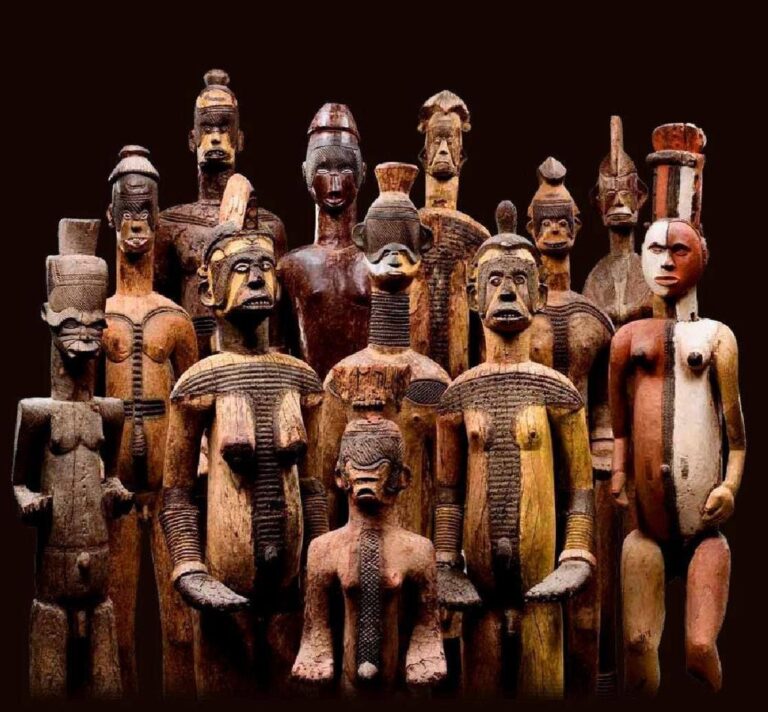
The spiritual world of Africa is far more diverse than the simplified
images that are sometimes presented in popular culture.
Across the continent, different societies developed elaborate
understandings of spiritual beings, natural forces, sacred places and
the relationship between humanity and the unseen world. Some traditions
recognize a Supreme Being as the ultimate creator while also
acknowledging other spiritual beings with particular responsibilities or
associations. Others place stronger emphasis on ancestors, spirits or
sacred landscapes.
These traditions cannot be reduced to the idea that Africans simply
“worshipped nature.”
Nature was often understood as part of a much larger spiritual and
moral universe.
A river could be regarded as sacred because of its association with a
spiritual being, a community’s history or a religious tradition. A
forest could be protected because it was believed to be inhabited by
spiritual forces. A mountain could become a place of religious
significance because of its connection to ancestral stories.
The meaning was therefore not necessarily that the physical object
itself was the Supreme Being.
Instead, the natural world could serve as a meeting point
between the visible and invisible worlds.
This distinction is essential to understanding African traditional
religions accurately.
Africa Has No Single
System of Deities
The first principle to remember is that there is no universal African
pantheon.
The spiritual beings recognized by the Yoruba are not identical to
those recognized by the Akan, Fon, Igbo, Maasai, Shona or Zulu.
Even names that are sometimes translated into English using words
such as “god,” “spirit,” or “deity” may have meanings that are much more
specific in their original cultural contexts.
This is why it is dangerous to create a single list of “African gods”
and present it as though all African societies believed in the same
beings.
Instead, Africa contains numerous religious systems, each with its
own cosmology.
Some have elaborate traditions concerning deities.
Others emphasize ancestors.
Some give considerable importance to spirits associated with
particular natural environments.
Many combine several categories.
The diversity is itself one of the defining features of African
religious heritage.
Deities Within a
Larger Spiritual Universe
In several African traditions, deities occupy positions within a
broader spiritual structure.
The Supreme Being may be regarded as the ultimate creator, while
other divine or spiritual beings have specific identities, functions or
relationships with particular communities.
This is especially visible in traditions such as Yoruba religion.
The Yoruba religious system includes the òrìṣà, a
diverse group of spiritual beings who have important relationships with
different aspects of existence.
But even here, the òrìṣà should not simply be described as equivalent
to the gods of ancient Greek or Roman mythology.
Their roles, relationships and religious meanings developed within
Yoruba culture.
The Yoruba Òrìṣà
The Yoruba tradition provides one of the most extensively documented
examples of an African religious system containing numerous spiritual
beings.
The òrìṣà are associated with different aspects of
the spiritual and natural order.
Among the best known is Ọ̀ṣun, strongly associated
with rivers, fertility, beauty and other dimensions of Yoruba religious
thought.
Ṣàngó is associated with thunder, lightning,
kingship and power.
Ògún is associated with iron, technology, warfare,
labor and related aspects of Yoruba culture.
These descriptions are useful introductions, but none of these
figures can be fully understood through a single English label.
Each exists within a complex network of stories, rituals, communities
and philosophical concepts.
Ọ̀ṣun and Sacred Water
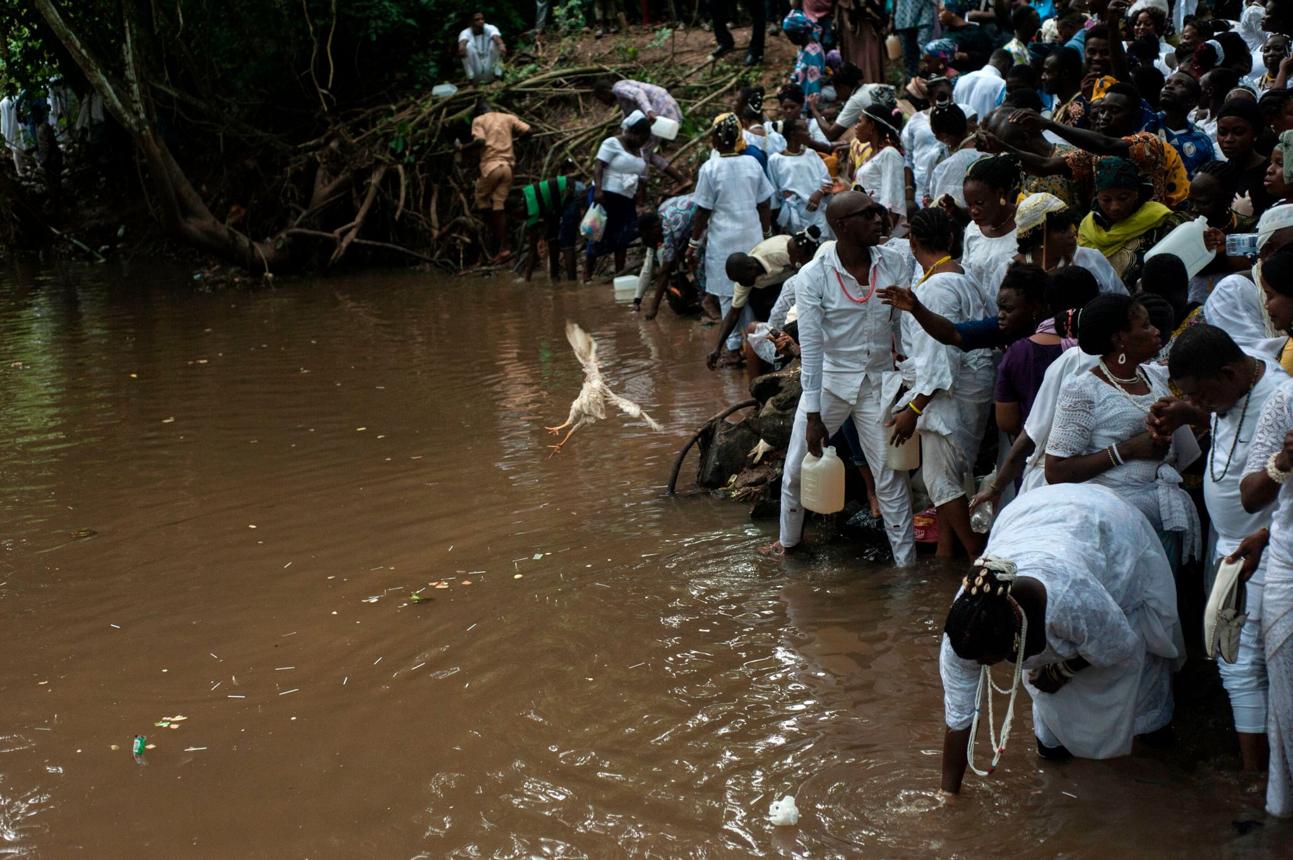
The religious significance of rivers is particularly visible in
traditions associated with Ọ̀ṣun.
The Ọ̀ṣun-Ọ̀ṣogbo Sacred Grove in Nigeria demonstrates
how spiritual belief, natural environment and cultural heritage can come
together.
The grove is associated with Ọ̀ṣun and remains an important cultural
and religious site.
Its significance is not simply that there is a river in a forest.
The landscape has become meaningful through generations of religious
traditions, stories, artistic expressions and ceremonies.
This demonstrates why sacred nature should not be interpreted simply
as “worshipping a river.”
The river exists within a much broader religious and cultural
system.
Ṣàngó and the Power of
Thunder
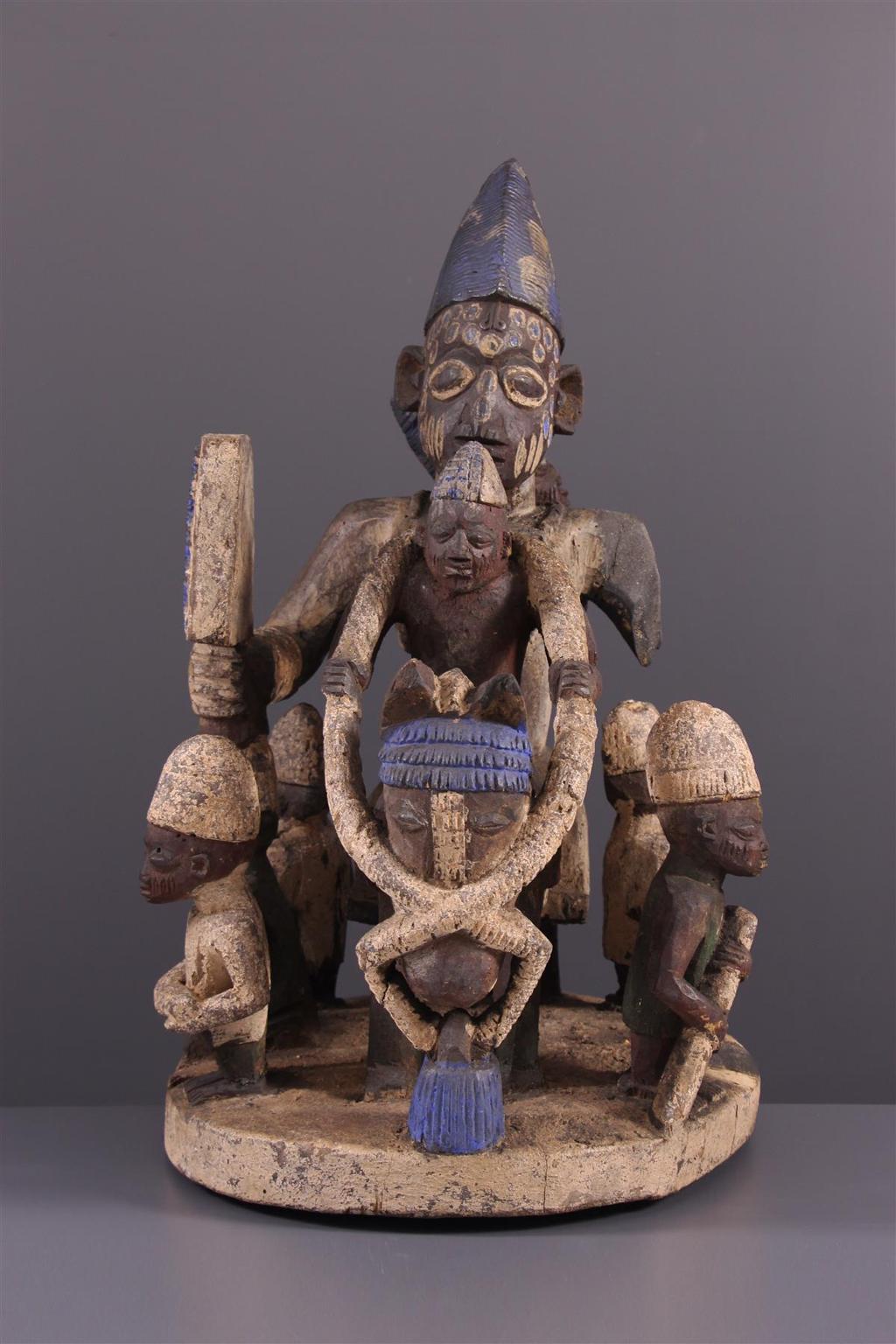
Another prominent Yoruba spiritual figure is Ṣàngó.
He is associated with thunder and lightning and is also strongly
connected with kingship, authority and power.
The traditions surrounding Ṣàngó demonstrate how natural phenomena
can become integrated into religious and political symbolism.
Thunder is not simply an atmospheric event.
Within a religious worldview, it can become associated with divine
power, justice and authority.
The natural world therefore becomes part of a language through which
communities understand moral and social realities.
Ògún and Human Technology
The tradition surrounding Ògún offers another fascinating
example.
Ògún is associated with iron and with activities involving
metalworking, warfare, hunting, agriculture, roads and technology.
This relationship reflects the importance of iron technology to many
societies.
Iron tools transformed agriculture, craftsmanship and warfare.
A spiritual tradition centered around iron therefore also reflects an
important stage in human technological and social development.
Religion and technology were not necessarily separate categories.
The sacred could be associated with the tools that made civilization
possible.
Akan Spiritual Traditions
Akan-speaking peoples of West Africa also developed complex religious
systems involving the Supreme Being, spiritual beings and ancestors.
Nyame is associated with the Supreme Being.
Other spiritual entities occupy different positions in Akan religious
thought.
Natural features can also have spiritual significance.
Rivers, forests and other landscapes may be associated with
particular traditions.
The details vary among Akan communities, demonstrating again that
even within broad cultural groups, religious practices can evolve and
differ.
Water Spirits Across Africa
Water holds a particularly powerful place in many African
traditions.
Rivers, lakes, oceans and springs provide life, transportation, food
and agricultural resources.
They can therefore naturally acquire deep cultural significance.
Across different parts of Africa, traditions exist concerning water
spirits.
These spirits may be associated with rivers, lakes or the sea.
Their names and characteristics vary enormously.
In parts of West and Central Africa, traditions concerning
Mami Wata became especially widespread and culturally
influential.
However, Mami Wata traditions themselves are diverse and have
developed through long histories of African and external cultural
interaction.
Mami
Wata and the Complexity of Water-Spirit Traditions
Mami Wata is often represented as a beautiful water-associated female
figure.
But the traditions surrounding her are not uniform.
Different communities have developed different stories, images and
religious practices.
Her representations have also been influenced by artistic and
cultural exchanges across Africa and beyond.
This makes Mami Wata an excellent example of why African spiritual
traditions should be studied historically.
A spiritual figure can change over time as communities interact with
one another.
Religious traditions are not frozen in the past.
They evolve.
 Spirits of the Forest
Forests have long been important environments for African
communities.
They provide food, medicine, timber, wildlife and agricultural
resources.
They can also become sacred spaces.
In some traditional systems, particular forests are believed to
contain spiritual beings.
These traditions can produce rules governing access to the
forest.
Certain activities may be forbidden.
Particular people may serve as custodians.
Ceremonies may take place in designated areas.
The forest becomes more than a physical resource.
It becomes a cultural and spiritual landscape.
Sacred Groves
Sacred groves are among the most visible examples of this
relationship.
A grove may be protected because it is associated with a deity,
spirit, ancestor or important cultural tradition.
Restrictions on cutting trees, hunting or entering particular areas
can preserve the environment.
The religious motivation may be very different from modern
conservation.
Yet the result can sometimes be similar: an area of natural habitat
is protected from excessive exploitation.
This demonstrates an important historical relationship between belief
systems and environmental management.
Mountains and Sacred
Landscapes
Mountains can also become sacred.
Their height, permanence and dramatic physical presence make them
powerful symbols.
Some communities associate particular mountains with creation
stories, ancestors, spirits or religious events.
The mountain can become a place for ritual activity.
It can also function as a landmark connecting a community to its
history.
Sacred landscapes therefore contain both physical and cultural
dimensions.
Rocks, Caves and Springs
Sacred places are not limited to major mountains or forests.
Rocks, caves, springs and unusual geological formations can also
become important.
A location may be considered sacred because of an event associated
with it.
Another may be connected to a spiritual being.
A spring may be valued because it provides water and is believed to
possess special significance.
Over generations, stories reinforce the meaning of these places.
The physical landscape becomes a repository of memory.
Sacred Animals
Animals can also occupy important positions in African religious
traditions.
Certain animals may be associated with particular spiritual
beings.
Others may be regarded as symbols of power, wisdom or fertility.
Some communities may place restrictions on killing particular
animals.
Again, the meaning differs between cultures.
A crocodile may have sacred significance in one community and simply
be regarded as wildlife in another.
There is no universal African system of sacred animals.
The Snake in African
Spiritual Traditions
Snakes appear in numerous African religious and cultural
traditions.
They may symbolize fertility, renewal, power, protection or spiritual
forces.
In some traditions, snakes are associated with particular deities or
sacred places.
The symbolism is not universally positive or negative.
Its meaning depends on the culture.
This is an important reminder that religious symbols cannot be
interpreted correctly without knowing the society that produced
them.
Trees and Spiritual
Significance
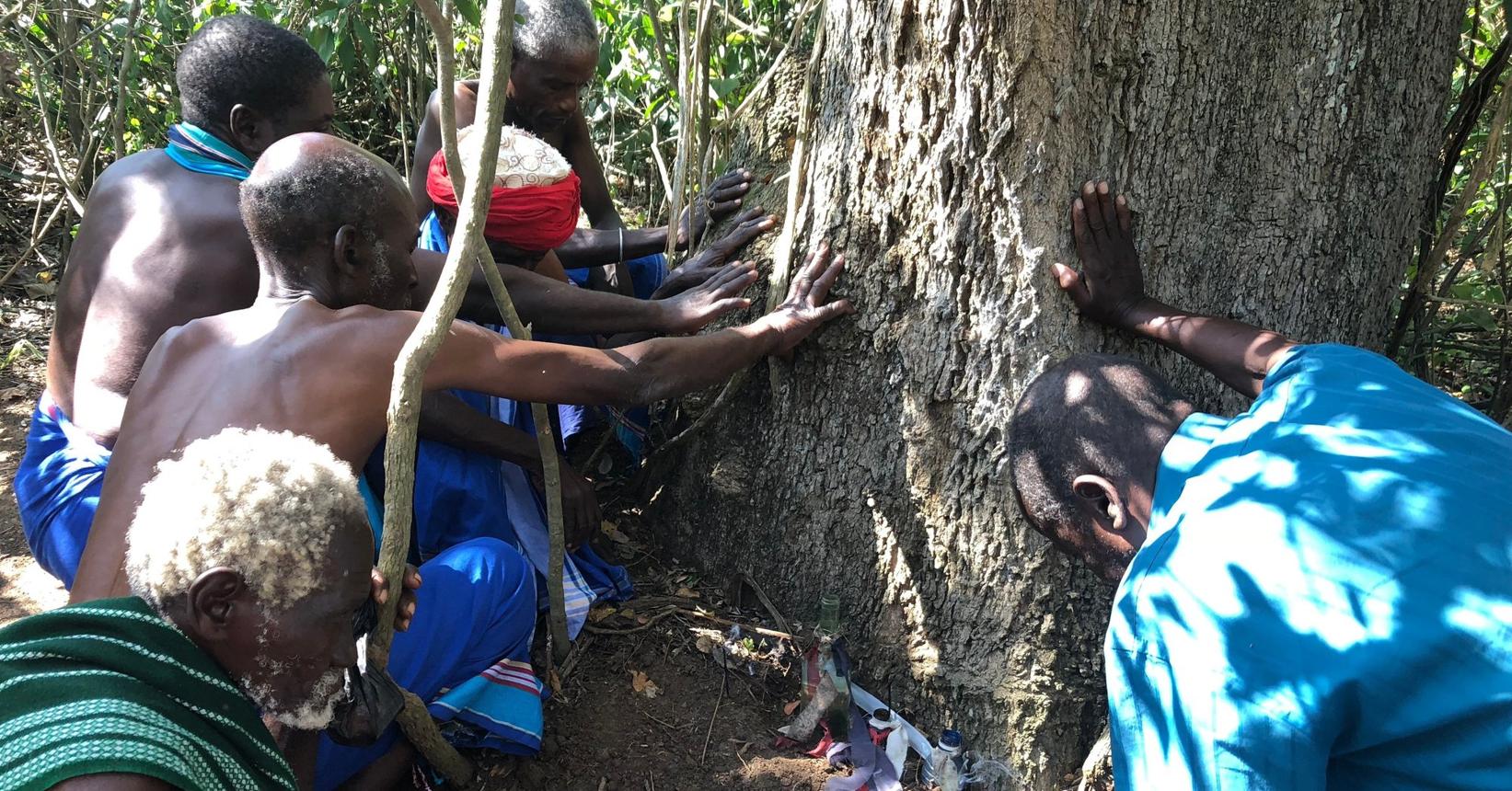
Trees can also become sacred.
Large, old or unusual trees may be associated with ancestors, spirits
or important community traditions.
Some trees provide medicine, food or shade, giving them practical
significance as well.
A sacred tree can therefore combine environmental, economic, cultural
and spiritual meanings.
The tree becomes a living link between generations.
The Natural World as a Moral
Space
One of the most interesting aspects of African traditional
spirituality is that nature can be connected with morality.
If a sacred forest must not be destroyed, the rule is simultaneously
environmental and religious.
If a sacred river must be treated with respect, the rule communicates
both spiritual and social values.
Breaking a rule may be understood as more than damaging property.
It can be interpreted as violating an established relationship
between people, the community and the spiritual world.
Nature Is Not Necessarily
“God”
This distinction deserves special attention.
It is common to hear statements claiming that traditional African
religions simply “worshipped nature.”
Such descriptions are usually too simplistic.
Many African traditions distinguish between the Supreme Being,
spiritual beings and the physical world.
A sacred river does not necessarily mean that the river itself is
believed to be the creator.
A sacred forest does not necessarily mean that every tree is
considered divine.
A sacred mountain does not necessarily mean the mountain is itself
God.
Instead, the natural environment can be understood as a place where
spiritual significance is concentrated.
Spirits and Everyday Life
Spiritual beings can also be connected to everyday concerns.
People may seek protection.
They may pray for health.
They may ask for success in farming.
They may seek guidance during difficult decisions.
They may perform ceremonies connected with marriage, birth or
death.
The spiritual world can therefore be woven into ordinary life.
Religion is not necessarily confined to special buildings.
Spirits and Human Behavior
Traditional religious systems can also establish expectations
concerning behavior toward spiritual forces.
Certain places may have rules.
Certain ceremonies may require specific conduct.
Certain objects may be treated with respect.
Certain people may have authority to perform rituals.
These restrictions help organize religious life.
They also create boundaries between ordinary and sacred spaces.
Religious
Specialists and Spiritual Beings
Priests, diviners and other religious specialists can play important
roles in traditions involving deities and spirits.
They may be responsible for maintaining shrines.
They may conduct ceremonies.
They may interpret religious signs.
They may preserve specialized knowledge.
Their authority can come from training, lineage, initiation or
community recognition.
Again, the role differs from one society to another.
Shrines as Places of
Connection
A shrine can provide a physical location where a community expresses
its relationship with a spiritual being.
Shrines can vary enormously.
Some may be located in homes.
Others may exist in forests.
Some may be elaborate structures.
Others may be simple sacred spaces.
The physical appearance of a shrine does not necessarily reveal its
importance.
Its meaning comes from the cultural and religious relationships
surrounding it.
Offerings and Ritual
Practice
Some traditions involve offerings to spiritual beings.
The offerings may consist of food, drink, symbolic objects or other
culturally significant items.
The meaning can vary.
An offering might express gratitude.
It might accompany a request.
It might mark a festival.
It might honor a spiritual being.
It might be part of a ritual intended to restore balance.
The practice should always be interpreted according to the tradition
in which it occurs.
Festivals and Deities
Many African festivals are connected to religious traditions.
A festival can honor a deity, celebrate an agricultural season,
commemorate an important historical event or bring the community
together.
Music, dance, masks, costumes and food can become part of the
celebration.
This means a festival can have multiple layers of meaning.
It may be religious.
It may be cultural.
It may be historical.
It may also be social.
These dimensions often overlap.
Deities and Political
Authority
Spiritual traditions can sometimes influence political
institutions.
A king or chief may have religious responsibilities.
A ruling dynasty may associate itself with particular spiritual
traditions.
A city may have a patron deity.
Ceremonies can reinforce political legitimacy.
However, not every African society had kings or centralized political
structures.
Some were organized through councils of elders, lineage systems, age
grades or other institutions.
Religious and political relationships therefore varied
significantly.
Deities and Agriculture
Agriculture has traditionally been central to many African
societies.
Rain, fertile soil and successful harvests are essential for
community survival.
It is therefore unsurprising that religious traditions often
developed around agricultural cycles.
Some communities have ceremonies associated with planting.
Others celebrate harvests.
Prayers or rituals may ask for favorable conditions.
Spiritual beliefs can therefore reflect the practical realities of
farming societies.
Rain and Spiritual Power
Rain is particularly important.
Without reliable rainfall, agricultural societies can experience
serious hardship.
In different African traditions, rain may therefore be associated
with spiritual power.
Rainmaking traditions have existed in several regions.
Their specific forms vary considerably.
Some involve religious specialists.
Others involve community ceremonies.
These traditions demonstrate how environmental uncertainty can shape
religious ideas.
Fertility and Spiritual
Traditions
Fertility can also be an important theme.
For agricultural communities, fertile land means food.
For families, childbirth represents continuity.
Spiritual traditions may therefore contain symbolism concerning
fertility, birth and renewal.
Female spiritual figures, water spirits and agricultural deities may
sometimes become associated with these themes.
But once again, the specific meanings differ between societies.
Spirituality and Healing
Traditional healing systems can also involve spiritual beliefs.
A healer may use medicinal plants while also performing rituals.
A community may interpret illness through physical, social and
spiritual explanations simultaneously.
It is important to distinguish cultural beliefs from scientifically
established medical treatments.
Nevertheless, traditional healing systems provide valuable evidence
of how African societies historically understood the human body, illness
and the relationship between physical and spiritual well-being.
Spirits of Place
Some spiritual traditions are strongly connected to particular
locations.
A spirit may be associated with a river, forest, mountain or
village.
Such traditions can create a strong sense of place.
The landscape becomes part of the community’s identity.
People do not simply live on the land.
They live within a landscape filled with stories, memories and
meanings.
Migration
and the Movement of Spiritual Traditions
African spiritual traditions have never been completely isolated.
People migrated.
Kingdoms expanded.
Trade connected distant regions.
Communities intermarried.
Religious specialists traveled.
As a result, spiritual ideas could move between communities.
This is particularly important when studying widespread
traditions.
A spiritual figure may appear in several regions because of cultural
interaction rather than because every community independently developed
the exact same belief.
Trade and Religious Exchange
Trade routes played a major role in the exchange of ideas.
Merchants carried more than goods.
They also carried languages, stories, religious ideas and artistic
traditions.
Coastal regions were particularly exposed to long-distance cultural
exchange.
This helped create religious traditions containing both local and
external influences.
African spirituality therefore developed within networks of
interaction.
The Influence of the
Atlantic World
The Atlantic slave trade also transformed African religious
traditions.
Millions of Africans were forcibly transported to the Americas.
They carried religious ideas with them.
Over generations, African spiritual traditions interacted with
Christianity, Indigenous American traditions and other cultural
systems.
New religious traditions emerged in different parts of the
Americas.
This history demonstrates the resilience and adaptability of African
spiritual traditions.
African Spiritual
Traditions in the Diaspora
Elements of African religious traditions survive in various forms
throughout the African diaspora.
Different communities developed different religious systems.
Some incorporated Yoruba traditions.
Others drew from Central and West African religious cultures.
These traditions should not simply be described as unchanged African
religions.
They developed in new historical environments.
Nevertheless, their African roots remain an important part of their
history.
Colonial
Descriptions and Misunderstandings
European colonial writers often interpreted African spiritual
traditions through European religious categories.
Complex spiritual beings could be labeled as “idols.”
Sacred objects could be described as primitive.
Traditional rituals could be dismissed as superstition.
Such descriptions often failed to capture the philosophical and
cultural systems behind the practices.
Modern scholarship has increasingly emphasized the importance of
understanding these traditions from within their own cultural
contexts.
The Survival of
Deities and Spirits Today
Traditional spiritual traditions have not disappeared.
Some communities continue practicing indigenous religions.
Others maintain festivals and ceremonies that have traditional
religious origins.
Names of spiritual beings remain part of language and culture.
Traditional stories continue to influence literature, music, art and
film.
Even when religious practice changes, cultural memory can preserve
elements of older traditions.
Urbanization and Changing
Beliefs
Modern African cities are highly diverse.
People from different ethnic and religious backgrounds live
together.
Christianity and Islam are widespread.
Education, technology and globalization influence younger
generations.
Yet traditional beliefs can continue to shape identity.
Some people actively practice indigenous religions.
Others participate in traditional ceremonies primarily for cultural
reasons.
Still others reject traditional religious beliefs entirely.
There is no single modern African response.
Nature Worship and
Modern Conservation
The relationship between sacred nature and environmental conservation
has attracted increasing attention.
Sacred forests and protected landscapes can preserve
biodiversity.
Traditional restrictions can sometimes prevent destructive
exploitation.
However, sacred sites can also face pressure from population growth,
development, mining, logging and tourism.
Preserving these places therefore requires understanding both their
environmental and cultural significance.
Threats to Sacred Landscapes
Sacred natural sites can face several threats.
Urban expansion can destroy traditional landscapes.
Commercial agriculture can reduce forest areas.
Mining can damage mountains and ecosystems.
Pollution can affect rivers.
Tourism can become harmful when visitors do not understand local
customs.
Climate change may also alter ecosystems that have been culturally
important for centuries.
Preserving sacred places therefore involves protecting both nature
and cultural heritage.
The Importance of Cultural
Context
Perhaps the most important principle when studying African deities
and spirits is context.
A symbol cannot always be interpreted using an external
dictionary.
A snake can mean different things in different cultures.
A river can have different religious meanings.
A mask can represent different spiritual ideas.
A deity associated with thunder in one culture may have no equivalent
in another.
Understanding the language, history, environment and social structure
of the community is essential.
Respecting Sacred Traditions
Traditional religious sites should also be approached
respectfully.
Some sacred places are open to visitors.
Others have restrictions.
Certain ceremonies may be private.
Certain objects may be intended only for initiated members or
religious specialists.
Researchers, photographers and tourists should therefore respect
community rules.
Cultural heritage does not automatically mean everything is publicly
accessible.
The Difference
Between Religion and Folklore
Another important distinction is between religious practice and
folklore.
A story about a spiritual being may survive after the original
religious practice has declined.
A festival may become primarily cultural.
A traditional symbol may become a fashion design.
A deity may appear in popular entertainment.
These transformations are not necessarily evidence that the original
religion remains unchanged.
They demonstrate how cultural traditions evolve.
African Spirituality
in Contemporary Art
Modern African artists frequently reinterpret traditional spiritual
imagery.
Paintings, sculptures, photography and digital art may draw on masks,
spirits, ancestors, deities and sacred landscapes.
Some artists use these themes to explore identity.
Others examine colonial history.
Others address environmental concerns.
Traditional spirituality therefore continues to influence
contemporary African creativity.
Film, Music and Popular
Culture
African musicians and filmmakers also use spiritual imagery.
Traditional drums, masks, stories and spiritual characters can appear
in music videos and films.
Sometimes these portrayals are historically informed.
Sometimes they are fictionalized.
Sometimes they are created primarily for entertainment.
The distinction matters.
Popular culture can introduce traditional concepts to new audiences,
but it can also create stereotypes.
Why Understanding Spirits
Matters
Studying African spiritual beings is not simply about making a
catalog of unusual supernatural figures.
It helps explain how communities understood the world around
them.
Spiritual traditions provided ways of interpreting:
nature;
illness;
fertility;
agriculture;
morality;
leadership;
family;
death;
community;
uncertainty; and
human responsibility.
They formed part of broader systems of knowledge.
A Different Way of
Understanding Nature
Modern societies often distinguish sharply between the natural and
supernatural.
Many traditional African worldviews did not always make the same
separation.
A river could simultaneously be:
a source of water,
a transportation route,
an ecological system,
a place of community history,
and a sacred landscape.
These meanings could exist together.
This is one of the most important insights provided by the study of
African traditional religions.
Conclusion:
A Spiritual Relationship With the World
African traditions concerning deities, spirits and sacred nature are
among the continent’s most diverse cultural inheritances.
Different societies developed their own understandings of spiritual
beings and their relationships with the Supreme Being, ancestors,
humanity and nature.
The Yoruba òrìṣà provide one example.
Akan spiritual traditions provide another.
Water-spirit traditions such as those associated with Mami Wata
demonstrate another dimension of African religious history.
Sacred forests, rivers, mountains, trees and animals show how
spirituality could become connected to the physical environment.
But these traditions should never be reduced to the simplistic
statement that Africans “worshipped nature.”
In many societies, nature was understood as part of a larger
spiritual order.
The natural environment could carry memory.
It could contain sacred places.
It could be associated with spiritual beings.
It could provide a setting for rituals.
And it could establish rules governing the relationship between
people and their surroundings.
The result is a worldview in which the physical and spiritual
dimensions of existence can be deeply interconnected.
Although Christianity, Islam, colonialism, modernization and
globalization have transformed African religious life, many traditional
concepts continue to survive—in religious practice, cultural ceremonies,
sacred landscapes, literature, art, music and oral tradition.
Studying these traditions therefore allows us to see Africa not
merely as a continent with ancient religious customs, but as a place
where generations of people developed sophisticated ways of
understanding nature, spirituality, morality, community and
existence itself.
