

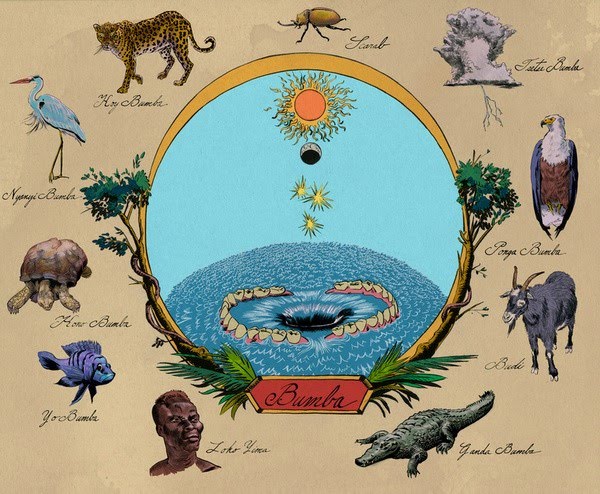
Every human culture has, at some point in its history, grappled with the fundamental question of origins: where did the world come from, why does it look the way it does, and what is humanity’s place within it. Across the African continent, this universal human impulse gave rise to an extraordinarily rich and varied body of creation mythology, shaped by the continent’s staggering ecological, linguistic, and cultural diversity. From the deserts of the Sahara to the rainforests of the Congo Basin, from the highlands of Ethiopia to the coastal plains of West Africa, different peoples developed distinct cosmological frameworks to explain the emergence of the world, the sky, the earth, humanity, and the intricate relationships binding them all together. This chapter of our exploration into African folklore turns to these foundational narratives, building on the previous discussion of Anansi the trickster to examine how various African societies have imagined the very beginning of existence itself, long before any spider learned to spin a web or outwit a sky god.
The Diversity of Creation Narratives
Unlike some religious traditions built around a single canonical creation account, African creation mythology exists as a vast mosaic of distinct, often unrelated narratives, each rooted in the specific cosmology of a particular ethnic group or cultural cluster. There is no single “African creation myth” any more than there is a single European or Asian one; rather, there are hundreds, if not thousands, of distinct origin stories reflecting the continent’s more than three thousand ethnic groups and comparable number of languages.
Despite this diversity, certain broad patterns and recurring motifs do emerge when examining these narratives comparatively. Many African creation stories feature a supreme, often somewhat distant creator deity who sets the process of creation in motion before withdrawing to a more removed position, leaving the ongoing management of the world to lesser spirits, ancestral figures, or the forces of nature themselves. This pattern, sometimes referred to by scholars of comparative religion as the “deus otiosus” or “idle god” motif, appears across numerous African cultures, though the specific details of how this withdrawal occurs, and what fills the resulting gap, vary enormously.
This structural pattern carries important theological implications worth pausing on. A creator god who withdraws from direct governance after the act of creation is not typically understood, within these traditions, as an absent or uncaring deity. Rather, the withdrawal often reflects a theological logic in which the sheer magnitude and majesty of the supreme creator renders direct, everyday interaction inappropriate or even impossible for ordinary humans. Approaching such a being would require the mediation of lesser spirits, ancestors, or divine messengers specifically suited to bridging the vast gap between human concerns and cosmic authority. This layered cosmological structure, far from diminishing the supreme deity’s importance, often reinforces it, positioning the creator as a foundational, ever-present force whose authority underwrites the entire spiritual hierarchy even without requiring constant direct intervention in daily affairs.
The Yoruba Creation Narrative
Among the most elaborately documented African cosmologies is that of the Yoruba people, predominantly located in southwestern Nigeria and parts of Benin and Togo. In Yoruba tradition, the supreme deity Olodumare presides over the cosmos from the realm of the sky, orim orun, existing in a state so exalted and abstract that direct worship or interaction is generally mediated through a vast pantheon of divine intermediaries known as the Orisha.
According to the most widely recounted version of the Yoruba creation story, the earth was originally nothing but water and marshland, an undifferentiated watery chaos with no solid ground. Olodumare commissioned the Orisha Obatala, sometimes described as his most trusted and senior deity, to descend from the sky and create solid land upon which life could flourish. Obatala was given a chain, a small snail shell filled with earth, a white hen, and other sacred implements to accomplish this task.
Descending along the chain toward the watery void below, Obatala poured the earth from the snail shell onto the water’s surface and released the white hen, which began scratching and scattering the earth in all directions, gradually spreading it to form solid land. Obatala then planted a palm nut, which grew into a great tree, and eventually built a dwelling for himself at the place where he first descended, a location that in Yoruba tradition became identified with the city of Ile-Ife, still regarded today as the spiritual and ancestral homeland of the Yoruba people.
Subsequent episodes in this creation cycle recount how Obatala later fashioned the first human forms out of clay, breathing them into being with life granted by Olodumare himself. In some versions of the story, Obatala’s role in shaping humanity is complicated by an episode in which he becomes intoxicated on palm wine while working, resulting in the creation of individuals with physical disabilities or differences. This detail, rather than being treated as simple misfortune, is often understood within Yoruba tradition as an explanation for human diversity and a reminder that even divine beings are not infallible, with disabled individuals in Yoruba society historically accorded specific ritual respect and association with Obatala himself as a mark of his direct, if imperfect, handiwork.
Beyond the core narrative of land and human creation, Yoruba cosmology extends into an elaborate system of divination and ethical guidance known as Ifa, through which the wisdom accumulated since the moment of creation is understood to remain accessible to the living. Practitioners of Ifa divination, known as babalawo, consult an extensive corpus of verses, the Odu Ifa, said to encode the accumulated knowledge of creation itself, applying this ancient wisdom to contemporary questions of personal guidance, communal decision-making, and spiritual practice. This living connection between the primordial act of creation and ongoing everyday consultation illustrates how thoroughly Yoruba cosmology integrates its origin narrative into the practical fabric of religious and social life, rather than relegating it to a distant, purely historical event.
The Dogon Cosmology of Mali
Far to the northwest, among the Dogon people of the Bandiagara Escarpment in present-day Mali, an entirely different and remarkably intricate cosmological system developed, one that has attracted particular scholarly fascination for its complexity and its detailed astronomical knowledge embedded within mythological narrative. Dogon cosmology centers on the supreme creator god Amma, who is understood to have created the universe through a series of cosmic acts involving primordial seeds, celestial eggs, and the emergence of paired twin spirits known as the Nommo.
According to Dogon tradition, Amma first created the universe from a cosmic egg containing the essential blueprint for all existence. From this egg emerged the Nommo, amphibious ancestral beings often depicted with both human and fish-like characteristics, who descended to earth aboard a great vessel accompanied by essential knowledge, tools, and the foundations of Dogon social and agricultural organization. The Nommo are understood not merely as mythological figures but as ongoing spiritual presences who continue to influence Dogon religious and social life, associated closely with water, fertility, and the maintenance of cosmic order.
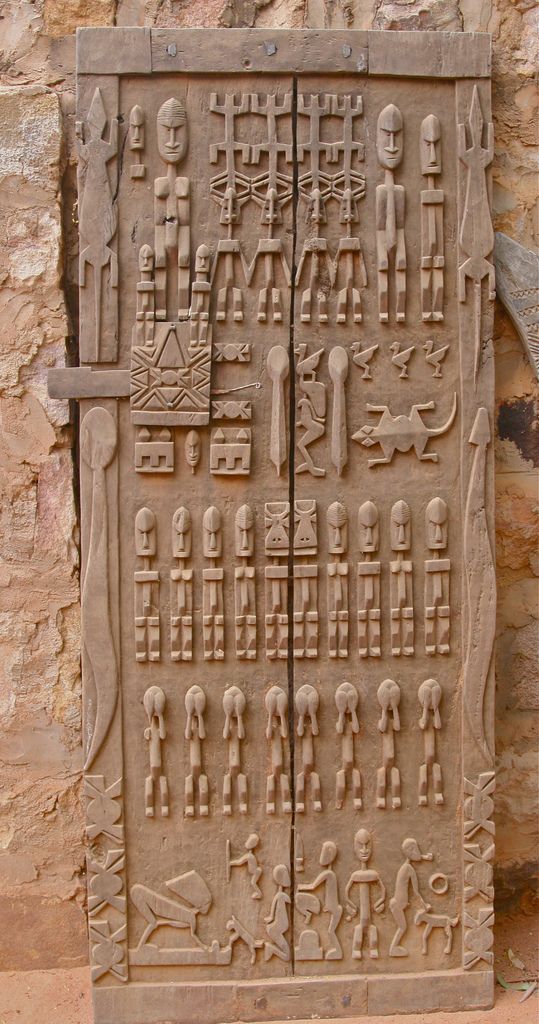 Dogon cosmology’s most striking feature, and the aspect that has generated the most scholarly debate and popular fascination, involves detailed traditional knowledge regarding the star system Sirius, including references to an invisible companion star that align remarkably closely with astronomical facts confirmed by modern telescopes only in the twentieth century. Whatever the ultimate explanation for this correspondence, whether independent astronomical observation, external cultural contact, or other factors debated extensively among anthropologists and astronomers, the Dogon cosmological system stands as a testament to the sophistication and depth of African cosmological thought, integrating astronomical, agricultural, and spiritual knowledge into a unified explanatory framework passed down through generations of careful oral transmission.
This integration of astronomical observation with sacred narrative was not merely decorative but served concrete practical functions within Dogon society. Ceremonial calendars, agricultural planning, and communal ritual life were all organized around celestial events described within this cosmological framework, meaning that accurate transmission of this knowledge carried direct practical consequences for community survival and prosperity. Dogon ritual specialists, tasked with maintaining and interpreting this complex cosmological knowledge, occupied positions of considerable social importance, their role bridging the practical necessities of agricultural timing with the deeper spiritual significance embedded within the Amma and Nommo creation narrative.
San Cosmology and the World’s Oldest Stories
Among the San peoples of Southern Africa, whose ancestors are believed to represent one of the oldest continuous human lineages and cultural traditions on the planet, creation narratives take on a somewhat different character, deeply interwoven with the natural landscape, celestial bodies, and the animals that populate the Kalahari and surrounding regions. San cosmology often centers on a trickster-creator figure, variously identified across different San groups, who is associated with the praying mantis and credited with shaping the early world and its creatures through a combination of genuine creative power and mischievous, sometimes morally ambiguous, behavior.
This blending of creator and trickster within a single figure distinguishes San cosmology from traditions like the Yoruba or Dogon systems, where creation and trickery tend to be more clearly separated between distinct classes of divine beings. In San tradition, the moon, stars, and various animal characteristics are frequently explained through stories in which this creator-trickster figure makes both wise and foolish decisions, with the physical world bearing the lasting marks of both his wisdom and his errors. A commonly cited San proverb captures this worldview elegantly: “The stars are the eyes of those who came before, watching to see if we remember.” This saying reflects a cosmology in which creation is not a distant, completed event but an ongoing relationship between the living, the ancestral, and the celestial realms, with the night sky itself serving as a constant reminder of humanity’s connection to those who shaped the world.
The San relationship to their creation narratives is inseparable from their broader relationship to the land itself, with specific rock formations, waterholes, and celestial alignments across the Kalahari region often directly associated with particular episodes from the creation cycle. Rock art sites scattered throughout Southern Africa, some dating back tens of thousands of years, are believed by many researchers to depict scenes connected to this cosmological tradition, offering a rare visual record that predates and parallels the oral transmission of these ancient stories, and providing tangible evidence of just how deeply and how anciently these narratives have shaped San understanding of their world.
The Fon and Vodun Creation Traditions
Among the Fon people of present-day Benin, whose spiritual traditions form the foundation of what is known internationally as Vodun, creation mythology centers on the primordial deity Nana Buluku, often understood as an androgynous or dual-gendered supreme creator who gave rise to the twin deities Mawu and Lisa, associated respectively with the moon and sun, and by extension with femininity and masculinity, night and day, wisdom and strength.
Mawu-Lisa, functioning as a paired or sometimes unified creative force, is credited with shaping the physical world and populating it with the various Vodun spirits, or Loa, who continue to govern different aspects of natural and human existence. This creation narrative places particular emphasis on balance and complementarity, with the physical world understood as the product of harmonious cooperation between paired, gendered cosmic forces rather than the unilateral action of a single creator deity. This emphasis on duality and balance reflects broader philosophical themes present throughout Fon and Vodun spiritual thought, in which harmony between opposing but complementary forces is understood as essential to maintaining cosmic and social order.
Common Threads Across African Creation Mythology
Despite the remarkable diversity of specific narrative details across these various traditions, several common threads emerge when examining African creation mythology comparatively. Water frequently appears as a primordial substance from which solid land and structured existence must be actively created, reflecting perhaps the ecological reality of a continent where water scarcity and abundance have always profoundly shaped human settlement, migration, and survival across countless generations. The motif of a supreme creator delegating the actual work of world-building to intermediary figures, whether divine messengers, ancestral spirits, or trickster-creators, appears with notable frequency, suggesting a broader African theological tendency toward layered, mediated cosmologies rather than direct, unmediated relationships between humanity and the ultimate divine source.
Human creation from earth or clay, breathed into life by divine breath or word, represents another widely shared motif, appearing in the Yoruba tradition discussed above as well as in numerous other African creation narratives across different linguistic and cultural regions. This shared imagery, of humanity fashioned from the very earth that sustains physical life, reinforces a persistent theme throughout African cosmological thought: the deep, inseparable connection between humanity and the natural world from which it emerged and upon which it continues to depend.
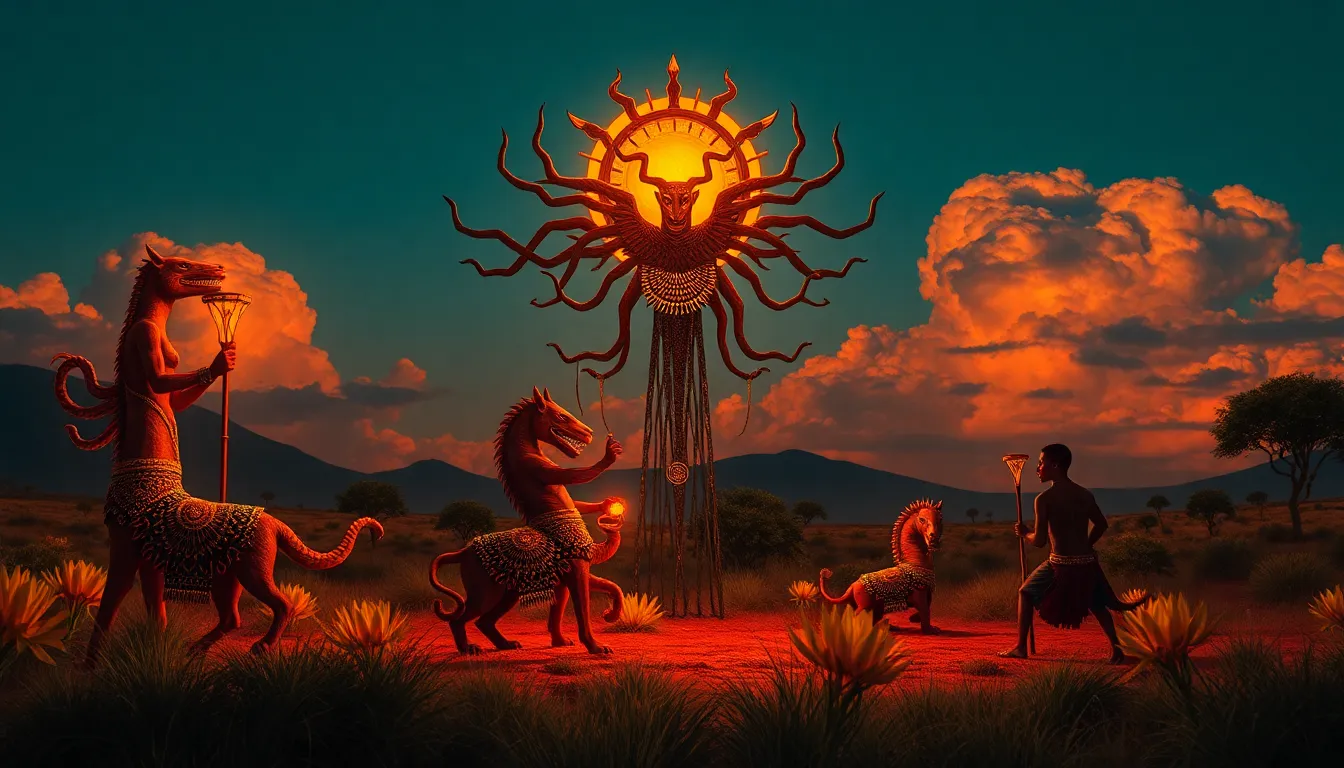 A further recurring element across many of these traditions involves the significance of number and pairing within creation, whether the paired twin deities of Fon cosmology, the dualistic structuring of Dogon cosmic eggs, or the symbolic numerology embedded within Yoruba divination practice. This attention to numerical and structural symmetry within creation narratives suggests a shared African intellectual tendency toward understanding the cosmos as fundamentally ordered and patterned, even amid apparent chaos or unpredictability, with creation myths functioning partly as demonstrations of this underlying cosmic order made accessible through narrative and ritual practice.
The Function of Creation Myths in Society
Beyond their explanatory function, African creation myths served, and in many communities continue to serve, crucial roles in establishing social order, validating political and religious authority, and providing ethical frameworks for human behavior. Creation narratives frequently establish the legitimacy of particular ruling lineages by tracing their descent directly from creator deities or the earliest ancestral figures, embedding political authority within a sacred cosmological framework that placed rulers within, rather than above, the broader order established at the world’s founding.
These narratives also provided communities with explanatory frameworks for natural phenomena, seasonal cycles, and the relationships between different social groups, animals, and geographical features, weaving together cosmology, history, and practical knowledge into a unified system of understanding that guided both spiritual practice and everyday decision-making. Agricultural societies, in particular, often embedded creation narratives with detailed cosmological justifications for planting cycles, land use practices, and resource management, reinforcing sustainable practices through sacred narrative authority rather than purely practical instruction.
Creation myths further served to establish frameworks for understanding gender roles, kinship obligations, and the proper relationship between individuals and their broader community. The paired, complementary creator deities found in Fon cosmology, for instance, offered a cosmological template for understanding gender relations as fundamentally balanced and interdependent rather than strictly hierarchical, a template that in turn shaped social expectations around marriage, labor division, and communal decision-making within Fon society. Similarly, creation narratives establishing humanity’s descent from specific ancestral or divine figures often underpinned entire systems of clan organization, inheritance practice, and communal obligation, embedding practical social structure within a framework of sacred origin.
Creation Myths in the Contemporary World
As with the broader body of African folklore explored throughout this series, creation myths have faced significant pressure from colonial-era religious conversion, modernization, and shifting social structures, yet they have proven remarkably resilient, continuing to inform religious practice, artistic expression, and cultural identity across the continent and its diaspora. Traditional religions rooted in these creation narratives, including Yoruba Ifa tradition and various forms of Vodun practice, continue to be actively practiced by millions of adherents both within Africa and throughout the diaspora communities that carried these traditions across the Atlantic during the era of the slave trade.
Contemporary African artists, writers, and filmmakers increasingly draw upon these creation narratives as sources of creative inspiration, reimagining ancient cosmological frameworks for new audiences and new artistic mediums, ensuring that these foundational stories continue to shape cultural imagination even as the specific contexts of their transmission evolve, from oral fireside performance to novel, film, and gallery installation alike. Academic and cultural preservation efforts have also worked to document and protect these narratives, recognizing their significance not merely as historical curiosities but as living philosophical and theological systems offering distinct and valuable perspectives on some of humanity’s most enduring existential questions.
The global spread of these traditions through the African diaspora deserves particular note. Yoruba-derived religious systems, carried across the Atlantic during the transatlantic slave trade, took root and evolved into distinct but recognizably related traditions such as Santeria in Cuba, Candomble in Brazil, and various forms of Vodou in Haiti, each preserving core elements of the original creation cosmology while adapting to new cultural, linguistic, and social contexts. These diasporic traditions today claim millions of practitioners across the Americas, representing one of the most remarkable and enduring legacies of African cosmological thought, a testament to the resilience of these creation narratives even under conditions of extreme historical disruption and forced cultural transformation, carried forward in memory and ritual practice when nearly everything else material was stripped away by the brutal circumstances of forced migration.
Conclusion
African creation myths represent one of the richest and most philosophically sophisticated bodies of cosmological thought found anywhere in world mythology, offering a vast array of distinct answers to the universal human question of how the world came to be. From the Yoruba account of Obatala descending on a chain to create solid land, to the intricate astronomical cosmology of the Dogon, to the trickster-creator traditions of the San and the balanced dual cosmology of the Fon, these narratives reveal both the remarkable diversity of African cultural thought and certain deep, recurring patterns that speak to shared human concerns about origin, order, and humanity’s place within the created world. In the next installment of this series, we move from cosmic origins to human achievement, exploring the legends of heroes, kings, and warriors whose deeds have been immortalized across generations of African oral tradition, figures who, unlike the gods and creators discussed here, walked the same earth as the storytellers who remembered them.
