

The Living Archives: Nigeria’s Linguistic Giants and the Multilingual Mosaic
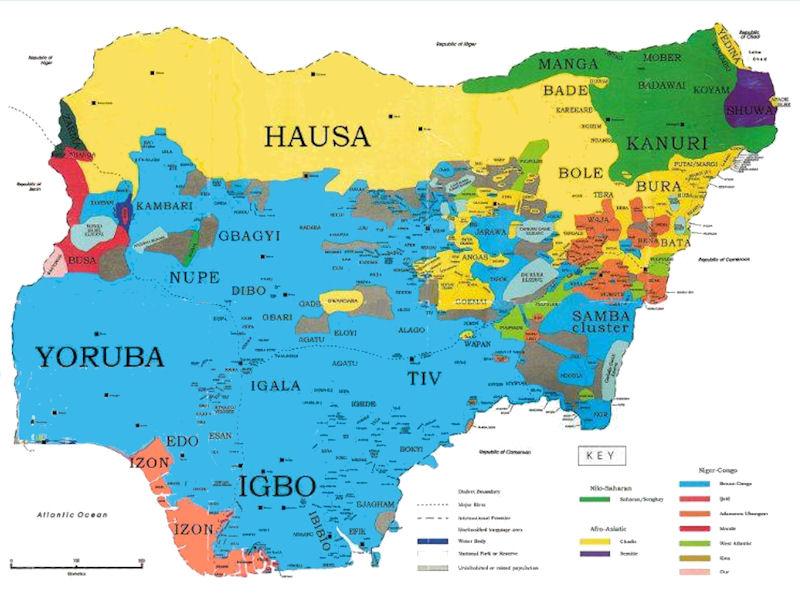
Nigeria’s linguistic landscape is one of the most dynamic and complex on the African continent. Home to hundreds of distinct languages, its territory reflects millennia of migration, trade, state formation, and cultural exchange. Within this vast multilingual canvas, three languages—Yoruba, Igbo, and Hausa—stand out as major regional, cultural, and historic anchors. Spoken by tens of millions of native and second-language speakers, these three “linguistic giants” serve not only as modes of everyday communication but as living archives of the philosophies, trade networks, and social institutions that continue to shape modern Nigeria.
 The Multilingual Foundation
Nigeria’s linguistic diversity predates colonial borders by thousands of years. The dense tropical forests and coastal waterways of the south nurtured different settlement patterns, social organizations, and speech forms than the open savannas and Sahelian trade corridors of the north.
Rather than existing in isolation, communities were linked through extensive riverine and overland trade routes, intermarriage, political expansion, and shared religious or cultural institutions. Yoruba, Igbo, and Hausa attained their prominent positions because the societies that spoke them built high-density population centers, influential political states, and far-reaching commercial networks.
Yoruba: Heritage of the Southwest
Spoken predominantly in southwestern Nigeria as well as parts of neighboring Benin and Togo, Yoruba belongs to the Benue-Congo branch of the Niger-Congo language family. Historically associated with powerful kingdoms such as Oyo and Ife, Yoruba culture developed sophisticated urban centers, artistic traditions, and complex philosophical systems.
- Tonal Structure: Yoruba is a tonal language utilizing three primary pitch levels: high ($\acute{}$), mid (unmarked), and low ($\grave{}$). Tone is fundamental; changing the pitch contour of a single syllable completely alters its lexical meaning (e.g., owó “money”, ọwọ́ “hand”, owó / òwò “trade”).
- Oral Literature & Proverbs: Knowledge was historically preserved through specialized oral traditions such as Oriki (praise poetry) and Awe (folktales). Proverbs (Òwe) are regarded as the “horses of speech”—essential tools used by elders and orators to navigate complex moral, social, and legal issues.
- Ifá and Diaspora Legacy: The vocabulary of Yoruba religious thought, particularly the Ifá divination system and Òriṣà veneration, survived the transatlantic slave trade. Today, Yoruba-derived terms, chants, and ritual phrases remain active in diaspora communities across Cuba (Lucumí), Brazil (Candomblé), and the wider Caribbean.
- Modern Media & Arts: Yoruba maintains a thriving modern presence through literature, theatre, the Yoruba film sector, and contemporary popular music (Afrobeats, Fuji, Highlife), where artists frequently code-switch between Yoruba, English, and Nigerian Pidgin.
Igbo: Republican Traditions of the Southeast
Igbo is the principal language of southeastern Nigeria, also belonging to the Niger-Congo family. Unlike historical states with centralized monarchies, traditional Igbo society was largely organized around autonomous, republican village groups, age grades, council of elders, and title societies (such as Ozo).
- Dialectal Diversity & Standardization: Because political authority was localized across different communities, Igbo developed a wide array of regional dialects (e.g., Owere, Onitsha, Afikpo). Over the 20th century, standard forms (Igbo Izugbe) emerged through education, Bible translations, and publishing, while local dialects continue to anchor community identity.
- Sociolinguistic Institutions: Igbo vocabulary places heavy emphasis on lineage, land (Ala), titles, and communal responsibility. Naming conventions (Afa) carry significant historical and spiritual weight, often functioning as full sentences that commemorate family circumstances, express faith, or invoke personal destiny.
- Proverbs & Classical Literature: As Chinua Achebe famously observed in Things Fall Apart, among the Igbo, “proverbs are the palm-oil with which words are eaten.” Achebe demonstrated how traditional Igbo oral aesthetics, rhetoric, and social values could be woven into modern prose, establishing a bridge between indigenous philosophy and world literature.
- Digital Adaptations: Igbo content creators, musicians, and digital artists actively use social media, comedy, and online publishing to keep the language vibrant among younger, highly urbanized generations.
Hausa: Commercial Engine of the Sahel
Hausa occupies a distinct position as a member of the Chadic branch of the Afroasiatic language family. Native to northern Nigeria and southern Niger, Hausa historically spread across the West African Sahel and West Africa as the dominant language of trans-Saharan trade and commerce.
- Trade and Urban Centers: Historical Hausa city-states—such as Kano, Katsina, Zaria, Gobir, and Daura—served as commercial hubs connecting the savanna to North Africa and the forest zones to the south. Kano’s central markets established Hausa as an indispensable lingua franca for merchants of diverse ethnic backgrounds.
- Islamic Scholarship & Literacy: Century-long trade and religious connections integrated Islam deeply into Hausa society. Hausa was historically written in Ajami (an adapted Arabic script) for centuries before the introduction of Boko (the Latin-based orthography used today in formal schooling).
- Broadcasting & Kannywood: Hausa is one of the most widely broadcast African languages globally, featured prominently on international networks (BBC Hausa, DW, VOA) and regional media. Kano serves as the heart of Kannywood, a major Hausa-language film industry that produces media consumed across the Sahel and North Africa.
Comparative Overview
| Attribute | Yoruba | Igbo | Hausa |
| Language Family | Niger-Congo (Benue-Congo) | Niger-Congo (Benue-Congo) | Afroasiatic (Chadic) |
| Primary Region | Southwestern Nigeria, Benin, Togo | Southeastern Nigeria | Northern Nigeria, Niger, Sahel |
| Historical Writing System | Latin (modern); Oral preservation | Latin (modern); Nsibidi (ideographic) | Ajami (Arabic-based); Latin (Boko) |
| Key Cultural Markers | Ifá, Òriṣà, Òwe (proverbs), urban kingdoms | Autonomous councils, Afa (naming), Ozo titles | Trans-Saharan trade, Islamic scholarship, Ajami literature |
| Media & Creative Hubs | Yoruba Cinema, Afrobeats, Theatre | Digital content, Highlife, Literature | Kannywood film, international radio broadcasting |
The Modern Multilingual Canvas
Modern Nigeria operates through layerings of language. In urban centers like Lagos, Abuja, Port Harcourt, and Kano, millions of citizens navigate life by shifting seamlessly between their mother tongues, English (the official language of administration and formal education), and Nigerian Pidgin (a widely spoken creole that bridges ethnic lines).
Rather than viewing Nigeria’s linguistic diversity as a barrier, contemporary scholars, creative industries, and technology researchers increasingly recognize it as a major national asset. Continued efforts to digitize orthographies, develop local language AI tools, and integrate indigenous languages into formal education ensure that Yoruba, Igbo, Hausa, and the hundreds of surrounding languages remain living, evolving archives for generations to come.
