


The Living Bridge: How Kiswahili Connected a Coast to the World
Few African languages demonstrate the power of cultural contact as clearly as Swahili. Known to its speakers as Kiswahili, Swahili has developed from a regional language of the East African coast into one of the continent’s most important languages of communication. It is spoken across a broad region of Eastern Africa and serves as a first or additional language for millions of people.
Its importance extends beyond the number of people who speak it. Swahili connects communities that have different ethnic and linguistic backgrounds. It crosses national borders and appears in schools, markets, government institutions, music, literature, broadcasting, and digital media. It is one of the principal languages of the East African Community and one of the African languages with the strongest international visibility.
The history of Swahili is a story of continuous interaction. Its grammatical foundation belongs to the Bantu language family, yet centuries of contact along the Indian Ocean coast brought vocabulary and cultural influences from Arabic and other languages. Persian, Portuguese, English, and languages of the Indian Ocean world have also contributed words to different varieties of Swahili.
This does not make Swahili a “foreign” language. Swahili is an African language whose history reflects Africa’s long-standing connections with the wider world. The language grew in African coastal communities, developed through interactions among African peoples, and became an important medium for trade, religion, scholarship, and everyday communication. To understand Swahili is to understand the trade ports that connected Africa to the Indian Ocean, the movement of merchants and scholars, and the ability of a language to borrow without losing its original identity.
 What Does Swahili Mean?
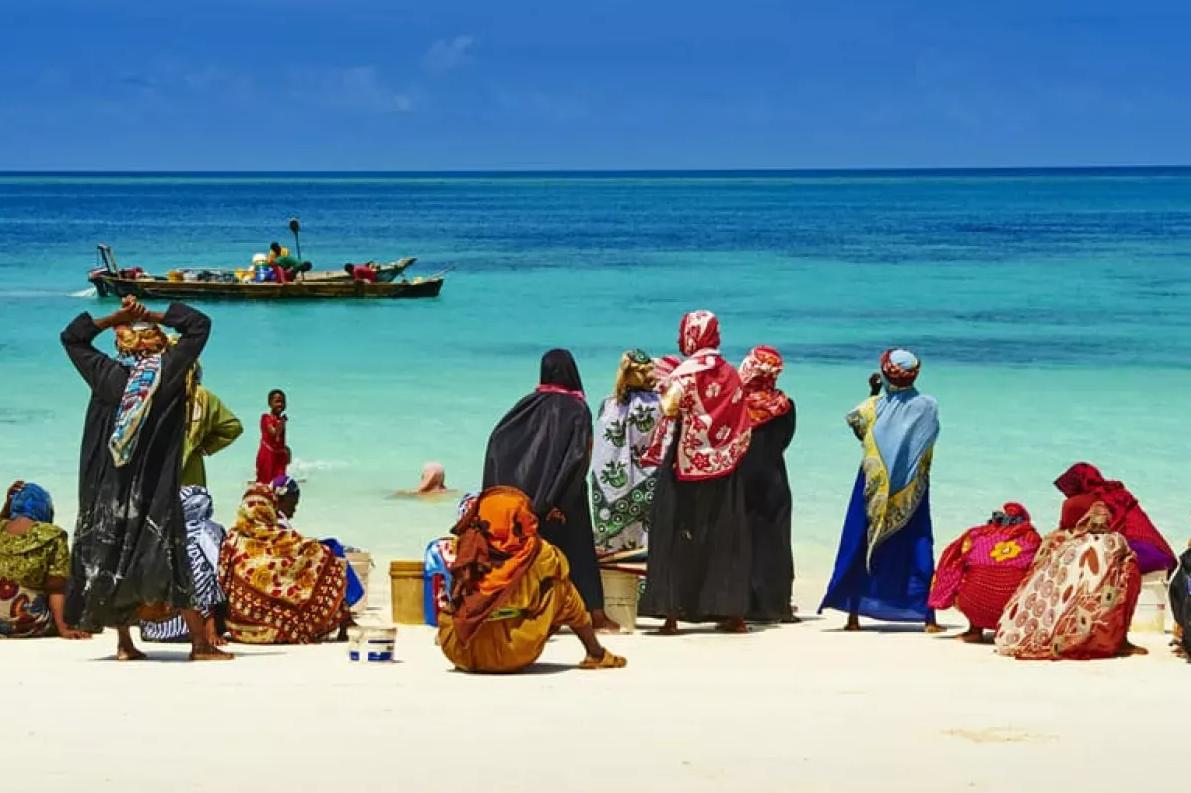
The word Swahili is connected to the Arabic term sawāḥil, meaning “coasts” or “shores.” The name reflects the language’s historical association with the East African coast. Its speakers are often described as Waswahili, while the language itself is called Kiswahili.
The prefixes are significant because Swahili grammar uses noun-class systems that affect how words are formed:
- Waswahili: The Swahili people or speech community.
- Kiswahili: The language itself.
In everyday English, people commonly say “Swahili.” In East Africa, however, “Kiswahili” is the proper name of the language. This distinction is useful because it highlights the fact that Swahili is not simply a label created by outsiders; it possesses its own linguistic terminology and rich cultural identity.
Swahili Is a Bantu Language
One of the most important facts about Swahili is that it is a Bantu language. Bantu languages form a major branch of the Niger-Congo language family and are spoken across a huge portion of Central, Eastern, and Southern Africa.
Swahili shares important grammatical characteristics with other Bantu languages. Its system of noun classes is one example where nouns are organized into grammatical categories and words associated with them change accordingly. This structure is fundamentally African and reflects Swahili’s core heritage.
The large number of Arabic loanwords sometimes causes people to assume that Swahili is an Arabic dialect or hybrid. It is not. Arabic has had an enormous influence on Swahili vocabulary—particularly because of centuries of religious and commercial contact—but the underlying linguistic structure places Swahili firmly within the Bantu family.
The Birth of a Coastal Language
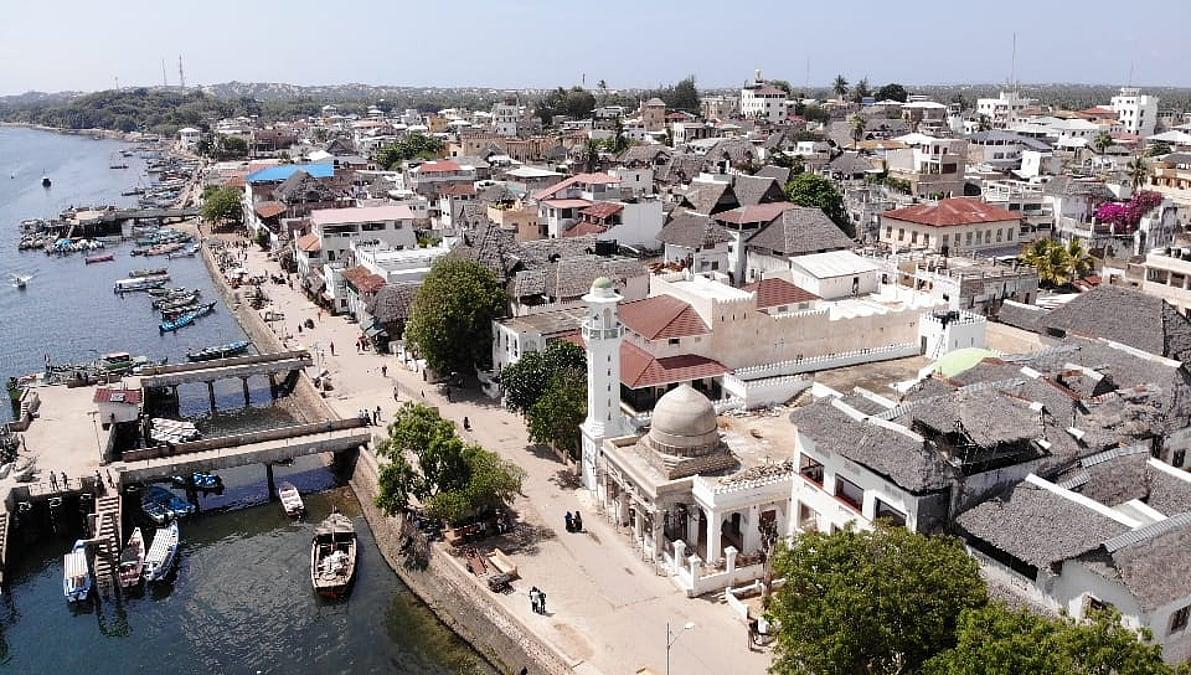
Swahili developed along the East African coast and nearby islands. This region includes areas of modern-day Kenya, Tanzania, northern Mozambique, and the islands of Zanzibar, Pemba, and other parts of the western Indian Ocean.
The coast was never isolated. For centuries, communities living along the shoreline interacted with people arriving by sea and people traveling inland. African coastal populations traded with merchants from Arabia, Persia, India, and other parts of the Indian Ocean world. These interactions created an environment in which languages could influence one another.
Swahili emerged within this African coastal environment. Its development was therefore closely connected to both local Bantu societies and international maritime networks.
The Indian Ocean and the Making of Swahili
The Indian Ocean was one of the world’s great historical networks of exchange. Long before modern globalization, ships crossed these waters carrying goods, people, and ideas. The East African coast was connected to Arabia, Persia, India, and other regions.
Monsoon winds played an important role in navigation. Sailors could use seasonal wind patterns to travel across the ocean and return at different times of the year, creating repeated contact. A merchant might arrive on the East African coast, conduct business, establish relationships, and return during another season. Over centuries, such interactions contributed to the growth of coastal towns and the development of Swahili-speaking communities.
Swahili City-States
The medieval East African coast was characterized by numerous urban settlements and trading centers. Among the best-known are:
- Kilwa: A dominant southern trading center known for gold and ivory commerce.
- Mombasa & Malindi: Strategic coastal hubs with deep maritime connections.
- Lamu & Pate: Historic island centers of architecture, poetry, and Islamic scholarship.
- Zanzibar: An island node that grew into a central commercial and cultural hub.
These communities are often associated with what historians call Swahili civilization. They were not simply copies of foreign settlements—they were African coastal societies shaped by local traditions and international connections. Their architecture, commerce, religion, and language reflected centuries of interaction.
Kilwa and the Indian Ocean Economy
Kilwa, located on the southern Tanzanian coast, became one of the most important medieval trading centers of the East African coast. Its wealth was connected to Indian Ocean commerce and trade with the African interior.
Gold from areas farther south, including the Zimbabwean region, moved through coastal networks. Other goods included ivory and agricultural products. Imported ceramics and other materials demonstrate the city’s connections with the wider Indian Ocean world.
The history of Kilwa illustrates why language developed the way it did. A port connecting people from different regions needs a language capable of facilitating communication. Swahili fulfilled that role.
Zanzibar and the Swahili World
Zanzibar eventually became one of the most famous centers of Swahili culture. Its strategic position in the Indian Ocean helped it become a major commercial center.
Stone Town, with its narrow streets, historic buildings, and elaborate carved doors, preserves physical evidence of the cultural exchanges that shaped the island. Arabic, African, Indian, and European influences can be found in its historical environment. Yet the dominant cultural identity that emerged was distinctly Swahili. Cultural mixing does not necessarily erase local identity; it can create something entirely new.
Swahili and Islam
Islam has played an important role in the history of Swahili. Islam reached the East African coast centuries ago through commercial and social connections with the wider Muslim world. Many coastal Swahili communities became Muslim, making Arabic important in religious life.
Islamic scholarship introduced Arabic religious vocabulary into Swahili. Words associated with prayer, faith, morality, religious education, and social life entered the language. However, Swahili remained structurally a Bantu language. This combination of African linguistic foundations and Islamic cultural influence became one of the defining characteristics of Swahili civilization.
Arabic Influence on Swahili Vocabulary
A substantial part of Swahili vocabulary comes from Arabic, illustrating how words move across borders:
- Kitabu (book): Derived directly from Arabic roots.
- Shule (school): Entered through historical contact involving European languages and Arabic pathways.
- Safari (journey): Has Arabic roots and has become familiar internationally.
The English word “safari” comes directly from Swahili. This is a clear example of linguistic exchange moving in both directions: English borrowed a Swahili word, while Swahili had already borrowed and integrated words from other languages over time.
 Swahili Was Never Simply Arabic
The Arabic influence on Swahili is substantial, but describing Swahili as an Arabic language would be historically and linguistically inaccurate.
Its grammatical structure is Bantu. Its earliest development is tied to African coastal societies. Its vocabulary contains words from multiple sources, and its speakers have historically included communities with diverse backgrounds. It demonstrates how a language can remain rooted in one linguistic family while absorbing extensive vocabulary and cultural influences from others.
Persian, Portuguese, and Colonial Footprints
Other global powers also left linguistic traces on the coast:
- Persian Influence: Persian merchants interacted with coastal societies, leaving historical memories and subtle vocabulary traces, though modern scholarship emphasizes the indigenous African foundations over external origins.
- Portuguese Contact: Arriving in the late fifteenth century, Portuguese forces occupied strategic coastal locations. While they introduced words related to food and everyday items, they did not replace Swahili.
- German and British Colonial Rule: Colonial administrations often promoted European languages for higher education, yet relied on Swahili for local administration, inadvertently expanding the language far beyond its coastal heartland.
Swahili Moves Inland as a Lingua Franca
One of the most significant developments in Swahili history was its expansion inland. Trade routes connected the coast to communities deep inside East Africa. Traders, porters, missionaries, soldiers, and administrators traveled along these routes, spreading Swahili as a practical language of communication.
A lingua franca is a language used for communication between people who have different first languages. Swahili became one of Africa’s most successful lingua francas. A person in East Africa might speak a local language at home but use Swahili when communicating with people from other communities in markets, transportation, education, and political life.
Swahili in East African Nations
Swahili plays distinct roles across different East and Central African countries:
- Tanzania: Promoted extensively post-independence by Julius Nyerere, Swahili became an instrument of national unity across hundreds of ethnic groups and is deeply embedded in schools, government, and public life.
- Kenya: Serves as a major national and official language alongside English. It is widely used in media and government, while urban youth have shaped distinct variations like Sheng in Nairobi.
- Uganda: Maintained a complex environment where English and local languages dominate, but Swahili retains regional and security importance.
- Democratic Republic of Congo: Spoken widely in eastern regions, where the Congolese variety has developed unique local characteristics.
- Rwanda & Burundi: Used increasingly in commerce and regional integration within the East African Community.
Swahili and African Unity
Swahili has acquired symbolic importance in discussions of Pan-Africanism. Because it is an African language spoken across multiple national boundaries without being tied exclusively to a single ethnic group, it represents unity beyond colonial borders.
It has been used in political speeches, cultural movements, and educational initiatives promoting African identity. The language’s history makes it particularly suitable for this role: it is African in origin while carrying evidence of centuries of international interaction.
Literary Traditions, Music, and the Digital Era
Swahili possesses a rich cultural tradition that spans generations and mediums:
- Poetry and Literature: Coastal communities developed traditions of written poetry and storytelling using Arabic script (Ajami) before Latin scripts became widespread. Modern writers continue this legacy through novels, plays, and essays.
- Music and Bongo Flava: Genres like Bongo Flava from Tanzania combine hip-hop, R&B, and local rhythms, using Swahili to express youth culture, social commentary, and contemporary life across the continent.
- Digital Media & Education: News agencies, podcasts, social media, and digital platforms use Swahili extensively. Efforts continue to expand Swahili integration into speech recognition, translation, and modern AI systems.
The Grammar Behind the Language
Swahili grammar reflects its Bantu heritage through prefix-based systems. One of its most distinctive features is its noun-class system, where prefixes determine grammatical agreement:
- Mtu (person) / Watu (people) — Human class singular and plural.
- Kitabu (book) / Vitabu (books) — Item class singular and plural.
Swahili frequently combines prefixes and roots to express subject, tense, object, and verb in a single word. A single Swahili verb can express what English requires an entire phrase or sentence to state, demonstrating its dynamic structure.
Greetings and Cultural Identity
Swahili greetings highlight the social nature of the language. Expressions like Habari? (How are things?) and Jambo (Hello) are recognized globally. Greetings communicate respect, friendliness, and social awareness, reflecting the principle that communication is about maintaining human relationships as much as exchanging information.
For coastal communities, Swahili is cultural heritage. For Tanzanians, it is national identity. For East Africans, it represents regional unity, and for the global diaspora, it provides a direct bridge to African history and culture.
Conclusion: A Language Built Through Connection
Swahili is much more than a language spoken along the East African coast—it is a product of centuries of African history. It emerged from Bantu-speaking communities and developed within the dynamic environment of the East African coast. Through trade, migration, religion, and cultural exchange, it absorbed influences from Arabic and numerous other languages while maintaining its fundamental Bantu identity.
It traveled along trade routes, expanded inland, and became a bridge connecting communities that did not share the same mother tongue. Later, it became a central pillar of national identity, education, literature, and modern music.
Kiswahili demonstrates that African languages have always been capable of crossing borders and uniting diverse populations. Its history challenges the idea that Africa’s linguistic development occurred in isolation, showing instead a continent deeply connected to itself and the world. From ancient Indian Ocean trading ports to modern digital platforms, Swahili continues to evolve as one of Africa’s most enduring linguistic bridges.
