


The Voices That Built a Continent: Decoding Africa’s Extraordinary Linguistic Landscape
Africa’s linguistic diversity is enormous. Across the continent, thousands of languages are spoken by communities separated by geography, history and political borders. At first glance, these languages can appear completely unrelated. A speaker of Yoruba may not understand Amharic. A speaker of Swahili may not understand Hausa. Someone speaking Xhosa may communicate very differently from someone speaking Wolof.
Yet beneath this extraordinary diversity are relationships that linguists have spent generations trying to understand. Languages can change dramatically over time, but traces of their shared ancestry often remain hidden within vocabulary, grammar, sound systems and sentence structure. By comparing these features, linguists can determine that certain languages descended from older common languages. These groups are known as language families.
A language family is therefore not simply a collection of languages that happen to sound similar. It represents a proposed historical relationship in which the languages developed from a common ancestral language, often called a proto-language. Africa is particularly important to the study of language families because it contains several enormous linguistic groupings and some of the world’s most complex multilingual environments.
The commonly discussed major groupings include Niger-Congo, Afroasiatic, Nilo-Saharan, and the diverse language families of southern Africa often historically grouped under the label “Khoisan.” However, modern linguistics has shown that these categories are not equally secure. Some relationships are strongly supported, while others remain debated.
This distinction matters. For many years, simplified maps presented Africa as if its languages could be neatly divided into four or five enormous families. Modern research paints a more complicated picture. Some classifications have been revised, some proposed relationships have been challenged, some languages remain difficult to classify, and some linguistic histories are still being reconstructed. Understanding these uncertainties does not make Africa’s linguistic story less fascinating—it makes it even more interesting.
What Is a Language Family?
Before examining Africa’s major language families, it is useful to understand what linguists mean by the word “family.” The idea is similar to a human family tree. Imagine an ancestral language spoken thousands of years ago. Over generations, different groups of speakers migrate to new locations and become separated from one another. Their languages begin to change independently. Words change pronunciation, new words enter the vocabulary, old words disappear, grammar develops new patterns, sounds shift, and neighboring languages influence one another.
Eventually, the descendants of the original language may become so different that their speakers can no longer understand one another. Yet historical similarities remain. Linguists can compare these similarities and reconstruct aspects of the earlier language. This is the basis of the comparative method, one of the major tools used to investigate relationships between languages. A language family is therefore essentially a linguistic family tree.
Proto-Languages: The Ancestors We Cannot Hear
A proto-language is a reconstructed ancestor from which a group of related languages is believed to have developed. It is important to understand that proto-languages are usually not languages that linguists have directly recorded. If a language family has no written records from its earliest period, researchers cannot simply open an ancient dictionary and read the ancestral language.
Instead, they work backward. Suppose several related languages have similar words for parts of the body, natural features, numbers or everyday activities. If the similarities follow systematic patterns rather than occurring randomly, linguists can compare them and propose earlier forms. Over time, these reconstructions can provide clues about the vocabulary and sound system of an ancestral language. This is one reason linguistic research can contribute to African history. Language can preserve evidence of relationships that existed long before modern borders were created.
Niger-Congo: One of Africa’s Largest Linguistic Groupings
One of the most important language groupings in Africa is Niger-Congo. It encompasses a vast number of languages across much of West, Central, Eastern and Southern Africa. Languages commonly associated with Niger-Congo include Yoruba, Igbo, Wolof, Akan, Ewe, Shona, Zulu, Xhosa, Kikongo, Kinyarwanda, Kirundi, Luganda and many others.
The Bantu languages form one particularly large branch within Niger-Congo. Because of its enormous geographical distribution and number of languages, Niger-Congo is central to discussions of African linguistic history. However, the internal classification of Niger-Congo remains a subject of scholarly research. It should not be imagined as a perfectly settled tree in which every branch is known with complete certainty. Linguists continue to debate the relationships among several groups.
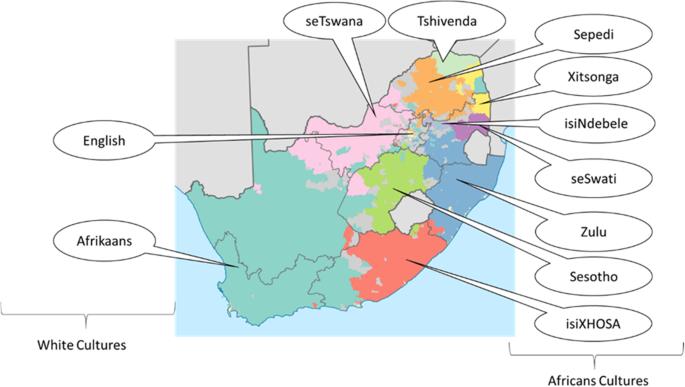
The Geographic Reach of Niger-Congo
Niger-Congo languages occupy a huge portion of sub-Saharan Africa. They are spoken from the western regions of the continent across Central Africa and deep into Eastern and Southern Africa. This distribution is historically significant. The languages provide clues about ancient population movements.
One of the most important developments in this history was the expansion of Bantu-speaking populations across large portions of Central, Eastern and Southern Africa. The linguistic evidence associated with this expansion has been studied alongside archaeological, genetic and environmental evidence. Language therefore becomes one piece of a much larger historical puzzle.
Bantu Languages: A Major Branch
When people discuss African languages, the word Bantu frequently appears. Bantu is not one language. It is a large group of related languages within the broader Niger-Congo family. Swahili, Zulu, Xhosa, Shona, Kinyarwanda, Kirundi, Luganda, Kikongo and numerous other languages belong to the Bantu group.
These languages can be remarkably different from one another. A Swahili speaker cannot automatically understand Zulu simply because both languages are Bantu. Their shared ancestry is comparable to the relationship between languages such as English, German and Dutch: related languages can preserve historical similarities while becoming distinct systems.
What Makes Bantu Languages Interesting?
Bantu languages have several features that have attracted considerable linguistic attention:
- Noun Class Systems: Many use systems of noun classes, in which nouns are grouped according to grammatical categories. These categories can influence other words in the sentence. For someone accustomed to English grammar, this may initially seem unusual, but noun-class systems are perfectly natural within the languages that use them. They demonstrate how differently languages can organize the world grammatically.
- Evidence for Population Movement: Bantu languages also provide important evidence for studying population movement. Their wide distribution across Central, Eastern and Southern Africa has helped researchers investigate the historical expansion of Bantu-speaking communities.
Afroasiatic: Languages Across North and Northeast Africa
Another major linguistic grouping associated with Africa is Afroasiatic. It includes languages spoken across North Africa, the Horn of Africa and parts of the Sahel, as well as related languages outside Africa. Arabic is perhaps the most globally recognizable language in this family. Other important African Afroasiatic languages include Amharic, Tigrinya, Somali, Oromo and Hausa.
Afroasiatic demonstrates an important feature of African linguistic geography: African language families do not always fit neatly within modern national borders. The family extends across the Sahara and into regions that have experienced centuries of interaction between African, Middle Eastern and Mediterranean societies.
Arabic and the African Linguistic Landscape
Arabic has a long and complex history in Africa. It spread through North Africa alongside the expansion of Islam beginning in the seventh century and subsequently became deeply embedded in education, administration, scholarship, commerce and religious life. Today, Arabic is spoken in many forms across North Africa and parts of the Sahel.
Modern Arabic varieties differ from one region to another. The Arabic spoken in Morocco, for example, is not identical to the Arabic spoken in Egypt or Sudan. This illustrates another important linguistic principle: a language can spread over a huge geographical area and then diversify into regional varieties.
Amharic and the Horn of Africa
Amharic is one of Africa’s major languages and an important Semitic language. It is widely spoken in Ethiopia and has a long literary and political history. Its writing system, Ge’ez script, connects it to a broader literary tradition in the Horn of Africa.
The history of Amharic demonstrates that African linguistic traditions are not simply oral traditions. Several African societies developed long-established writing systems and literary cultures. The Ethiopian highlands in particular have a rich history of written language, manuscript production and religious literature.
Hausa and the Chadic Branch
Hausa occupies a particularly important position in West Africa. It belongs to the Chadic branch of the Afroasiatic family. Hausa has developed into a major regional language and lingua franca across parts of West Africa.
Its historical significance is closely connected to trade. For centuries, Hausa-speaking communities participated in commercial networks crossing the Sahel and connecting cities and markets. As traders moved between communities, Hausa became useful for communication beyond the boundaries of individual Hausa-speaking settlements. This is one reason language and trade are so closely connected in African history.
Language Families and Ancient Trade
Trade does more than move goods—it moves words. A merchant traveling from one city to another may encounter new objects, technologies, foods or customs. New terms can enter a language, or a word can be borrowed from a neighboring language.
Over generations, these borrowed words can become so familiar that speakers no longer recognize their foreign origin. Africa’s ancient trade networks therefore contributed to the linguistic exchange that continues to shape the continent.
Nilo-Saharan: A Complex Classification
The term Nilo-Saharan is commonly used to describe a proposed grouping of languages across parts of the Sahel, Nile Valley and East-Central Africa. Languages associated with the classification include communities speaking languages such as Dinka, Nuer, Luo and Kanuri, among others.
However, the status of Nilo-Saharan as a single demonstrated language family is considerably more debated than the status of some other major African groupings. Some linguists have questioned whether all the languages traditionally placed under Nilo-Saharan share a single common ancestor.
This is an important distinction for readers. Older educational materials may present Nilo-Saharan as a clearly established family comparable to Indo-European. Modern scholarship is more cautious. The evidence for relationships among many of its branches is uneven.
Why Classification Is Difficult
Languages do not evolve in isolation. Communities live next to one another. They trade, marry, migrate, fight wars, form political alliances, adopt religious traditions, and exchange technologies. All of these interactions can influence language.
This creates a problem for linguists. Two languages may share vocabulary because they are related, but they may also share vocabulary because their speakers have lived next to one another for centuries. Distinguishing inheritance from borrowing can therefore be extremely difficult.
The Languages of Southern Africa
Southern Africa contains some of the continent’s most distinctive linguistic traditions. The region includes numerous Bantu languages such as Zulu, Xhosa, Tswana, Sotho and Ndebele. It also contains languages traditionally associated with the various groups historically called Khoisan.
The term “Khoisan” should be used carefully. For much of the twentieth century, scholars grouped numerous southern African languages together under this broad label because of certain shared features, particularly click consonants. Modern linguistic research, however, does not generally treat “Khoisan” as a single proven language family. Instead, several distinct language families and isolates are recognized. This is an excellent example of how scientific understanding changes over time.
The Famous Click Languages
Some languages of Southern Africa are particularly famous for their click consonants. Clicks are produced using movements of the tongue that create a suction effect in the mouth. They are represented in writing using symbols such as ǃ, ǀ, ǁ and ǂ in linguistic transcription.
Languages such as Xhosa and Zulu contain click sounds, partly as a result of historical contact with neighboring click-language communities. This demonstrates something fascinating about language: a sound can move between languages. A community can adopt a pronunciation feature from another language even when the two languages do not belong to the same family. Language contact can therefore leave visible traces in speech.
Language Isolates
Not every African language fits neatly into a large family. A language isolate is a language for which no demonstrable relationship to another living language has been established.
Language isolates are especially interesting because they may represent the surviving branch of a much older linguistic history. However, determining whether a language is genuinely isolated can be difficult. It may simply be that researchers have not yet found sufficient evidence to establish its relationships. Africa contains several languages whose classification has been particularly challenging.
The Challenge of Language Classification
Classifying African languages is not like sorting books into shelves. The boundaries can be complicated. A language may have vocabulary from several neighboring languages. A community may shift from one language to another. A language may split into several varieties, or two dialects may gradually become distinct languages.
Different researchers may use different criteria. This explains why language maps can change as linguistic knowledge improves.
Language Families Are Not Ethnic Families
An important distinction must be made between language, ethnicity and culture. Speaking a language does not automatically mean belonging to a particular ethnic group.
- Language Shift: Communities can change languages over time due to social or political pressure.
- Multilingualism: People can become multilingual and adopt languages of neighboring groups.
- Urbanization and Identity: Urbanization can create new linguistic identities independent of lineage.
Therefore, language families should never be treated as direct maps of ethnicity. A linguistic relationship tells us something about language history; it does not automatically provide a complete explanation of a people’s ancestry or identity.
Language Change Through Migration
Migration is one of the strongest forces behind linguistic diversity. When a population moves into a new region, its language enters an environment containing other languages.
Sometimes the migrants maintain their language. Sometimes they adopt words from local communities. Sometimes the original language becomes divided into regional varieties. Over very long periods, these changes can produce entirely new languages. The history of Bantu languages provides an important example of how language distributions can change as populations expand into new territories.
The Role of Geography
Mountains, deserts, forests and rivers can influence language boundaries. The Sahara, for example, has historically been both a barrier and a bridge. At certain times and in certain regions, crossing the desert was difficult. At other times, caravan networks created strong connections between communities on opposite sides.
The Nile similarly connected populations over enormous distances. Coastal regions encouraged maritime interaction, while forests and mountain regions sometimes contributed to the isolation of smaller communities. Geography therefore does not determine language by itself, but it can influence how languages interact.
The Sahara as a Linguistic Bridge
The Sahara is often imagined simply as a giant barrier separating North Africa from sub-Saharan Africa. Historically, however, it was also crossed by merchants, travelers, scholars and religious figures.
The development of trans-Saharan trade created connections between North African and West African societies. Arabic words entered African languages, and African words entered other languages. People carried names, religious vocabulary and commercial terminology across the desert. The linguistic map of the Sahel still reflects some of these historical connections.
Swahili and Language Contact
Swahili provides another powerful example of language contact. It is a Bantu language that developed along the East African coast within a region connected to Indian Ocean trade. Swahili contains substantial vocabulary of Arabic origin, alongside vocabulary inherited from Bantu and words borrowed from other languages through centuries of interaction.
Its history demonstrates that borrowing does not destroy a language’s identity. Swahili remains a Bantu language despite its extensive history of contact.
Borrowed Words Do Not Necessarily Change a Language Family
This distinction between language family and borrowed vocabulary is essential. Consider English. English belongs to the Germanic branch of the Indo-European family. Yet a large portion of its vocabulary comes from French, Latin, Greek and other languages. If someone classified languages simply by counting vocabulary, English might appear far more closely related to French than it actually is historically.
The same principle applies to African languages. A language can borrow thousands of words while retaining the grammatical and historical structure of its original family.
Religion and Language
Religious movements have also influenced African languages. Islam introduced Arabic religious terminology across large parts of Africa. Christianity contributed Greek, Latin and later European vocabulary through churches and schools.
Missionary education sometimes produced written forms of African languages. Religious institutions therefore played contradictory roles: in some cases, they contributed to the spread of European languages; in others, missionaries helped document local languages by creating dictionaries, grammars and writing systems.
Writing and Language Families
Writing systems provide another layer of linguistic history. Some African languages have ancient written traditions, while others adopted writing relatively recently.
The Ge’ez script is one of the continent’s most famous indigenous writing traditions. Arabic script has also been used historically to write several African languages. In West Africa, languages including Hausa and others have traditions of writing in Arabic-derived scripts known as Ajami. European alphabets later became widespread through colonial education. These different writing traditions demonstrate that African languages have never been limited to a single model of literacy.
The Impact of Colonial Languages
Colonialism added another layer to Africa’s linguistic landscape. English, French, Portuguese and other European languages became languages of administration and formal education in different parts of the continent.
These languages do not belong to African language families. Yet they now have deeply established African varieties. Nigerian English is not identical in use to British English. Kenyan English has developed within a multilingual environment. South African English exists alongside numerous indigenous languages. African speakers have adapted imported languages to local contexts, creating new varieties that are now part of African linguistic identity.
Language Families and National Identity
After independence, African governments faced a difficult question: Which languages should be used officially? A country containing dozens or hundreds of languages cannot necessarily choose every local language as the primary language of national administration.
International languages were sometimes retained because they offered a common administrative medium. In other countries, major African languages were promoted as national or official languages. Tanzania’s promotion of Swahili is one of the most important examples. The choice of language can therefore become part of nation-building.
Why One Family Can Span Many Countries
A language family does not stop at a political border. Niger-Congo languages are distributed across numerous countries. Afroasiatic languages extend across North and Northeast Africa. Bantu languages stretch across much of Central, Eastern and Southern Africa.
This means linguistic history often predates modern states. Studying language families can therefore help us see Africa from a different perspective: instead of beginning with modern national borders, we begin with relationships between communities and languages.
Language Families and African History
Historical records are often incomplete. Ancient African societies did not always leave written documentation, and archaeological evidence can be difficult to interpret. Linguistics provides another source of evidence.
If related languages are distributed across a particular geographical region, their similarities may provide clues about earlier population movements. Words for crops, animals, tools and technologies can also provide clues. For example, if related languages share ancient terms for particular agricultural practices, researchers can investigate when and where those practices may have spread. Language can therefore function as an indirect historical record.
What Language Can Tell Us About Migration
Suppose several languages separated by hundreds of kilometers share systematic grammatical features and related vocabulary. This suggests historical connections. Researchers can then compare the linguistic evidence with archaeology and other forms of evidence.
The goal is not to assume that language automatically proves migration. Instead, different evidence can reinforce or challenge one another. This interdisciplinary approach has become increasingly important in the study of African population history.
What Language Cannot Tell Us
Language is powerful evidence, but it has limitations:
- Biological Distinction: A population can change its language without being replaced biologically.
- Conquest and Power: A conquering group may impose its language on another group.
- Trade Alignment: A community may adopt the language of a powerful trading partner.
- Bilingual Shift: People may become bilingual and gradually shift toward another language over generations.
Therefore, language change should not automatically be interpreted as mass population replacement. This is another reason historians, archaeologists, geneticists and linguists increasingly work together.
Africa’s Linguistic Family Tree Is Still Growing
Our understanding of African language families is not complete. Researchers continue to document poorly studied languages, new recordings are being made, old classifications are being reconsidered, and digital databases are expanding.
Communities are participating in linguistic documentation, and advances in computational linguistics are helping researchers compare large collections of linguistic data. Every new discovery can potentially change our understanding of how languages are related.
Preserving Linguistic Diversity
Studying language families is not only an academic exercise; it has practical consequences. If a small language becomes endangered, documenting its vocabulary and grammar can help preserve knowledge for future generations.
- Recordings: Preserve exact pronunciation and vocal cadence.
- Oral Literature: Capture stories, songs, and cultural histories.
- Dictionaries: Document unique vocabulary and semantic nuances.
- Digital Archives: Make materials available to researchers and local communities.
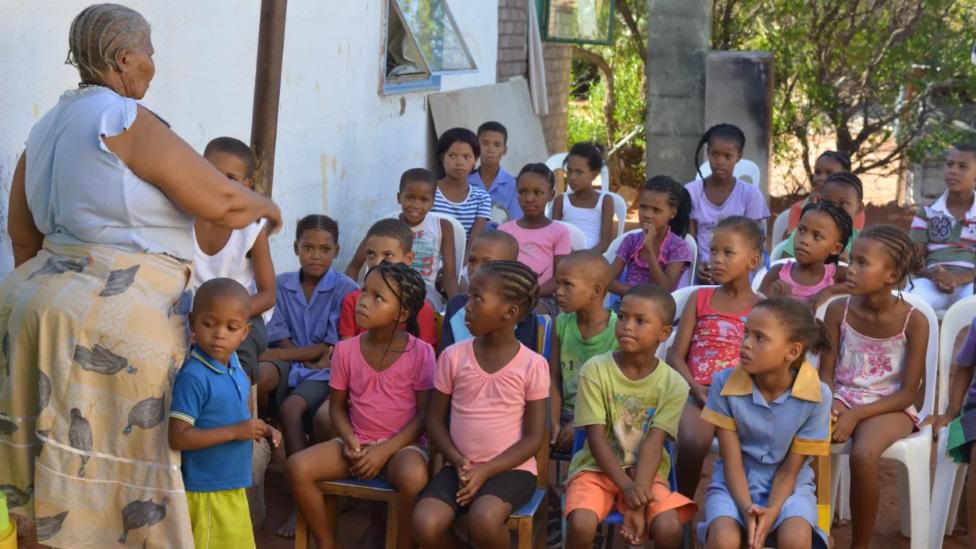
- Education: Ensure that children continue speaking their ancestral languages in school settings.
Language preservation therefore connects historical research with cultural responsibility.
The Future of African Language Research
Technology is transforming the study of African languages. Researchers can record speakers using mobile devices, large collections of speech can be stored digitally, computational tools can compare vocabulary, and artificial intelligence can assist with transcription and translation.
However, technology should support communities rather than treat languages simply as datasets. The people who speak a language should have an important role in deciding how their linguistic knowledge is recorded, shared and used.
Why Language Families Matter
The concept of language families allows us to see connections that are not obvious on the surface. A speaker of one language may be separated from a related language by thousands of kilometers, yet their languages may preserve traces of a shared past.
A word may have changed, a sound may have disappeared, or a grammatical system may have developed differently, but historical relationships remain visible. Language families therefore reveal Africa not as a collection of isolated communities, but as a continent of continuous interaction.
Reading Africa Through Its Languages
Africa’s major language families tell a story that stretches far beyond vocabulary. They tell stories of migration, reveal ancient connections, reflect trade, demonstrate cultural exchange, preserve evidence of population movements, and show how communities adapt when they encounter new environments and neighboring societies.
Niger-Congo demonstrates the enormous linguistic diversity of much of sub-Saharan Africa, with the Bantu languages forming one of its most extensive branches. Afroasiatic connects languages across North Africa, the Horn of Africa and parts of the Sahel. Nilo-Saharan represents an important but more debated classification of languages across parts of the continent. Southern Africa contains several distinct language families and isolates, including languages famous for their click consonants. And beyond these major groupings are numerous individual languages whose histories continue to challenge and enrich our understanding of Africa.
The most important lesson is that a language family is not simply a technical category on a linguistic map—it is evidence of human connection. Every related language carries traces of an earlier relationship. Every borrowed word can reveal contact. Every grammatical similarity can provide a clue. Every endangered language represents a potentially disappearing record of human experience.
Africa’s linguistic landscape is therefore not only something to study. It is a heritage to understand, document and keep alive.
