

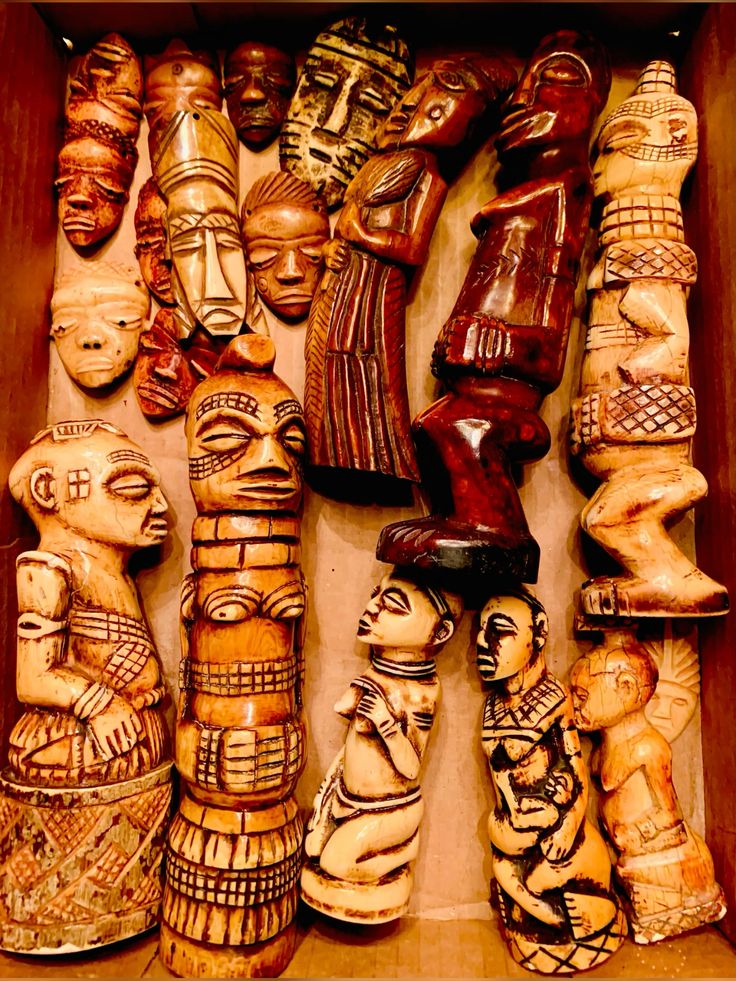
The Carver’s Hand and the Community’s Voice
Long before Benin’s bronze casters achieved their celebrated technical mastery, and continuing in communities across the continent long after that specific royal tradition reached its artistic peak, wood carving has remained perhaps the most widespread, accessible, and continuously practiced sculptural tradition in African art. Where bronze casting required expensive imported metal, specialized guild infrastructure, and, as the previous article demonstrated, close royal patronage and control, wood carving could be practiced, at varying levels of skill and specialization, across a far broader range of communities, economic circumstances, and social contexts — from highly specialized professional carvers producing significant ritual and royal commissions to more general craft production serving everyday household and community needs.
This accessibility should not be mistaken for lesser artistic achievement. African wood carving traditions include some of the most technically sophisticated, formally innovative, and spiritually significant sculptural work found anywhere in world art history — work that, as discussed in this series’ opening article, fundamentally reshaped early twentieth-century European modernist art once figures including Picasso, Matisse, and their contemporaries encountered African carved sculpture and recognized in it formal possibilities that would help liberate their own work from the constraints of European academic realist tradition. This article examines wood carving’s technical foundations, its major stylistic traditions across different African regions, the specialized carvers and their social position, and the specific object types — from ancestral figures to royal regalia to everyday functional objects — through which this remarkably diverse and enduring tradition finds expression.
Wood as Material: Selection, Meaning, and Technical Properties
As established in this series’ opening article regarding materials’ symbolic significance throughout African art, wood carries meaning extending well beyond its practical carving properties alone, connecting symbolically to living growth, forest and natural world spiritual significance, and, in numerous traditions, specific ancestral or spiritual associations attached to particular tree species or even specific individual trees considered spiritually significant within local cosmological understanding.
Practically, African carvers across different regions and traditions developed sophisticated knowledge regarding which wood types suited which specific carving purposes, considering factors including the wood’s density and workability, its resistance to insect damage and decay (a particularly significant consideration in tropical and subtropical climates prevalent across much of the continent), its color and grain characteristics affecting final aesthetic appearance, and, frequently, specific spiritual or symbolic appropriateness for particular ritual or ceremonial purposes. Hardwoods including various mahogany species, iroko, and numerous other regionally specific hardwood types were and remain particularly prized for significant ceremonial and figurative carving requiring durability and fine surface finishing, while softer, more easily worked woods might be selected for objects requiring less durability or more rapid production for everyday functional use.
Tree felling and wood harvesting for significant ceremonial or ritual carving purposes frequently involved specific ritual protocols in many traditions, including offerings or prayers made to the tree or associated spiritual forces before felling, reflecting the broader spiritual framework, discussed throughout this series, in which significant artistic material sourcing was understood as a spiritually consequential act requiring appropriate respect and ritual preparation rather than a purely practical, spiritually neutral material acquisition process.
The Carver: Training, Status, and Specialized Knowledge
Across numerous African traditions, skilled wood carving, particularly for significant ceremonial, ritual, or royal commissions, was and often remains a specialized profession requiring extensive training, frequently transmitted through structured apprenticeship systems within specific families or recognized carving lineages, echoing the guild-based knowledge transmission systems discussed regarding Benin’s bronze casting tradition in the previous article, though generally operating with somewhat less centralized royal control than Benin’s specific guild system, given wood carving’s broader geographic distribution and more varied patronage contexts across different communities and political structures.

Individual carvers, particularly the most accomplished, frequently developed recognizable personal stylistic signatures, with art historians and collectors, particularly from the twentieth century onward as Western scholarly interest in African art developed significantly beyond the purely aesthetic modernist appreciation discussed in this series’ opening article, increasingly working to identify and document specific named master carvers and their distinctive stylistic contributions, moving beyond earlier tendencies to treat African carved sculpture as anonymous, generically “tribal” production without recognition of individual artistic achievement and innovation — a significant corrective to earlier, often dismissive Western art historical treatment of African sculptural achievement. The renowned Yoruba master carver Olowe of Ise, whose distinctively dynamic, technically innovative carved palace doors, veranda posts, and royal regalia achieved significant recognition both within his own Yoruba cultural context and, increasingly, within broader international art historical scholarship, exemplifies this growing recognition of individual African artistic achievement and named authorship within traditions too often historically treated as anonymous collective production.
Ancestral and Spiritual Figures
Among the most significant categories of African wood carving, connecting directly to this series’ opening discussion regarding art’s function as spiritual vessel and ancestral connection, are carved figures representing or embodying ancestral spirits, deities, or other spiritual entities, created to serve as focal points for ongoing spiritual veneration, communication, and, in many traditional understandings, active spiritual presence and engagement with the living community.
These ancestral and spiritual figures vary enormously in specific style, scale, and iconographic convention across different regional and cultural traditions, from the elegant, elongated figurative style associated with various Central African traditions, through the more geometrically stylized approaches characteristic of certain West African carving traditions, to the boldly expressive, sometimes deliberately distorted or exaggerated figurative approaches found in various other regional traditions, each reflecting distinct aesthetic conventions and, frequently, specific spiritual or symbolic considerations regarding how ancestral or spiritual presence should be appropriately represented and embodied within the carved form.
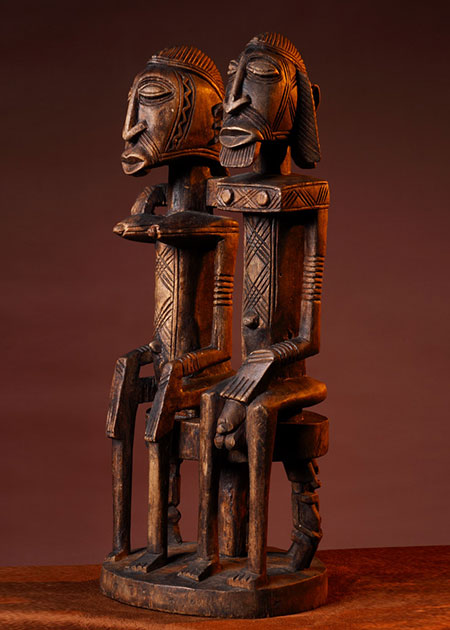 Twin figures, carved to commemorate and spiritually honor deceased twins within Yoruba tradition (where twin births carry particular spiritual and cultural significance) exemplify this ancestral commemorative carving tradition’s specific ritual function, with these carved figures, known as ere ibeji, receiving ongoing ritual care, feeding, and attention from surviving family members as a means of maintaining appropriate spiritual relationship with the deceased twin’s spirit, illustrating the active, ongoing spiritual relationship such carved figures were frequently understood to maintain with the living community, rather than functioning merely as static memorial objects.
Masks and Masquerade-Related Carving
As explored in depth in the preceding article of this series, wood carving forms the foundational material basis for the vast majority of African masquerade traditions, with carved wooden masks representing among the most artistically celebrated and internationally recognized categories of African sculptural achievement. Rather than repeating that article’s extensive discussion, this section simply reinforces the significant overlap and mutual reinforcement between wood carving and masquerade traditions as artistic categories, with many of the continent’s most accomplished carvers specializing specifically in mask production for particular masquerade societies and traditions, developing specialized knowledge regarding the specific stylistic conventions, ritual requirements, and technical considerations particular masking traditions demand.
Royal and Chieftaincy Regalia
Paralleling the royal patronage systems discussed regarding Benin’s bronze casting tradition, though generally operating through somewhat less centralized guild control, wood carving has historically served significant royal and chieftaincy regalia functions across numerous African political traditions, producing elaborate carved thrones, ceremonial staffs, carved doors and architectural elements for royal palaces, and various other regalia items marking and reinforcing political authority through sophisticated artistic achievement, connecting directly to this series’ opening discussion regarding art’s function as political instrument reinforcing social hierarchy and authority.
Ashanti carved stools, connecting to the broader Akan cultural context discussed extensively in the Traditional Clothing series regarding Kente’s royal significance, hold particular symbolic significance within Akan political and spiritual tradition, understood not merely as functional seating furniture but as objects carrying significant spiritual and political symbolism, with the “Golden Stool” specifically holding legendary status as the physical embodiment of Ashanti national unity and royal authority according to Ashanti oral historical tradition, illustrating carved wooden objects’ capacity to carry political and spiritual significance extending well beyond their practical function, directly paralleling this series’ broader discussion regarding African art’s integrated symbolic and functional dimensions.
Everyday and Functional Carved Objects
Beyond the significant ceremonial, spiritual, and royal carving traditions discussed above, wood carving across the continent has historically served extensive everyday functional purposes, producing household items including stools, bowls, spoons and other utensils, storage containers, and numerous other practical objects for domestic and community use. While generally receiving less scholarly and collector attention than more explicitly ceremonial or spiritually significant carved objects, this everyday functional carving tradition demonstrates the pervasive integration of skilled woodworking craft throughout African material culture and daily life, extending well beyond the specifically ceremonial or elite-patronage contexts that have historically received disproportionate external scholarly and market attention.
Even within this everyday functional category, aesthetic consideration and skilled craftsmanship frequently remained significant, with many households and communities valuing well-made, aesthetically pleasing functional objects alongside their practical utility, reflecting the broader principle, established throughout this series, that African material culture has historically resisted sharp separation between “fine art” and “craft” or “functional object” categories more typical of Western art historical classification systems.
Regional Stylistic Diversity
Consistent with this series’ recurring emphasis on regional diversity, African wood carving traditions demonstrate enormous stylistic variation across the continent’s different regions and cultural contexts, resistant to easy generalization into a single “African style.” Central African traditions, including celebrated Congo Basin carving traditions, frequently favor elongated, elegantly stylized figurative forms with distinctive facial and bodily proportions specific to particular cultural traditions within the region. West African traditions demonstrate enormous internal diversity, ranging from the dynamic, sometimes dramatically expressive carving traditions associated with various Nigerian cultural groups to the more geometrically restrained approaches characteristic of certain other West African carving traditions.
East African traditions, including notably the distinctive Makonde carving tradition associated with communities in present-day Tanzania and Mozambique, developed particularly distinctive stylistic approaches, including the celebrated “Tree of Life” (Ujamaa) sculptural form featuring complex, densely interwoven multiple figures carved from a single piece of ebony or other dark hardwood, representing a relatively more recent, twentieth-century artistic development within the broader Makonde carving tradition that has achieved significant international recognition and commercial success while maintaining meaningful connection to traditional Makonde carving skill and aesthetic sensibility.
Colonial Disruption and the Path to Contemporary Practice
As with the artistic and craft traditions discussed throughout this series, wood carving faced significant colonial-era disruption, including missionary opposition to carving closely associated with traditional spiritual practice (paralleling the missionary opposition to masquerade discussed in the previous article), disruption of traditional royal and chieftaincy patronage systems as colonial administration undermined existing political structures, and, as with Benin’s bronzes, significant looting and removal of carved sculptural objects to European and American museums and private collections, contributing to the broader restitution debate discussed in the previous article and revisited in this series’ concluding examination of heritage preservation.
Despite this disruption, wood carving demonstrated remarkable resilience and adaptive capacity, with traditional carving skill persisting through the colonial period and experiencing significant post-independence revival, while also adapting to new market contexts including expanding tourist and international art markets, which, from the mid-twentieth century onward, provided significant new economic opportunity for skilled carvers even as this market expansion raised familiar questions, echoed throughout this series regarding textile and other craft traditions, about authenticity, appropriate compensation, and the tension between rapid commercial production for tourist markets and the deeper technical and spiritual sophistication characteristic of the tradition’s most significant historical and continuing ceremonial and ritual production.
Conclusion: A Tradition Carved Into the Present
Wood carving’s remarkable geographic reach, stylistic diversity, and continued vitality across the continent make it, perhaps more than any other single artistic medium explored throughout this series, the most broadly representative embodiment of African sculptural achievement’s full range — from the most spiritually significant ancestral and masquerade carving, through royal and chieftaincy regalia paralleling Benin’s bronze tradition in political function if not specific technique, to the everyday functional objects demonstrating skilled craftsmanship’s pervasive integration throughout African material culture and daily life. As this series turns next to pottery and ceramic traditions, wood carving’s example of widely distributed, technically sophisticated, and continuously practiced craft skill — surviving significant colonial disruption while continuing to adapt and thrive within contemporary artistic and commercial contexts — offers an important model for understanding African art’s genuine, still-unfolding living tradition, extending well beyond the historical museum collections that too often dominate external perception of African sculptural achievement.
