


The Blue Men of the Sahara
Across the vast, sun-scorched expanse of the Sahara Desert, spanning present-day Niger, Mali, Algeria, Libya, and Burkina Faso, the Tuareg people have developed one of Africa’s most visually distinctive and functionally sophisticated dress traditions — one shaped not by royal courts or urban trade networks, as with several traditions explored earlier in this series, but by the unforgiving demands of desert survival, nomadic mobility, and a deeply held cultural code of honor, modesty, and social distinction. Most strikingly, the Tuareg are widely known by the evocative nickname “the Blue Men of the Sahara,” a name earned through the deep indigo-dyed cloth traditionally worn by Tuareg men, which over years of wear stains the skin a subtle blue — a visible, almost literal embodiment of cultural identity worn into the very body of the wearer.
The Tuareg, who refer to themselves as the Kel Tamacheq (speakers of the Tamacheq language) among other self-designations, maintain a matrilineal social structure and Berber (Amazigh) ethnic and linguistic heritage distinct from many of the sub-Saharan African traditions discussed elsewhere in this series, situating them within North Africa’s broader Berber cultural sphere while maintaining distinctive traditions shaped by their specific Saharan environment and historical trans-Saharan trading role. This article explores the Tuareg tesagelmust (veil), the broader system of Tuareg dress and its gendered dimensions, the renowned silverwork and jewelry tradition, and the ways this desert-adapted dress system continues to signify identity amid significant contemporary political and environmental pressures facing Tuareg communities.
The Tagelmust: A Veil of Identity, Not Concealment
The single most distinctive element of Tuareg dress is the tagelmust (also spelled tagelmoust or referred to regionally by related terms), a long, indigo-dyed cloth wrapped around the head and face, leaving only the eyes visible, traditionally worn by adult Tuareg men. Unlike veiling practices in some other cultural contexts, which may be primarily associated with female modesty, the tagelmust is distinctively a marker of adult Tuareg masculinity, and its wearing conventions carry precise social meaning quite different from surface assumptions a casual observer might make.
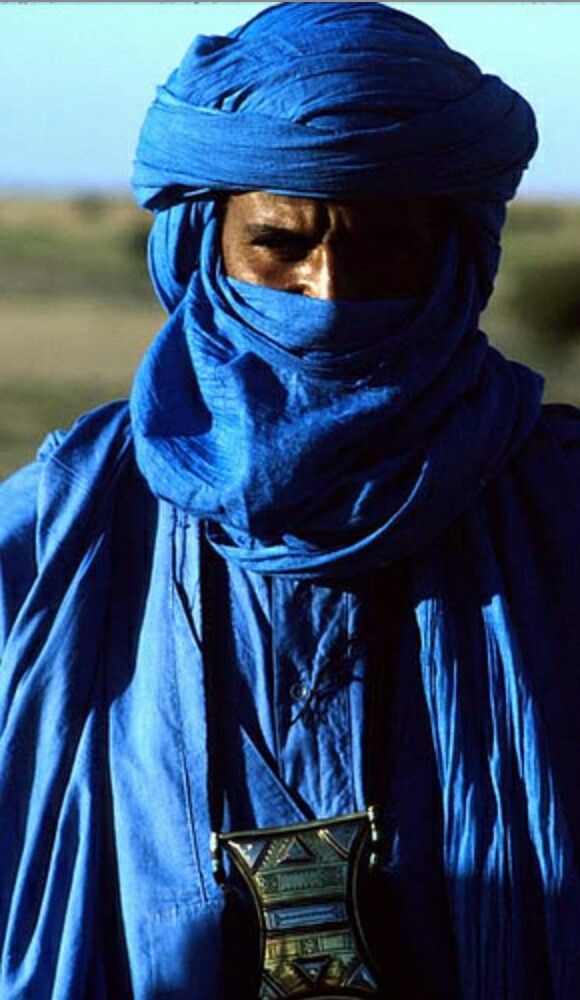 The tagelmust serves genuine, significant practical functions within the harsh Saharan environment: protecting the wearer’s face and respiratory system from blowing sand and dust, shielding skin from intense sun exposure, and providing some measure of warmth during the Sahara’s surprisingly cold desert nights. However, its cultural and social significance extends well beyond practical desert-survival function into a complex system of etiquette, modesty, and social signaling specific to Tuareg cultural understanding.
Traditionally, young Tuareg boys do not wear the tagelmust; its adoption marks a significant transition into adult masculine status, typically occurring around the time a young man reaches maturity, in a manner conceptually similar to the age-marked dress transitions discussed regarding Maasai moranhood, though expressed through an entirely different specific garment and cultural logic. Once adopted, the tagelmust becomes a near-constant element of adult male presentation, worn not only in public but often maintained even within some domestic contexts, particularly in the presence of individuals outside one’s immediate close family, elders, or in-laws, reflecting specific modesty and respect conventions governing exactly when and before whom a man might lower his veil.
Notably, Tuareg social convention traditionally holds that a man should not fully expose his mouth and nose in the presence of certain categories of people, particularly parents-in-law and other respected figures, with the specific height and manner of veil-wearing communicating levels of respect, formality, and social context much as, in other cultural systems, specific gestures or postures might communicate deference. This makes the tagelmust not simply an item of clothing but an active, continuously managed tool of social communication, adjusted throughout the day according to who is present and what level of formality or respect a given interaction calls for.
Indigo: The Cloth That Colors the Skin
The deep indigo dye traditionally used for the tagelmust and other Tuareg garments carries both practical and deeply symbolic significance. Historically, this cloth was often imported through trans-Saharan trade networks from regions including present-day Nigeria (connecting, notably, to the same broader indigo-dyeing tradition discussed regarding Yoruba Adire production, though processed and used quite differently within Tuareg cultural context) and other West African textile-producing regions, reflecting the Tuareg’s historical position as crucial intermediaries within extensive trans-Saharan trade networks connecting North Africa, West Africa, and beyond.
The distinctive quality of this deeply saturated indigo cloth, particularly historically, was that the dye was not entirely colorfast, meaning that over extended wear, particularly in hot conditions that cause perspiration, the indigo pigment would gradually transfer onto the wearer’s skin, producing the characteristic blue-tinted complexion that gave rise to the “Blue Men” designation used by outside observers, particularly European travelers and colonial-era chroniclers who found the phenomenon strikingly distinctive. Rather than viewing this dye transfer as an unwanted side effect, Tuareg cultural understanding has historically regarded the resulting blue-tinted skin with a degree of pride and aesthetic appreciation, with particularly deep, rich indigo coloring on cloth (and its resulting skin transfer) historically associated with higher quality, more expensive cloth and, by extension, with wealth and status.
This deep indigo, alongside less saturated blue tones and, in some regional and social contexts, white or other colors for specific garments or occasions, forms the core color palette of traditional Tuareg dress, creating a visual identity closely associated with the vast blue sky and, through the association with wealth-indicating cloth quality, with the trade wealth historically available to successful Tuareg trading families and confederations controlling key trans-Saharan trade routes.
Broader Garments: Boubou, Trousers, and Layered Desert Dress
Beyond the iconic tagelmust, traditional Tuareg men’s dress typically includes a flowing robe or gown, often referred to regionally as a boubou (a term and garment style shared, with regional variation, across several West African and Saharan cultures), providing loose, breathable coverage well-suited to intense desert heat while also offering protection from sun exposure and blowing sand across the body more broadly. Loose trousers, again designed for both comfort in extreme heat and practical mobility for a historically nomadic, camel-herding and trading lifestyle, complete the core garment structure, often layered with additional cloaks or wraps for cooler desert nights or during travel.
This emphasis on loose, layered, breathable garments reflects a broader logic common across desert and arid-climate dress traditions worldwide: rather than minimizing clothing to cope with heat, loose, air-permeable, but substantial coverage often proves more effective at managing extreme temperature swings and protecting skin from sun and windblown sand than minimal dress would achieve, a practical wisdom refined over many generations of Saharan nomadic experience and reflected consistently in the specific construction and draping conventions of traditional Tuareg garments.
Women’s traditional dress, while sharing the general aesthetic sensibility and indigo-influenced color palette common to Tuareg material culture, differs notably from men’s dress in that Tuareg women traditionally do not wear the face-covering veil associated with Tuareg men — an inversion of veiling gender conventions found in various other cultural and religious contexts, and one that reflects the Tuareg’s distinctive matrilineal social structure and the relatively significant social and economic autonomy traditionally afforded to Tuareg women compared to gender norms in some neighboring cultural contexts. Tuareg women’s traditional dress typically includes flowing robes and wraps, often in dark colors including indigo-influenced tones, complemented by the elaborate silver jewelry discussed below, with hairstyle, headwear, and jewelry choices carrying their own significant social and status signaling within Tuareg cultural understanding.
Silverwork: Tuareg Jewelry as Craft, Protection, and Identity
Tuareg silverwork stands among the most celebrated craft traditions in the broader Saharan and West African region, produced by specialized blacksmith-artisans known as inadan, who traditionally occupy a distinct social caste-like position within Tuareg social structure, combining metalworking, leatherworking, and woodworking skill with deep knowledge of traditional design motifs and, in some understanding, spiritual or protective significance attached to specific jewelry forms.
The most internationally recognized Tuareg silver design is the Cross of Agadez (and its numerous regional variants, each associated with a specific Tuareg confederation or region, with reportedly over twenty distinct traditional cross designs recognized across different Tuareg communities, each carrying local significance and stylistic distinction). These cross pendants, despite their name, are not religious symbols in the Christian sense but rather carry protective, and in various interpretations, geographic or genealogical significance, historically gifted to young men, in some documented traditions, by their fathers as they reached maturity, imbued with wishes for protection and safe travel through the vast, hazardous desert landscape that has historically defined Tuareg life and livelihood.
Beyond the Agadez cross, Tuareg silverwork encompasses elaborate necklaces, bracelets, rings, and decorative elements incorporated into swords, saddlery, and other significant personal items, frequently featuring geometric engraved patterns believed, in various traditional understandings, to carry protective significance against evil influences or misfortune, alongside their considerable aesthetic and status value. This silverwork tradition, much like the Zulu beadwork discussed previously, functions simultaneously as fine craft artistry, personal adornment, and a carrier of specific cultural and, in this case, protective spiritual meaning, requiring specialized artisan skill passed down through dedicated craft lineages rather than practiced as a generalized household skill.
Social Structure, Status, and the Meaning of Dress Quality
As with several traditions discussed throughout this series, the specific quality, quantity, and elaboration of Tuareg dress and jewelry historically signaled social status within a traditionally stratified Tuareg social structure that included recognized noble, vassal, religious scholar (marabout), artisan (including the inadan silversmiths discussed above), and formerly enslaved or client population categories, each historically associated with particular social roles, economic activities, and, to varying degrees, dress conventions, though these traditional stratifications have evolved significantly, particularly following the abolition of traditional slavery practices and broader social changes across the twentieth and twenty-first centuries.
Fine, deeply saturated indigo cloth, elaborate silver jewelry, and well-maintained swords or other status accessories historically indicated noble status and trade wealth, reflecting the significant historical wealth some Tuareg confederations accumulated through control of strategic trans-Saharan trade routes carrying salt, gold, enslaved people (a historical practice now abolished but forming part of the region’s documented economic history), and other valuable trade goods across the desert between North and West Africa over many centuries.
Contemporary Tuareg Identity: Political Pressure and Cultural Resilience
Contemporary Tuareg communities face significant political, economic, and environmental pressures that directly bear on questions of cultural identity and dress. Colonial-era border delineations divided Tuareg communities across multiple modern nation-states (predominantly Niger, Mali, Algeria, Libya, and Burkina Faso), disrupting traditional trans-Saharan trade networks and nomadic movement patterns that had historically sustained Tuareg economic and social life across a broader, more fluid desert territory unconstrained by contemporary national boundaries.
 Post-independence political tensions, including several documented Tuareg rebellions and ongoing conflicts across the Sahel region related to questions of political autonomy, resource access, and marginalization within postcolonial nation-states, have created significant instability affecting Tuareg communities, alongside severe environmental pressures including recurring drought and desertification that directly threaten the traditional nomadic pastoral and trading livelihoods that have historically sustained Tuareg culture and, by extension, the material and economic foundations supporting traditional dress and craft production.
Despite these substantial pressures, Tuareg cultural identity, including traditional dress, remains a source of significant pride and active cultural assertion. The tagelmust and indigo dress continue to be worn prominently, including within contemporary contexts such as internationally touring Tuareg musical groups (a musical tradition, sometimes associated with the broader “desert blues” genre, that has achieved significant international audiences and visibility over recent decades) whose performers frequently wear traditional indigo dress and silver jewelry as visible assertions of Tuareg cultural identity on international stages, contributing to renewed global interest in and appreciation for Tuareg culture, craft, and history.
Tuareg silverwork, similarly, has found expanding international markets among collectors and craft enthusiasts appreciating its distinctive aesthetic and historical significance, providing important economic opportunity for inadan artisan communities while raising familiar questions, echoed throughout this series’ discussion of Kente, Adire, Ankara, and Maasai craft traditions, regarding fair compensation, authenticity, and appropriate cultural recognition amid growing international commercial interest.
Conclusion: Dress Forged by the Desert
Tuareg clothing offers this series a particularly vivid demonstration of how environment, historical trade role, and specific social structure combine to produce a dress tradition of remarkable functional sophistication and symbolic depth. From the tagelmust’s precise etiquette of respect and modesty, through the indigo dye’s literal transfer onto skin as embodied cultural identity, to the protective and status-marking silverwork of the inadan artisans, Tuareg dress demonstrates how a nomadic desert people developed a visual language perfectly adapted to both the practical demands of Saharan survival and the complex social structures governing trade, status, and honor across a vast, historically interconnected desert trading civilization.
As this series turns next to the broader significance of beads and jewelry across African traditions — building directly on the silverwork and protective ornamentation themes introduced here — the Tuareg example reinforces a theme now well-established throughout this exploration: that African traditional dress, whatever its specific environmental origin or historical circumstance, consistently reveals itself as a carefully calibrated system of communication, protection, and identity, actively maintained and defended by the communities who continue to wear it with pride against considerable historical and contemporary pressure.
