

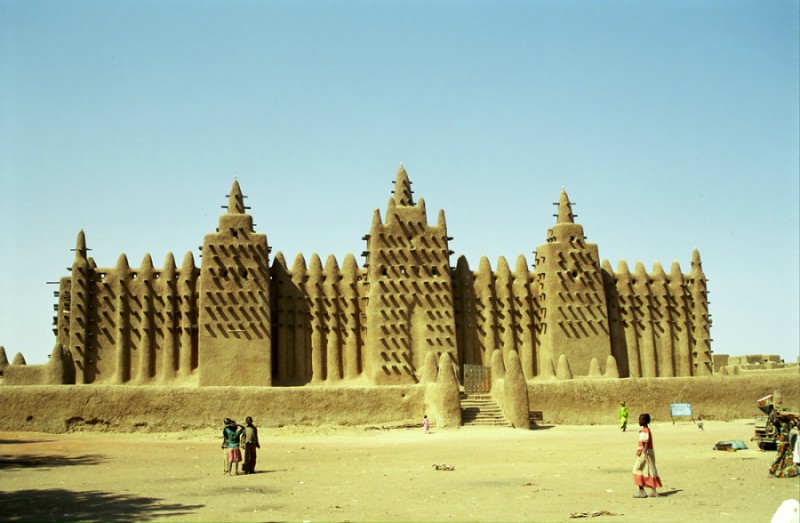
There is an old African saying that captures the spirit of heritage better than any dictionary definition ever could: a people without knowledge of their past history, origin, and culture is like a tree without roots. This proverb, often attributed to Marcus Garvey but echoed in one form or another across dozens of African languages and communities, is the philosophical foundation upon which the entire concept of heritage preservation rests. Africa, the cradle of humankind, is home to a staggering constellation of heritage sites — pyramids that have stood for more than four thousand years, churches carved directly into volcanic rock, walled cities built without a single nail, islands that bear the scars of one of history’s greatest crimes, and sacred groves where the spiritual and the natural world meet. These places are not simply tourist attractions or archaeological curiosities. They are windows into the past, portals through which the present generation can look back and see, however imperfectly, how their ancestors lived, worshipped, governed, traded, fought, and dreamed.
This article opens a ten-part series exploring some of the continent’s most remarkable heritage sites, from the pyramids of Egypt to the rock-hewn churches of Lalibela, from the ancient manuscripts of Timbuktu to the walls of Great Zimbabwe. Before diving into the specifics of each site in the chapters that follow, it is worth pausing to consider what heritage actually means in the African context, why these sites matter so profoundly, how they came to be recognised and protected, and what challenges threaten their survival into the next century.
What Counts as a Heritage Site?
The term “heritage site” is often used loosely, but it carries a fairly specific meaning in international law and conservation practice. Broadly speaking, a heritage site is a place, structure, monument, or geographic area that has been designated as having significant cultural, historical, scientific, or other form of social value, and which is therefore worthy of legal protection and preservation for present and future generations. Heritage sites are usually divided into three broad categories: cultural heritage, which includes monuments, buildings, archaeological sites, and works of human creativity; natural heritage, which includes geological formations, ecosystems, and areas of outstanding natural beauty or scientific importance; and mixed heritage, which combines both cultural and natural elements in a single designated area.
The most widely recognised system for identifying and protecting heritage sites globally is the UNESCO World Heritage Programme, established by the World Heritage Convention of 1972. Under this framework, sites are nominated by national governments and then evaluated by international experts against a set of ten criteria, ranging from representing a masterpiece of human creative genius to containing superlative natural phenomena or areas of exceptional natural beauty. Once a site is inscribed on the World Heritage List, it receives international recognition, technical support, and — at least in theory — a stronger claim to protection under both domestic and international law.
Africa currently accounts for roughly one hundred UNESCO World Heritage Sites, a number that is almost certainly an undercount of the continent’s true cultural and natural wealth, given how much of Africa’s heritage remains under-documented, under-funded, and under-nominated compared to Europe and Asia. Beyond the formal UNESCO list, thousands of other sites across the continent hold deep local, national, or regional significance without ever having received international designation — sacred forests in Kenya, rock art sites in the Sahara, royal palaces in Nigeria, ancient trade routes across the Sahel, and countless oral history landmarks passed down through generations of griots, elders, and custodians of tradition.
A Continent of Deep Time
To understand why Africa’s heritage sites matter so much, it helps to understand just how much time they represent. Africa is, according to overwhelming scientific consensus, the birthplace of humanity itself. Fossil evidence from sites such as the Great Rift Valley in East Africa, the Cradle of Humankind in South Africa, and various locations across Ethiopia and Tanzania trace the human story back millions of years, long before the first pyramid was ever built or the first word was ever written. This means that Africa’s heritage sites are not simply old in the way that a medieval European castle is old; many of them sit atop, or near, some of the very ground where the human species itself first stood upright and began its long journey across the planet.
From this deep prehistoric foundation, successive African civilizations rose, flourished, traded, warred, and eventually gave way to new configurations of power and culture, each leaving behind physical traces that we now call heritage. The pharaonic civilizations of ancient Egypt, which will be explored in depth in the next article of this series, built monuments along the Nile that remain among the most recognisable structures ever constructed by human hands. Further south, the Kingdom of Kush built its own pyramids at Meroë, arguably as impressive in number if not in scale as their Egyptian counterparts, yet far less known to the wider world. In the Horn of Africa, the Aksumite Empire raised towering stone obelisks and later gave rise to the extraordinary rock-hewn churches of Lalibela. Across the Sahel, cities like Timbuktu and Djenné became centres of Islamic scholarship, trade, and manuscript production that rivalled anything found in Europe at the time. In Southern Africa, the builders of Great Zimbabwe constructed a stone city so sophisticated that European colonisers initially refused to believe it had been built by Africans at all. And along the West African coast, ancient city-states like Benin developed sophisticated systems of governance, bronze casting, and urban planning centuries before European contact.
Each of these civilizations left behind heritage sites that continue to tell their stories today, even where written records are scarce or were deliberately destroyed. In a continent where much history was transmitted orally rather than in writing, physical heritage sites take on an even greater importance, because they often provide some of the only tangible, verifiable evidence of events, achievements, and ways of life that might otherwise be dismissed, doubted, or forgotten entirely.
Heritage as Identity and Memory
Heritage sites do more than preserve stones and structures; they preserve identity. For many African communities, a heritage site is not a distant museum piece but a living connection to ancestors, a place where spiritual practices continue, where oral traditions are recited, and where a sense of belonging is renewed generation after generation. The shrines, sacred groves, and ancestral compounds scattered across the continent often continue to serve active religious and cultural functions even as they are simultaneously recognised as heritage sites of historical importance.
This dual nature — living culture and historical artifact — is one of the features that distinguishes African heritage from heritage traditions in many other parts of the world, where historic sites are more often treated purely as museums frozen in time. In much of Africa, heritage is not something locked away behind glass; it breathes, it is danced, it is sung, and it is renewed through ritual and practice. This has enormous implications for how heritage sites ought to be managed and protected, since preservation approaches that treat these sites as static relics can sometimes come into tension with the living communities who continue to use and value them as active spaces of worship, memory, and identity.
Heritage sites also serve a crucial function in countering historical distortion. For centuries, colonial narratives portrayed Africa as a continent without significant history prior to European contact, a view that heritage sites decisively refute. The pyramids of Meroë, the walls of Great Zimbabwe, the manuscripts of Timbuktu, and the bronzes of Benin all stand as physical, irrefutable evidence of sophisticated pre-colonial African civilizations with advanced systems of architecture, governance, scholarship, trade, and artistic achievement. In this sense, heritage preservation in Africa is not merely an academic or touristic exercise; it is an act of historical correction and, for many, an act of reclamation.
Economic and Educational Value
Beyond their cultural and symbolic significance, heritage sites carry substantial economic weight. Tourism built around heritage sites represents a significant source of revenue and employment for many African countries. Egypt’s ancient monuments alone attract millions of international visitors annually, generating billions of dollars in tourism revenue and supporting an enormous ecosystem of hotels, guides, transport operators, artisans, and vendors. Similarly, Ethiopia’s Lalibela churches, Ghana’s coastal forts, and South Africa’s Robben Island draw significant numbers of visitors each year, contributing meaningfully to local and national economies.
Heritage tourism, when managed responsibly, can create a virtuous cycle: revenue generated from visitors funds further conservation and restoration work, while conservation work in turn protects the very assets that draw visitors in the first place. However, this relationship is fragile and can easily become extractive rather than sustainable if not carefully managed, a tension explored more fully in the final article of this series.
Heritage sites also carry immense educational value, both for African populations and for the wider world. They serve as open-air classrooms where history, architecture, engineering, art, and spirituality can be studied in their original physical context rather than only in textbooks. School trips to heritage sites, guided tours led by knowledgeable local historians, and community-led interpretation programmes all play a role in transmitting historical knowledge to younger generations who might otherwise have limited exposure to the depth and sophistication of pre-colonial African achievement.
 The Fragility of Memory
For all their apparent permanence, heritage sites are remarkably fragile. Stone erodes, mudbrick dissolves in heavy rains, wooden structures rot and burn, and even the most solidly built monuments are vulnerable to earthquakes, flooding, and the slow creep of environmental change. Climate change poses an increasingly serious threat to heritage sites across Africa, from rising sea levels threatening coastal sites like Gorée Island to shifting rainfall patterns accelerating the erosion of mudbrick structures in the Sahel, including the historic mosques and buildings of Timbuktu and Djenné.
Human conflict has also taken a devastating toll on African heritage. Armed groups have deliberately targeted heritage sites in several countries, most notoriously in Mali, where extremist fighters destroyed centuries-old mausoleums and manuscripts in Timbuktu during the 2012 occupation of the city, prompting an international outcry and a subsequent restoration effort supported by UNESCO and local communities. Elsewhere, heritage sites have suffered from neglect, inadequate funding, looting, illegal excavation, and the pressures of rapid urbanisation, as expanding cities encroach on archaeological zones and historic districts.
Colonial-era looting also continues to cast a long shadow over the state of African heritage. Countless artifacts, manuscripts, and cultural treasures were removed from the continent during the colonial period and remain housed in museums and private collections in Europe and North America. The ongoing debate over restitution — the question of whether and how these items should be returned to their countries of origin — is itself part of the broader story of African heritage in the twenty-first century, intersecting with questions of ownership, identity, and historical justice.
Preservation in Practice
Across the continent, a growing network of governments, international organisations, local communities, and individual custodians work to protect and preserve heritage sites against these many threats. UNESCO plays a coordinating role for internationally recognised sites, providing technical expertise, emergency funding in crisis situations, and a platform for raising global awareness. National heritage authorities, museums, and universities conduct research, documentation, and conservation work, while local communities frequently serve as the first line of defence, maintaining oral traditions, protecting sacred sites from desecration, and passing down traditional knowledge about construction techniques, such as the annual mudbrick replastering ceremonies that keep the Great Mosque of Djenné standing.
Increasingly, digital technology is also playing a role in heritage preservation, with organisations using 3D scanning, photogrammetry, and digital archiving to create permanent records of sites and artifacts that might otherwise be lost to time, conflict, or environmental degradation. These digital records cannot replace the physical sites themselves, but they provide an important safety net, ensuring that even if the worst happens, detailed knowledge of these places will survive for future study and, potentially, physical restoration.
A Snapshot Across the Regions
Because the sites profiled in this series are drawn from different corners of the continent, it is useful to pause here and sketch, in broad strokes, how heritage manifests differently from region to region, even as common threads of resilience and meaning run through all of them.
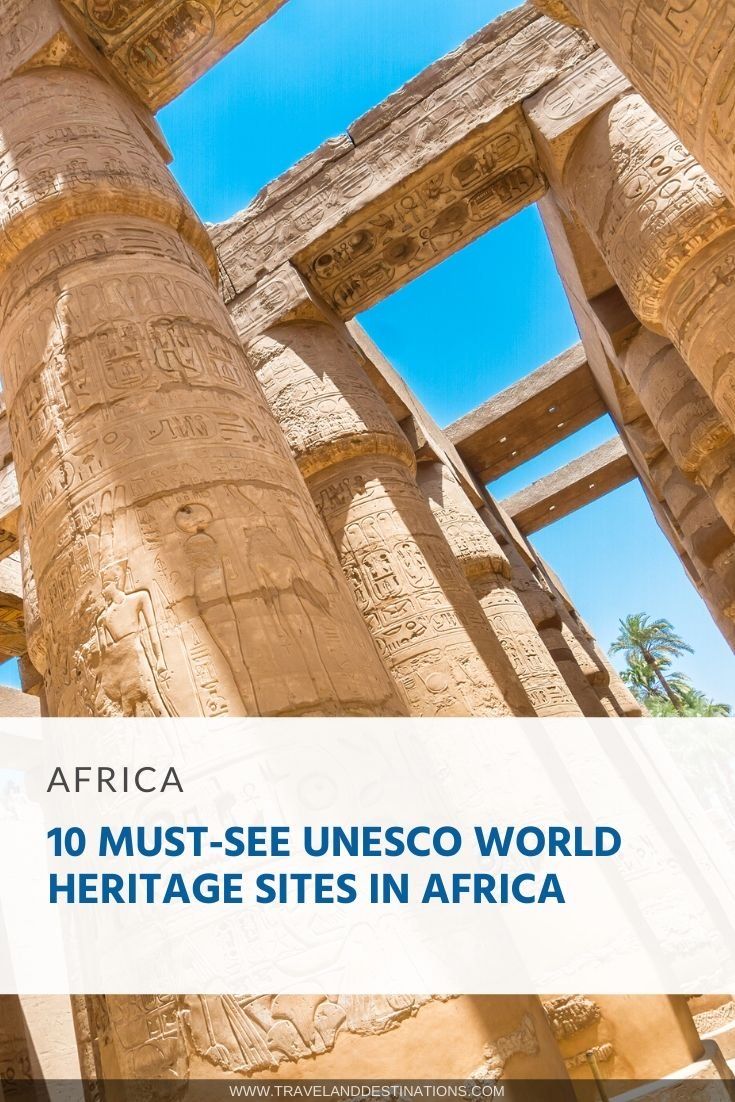
In North Africa, heritage is dominated by the monumental — the pyramids, temples, and tombs of ancient Egypt along the Nile Valley, structures built on a scale that still humbles modern engineers. This is heritage as state power made permanent in stone, built by rulers who believed, quite literally, that they were securing eternity for themselves and their kingdoms.
In the Horn of Africa, heritage takes on a more spiritual character. The obelisks of Aksum and the rock-hewn churches of Lalibela reflect a civilization deeply intertwined with early Christianity, one of the oldest Christian traditions in the world, predating the faith’s arrival in much of Europe. Here, heritage and active religious practice remain almost inseparable; pilgrims still walk the same stone floors that worshippers have walked for eight centuries.
Across the Sahel, from Timbuktu to Djenné, heritage is inseparable from scholarship and trade. This was a region where camel caravans crossing the Sahara met scholars debating theology, law, and astronomy, producing a written intellectual tradition — the manuscripts of Timbuktu — that decisively challenges old stereotypes of a continent without a written past.
In West Africa’s forest and coastal zones, heritage speaks to statecraft, artistry, and, tragically, the transatlantic slave trade. The bronze-casting achievements of Benin sit alongside the sombre coastal forts and island holding points, such as Gorée Island, that testify to one of history’s greatest crimes against humanity, forcing heritage tourism in this region to hold beauty and horror in the same breath.
In Southern Africa, heritage often speaks to sophisticated urban planning and, more recently, to the memory of apartheid. Great Zimbabwe demonstrates a level of architectural and engineering skill that colonial-era historians long refused to attribute to African builders, while Robben Island stands as a stark, comparatively recent reminder of how heritage sites can commemorate suffering and resistance within living memory rather than only in the distant past.
And in the Nile Valley south of Egypt, the pyramids of Meroë represent perhaps the most under-appreciated of all African heritage sites — more numerous than Egypt’s pyramids, yet visited by only a fraction of the tourists, a case study in how uneven global attention can leave even extraordinary heritage relatively obscure.
 The Role of Custodians and the Next Generation
None of these sites survive by accident. Behind every standing monument, every preserved manuscript, and every intact mural is a chain of custodianship stretching back through generations — masons who learned their craft from their fathers, manuscript families who hid precious texts from invaders, griots who memorised oral histories word for word, and community elders who insisted that sacred spaces be respected even as modernisation pressed in from every side.
Increasingly, the responsibility for carrying this custodianship forward is shifting toward a younger, more digitally connected generation of Africans. Young historians, archaeologists, tour guides, content creators, and heritage professionals are using new tools — social media, digital mapping, virtual reality reconstructions, and online archives — to document, promote, and advocate for sites that previous generations protected largely through oral tradition and physical vigilance alone. This generational handover is not without friction; questions about who has the authority to interpret and present heritage, how much commercialisation is appropriate, and how to balance tourism revenue against cultural sensitivity are actively debated in heritage circles across the continent.
Still, the involvement of young Africans in heritage advocacy represents one of the more hopeful developments in the field. Where earlier generations of scholarship on African heritage were dominated by foreign archaeologists and historians, often working within colonial or post-colonial institutional frameworks, today’s heritage conversation increasingly includes African voices speaking directly about their own history, on their own terms, and for their own audiences — a shift that matters enormously for how these stories are told and who gets to tell them.
Looking Ahead
The chapters that follow in this series will take a closer look at nine specific heritage sites that, together, offer a representative cross-section of Africa’s astonishing historical depth and diversity. From the pyramids of Egypt and Meroë to the rock-hewn churches of Lalibela, from the walled city of Great Zimbabwe to the ancient scholarly capital of Timbuktu, from the bronze-casting kingdom of Benin to the haunting memory embedded in Gorée Island and Robben Island, each site tells its own distinct story while contributing to a larger continental narrative of resilience, achievement, and continuity.
As we explore these sites one by one, it is worth returning again and again to the central idea introduced at the outset: heritage sites are not simply relics of a bygone era, but living windows into the past that continue to shape identity, inform education, generate economic opportunity, and demand active protection in the present. They remind us, in the words of the proverb with which this article began, that a people who know their roots are far better equipped to grow strong branches into the future.
Conclusion
Africa’s heritage sites stand as some of the most remarkable and least fully appreciated treasures on the planet. They are simultaneously ancient and alive, fragile and enduring, local and universal. As custodians of this heritage — whether as governments, communities, researchers, or simply as visitors passing through — the responsibility falls to the present generation to ensure that these windows into the past remain open for generations yet to come. The story of Africa’s heritage sites is, in the end, the story of Africa itself: complex, resilient, deeply rooted, and still being written.
For readers, travellers, and researchers approaching this series, it is worth holding on to one final thought. A heritage site is never truly finished being understood. Each generation that visits Lalibela, walks the corridors of Gorée Island, stands before the pyramids of Meroë, or reads a rediscovered manuscript from Timbuktu brings its own questions, its own context, and its own stake in what these places mean. In that sense, engaging with heritage is not a passive act of admiring the past but an active, ongoing conversation between yesterday and today. The nine sites explored in the remainder of this series are an invitation to join that conversation — to look closely at what has survived, to ask what it cost to survive, and to consider what it will take to ensure these windows into the past remain open for those who come after us.
