Close Menu
  • Home
  • African History
  • Traditional Religions
  • Ethnic Groups
  • Food & Recipes
  • Culture
  • Festivals
  • More
    • Traditional Clothing
    • Art & Crafts
    • Languages
    • Heritage Sites
    • Folklore
  • Get In Touch
What's Hot

Traditional Religion’s Quiet Survival Today

December 27, 2021

East African Dishes Injera, Nyama Choma

December 26, 2021

Street Food Culture Across the Continent

December 22, 2021

Subscribe to Updates

Get the latest creative news from FooBar about art, design and business.

Facebook X (Twitter) Instagram
  • Home
  • About Us
  • Get In Touch
Facebook X (Twitter) Instagram Pinterest Vimeo
AfriFacts.net – Amazing Facts, News & Stories from Africa
  • Home
  • African History
  • Traditional Religions
  • Ethnic Groups
  • Food & Recipes
  • Culture
  • Festivals
  • More
    • Traditional Clothing
    • Art & Crafts
    • Languages
    • Heritage Sites
    • Folklore
  • Get In Touch
SUBSCRIBE
AfriFacts.net – Amazing Facts, News & Stories from Africa
Home»African History»The Transatlantic Slave Trade’s Deep Wounds
African History

The Transatlantic Slave Trade’s Deep Wounds

Mike AndersonBy Mike AndersonMarch 20, 2021Updated:August 12, 2026No Comments18 Mins Read
Facebook Twitter Pinterest Telegram LinkedIn Tumblr Email Reddit
Share
Facebook Twitter LinkedIn Pinterest Email Copy Link

Few events have shaped the modern history of Africa as profoundly as the Transatlantic Slave Trade.

For more than three centuries, millions of African men, women and children were forcibly removed from their homes, transported to the Atlantic coast, imprisoned aboard ships and carried across the ocean to the Americas.

The trade was part of a vast international economic system that connected Africa, Europe and the Americas. UNESCO describes the transatlantic trafficking of enslaved Africans as operating from the fifteenth to the late nineteenth centuries and involving the forced displacement of millions of people, primarily from West Africa to the Americas.

The scale was enormous.

The Trans-Atlantic Slave Trade Database estimates that approximately 12.5 million Africans were forced aboard slave ships, with around 10.7 million surviving the Middle Passage and arriving in the Americas.

Behind these numbers were individual human lives.

Families were separated.

Communities were attacked.

People were marched to coastal markets.

Others were imprisoned in forts and castles.

Many died before reaching the coast.

Thousands died during ocean crossings.

Those who survived entered systems of forced labor throughout the Americas.

The consequences did not end when the slave ships stopped sailing.

The trade transformed African societies, influenced the development of the Atlantic world and contributed to racial systems whose consequences remain visible today.

But understanding this history requires more than describing Africans as victims.

African people resisted.

They escaped.

They rebelled.

They protected communities.

They preserved languages and beliefs.

They formed new societies in the Americas.

And despite the violence inflicted upon them, African cultures survived and profoundly influenced the modern world.


A Trade Built on Human Beings

The Transatlantic Slave Trade was fundamentally different from ordinary commerce because its central commodity was human freedom.

People were captured, transported and sold.

They were treated as property under the legal systems of slaveholding societies.

Their labor was extracted through coercion.

Their family relationships could be destroyed by sale.

Their names, identities and cultural practices were often suppressed.

Yet enslaved Africans continued to maintain aspects of their identities wherever possible.

This is why the history of the trade must be told from both sides:

the violence of enslavement and the resilience of the enslaved.

The trade was not simply a series of voyages across the Atlantic.

It was a system that connected warfare, markets, plantations, shipping, finance, political power and racial ideology.


Slavery Existed Before the Atlantic Trade

A historically responsible discussion must acknowledge that slavery existed in many parts of the world before the rise of the Atlantic system.

Forms of slavery existed in ancient societies, including parts of Africa, Europe, the Middle East and Asia.

UNESCO’s General History of Africa notes that the export of enslaved people from Africa to regions outside the continent existed for centuries before the Atlantic trade, including networks directed toward the Mediterranean, Middle East and parts of Asia.

African societies themselves had different forms of servitude and slavery.

However, these systems varied considerably.

They were not identical to the racialized plantation slavery that developed in the Americas.

The emergence of European colonial plantation economies created a new and extraordinarily large demand for enslaved labor.

That demand fundamentally transformed the scale and direction of human trafficking from Africa.


Why Did the Atlantic Slave Trade Expand?

Several developments came together.

European expansion into the Americas created colonies requiring enormous amounts of labor.

Plantations producing sugar, tobacco, cotton, coffee and other commodities became major components of colonial economies.

Indigenous populations in many parts of the Americas suffered catastrophic demographic losses from disease, warfare and exploitation.

European colonizers increasingly turned toward African labor.

The result was a devastating economic equation:

European capital + American plantations + African forced labor = enormous Atlantic profits.

The system enriched merchants, plantation owners, shipping interests and imperial states.

But its wealth came at the cost of human freedom.

UNESCO explicitly notes that the forced displacement of enslaved Africans enriched imperial and other powers.


The Three-Cornered Atlantic System

The slave trade became associated with what historians often describe as triangular trade.

The exact patterns varied considerably, but a simplified version involved three major regions.

Europe

European merchants and manufacturers supplied goods such as textiles, firearms, metal products and other manufactured items.

Africa

These goods entered African markets, where European traders exchanged them for commodities, including enslaved people.

Americas

Enslaved Africans were transported to plantations and other labor systems.

American products such as sugar, tobacco, cotton and coffee were then transported into Atlantic markets.

The system was much more complicated than a simple triangle.

But the model helps explain how different economies became interconnected.

The result was an Atlantic economic system built partly on forced African labor.


The Capture of Africans

Not everyone transported across the Atlantic was captured in exactly the same way.

Some were taken during warfare.

Others were victims of raids.

Some were kidnapped.

Others were sold by African political authorities or merchants.

Political conflicts and competition over resources could contribute to the expansion of enslavement.

European demand increased the economic incentives surrounding the capture and sale of people.

This created destructive feedback loops.

If enslaved people could be exchanged for weapons or other valuable goods, political leaders might have incentives to wage war against neighboring communities.

Captured people could then be sold to European merchants.

The weapons and wealth obtained from these transactions could strengthen states or armies.

This could contribute to further warfare.

However, the consequences varied significantly across different regions and periods.

There was no single African experience of the slave trade.


African States and European Traders

It is important to avoid two opposite historical mistakes.

The first is claiming that Europeans alone captured every person who entered the Atlantic slave trade.

The second is suggesting that African participation makes Europeans irrelevant to the system.

Neither interpretation is accurate.

European merchants created a powerful external market for enslaved people.

African rulers, merchants and intermediaries participated in various parts of the trade.

European ships transported captives across the Atlantic.

European colonies created the plantation demand.

European legal and financial systems helped sustain the wider commercial structure.

The Atlantic slave trade was therefore a multilateral system, but one overwhelmingly shaped by European imperial expansion and American plantation demand.


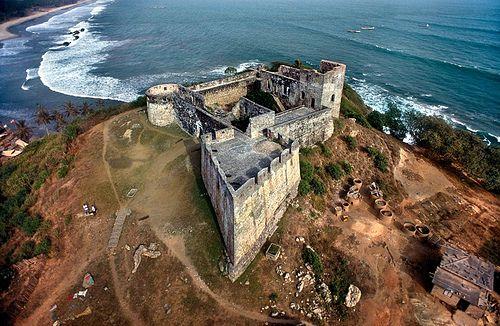
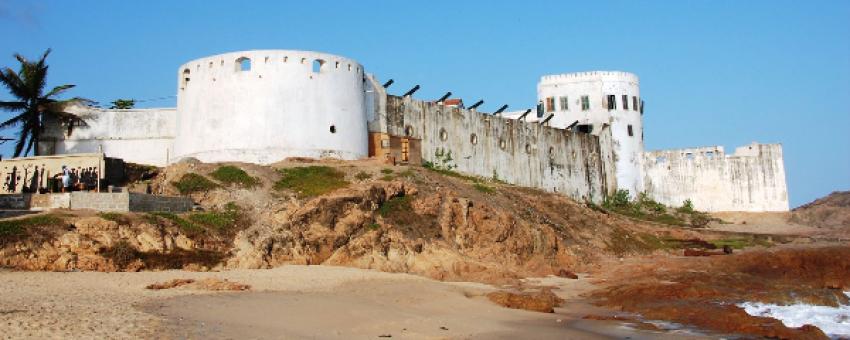
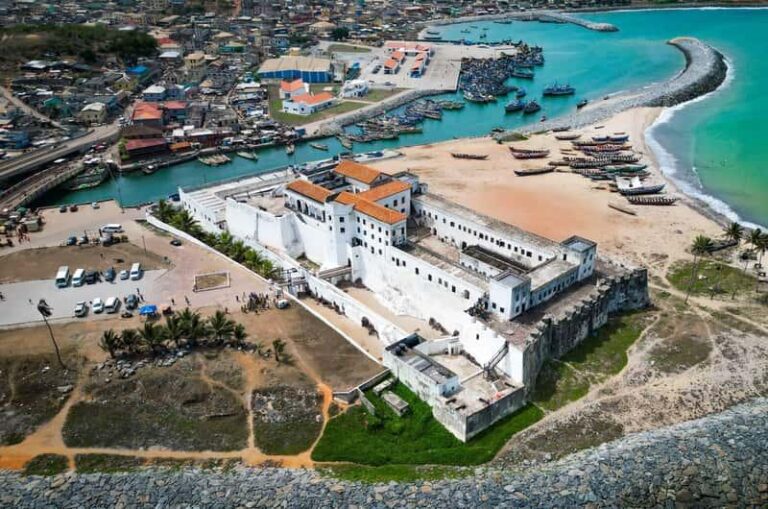
The Forts and Castles of the African Coast

European powers established fortified trading posts along parts of the African coast.

Some became deeply associated with the slave trade.

Elmina Castle in present-day Ghana is one of the best-known examples.

European merchants used coastal forts as places for commerce, storage and defense.

The Forts and Castles of the African Coast.
African coastal infrastructure through which captives were held before Atlantic transportation.

Captives could be held in dungeons before being transported onto ships.

Other important sites included Cape Coast Castle in Ghana and the House of Slaves on Gorée Island in Senegal.

These sites are now places of historical memory.

They help visitors confront the physical reality of the trade.

UNESCO has supported archival and memory projects documenting the slave trade in African countries including Benin, Ghana, Senegal and Gambia.


From the Interior to the Coast

The Atlantic slave trade did not begin when a person stepped aboard a ship.

For many captives, the journey began far inland.

People could be captured hundreds of kilometers from the coast.

They might be marched through difficult terrain toward coastal markets.

Along the way, some died from hunger, exhaustion, disease or violence.

Others were sold repeatedly.

Families could be separated.

Children could be taken from parents.

The journey to the coast was therefore itself a form of suffering.

Modern research attempts to reconstruct these routes and identify where enslaved Africans originated.

But the historical record is incomplete.

Names and identities were frequently erased or transformed in European records.


The Middle Passage

The ocean crossing from Africa to the Americas became known as the Middle Passage.

It was one of the most brutal stages of the slave trade.

Enslaved people were confined aboard ships under horrific conditions.

They were packed into restricted spaces.

Disease spread easily.

Food and water were limited.

People were subjected to physical violence.

Some attempted resistance.

Some attempted suicide.

Others died from disease, malnutrition, dehydration or mistreatment.

The Trans-Atlantic Slave Trade Database estimates that approximately 10.7 million people survived the Middle Passage out of the roughly 12.5 million forced aboard ships.

That difference represents millions of lives lost before the survivors even reached the Americas.


The Human Cost Behind the Numbers

Statistics help demonstrate the scale of the trade.

But statistics can also hide individual experiences.

Imagine a village suddenly losing dozens of people.

Imagine parents losing children.

Imagine communities losing farmers, craftspeople, hunters, traders and political leaders.

Imagine being separated from everyone whose language you understood.

Then imagine being placed on a ship headed toward an unknown destination.

The psychological trauma was enormous.

The slave trade did not simply remove labor from Africa.

It removed people with families, memories, skills, identities and aspirations.


Women and Children in the Slave Trade

Women and children were also extensively trafficked.

Children were particularly vulnerable because they could be separated from parents and sold independently.

Women experienced multiple forms of exploitation.

They were subjected to forced labor, sexual violence and reproductive control in slave societies.

Women also played critical roles in preserving African cultural traditions.

They passed languages, cooking traditions, religious practices, music and stories to younger generations.

Their contributions were essential to the survival of African cultures throughout the diaspora.


The Economic Transformation of West Africa

The slave trade altered economic incentives in parts of West and West-Central Africa.

Some regions became increasingly involved in supplying captives to coastal markets.

Other regions suffered repeated attacks.

Political power could become associated with control of trade routes and access to European goods.

Weapons became important in some conflicts.

States that could participate effectively in the trade could gain resources.

States that became targets could suffer severe disruption.

The effects were therefore uneven.

Some political systems grew stronger for periods.

Others experienced instability.

Some communities relocated to avoid raids.

Others became militarized.

The economic consequences cannot be reduced to a single continent-wide pattern.


Population Loss and Demographic Disruption

One of the most difficult questions concerns the demographic effects of the trade.

Millions of people were removed from Africa over centuries.

But the demographic impact was not simply the numerical loss of those transported.

People who were captured could have had children.

Communities could lose generations of potential growth.

Young adults—the very people most likely to form families and contribute labor—were disproportionately represented among captives.

Wars and raids could also produce additional deaths and displacement.

The trade therefore affected population growth in ways that are difficult to calculate precisely.

This is one reason historians continue to debate the regional effects.


Political Violence and Warfare

The demand for captives could intensify warfare in some regions.

Political states sometimes expanded militarily in ways connected to slave trading.

The rise of powerful states such as Dahomey has often been studied in connection with Atlantic commerce.

But the relationship between warfare and the slave trade was complex.

Wars could produce captives.

Captives could become trade commodities.

The profits from trade could support armies.

Those armies could then conduct further wars.

This did not happen everywhere or continuously.

But where it occurred, it created a destructive cycle.


Dahomey and the Atlantic Trade

The Kingdom of Dahomey, centered in present-day southern Benin, became one of the best-known West African states associated with the Atlantic slave trade.

Dahomey developed a powerful military system and participated extensively in regional warfare and commerce.

Captives taken during military campaigns could enter the Atlantic trading system.

At the same time, Dahomey was not simply a puppet of European merchants.

Its rulers pursued their own political objectives.

They negotiated with European powers.

They sought military and economic advantages.

The history of Dahomey demonstrates the complicated relationship between African state-building and Atlantic commerce.


Resistance Began Before the Ships Left Africa

Resistance did not begin in the Americas.

People resisted enslavement at every stage.

Some resisted capture.

Some escaped before reaching coastal markets.

Others rebelled while imprisoned.

Some resisted aboard ships.

Others fought against slave traders or colonial authorities.

Resistance took many forms.

It could be physical.

It could be psychological.

It could be cultural.

A person preserving their language or religious practice was also resisting the attempt to erase their identity.


Revolts on Slave Ships

Captive Africans sometimes attempted to take control of slave ships.

These revolts were extremely dangerous.

Enslaved people could be severely punished if resistance was discovered.

Yet shipboard revolts occurred.

Some were successful.

Others ended in massacres.

The possibility of rebellion forced slave traders to develop systems of surveillance, restraints and armed security.

The very existence of these measures reveals that enslaved people were not passive.

They constantly resisted the conditions imposed upon them.


Resistance in the Americas

Once they reached the Americas, resistance continued.

Enslaved people escaped plantations.

They formed communities in remote areas.

They organized revolts.

They sabotaged work.

They preserved cultural practices.

They negotiated better conditions when possible.

In several parts of the Americas, escaped Africans created independent or semi-independent communities known as maroon societies.

These communities became important centers of resistance.


The Haitian Revolution

One of the most extraordinary examples of resistance was the Haitian Revolution.

Beginning in 1791 in the French colony of Saint-Domingue, enslaved people launched a revolutionary struggle that eventually destroyed the colonial slave system there.

In 1804, Haiti became independent.

The revolution demonstrated something profoundly threatening to slaveholding societies:

Enslaved people could organize politically, defeat powerful armies and create an independent state.

Its impact was felt across the Atlantic world.


African Culture Survived the Atlantic

The slave trade attempted to reduce people to labor.

It did not succeed in destroying their cultures.

African traditions survived in the Americas.

They can be seen in:

  • music;
  • dance;
  • language;
  • food;
  • religion;
  • clothing;
  • storytelling;
  • family structures;
  • artistic traditions;
  • agricultural knowledge.

Across the Caribbean, Brazil and North America, African cultural traditions interacted with Indigenous and European cultures.

New cultural forms emerged.

The modern Atlantic world was profoundly shaped by these interactions.


Religion in the African Diaspora

African religious traditions survived in diverse forms.

In parts of the Caribbean and Latin America, traditions such as Vodou, Candomblé, Santería and related practices developed through interactions between African religious systems, Christianity and local traditions.

These religions should not be treated as simple copies of African religions.

They developed in new environments.

Different African traditions interacted with one another.

Christian symbols were sometimes incorporated.

New ritual systems emerged.

The result was cultural innovation under conditions of extreme oppression.


African Languages Across the Atlantic

Language also survived.

Enslaved Africans came from different linguistic communities.

They were often deliberately mixed to prevent communication and organized resistance.

Yet people developed new forms of communication.

African linguistic influences contributed to creole languages throughout the Atlantic world.

Words of African origin entered Portuguese, Spanish, English and French varieties spoken in the Americas.

Language became another vehicle through which African heritage survived.


Food as Cultural Survival

Food tells another part of the story.

African crops, cooking techniques and flavor combinations influenced cuisines throughout the Americas.

Rice cultivation knowledge from West Africa became particularly important in parts of the American South and Caribbean.

Okra, black-eyed peas and other foods became established in Atlantic cuisines.

Cooking was more than nutrition.

It was memory.

It preserved knowledge about home.

It connected generations.

Even under slavery, food could become a way of maintaining identity.


Music and Rhythm

African musical traditions profoundly influenced music throughout the Americas.

Rhythmic structures, call-and-response patterns, percussion traditions and dance forms contributed to later musical developments.

Over generations, these influences became part of genres including:

  • spirituals;
  • gospel;
  • blues;
  • jazz;
  • reggae;
  • samba;
  • rumba;
  • salsa;
  • and numerous other musical traditions.

The global music industry today owes an enormous debt to African creativity.


The Intellectual Legacy

The descendants of enslaved Africans also produced major intellectual, political and cultural movements.

Writers, philosophers, scientists, artists and political leaders challenged racist systems and demanded equality.

The abolitionist movement included Black voices that spoke directly from experience.

Figures such as Frederick Douglass demonstrated the intellectual and political power of formerly enslaved people.

In the twentieth century, Pan-Africanism and Black internationalism connected African and diaspora struggles.

The history of the slave trade therefore eventually became a history of resistance, political organization and demands for justice.


Abolition Did Not Happen Overnight

The abolition of the transatlantic slave trade occurred gradually.

Britain abolished its participation in the slave trade in 1807, although slavery itself continued in the British Empire until 1833.

Other countries followed different timelines.

The United States abolished the importation of enslaved people in 1808, although domestic slavery continued until the Civil War and constitutional abolition in 1865.

Brazil abolished slavery only in 1888.

The final abolition dates differed significantly across the Atlantic world.

Ending the legal trade did not immediately end exploitation.

Illegal trafficking continued.

Slavery itself persisted in some places.


Why Did Abolition Happen?

Abolition resulted from multiple forces.

Enslaved people’s resistance was crucial.

Revolts threatened slaveholding societies.

Escapes challenged plantation systems.

Black abolitionists produced powerful arguments against slavery.

Religious movements opposed human bondage.

Economic conditions changed.

Political campaigns pressured governments.

The Haitian Revolution demonstrated the dangers and possibilities of slave resistance.

Abolition was therefore not simply a gift from European governments.

Enslaved people themselves played a central role in undermining the system.


The End of the Trade Did Not End Its Consequences

Even after abolition, the consequences remained.

Formerly enslaved communities often received little compensation.

Former slaveholders sometimes received financial compensation.

Racial discrimination continued.

Colonial systems expanded.

Economic inequalities persisted.

The Atlantic world continued to benefit from wealth accumulated during centuries of forced labor.

The end of slavery therefore did not automatically produce equality.


Colonialism and the Next Chapter

There is a disturbing historical sequence worth considering.

The Atlantic slave trade weakened and transformed parts of Africa.

European commercial interests continued to grow.

European industrialization increased demand for African raw materials.

During the nineteenth century, European powers increasingly pursued territorial control.

The Scramble for Africa followed.

This does not mean the slave trade single-handedly caused colonialism.

The causes of European imperialism were complex.

But the earlier history of European commercial and political involvement in Africa formed part of the background against which later colonial expansion developed.


Remembering the Victims

The African Diaspora

The forced migration created one of the world’s largest diasporas.

African-descended populations today live throughout:

  • the Caribbean;
  • North America;
  • South America;
  • Europe;
  • and other regions.

Their cultures are not frozen versions of African cultures from centuries ago.

They are living cultures.

They developed through interaction, adaptation and innovation.

The African diaspora therefore represents both a consequence of historical violence and a remarkable story of cultural survival.


Remembering the Victims

Sites connected to the slave trade have become important places of memory.

Gorée Island in Senegal is one of the most recognized.

UNESCO describes Gorée as a place of memory dedicated to the slave trade and notes its historical importance as a slave-trading center from the fifteenth to nineteenth centuries.

Other important sites include:

  • Elmina Castle;
  • Cape Coast Castle;
  • the National Museum of Slavery in Angola;
  • slave-trade memorials in Benin;
  • historic sites in Sierra Leone;
  • and museums throughout the Caribbean and Americas.

These places allow descendants and visitors to confront the history physically.


Why Historical Memory Matters

Remembering slavery is not about keeping hatred alive.

It is about understanding how the modern world was constructed.

Modern inequalities did not emerge in a historical vacuum.

Neither did racial ideologies.

UNESCO notes that the transatlantic slave trade contributed to false narratives of racial superiority and inferiority that continued to affect societies after the trade itself ended.

Understanding that history can help societies recognize the origins of persistent discrimination.

It can also create opportunities for dialogue.


The Importance of African Archives

Much of the history of the slave trade has traditionally been reconstructed from European documents.

But African archives and historical sources are increasingly important.

UNESCO’s Slave Trade Archives project was created to improve access to original documents relating to slavery and the transatlantic slave trade, including archival materials preserved in African countries.

These records can reveal:

  • names;
  • commercial transactions;
  • political correspondence;
  • resistance;
  • abolition efforts;
  • local experiences;
  • and relationships between African and European actors.

Digital archives are making these sources increasingly accessible.


Moving Beyond Numbers

The figure of 12.5 million people forced aboard ships is essential for understanding scale.

But history must go beyond numbers.

Each person had a name.

Each had a family.

Each came from a community.

Each carried knowledge.

Each had a life before enslavement.

The slave trade attempted to turn human beings into units of labor.

Historical scholarship has a responsibility to restore their humanity.


The Deep Wounds

The word “wounds” in this article’s title is deliberate.

The effects of the slave trade were not limited to the period when ships crossed the Atlantic.

The wounds included:

Demographic wounds — communities lost millions of people.

Political wounds — warfare and political competition were intensified in some regions.

Economic wounds — some economies became increasingly tied to the export of human beings.

Social wounds — families and communities were repeatedly disrupted.

Cultural wounds — people were separated from their languages, traditions and identities.

Psychological wounds — generations experienced violence, fear and displacement.

Global wounds — racial ideologies developed to justify systems of exploitation.

But there was another side to the story.

Resilience.

African cultures survived.

Communities rebuilt.

Languages evolved.

Religions transformed.

Music flourished.

Political movements emerged.

Descendants created new societies.

The story is therefore not only about destruction.

It is also about survival.


Conclusion: Remembering Without Reducing

The Transatlantic Slave Trade was one of the largest forced migrations in human history.

Approximately 12.5 million Africans were forced aboard Atlantic slave ships, with roughly 10.7 million surviving the Middle Passage according to the Trans-Atlantic Slave Trade Database.

Behind these figures were millions of individual lives disrupted by violence.

The trade connected European merchants, African political systems, Atlantic shipping networks and American plantation economies.

It generated enormous wealth for imperial and commercial interests while imposing extraordinary suffering on enslaved Africans.

It reshaped African political and economic systems.

It transformed societies throughout the Americas.

It contributed to the development of racial ideologies.

And it created a global African diaspora whose influence can be found in music, religion, food, language, art, literature and politics.

Yet the enslaved were never simply passive victims.

They resisted capture.

They resisted transport.

They resisted plantation slavery.

They escaped.

They revolted.

They preserved culture.

They created families.

They built communities.

They fought for freedom.

Their descendants continued that struggle through abolitionism, civil rights movements, Pan-Africanism and campaigns for historical recognition and justice.

The history of the Transatlantic Slave Trade should therefore be remembered with honesty and complexity.

It should acknowledge African participation without confusing participation with responsibility for creating the larger Atlantic system.

It should recognize European and American economic interests without erasing African political agency.

It should document the suffering without reducing Africans to victims.

And it should remember that from one of the darkest periods in human history emerged extraordinary examples of resistance, survival and cultural transformation.

The Atlantic Ocean once separated Africa from the Americas.

The slave trade violently connected them.

Today, millions of people across both sides of that ocean continue to carry the history of that connection in their identities, cultures and memories.

That is why the story must be remembered.

Not simply as a tragedy of the past—

but as a history that helped shape the world we live in today.

African diaspora African resistance to slavery African slave trade Atlantic slave trade effects of slave trade on Africa history of slavery in Africa Middle Passage slave trade routes slavery in Africa
Share. Facebook Twitter Pinterest LinkedIn Tumblr Email
Mike Anderson

Related Posts

The Wave of Independence (1950s–1970s)

March 25, 2021

Resistance Movements and Freedom Fighters

March 22, 2021

The Scramble and Colonization of Africa

March 21, 2021
Leave A Reply Cancel Reply

Top Posts

10 Trends From Year 2020 That Predict Business Apps Popularity

January 20, 2021

Samsung Galaxy S23 Review: the Android Phone for Everyone

January 15, 2021

Shipping Lines Continue to Increase Fees, Firms Face More Difficulties

January 15, 2021
Top Posts

What Color Looks Best on Me? The Trick to Finding Your Signature Hue For Summer

January 6, 2020

Unmasking Stashing: The Hidden Monster in Modern Relationships

January 8, 2020

Culture Re-View: The New Reichstag & The Architect Behind Our Modern Cities

January 5, 2020

Traditional Religion’s Quiet Survival Today

December 27, 2021
About Us
About Us

AfriFacts.net is your trusted source for African facts, news, history, culture, business, travel, and inspiring stories from every corner of the continent. Our mission is to inform, educate, and celebrate Africa through accurate, engaging, and up-to-date content.

Facebook X (Twitter) Pinterest YouTube
Our Picks

Traditional Religion’s Quiet Survival Today

December 27, 2021

East African Dishes Injera, Nyama Choma

December 26, 2021

Street Food Culture Across the Continent

December 22, 2021
Most Popular

What Color Looks Best on Me? The Trick to Finding Your Signature Hue For Summer

January 6, 2020

Culture Re-View: The New Reichstag & The Architect Behind Our Modern Cities

January 5, 2020

Traditional Religion’s Quiet Survival Today

December 27, 2021
  • Home
  • Festivals
  • African History
  • Get In Touch
© 2023 | All rights reserved | www.AfriFacts.net

Type above and press Enter to search. Press Esc to cancel.