

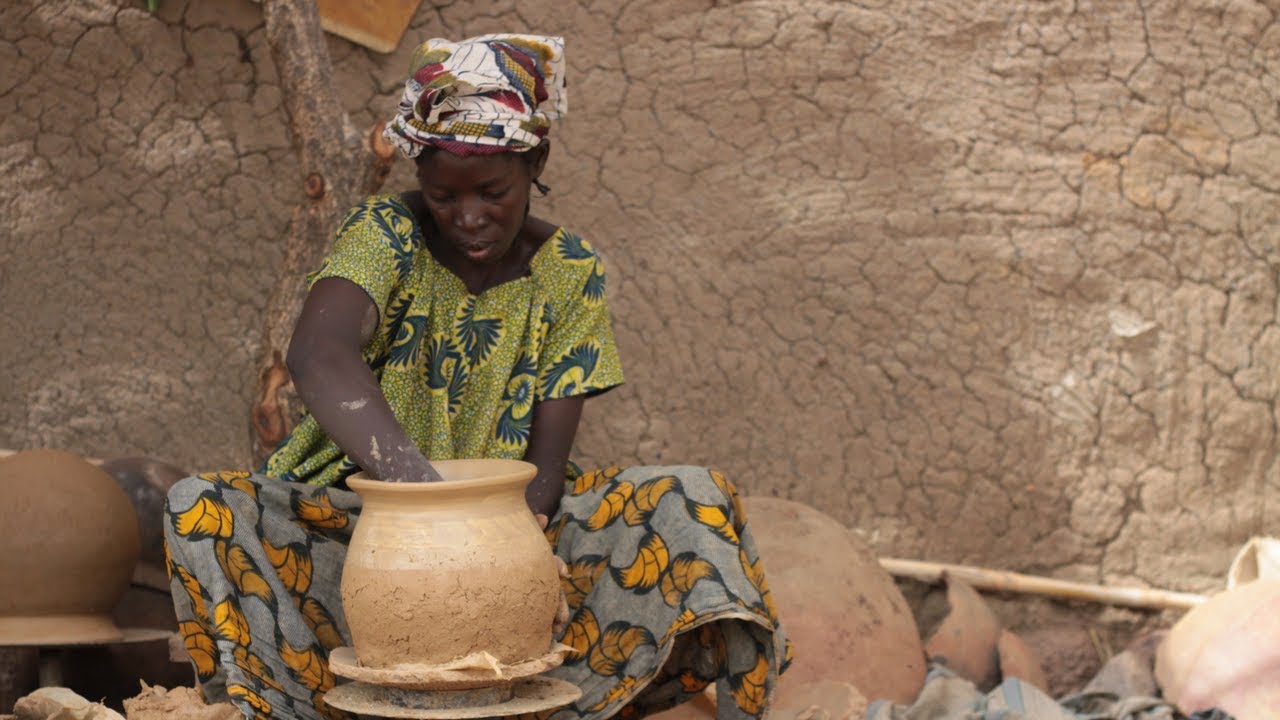
The Oldest Art Form Hiding in Plain Sight
Among all the artistic traditions explored throughout this series, pottery occupies a distinctive position: it is simultaneously among the most ancient — with archaeological evidence of African ceramic production stretching back many thousands of years — and among the most persistently undervalued within external, particularly Western, art historical frameworks that have often relegated pottery to “craft” or “domestic utility” categories beneath the more elevated status accorded to sculpture, masking, and metalwork discussed in preceding articles. Yet this framing profoundly understates pottery’s significance, both as sophisticated artistic and technical achievement in its own right and as an art form whose deep integration into daily household life, rather than diminishing its cultural importance, makes it in some respects the most pervasive and continuously significant artistic tradition explored throughout this entire series.
This article examines African pottery and ceramic traditions across their remarkable historical depth, their diverse regional production techniques, their close association with women’s craft knowledge and economic activity, their spiritual and ceremonial functions extending well beyond purely practical use, and the archaeological significance of ancient ceramic traditions including the remarkable Nok culture, whose terracotta sculptures represent among the earliest and most significant examples of figurative art documented anywhere on the African continent.
Ancient Origins and Archaeological Significance
Ceramic production represents one of humanity’s oldest technological and artistic achievements, and African archaeological evidence documents ceramic traditions of extraordinary historical depth across numerous regions of the continent, providing crucial evidence regarding early African technological development, trade networks, and artistic achievement that helps counter historically dismissive external narratives regarding African civilizational history and technical sophistication prior to external contact.
The Nok culture, documented through archaeological evidence found predominantly in present-day central Nigeria and dating back roughly to 1500 BCE through 500 CE according to current archaeological understanding, represents one of the most significant and internationally celebrated ancient African ceramic traditions, renowned particularly for its remarkable terracotta figurative sculptures depicting human and animal forms with striking stylistic sophistication, including distinctive elongated heads, detailed facial features, and elaborate depicted hairstyles and adornment that provide invaluable archaeological evidence regarding ancient West African dress, ornamentation, and social organization predating written historical documentation of the region by many centuries.
Nok terracotta sculptures hold particular art historical significance as among the earliest documented figurative sculptural traditions in sub-Saharan Africa, and their sophisticated stylistic conventions — including notable formal characteristics that some art historians and archaeologists have connected, through material and stylistic analysis, to potential influence on or connection with subsequent regional artistic traditions including aspects of the later Ife and Benin traditions discussed in the previous article — position Nok ceramic achievement as a foundational chapter within the broader historical narrative of West African artistic development explored throughout this series. Unfortunately, extensive illegal excavation and looting of Nok archaeological sites in recent decades, driven by significant international art market demand for these historically and artistically significant objects, has caused substantial, well-documented damage to the archaeological record, destroying crucial contextual information that could otherwise have provided even richer understanding of this remarkable ancient tradition — an urgent preservation concern this series addresses more fully in its concluding article.
Beyond Nok, archaeological evidence documents significant ancient ceramic traditions across numerous other African regions, including sophisticated ceramic production associated with various ancient West African kingdoms and trading centers, East African archaeological sites providing evidence of ceramic technology’s role in early agricultural and pastoral community development, and Southern African archaeological evidence connecting ceramic traditions to the broader Bantu migration and settlement patterns that significantly shaped the continent’s linguistic and cultural geography over many centuries.
 Traditional Production Techniques
African pottery traditions across the continent predominantly developed and maintained hand-building techniques rather than relying primarily on the potter’s wheel technology that became historically dominant within many Eurasian ceramic traditions, though wheel-thrown pottery does appear within certain specific regional and historical contexts, particularly in regions with documented historical trade or cultural contact with wheel-pottery-using civilizations. Hand-building techniques, including coiling (building vessel walls through the sequential addition and smoothing of rolled clay coils), pinching, and slab construction, allowed skilled potters to produce remarkably sophisticated, large-scale, and technically demanding vessel forms without wheel technology, demonstrating considerable skill in achieving symmetrical, structurally sound, and aesthetically refined finished vessels through purely hand-based construction and shaping methods.
Firing techniques similarly demonstrate considerable traditional technical sophistication, with many African pottery traditions historically employing open-firing or pit-firing methods rather than the enclosed kiln technology associated with certain other global ceramic traditions, requiring skilled potters to develop precise knowledge regarding fuel selection, firing duration, and atmospheric conditions necessary to achieve appropriate firing temperatures and desired surface finishing effects, including the distinctive blackened or burnished surface treatments characteristic of numerous African pottery traditions, achieved through specific smoke-reduction firing techniques and, frequently, subsequent surface treatment including burnishing with smooth stones or application of specific plant-based or mineral surface treatments to achieve desired color, sheen, and water-resistance properties.
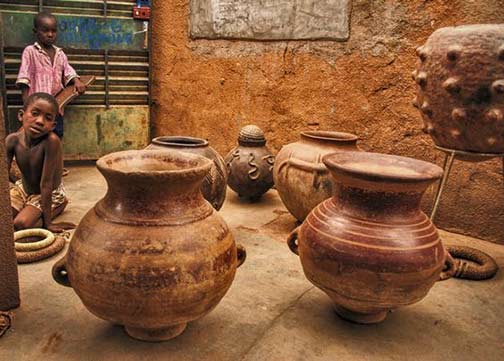 Surface decoration techniques across different regional traditions include incised or impressed geometric and figurative pattern work, applied relief decoration, and painted surface treatment using naturally sourced mineral pigments and plant-based dyes, with specific decorative motifs and techniques, consistent with this series’ recurring discussion regarding pattern and symbolic meaning throughout African art, frequently carrying specific cultural, symbolic, or regional-identifying significance recognizable to knowledgeable community members, functioning as a further expression of the broader “visual language” concept explored extensively throughout the companion Traditional Clothing series regarding textile pattern significance.
Women’s Craft Knowledge and Economic Role
As discussed extensively regarding Adire textile production in the Traditional Clothing series, pottery production across numerous African cultural traditions has historically been predominantly, though not universally, associated with women’s specialized craft knowledge and economic activity, with pottery-making skills traditionally transmitted through female family lines and structured apprenticeship relationships between experienced potters and younger women learning the craft, paralleling the gendered craft transmission patterns discussed regarding Adire dyeing and various beadwork traditions explored earlier in this broader series of articles.
This female-centered production model historically provided important pathways for women’s economic activity and, in various documented traditions, significant social status and recognition for particularly skilled potters, whose technical achievement and reliable production could support meaningful household and, in some cases, broader community-level economic activity through pottery trade and exchange. Pottery production and trade historically supported extensive regional exchange networks in various parts of the continent, with specific communities or regions developing particular reputations for high-quality ceramic production, supporting trade relationships extending well beyond immediate local consumption needs.
This gendered production pattern connects to broader spiritual and symbolic associations discussed in this series’ opening article regarding earth, fertility, and domestic life, with women’s close association with pottery production in many traditions understood as symbolically resonant with broader cultural associations connecting femininity, fertility, and the earth itself — clay being, quite literally, transformed earth — reinforcing pottery’s distinctive position within the broader material and symbolic universe explored throughout this series’ examination of African art and craft traditions.
Functional Diversity: Vessels for Every Purpose
Traditional African pottery served an extraordinarily diverse range of practical household and community functions, with skilled potters producing specialized vessel forms adapted to specific practical purposes including water storage and transport (with large, often beautifully proportioned water storage vessels representing among the most technically demanding and aesthetically celebrated forms within many regional pottery traditions, given the significant technical skill required to produce large-capacity vessels with sufficient structural integrity and appropriate porosity characteristics for effective water storage and, in many traditions, natural evaporative cooling of stored water), food preparation and cooking vessels adapted to specific culinary techniques and food types common within particular regional culinary traditions, and storage vessels for grain, oil, and other household provisions requiring appropriate protection from moisture, pests, and spoilage.
Beyond these everyday practical functions, pottery traditions across numerous African cultures produced specialized ceremonial and ritual vessels, connecting to this series’ broader discussion regarding art’s integrated spiritual function, including vessels specifically associated with ancestral veneration and offering practices, ceremonial vessels used in specific religious or spiritual ritual contexts, and, in various documented traditions, specialized funerary pottery created specifically for burial contexts, providing vessels believed necessary to accompany or serve the deceased within traditional understanding regarding the afterlife or ancestral realm, further illustrating pottery’s significant spiritual dimension extending well beyond purely practical household utility.
Regional Pottery Traditions and Stylistic Diversity
Consistent with this series’ consistent emphasis on regional diversity across African artistic traditions, pottery styles, techniques, and characteristic forms vary considerably across the continent’s different regions and cultural contexts. Southern African traditions, including notably various documented traditions among Venda, Zulu, and other Southern African cultural groups, developed distinctive vessel forms and surface treatment techniques, including celebrated burnished and blackened ceramic traditions achieving notable aesthetic refinement and, in various contemporary contexts, significant recognition within expanding international ceramic art markets and museum collecting interest.
West African pottery traditions demonstrate similarly significant regional diversity, with specific ethnic and regional traditions maintaining distinctive vessel forms, decorative conventions, and production techniques, while East African pottery traditions similarly reflect the region’s own distinct historical, cultural, and archaeological development, including significant ceramic evidence connected to the region’s documented role in early agricultural and pastoral community development and its historical position within extensive Indian Ocean and broader regional trade networks discussed regarding various other traditions throughout this series.
Contemporary Pottery: Persistence, Innovation, and Fine Art Recognition
Contemporary African pottery traditions demonstrate significant ongoing vitality, with traditional hand-building and firing techniques continuing active practice within numerous communities, supporting continued household and local market production alongside, increasingly, significant expansion into fine art and international ceramic art market contexts that have, particularly over recent decades, worked to challenge earlier dismissive “craft versus fine art” categorizations that historically diminished pottery’s recognition relative to sculpture, masking, and other artistic media discussed throughout this series.
Contemporary African and diaspora ceramic artists increasingly draw on traditional techniques, forms, and symbolic vocabularies while developing distinctly contemporary artistic expressions, achieving significant recognition within international contemporary art institutions and markets, contributing to a broader, welcome reassessment of pottery’s proper artistic status within both African and global art historical understanding — a reassessment this series’ broader project, treating pottery as a full article-length subject alongside sculpture, masking, and metalwork rather than a marginal footnote, aims to reflect and reinforce.
Conclusion: Heritage Held in Clay
Pottery’s extraordinary historical depth, documented through remarkable archaeological evidence including the Nok culture’s celebrated terracotta achievement, combined with its close, sustained integration into everyday household and community life across the continent, positions this tradition as simultaneously among the most ancient and the most pervasively significant artistic and craft traditions explored throughout this series. From the practical technical achievement required to hand-build and fire large, structurally sound vessels without wheel technology, through the significant economic and social role pottery production has historically provided predominantly female artisan communities, to the spiritual and ceremonial functions extending well beyond purely practical utility, African pottery demonstrates this series’ recurring central theme with particular clarity: that the boundary between “fine art” and “everyday craft” that structures much Western art historical thinking finds little meaningful application within African artistic tradition, where technical mastery, aesthetic achievement, spiritual significance, and practical daily function have long been understood as mutually reinforcing dimensions of a single, integrated creative practice.
As this series turns next to weaving and textile arts across the continent — building on foundational threads already introduced throughout the companion Traditional Clothing series — pottery’s example reinforces an essential principle guiding this entire exploration: that Africa’s most historically significant and culturally meaningful artistic achievements are frequently found not only in museum-celebrated masks and royal bronzes, but equally in the water jars, cooking vessels, and storage pots that have quietly, continuously served and enriched daily household life across the continent for many thousands of years.
