

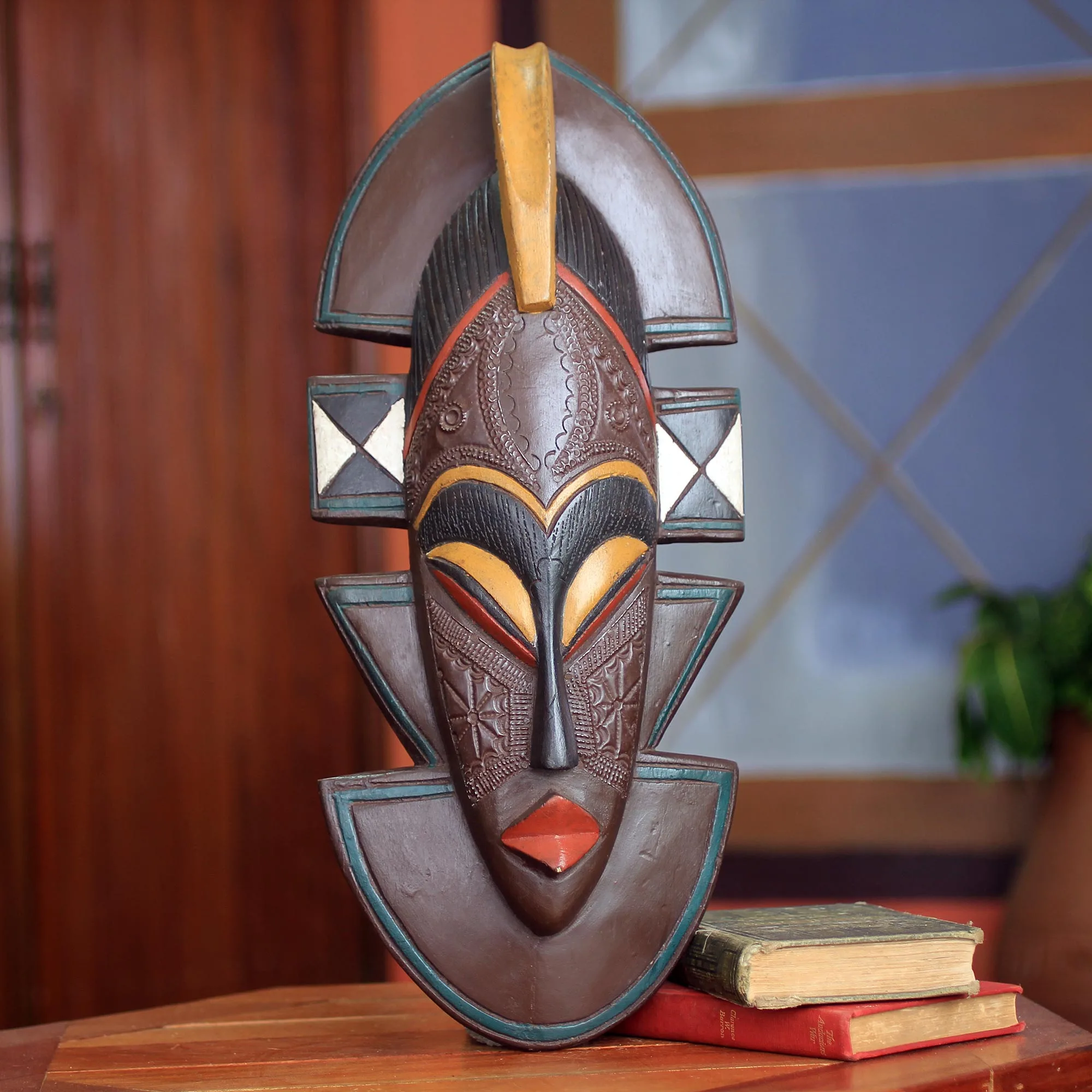
When Wood Becomes Spirit
Of all the artistic traditions explored throughout this series, none more vividly embodies the previous article’s central argument — that African art functions as integrated spiritual practice rather than mere decoration — than the mask. Carved from wood, woven from fiber, or constructed from cloth, beads, and other materials, a mask on a shelf or in a museum case is, by the understanding of many of the communities that create them, an incomplete object: inert, dormant, awaiting the specific ritual conditions, music, dance, and communal participation that transform it from carved object into active spiritual presence. This transformation — from static sculpture to living, moving, spiritually charged performance — is what makes masquerade among the most dynamic, multisensory, and, in many traditional understandings, genuinely powerful art forms found anywhere on the continent.
This article explores the masquerade tradition across several major African regions and cultural contexts, examining the mask as physical object, the masquerade as performance and social institution, the specific spiritual frameworks that give masking its power and meaning, and the significant contemporary pressures and adaptations facing this remarkable living art form today.
The Mask as Physical Object: Materials and Construction
While wood remains the most iconic and widely documented material for African masks, and receives dedicated attention in this series’ following article on wood carving traditions, masks across the continent are constructed from a remarkably diverse range of materials, each carrying specific symbolic, practical, and spiritual significance appropriate to the specific masquerade tradition and performance context involved.
Wooden masks, carved by specialized artisans whose training, social status, and ritual preparation are explored in greater depth in the following article, typically undergo careful selection of appropriate wood types, considering both practical carving properties and, frequently, spiritual significance attached to specific trees or forest locations from which the wood is sourced. Beyond wood, masks incorporate fiber, raffia, and woven materials, particularly common in constructing the extensive body coverings and costume elements that frequently accompany a carved facial mask, transforming the masquerade performer’s entire body, not merely their face, into part of the overall masked presentation.
Cloth, beads, cowrie shells (connecting to the currency and adornment traditions discussed in the Traditional Clothing series), metal ornaments, and, in various traditions, animal materials including fur, feathers, and, in some historical and continuing practices, animal skulls or bones, are incorporated into elaborate mask and costume construction, each material choice reflecting specific symbolic associations and the particular spiritual entity, ancestral figure, or nature spirit the masquerade is intended to represent or embody. This material diversity means that “mask” in the African context frequently refers not simply to a carved facial covering but to an entire, often elaborate full-body costume and performance apparatus, of which the carved or constructed facial element, however visually striking, represents only one component within a much larger integrated artistic and spiritual presentation.
Regional Masquerade Traditions: A Continent of Diversity
Consistent with the previous article’s caution against generalizing “African art” as monolithic, masquerade traditions vary enormously across the continent’s different regions and cultural contexts, each reflecting distinct spiritual frameworks, social structures, and historical circumstances.
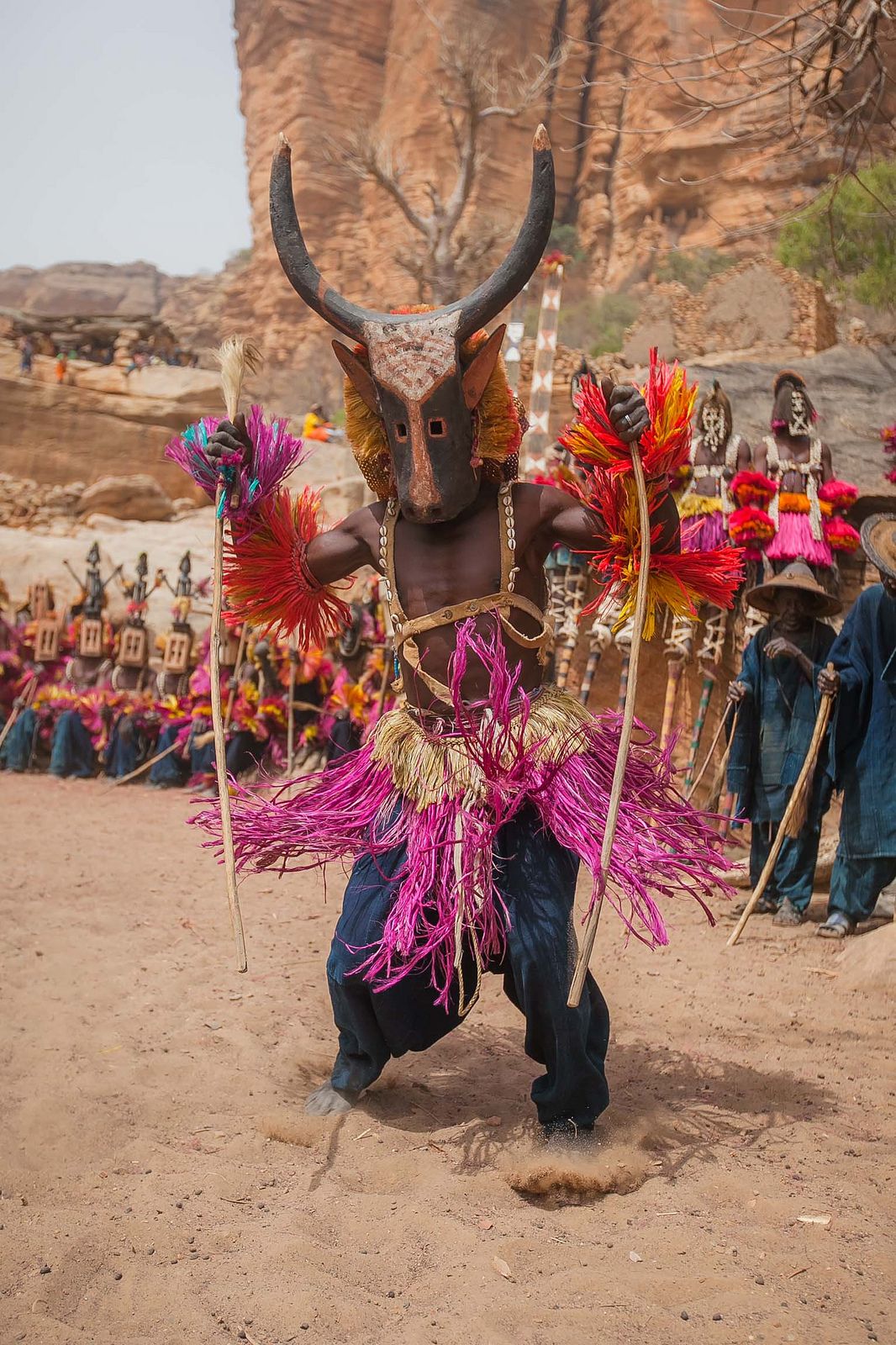 West African masquerade traditions rank among the most extensively documented and internationally recognized, encompassing an extraordinary diversity of specific cultural traditions. Among the Dogon people of Mali, elaborate masquerade traditions connect closely to funeral rites and broader cosmological beliefs, with specific mask types, including notably tall, elaborately constructed forms, representing specific spiritual concepts and performed during significant ceremonial occasions including the elaborate Dama funeral ceremonies marking the end of a mourning period and facilitating the transition of deceased spirits to the ancestral realm. Dogon masquerade performance involves extensive, carefully choreographed dance movements, with specific masks associated with specific movement patterns and symbolic meanings understood by trained performers and, to significant degree, the broader watching community.
Among Igbo communities in southeastern Nigeria, masquerade (known in various local terms including mmanwu) traditions maintain significant social, spiritual, and even judicial functions within traditional community governance structures, with specific masquerade societies historically holding recognized authority to enforce community rules, resolve disputes, and provide socially sanctioned mechanisms for community members to voice grievances or social criticism, protected by the masquerade’s spiritual authority and traditional anonymity, discussed further below. Igbo masquerade traditions encompass significant diversity even within Igbo cultural areas, with distinct masking traditions, associated societies, and specific masquerade characters varying considerably between different Igbo communities and regions.
Among Yoruba communities, masquerade traditions connect closely to ancestral veneration, particularly through the Egungun masquerade tradition, understood within traditional Yoruba spiritual practice as a mechanism through which ancestral spirits return to the community of the living during significant ceremonial occasions, appearing through elaborately costumed masquerade performers whose identity, within traditional practice, is understood to be genuinely transformed or superseded by the ancestral spirit during the performance itself, rather than merely representing or symbolizing that spirit through theatrical portrayal.
Central African masquerade traditions, including well-documented practices among various Congo Basin communities, similarly maintain sophisticated masking traditions connected to initiation societies, ancestral veneration, and community governance, often featuring distinctive stylistic characteristics differing significantly from West African masking conventions while sharing the broader structural pattern of masks functioning as vessels for spiritual presence rather than merely theatrical or decorative objects.
Masquerade Societies and Social Organization
Across numerous African masquerade traditions, mask ownership, performance, and the specialized knowledge required to create and properly activate masks are frequently restricted to specific masquerade societies — organized groups, often connected to age-grade systems discussed in the Traditional Clothing series regarding Maasai and Zulu age-based social organization, that maintain exclusive rights and specialized knowledge regarding particular masks, their associated rituals, and appropriate performance protocols.
Membership in these societies frequently involves significant initiation processes, sometimes extending over considerable time periods, through which members gain progressive access to increasingly significant ritual knowledge, culminating, for the most dedicated and trusted members, in access to the most sacred and spiritually significant masks and associated ritual knowledge within the tradition. This structured, restricted-access system serves several important social functions: it ensures that powerful spiritual knowledge and ritual objects remain in the hands of individuals who have demonstrated sufficient maturity, community commitment, and spiritual preparation to handle this responsibility appropriately; it provides a structured mechanism for transmitting specialized cultural and spiritual knowledge across generations; and it maintains the mystery and spiritual authority essential to masquerade’s broader social and religious function within the community.
Gender frequently plays a significant role in masquerade society organization, with many traditions historically restricting mask performance and associated ritual knowledge to men, even while women may play significant supporting roles in masquerade ceremonies, including through music, dance accompaniment, or specific ceremonial preparations, and even while some traditions maintain distinct women’s masquerade societies and traditions with their own significant ritual and social authority within their specific domains, illustrating that gender restrictions in masking traditions, where present, do not necessarily indicate a broader devaluation of women’s spiritual or artistic authority within the wider cultural context.
The Performance: Transformation Through Movement, Music, and Community
A carved mask alone, however skillfully made, represents only the starting point of masquerade as a complete art form. The full masquerade experience integrates carved or constructed mask and costume with music (frequently including specific drums, instruments, or vocal traditions closely associated with particular masquerade characters or performance types), dance and movement (often highly specialized, requiring extensive training to perform correctly and safely, particularly given some masks’ considerable size, weight, or restricted visibility for the wearer), and active communal participation and response, with audience members frequently playing significant roles through call-and-response interaction, ritual offerings, or specific behavioral protocols required in the masked spirit’s presence.
This integrated, multisensory performance is what many traditional frameworks understand as genuinely transformative — not merely theatrical representation of a spiritual entity but an event through which that spiritual presence becomes genuinely, if temporarily, manifest within the community’s shared physical and social space. The masked performer’s individual identity is, within many traditional understandings, considered subordinated to or replaced by the spiritual entity manifesting through the performance, reinforced through practical measures including voice disguise (masked performers frequently speak, if at all, through modified or disguised voices, sometimes using specific voice-altering devices, to prevent recognition), careful anonymity protocols regarding performer identity, and specific behavioral and spiritual preparations undertaken before and after performance to appropriately manage this significant spiritual transition.
Masquerade’s Social, Political, and Judicial Functions
As referenced regarding Igbo masquerade tradition above, masking societies across numerous African traditions have historically held significant social, political, and, in various documented traditions, judicial authority within their communities, extending well beyond purely religious or ceremonial function into active governance and social regulation roles. Masquerade societies have historically served as important mechanisms for community-level dispute resolution, enforcement of social and moral norms, and, significantly, as a socially sanctioned outlet for community members to voice criticism of authority figures, social problems, or community tensions that might otherwise be difficult or dangerous to express through direct, unmediated speech, protected by the masquerade’s spiritual authority, anonymity, and the specific social license traditionally granted to masked performance for satirical or critical content.
This social-regulatory function connects directly to the previous article’s discussion of art’s broader political and social instrumentality, demonstrating masquerade as among the most institutionally significant and socially consequential artistic traditions explored throughout this series, extending its influence well beyond aesthetic or purely religious domains into active, ongoing community governance and social regulation functions that many communities continued to value and practice well into the contemporary era, even as formal governmental and judicial structures have evolved significantly since the colonial and post-independence periods.
Colonial Disruption and Missionary Opposition
As with numerous artistic and spiritual traditions discussed throughout this series, masquerade traditions faced particularly intense colonial-era disruption, reflecting both general colonial administrative hostility toward traditional African religious and political structures and, significantly, particular opposition from Christian missionary activity, which frequently viewed masquerade’s close connection to traditional spiritual belief systems as directly incompatible with Christian conversion and actively discouraged or, in various documented cases, outright banned masquerade practice within communities under strong missionary influence.
Despite this significant pressure, masquerade traditions demonstrated remarkable resilience across numerous communities, persisting through the colonial period, in various cases adapting specific practices or public presentation to navigate colonial and missionary pressure while maintaining core ritual and spiritual functions, and experiencing significant post-independence revival and renewed cultural investment and pride, paralleling the broader cultural resurgence patterns discussed extensively throughout this series and its Traditional Clothing predecessor.
Contemporary Masquerade: Festival, Tourism, and Continued Practice
Contemporary masquerade traditions across the continent demonstrate significant ongoing vitality, appearing prominently within major cultural festivals, continuing traditional ceremonial and spiritual functions within many communities that maintain active masquerade societies and associated ritual practice, and, increasingly, drawing significant cultural tourism interest, generating both economic opportunity and, as discussed regarding several traditions throughout this series, important questions regarding the balance between sharing cultural heritage with wider audiences and maintaining appropriate respect for masquerade’s genuine sacred and spiritual significance within its originating communities.
Some communities have developed distinct approaches for tourism-oriented or public festival masquerade performance, differentiated in various ways from more restricted, spiritually significant ceremonial masquerade performed within specific traditional ritual contexts, allowing broader public and international audiences to appreciate masquerade’s remarkable artistic and performative achievement while maintaining appropriate boundaries around the tradition’s most sacred and spiritually significant dimensions, reserved for community members and appropriately initiated participants.
Contemporary African visual artists, filmmakers, and cultural documentarians have also increasingly engaged with masquerade tradition, working to document, preserve, and creatively reinterpret this remarkable artistic heritage for contemporary audiences, contributing to broader efforts, explored further in this series’ concluding article on preserving Africa’s artistic heritage, to ensure masquerade traditions and their associated specialized carving, performance, and ritual knowledge continue to be transmitted to and valued by younger generations amid significant ongoing social and economic change.
Conclusion: Art in Motion
Masquerade represents perhaps the most complete embodiment of this series’ opening argument regarding African art’s integrated spiritual, social, and political function, transforming carved wood, woven fiber, and constructed costume into genuinely animated, spiritually significant performance that has historically served — and in many communities continues to serve — as vehicle for ancestral connection, spiritual manifestation, social governance, and community entertainment simultaneously. As this series turns next to the specific bronze casting legacy of historical Benin, masquerade’s example of art fully activated through performance, music, and communal participation provides important context for understanding how even the more static sculptural and metalwork traditions explored in subsequent articles were typically created not for isolated aesthetic contemplation but for active integration within the vibrant ceremonial, spiritual, and social life of the communities that produced and continue to sustain them.
