


The Living Archives: Comprehensive Explorations of Africa’s Linguistic Heritage
Across the African continent, human speech has evolved into some of the world’s most intricate, historically layered, and structurally diverse linguistic systems. From the ancient trade ports of the Swahili Coast to the dense multilingual cities of the West African forest zones, and across the arid expanses of the Southern African Sahel and Kalahari, language functions as much more than a vehicle for daily instruction. It operates as an archive of migration, philosophy, social organization, ecological wisdom, and artistic expression.
To understand the trajectory of these languages is to understand the movement of peoples, the rise and fall of commercial empires, the impact of religious transmission, and the resilience of oral traditions through centuries of global contact. By examining the structural mechanics, historical developments, and modern socio-cultural realities of these speech systems, we uncover the living frameworks through which millions of people interpret their world.
Part 1: Kiswahili and the Indian Ocean World
The Coastal Cradle and Maritime Trade
Known to its speakers as Kiswahili, Swahili developed along a narrow strip of the East African coastline stretching from southern Somalia through Kenya, Tanzania, and northern Mozambique, encompassing offshore archipelagos such as Lamu, Zanzibar, Pemba, and the Comoros. This geographical area, historically known as the Swahili Coast, served for over a millennium as a central node in the vast commercial network of the Indian Ocean.
The development of Kiswahili was deeply tied to maritime seasonal rhythms. The predictable shift of the monsoon winds—blowing southwest toward the African continent between November and March, and northeast toward the Arabian Peninsula and India between April and September—allowed sailors, merchants, and scholars to cross the ocean, set up long-term residences along the coast, and return on the subsequent wind cycle.
As local Bantu-speaking populations built urban settlements along the shoreline, these ports evolved into independent city-states. Places like Kilwa, Mombasa, Malindi, Pate, and Zanzibar became major commercial centers trading gold, ivory, timber, and agricultural goods in exchange for ceramics, silks, glassware, and spices from Western Asia, South Asia, and the Far East.
In this environment of continuous maritime contact, a shared coastal culture and language emerged. Kiswahili provided the common linguistic currency necessary to conduct long-distance trade, negotiate legal agreements, manage shipping operations, and facilitate intermarriage between local African populations and visiting merchants.
Structural Foundations: A Core Bantu Grammar
Despite its heavy vocabulary exchanges with foreign languages, Kiswahili remains structurally, morphologically, and genealogically a Bantu language. It belongs to the Sabaki branch of the Northeast Coastal Bantu languages. Its core sentence structure, verbal conjugation patterns, and grammatical organization operate strictly according to Bantu principles.
The defining characteristic of Kiswahili grammar is its comprehensive system of noun classes. Rather than categorizing nouns by biological gender (such as masculine or feminine), Kiswahili organizes all nouns into paired singular and plural classes based on semantic concepts, such as human beings, trees/plants, abstract concepts, tools, or physical locations.
Each noun class is marked by a specific prefix, and this prefix dictates a strict pattern of grammatical agreement (concord) across the entire sentence, affecting adjectives, verbs, possessives, and demonstratives.
For example, in the human class, the singular noun m-tu (person) takes the adjective m-moja (one) and m-pole (gentle) with the verb a-li-fika (he/she arrived) to form Mtu mmoja mpole alifika (“One gentle person arrived”). In the plural, this becomes wa-tu (people), wa-wili (two), wa-pole (gentle), and wa-li-fika (they arrived), yielding Watu wawili wapole walifika (“Two gentle people arrived”).
In addition to noun class agreement, Kiswahili features an agglutinative verb structure. A single verbal word can incorporate the subject marker, tense or aspect marker, relative clause marker, object marker, root verb, verbal derivation extensions (such as causative, passive, or reciprocal markers), and a final vowel.
- Example: Watanipokea
- Wa- (Subject prefix: Class 2, “They”)
- -ta- (Tense prefix: Future)
- -ni- (Object prefix: First person singular, “Me”)
- -pokea (Verb root: “To receive / welcome”)
- Translation: “They will welcome me.”
This agglutinative capacity allows Kiswahili speakers to pack dense proposition-level meaning into single, precise verbal units, demonstrating a highly systematic grammatical architecture.
Arabic Lexical Integration and Multilingual Contact
While the grammatical frame of Kiswahili is unequivocally Bantu, centuries of commercial, social, and religious contact with Arabic speakers left a profound mark on its lexicon. Scholars estimate that approximately 20% to 35% of Kiswahili’s vocabulary is of Arabic origin.
The introduction of Arabic loanwords occurred primarily through two avenues: commercial trade and the expansion of Islam along the coast. Rather than replacing Bantu terms, Arabic words were frequently adopted alongside native roots to express specific nuances in legal administration, maritime navigation, trade accounting, scholarship, and theology.
- Kitabu: Derived from the Arabic root Kitāb, meaning “book” within the domain of education and literature.
- Saa: Derived from Sāʿah, meaning “hour”, “clock”, or “time”.
- Biashara: Derived from Bịḍāʿah, referring to trade and business commerce.
- Haki: Derived from Ḥaqq, meaning “right” or “justice” in legal jurisprudence.
- Amani: Derived from Amān, representing “peace” or “security” in governance.
- Elimu: Derived from ʿIlm, signifying “knowledge” or “education”.
In absorbing these terms, Kiswahili modified their phonetic structures to conform to Bantu phonological rules. Arabic words ending in consonants were typically given open final vowels (such as fikr becoming fikra for “thought”, or wqt becoming wakati for “time”).
Beyond Arabic, Kiswahili incorporated terms from other Indian Ocean trading partners, including Persian (serikali for “government”), Portuguese (meza for “table”, bendera for “flag”), and later English (shule via German or stesheni for “station”). This capacity to absorb external vocabulary without compromising its underlying Bantu syntax allowed Kiswahili to grow into an adaptable medium of international communication.
The Swahili City-States and Cultural Expression
The classical period of Swahili civilization saw the flourishment of urban architectural, literary, and artistic traditions. City-states such as Kilwa Kisiwani, Lamu, and Stone Town in Zanzibar were constructed largely from coral rag and lime mortar, producing multi-story stone houses, grand mosques, and defensive fortresses.
Literary production in classical Kiswahili was preserved through both oral performance and written manuscripts using Ajami—an adaptation of the Arabic script customized to accommodate Bantu vowel sounds and phonetic distinctions.
Poetry played a central role in political and intellectual life. Genres such as the Utenzi (epic narrative poetry) were composed to document historical battles, moral philosophies, religious teachings, and national heroic accounts.
The Utenzi wa Fumo Liyongo, for example, captures the heroic legends of Liyongo, a legendary coastal warrior and poet whose epic narratives were recited across generations along the northern Kenyan coast.
Expansion Inland: Lingua Franca of Eastern Africa
During the 18th and 19th centuries, the geographical reach of Kiswahili shifted dramatically. Long-distance caravan trade routes moved inland from coastal ports like Bagamoyo and Sadani toward the Great Lakes region, reaching Lake Tanganyika, Lake Victoria, and the eastern regions of the Congo basin.
Caravans composed of traders, porters, guides, and diplomatic envoys carried Kiswahili deep into the interior. The language became the primary medium for negotiating passage through various sovereign kingdoms, conducting market transactions, and establishing regional administrative networks.
During the colonial period, German and British administrations recognized the utility of Kiswahili as an existing regional language. Rather than imposing European languages for basic local administration, colonial authorities utilized Kiswahili for primary education, tax collection, police enforcement, and lower-level governance across Tanganyika and Kenya.
This policy inadvertently standardized the language and expanded its usage far beyond its original coastal heartland into diverse interior societies.
Post-Independence Unity and Modern Global Reach
Following independence in the 1960s, Kiswahili took on unprecedented political importance, most notably in Tanzania under the leadership of Julius Nyerere. Recognizing the challenge of building a unified national identity in a country with over 120 distinct ethnic groups, Nyerere’s government elevated Kiswahili as the primary national and official language.
Kiswahili was made the medium of instruction in primary schools, the primary language of parliamentary debates, and the core symbol of Ujamaa (African socialism and collective self-reliance). As a result, Tanzania achieved one of the highest levels of national linguistic integration on the continent, with virtually the entire population fluent in Kiswahili alongside their local regional mother tongues.
Across the broader region, Kiswahili functions with varying official statuses: it serves as a national and official language in Kenya alongside English, acts as a widespread regional trade lingua franca in the eastern provinces of the Democratic Republic of Congo, functions as an official language and primary medium within the security forces in Uganda, and continues to expand rapidly across Rwanda and Burundi due to regional integration.
Today, Kiswahili is spoken by an estimated 100 to 150 million people. It is an official working language of the African Union, a core medium of the East African Community (EAC), and widely taught in universities globally.
Its modern vitality is driven by a vibrant media ecosystem, including news broadcasting (BBC Swahili, Voice of America, DW), contemporary literature, and popular music genres like Bongo Flava, which blend local poetic traditions with modern hip-hop, R&B, and afro-pop rhythms.
Part 2: Nigeria’s Linguistic Landscape and the Three Giants
The Multilingual Canvas
Nigeria represents one of the most linguistically dense territories on Earth. Within its borders, an estimated 500 to 550 distinct languages are spoken, belonging to three of Africa’s major language phyla: Niger-Congo, Afroasiatic, and Nilo-Saharan.
This diversity is the result of long-term human settlement patterns, ecological adaptation, trade networks, and population movements across distinct geographic zones. The dense rainforests and river systems of the south created conditions for localized settlement and linguistic divergence, while the open grasslands and savanna belts of the north facilitated long-distance communication, political expansion, and broad language spread.
In the northern Sahel and Sudan Savanna, Hausa expanded as a primary Afroasiatic language through trans-regional trade networks and Islamic scholarship. The central Middle Belt and river valleys developed an extraordinarily high density of minority languages across highland refuges and riverine commercial hubs. In the tropical rainforest and coastal belts of the southwest and southeast, Yoruba and Igbo grew as dominant Niger-Congo languages tied to forest kingdoms and autonomous republican social structures.
Within this vast landscape, three languages—Yoruba, Igbo, and Hausa—attained prominent positions. These three groups represent large speaker populations, extensive historical literary traditions, significant regional commercial presence, and powerful media footprints.
Yoruba: Urban Kingdoms, Tonal Mastery, and Global Diaspora
Origins and Social Architecture
Yoruba is predominantly spoken in southwestern Nigeria, as well as in contiguous parts of Benin and Togo. Belonging to the Benue-Congo branch of the Niger-Congo family, the language is historically anchored in a tradition of urban state-building.
Unlike many historical African societies where urban centers were rare, the Yoruba people developed a highly urbanized settlement structure centuries ago. Powerful city-states and empires—such as Oyo, Ife, Ijebu, Ondo, and Abeokuta—were centered around fortified cities governed by a sacred king (Ọba) alongside state councils of state chiefs (Oyomesi), judicial and religious bodies (Ọgbóni), military commanders, and local ward heads (Baálẹ̀).
This urban social organization shaped the language, fostering elaborate honorific registers, specialized court terminology, complex greeting systems, and sophisticated judicial rhetoric.
Phonetics and Tone Architecture
Yoruba is a strict tonal language. Pitch variation does not merely express emotion or emphasis; it alters the fundamental meaning of a word. Yoruba features three primary pitch levels:
- High Tone: Indicated by an acute accent ($\acute{}$)
- Mid Tone: Unmarked (or occasionally indicated by a macron)
- Low Tone: Indicated by a grave accent ($\grave{}$)
A single combination of consonants and vowels can yield vastly different lexical items depending on the applied pitch contour:
- owó (High-High pitch) means “Money”.
- ọwọ́ (Mid-High pitch) means “Hand”.
- òwò (Low-Low pitch) means “Trade” or “Business”.
- òwọ̀ (Low-Low pitch with a sub-dot under the vowel) means “Respect” or “Honor”.
Additionally, Yoruba utilizes sub-dot diacritics under certain vowels and consonants to represent distinct phonetic qualities. For example, e represents [e], while ẹ represents the open vowel [\varepsilon]; o represents [o], while ọ represents [\supset]; and ṣ represents the voiceless postalveolar fricative [\int] (equivalent to the English “sh”).
Oral Traditions, Proverbs, and Literature
Prior to the wide adoption of European scripts, Yoruba history, philosophy, and legal principles were preserved through oral literature. Central to this tradition is the corpus of Òwe (proverbs). In Yoruba society, proverbs are considered ẹṣin ọ̀rọ̀ (“the horses of speech”)—when thought is lost, a proverb is used to retrieve it.
Proverbs are deployed strategically during formal deliberations, marital negotiations, and community disputes to summarize complex ethical arguments succinctly:
“Awoọ́n tí ń jẹ ẹ̀bà ní kọ̀ọ̀kan, wọn kì í mọ̀ pé ebi ń pa á.”
Translation: “He who eats eba one piece at a time does not realize how much he has consumed.”
Philosophical Meaning: Small, incremental actions produce monumental long-term outcomes.
The language also contains specialized oral poetic genres:
- Oriki: Praise poetry composed for individuals, royal lineages, towns, and animals, capturing family history and personal attributes.
- Iyẹrẹ Ifá: The chanted poetic verses of the Ifá divination system, containing 256 Odù (chapters) that store traditional medical, philosophical, and cosmological knowledge.
In modern times, Yoruba produced a robust written literary tradition. Writers like D.O. Fagunwa authored classic Yoruba-language novels such as Ògbójú Ọdẹ nínú Igbó Irúnmalẹ̀ (translated by Wole Soyinka as The Forest of a Thousand Daemons), blending traditional folklore, moral allegory, and modern prose.
The Yoruba Atlantic Diaspora
Through the transatlantic slave trade, millions of Yoruba speakers were forcibly transported to the Americas, particularly to Cuba, Brazil, Trinidad, and Saint-Domingue (Haiti). Despite systemic suppression, elements of Yoruba language, religion, and culture survived and adapted within diaspora communities.
In Cuba, Yoruba became central to the Lucumí religious tradition. Sacred chants, prayers, drum rhythms, and deity names (Ọ̀runmìlà, Ṣàngó, Ògún, Yẹmọja) derived directly from Yoruba phonology continue to be preserved in liturgy today.
Similarly, in Bahia, Brazil, the Candomblé tradition retains hundreds of Yoruba ritual terms, greetings, and sacred phrases. This Atlantic legacy demonstrates the resilience of language as a vehicle for cultural survival across centuries of geographical displacement.
Igbo: Republican Institutions, Dialectal Richness, and Modern Innovation
Origins and Decentralized Governance
Igbo is the principal language of southeastern Nigeria, spoken across states such as Anambra, Enugu, Imo, Abia, Ebonyi, and parts of Delta and Rivers. Like Yoruba, Igbo belongs to the Benue-Congo branch of the Niger-Congo family.
The historical social structure of the Igbo people differed significantly from centralized coastal empires. Igbo society was characterized by decentralized, autonomous, republican village groups. Governance was carried out through local institutions, including:
- Ama-ala: Village assemblies where decisions were reached through public debate and consensus.
- Umunna: Extended patrilineal kinship networks that managed land distribution and social welfare.
- Ndi Ozo: Title societies composed of accomplished individuals who had demonstrated integrity, industry, and leadership.
- Umuada: Councils of women born into a lineage, holding significant moral and conflict-resolution authority.
This decentralized social structure directly influenced the language. Without a single imperial center dictating speech standards, Igbo developed an extraordinary richness of regional dialects, with distinct speech forms in areas like Onitsha, Owerri, Umuahia, Nsukka, and Afikpo.
Dialectal Variation and the Search for a Standard
The high degree of dialectal variation posed both opportunities and challenges for written documentation. Early European missionaries and Igbo scholars attempted to synthesize these regional varieties into a single written standard:
- Isiama Igbo (1850s–1890s): An early standardized form based primarily on southern dialects, used in early biblical translations.
- Union Igbo (1900s–1930s): Created by missionary Dennis Archdeacon by blending elements from five distinct dialects (Owerri, Onitsha, Bonny, Arochukwu, and Unwana). While useful for publishing a unified Igbo Bible, it felt artificial to native speakers.
- Central Igbo (1930s–1970s): Developed by linguists like Ida Ward and based on the speech patterns of the central Owerri-Umuahia belt.
- Standard Igbo (Igbo Izugbe): The modern official standard taught in schools today, drawing from Central Igbo while incorporating widely understood vocabulary from various regional dialects.
Linguistic Features and Naming Conventions
Igbo is a tonal language with two primary register tones (High and Low) along with a Downstep feature (where a High tone following a Low tone is realized at a slightly lower pitch level than a preceding High tone).
A notable aspect of Igbo culture embedded in the language is its naming system (Afa). Igbo personal names are rarely arbitrary; they function as complete syntactic sentences that convey historical events, theological convictions, philosophical statements, or parental hopes.
For instance, the name Chukwuemeka breaks down into Chukwu (God), eme (do), and eka (great things), translating to “God has done great things.” The name Nneka combines Nne (Mother) and ka (is supreme), conveying “Mother is supreme.” Oluchukwu joins Olu (Work) and Chukwu (God) to mean “The work of God,” while Nnamdi breaks down into Nna (Father), m (My), and di (is alive/returned), translating to “My father is alive” or “My father has reincarnated.”
Literature and Literary Production
Igbo literature achieved global prominence through English-language works that deeply integrated Igbo rhetoric, proverbs, and structural worldviews. Chinua Achebe’s landmark 1958 novel, Things Fall Apart, stands as a prime example. Achebe famously wrote:
“Among the Igbo, the art of conversation is regarded very highly, and proverbs are the palm-oil with which words are eaten.”
By translating the cadence, proverbs, and conceptual framework of Igbo into written English, Achebe made the cultural depth of Igbo society accessible to an international audience.
Simultaneously, writers like Pita Nwana (author of Omenuko, the first published novel written entirely in Igbo in 1933) established a native-language literary tradition exploring themes of morality, trade, exile, and social change.
Hausa: Trans-Saharan Trade, Islam, and Sahelian Influence
Origins and Linguistic Family
Hausa occupies a unique position among Nigeria’s major languages. Unlike Yoruba and Igbo, which belong to the Niger-Congo family, Hausa is a member of the Chadic branch of the Afroasiatic language phylum.
Its native speakers originally inhabited northern Nigeria and southern Niger, a geographic belt characterized by open savanna and Sahelian grasslands.
Historically, the Hausa people organized themselves into major city-states known collectively as the Hausa Bakwai (the seven legitimate Hausa states):
- Kano: Primary center of commerce, textile dyeing, and manufacturing.
- Katsina: Key node for trans-Saharan scholarship and foreign trade.
- Zaria (Zazzau): Southernmost kingdom, major supplier of agricultural goods and trade commodities.
- Daura: Traditional spiritual cradle of the Hausa people.
- Gobir: Western frontier military outpost.
- Rano: Agricultural and industrial processing center.
- Biram: Early administrative center.
The Trans-Saharan Economy and Hausa as a Lingua Franca
For over half a millennium, the Hausa city-states functioned as the southern terminus of the Trans-Saharan trade routes connecting Sub-Saharan West Africa with North Africa, the Mediterranean, and the Middle East.
Caravans comprising thousands of camels crossed the Sahara, bringing manufactured European goods, horses, books, and salt south to markets like Kano, while returning north with woven leather goods, indigo-dyed fabrics, agricultural produce, and gold.
Because Hausa merchants (Sana’a) established permanent commercial enclaves (Zongos) along major trade routes throughout West Africa, Hausa developed into the primary commercial lingua franca of the West African Sahel. Today, it is spoken fluently across Niger, northern Ghana, northern Cameroon, Chad, and Sudan.
Islamic Integration and Orthographic Traditions: Ajami to Boko
The early introduction of Islam via trans-Saharan trade networks profoundly shaped Hausa culture, legal institutions, and language. Islam brought Arabic literacy, which Hausa scholars adapted to write their own language using a modified Arabic script known as Ajami.
From the 17th century onward, Hausa Ajami was utilized to record religious poetry, legal opinions, historical chronicles, personal correspondence, and administrative records. Famous scholars, such as Nana Asma’u in the early 19th century, composed extensive educational and moral poetry in Hausa Ajami to teach women and rural populations principles of health, ethics, and theology.
During the British colonial period in the early 20th century, a Latin-based writing system known as Boko was introduced and systematically standardized for formal education, administrative publishing, and mass media. Today, Boko is the dominant script used in official communication, though Ajami remains actively preserved in traditional Islamic schools and religious circles.
Phonetics and Structural Traits
Hausa is a tonal language featuring two simple register tones (High and Low) and a Falling tone. Uniquely among major West African languages, Hausa features implosive and ejective consonants—sounds produced by manipulating pressure within the glottis rather than pushing air outward from the lungs.
- Implosives: Produced by lowering the glottis to draw air inward ($\textbf{ɓ}$ and $\textbf{ɗ}$).
- Ejectives: Produced by closing the vocal folds and raising the larynx to create air pressure before release ($\textbf{ƙ}$).
These phonetic features require precise articulation, as substituting a standard pulmonic consonant for an implosive or ejective alters the lexical meaning:
- Bara: “Begging / Servant”
- Ɓara: “Peeling / Shelling”
- Kora: “To drive away / chase”
- Ƙora: “Scabies / Skin infection”
Modern Media, Kannywood, and Global Broadcasting
Hausa possesses one of the largest media footprints of any indigenous African language. Radio broadcasting has historically played a central role in northern Nigerian communication. Major international broadcasters maintain dedicated, highly influential Hausa-language services with vast listenerships across West Africa:
- BBC Hausa
- Voice of America (VOA Hausa)
- Deutsche Welle (DW Hausa)
- China Radio International (CRI Hausa)
In contemporary entertainment, Kano serves as the capital of Kannywood—a prolific Hausa-language film industry that produces hundreds of feature films, musical dramas, and television series annually.
Kannywood content blends traditional Hausa moral storytelling, Islamic ethical frameworks, Indian cinematic musical structures, and modern urban social commentary, reaching tens of millions of viewers across Nigeria, Niger, Chad, and the global diaspora.
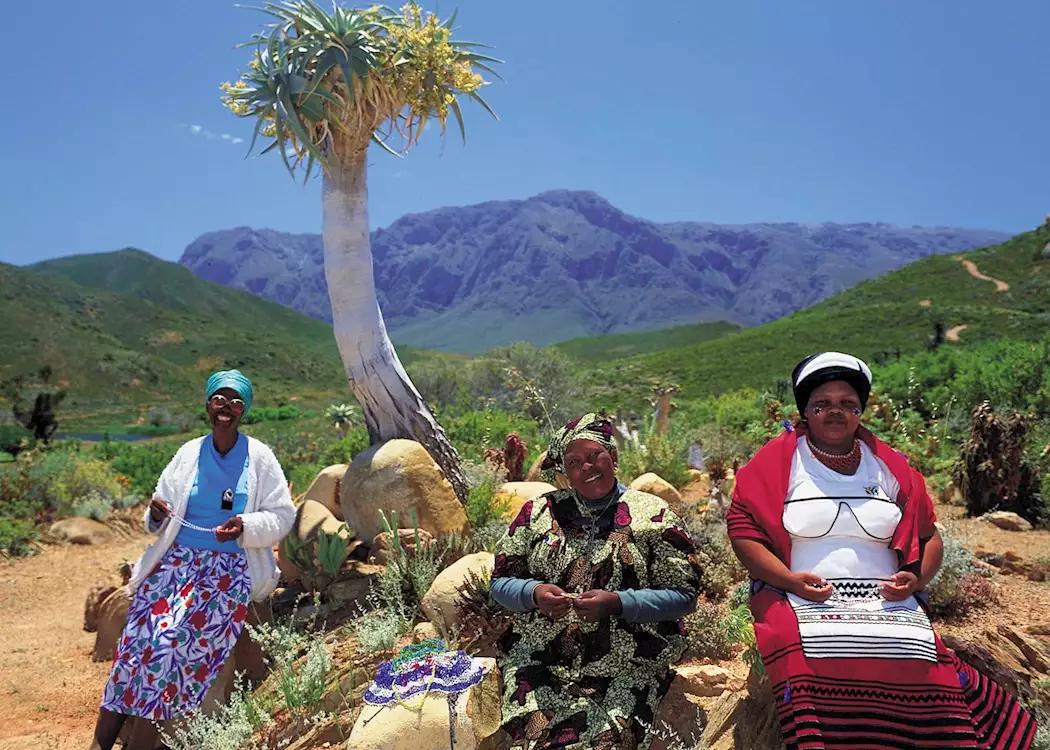 Part 3: Phonetic Marvels — The Click Languages of Southern Africa
Deconstructing the Click Mechanism
Few sound systems in human speech are as phonetically distinct as those featuring click consonants. While people around the world use click-like sounds for non-linguistic signals—such as making a “tsk-tsk” sound to signal disappointment or making a side-mouth popping sound to encourage an animal—in several languages of Southern Africa, click sounds function as ordinary, contrastive consonants.
A click consonant is produced using a lingual ingressive (or velaric) airstream mechanism. Unlike standard pulmonic consonants, which rely on pushing air outward from the lungs through the vocal tract, a click is generated entirely within the oral cavity using a vacuum release system.
The production of a click follows a four-step mechanical process:
- Double Closure: The tongue forms two complete seals in the mouth. The posterior closure is formed by the back of the tongue against the soft palate (velum), while the anterior closure is formed by the front of the tongue against the teeth, alveolar ridge, or hard palate.
- Suction Creation: The center body of the tongue lowers downward, expanding the enclosed air pocket between the two closure points. This creates a low-pressure vacuum cavity inside the mouth.
- Anterior Release: The front closure is released rapidly, causing air to rush inward to equalize the pressure. This produces a sharp popping, snapping, or suction sound.
- Posterior Release: The back closure is released, allowing speech to continue smoothly into the next sound.
The Primary Click Types and IPA Notation
Phoneticians classify clicks based on the precise location of the anterior (front) release point. The International Phonetic Alphabet (IPA) uses specific typographic symbols to represent these distinct places of articulation:
- Dental Click ($\mid$): Produced by placing the tip of the tongue against the back of the upper front teeth and pulling it back sharply. It sounds similar to the English “tsk-tsk” expression of disappointment. In Xhosa and Zulu orthography, it is represented by the letter c.
- Alveolar Click ($\ exclamation$): Produced by placing the tip or blade of the tongue against the alveolar ridge behind the upper front teeth and snapping it downward into the floor of the mouth. This creates a loud, sharp popping noise. In Xhosa and Zulu orthography, it is represented by the letter q.
- Lateral Click ($\parallel$): Produced by creating a seal with the tip of the tongue against the roof of the mouth and releasing air along the sides of the tongue past the molars. It resembles the sound used to encourage a horse. In Xhosa and Zulu orthography, it is represented by the letter x.
- Palatal Click ($\neq$): Produced by pressing the flat top surface of the tongue firmly against the hard palate and releasing it directly downward, yielding a high-pitched suction sound. Found primarily in non-Bantu Southern African languages like Juǀʼhoansi and ǃXóõ.
- Bilabial Click ($\odot$): Produced by creating suction between the upper and lower lips and pulling them apart, creating an unvoiced kissing sound. This sound is extremely rare globally, found almost exclusively in Tuu languages like ǃXóõ.
Clarifying Classification: Non-Bantu Families vs. Bantu Contact
Re-evaluating “Khoisan”
In historical popular literature, the click-bearing non-Bantu languages of Southern Africa were often grouped under the broad catch-all label “Khoisan.”
However, modern comparative linguistics has demonstrated that “Khoisan” does not represent a single genealogical language family. Instead, Southern Africa contains at least three distinct, mutually unrelated language families that happen to share click consonants as part of a regional linguistic area:
- Khoe-Kwadi Family: Includes languages such as Khoekhoegowab (Nama) and Naro across Namibia, Botswana, and South Africa, characterized by grammatical gender systems and extensive click usage.
- Ju-ǂHoan Family: Includes languages like Juǀʼhoansi and ǂkxʻaoǁʻae across the Kalahari Desert, known for complex vowel systems and rich click inventories.
- Tuu Family: Includes historically important languages like ǃXóõ (Taa) and Nǁng (Nǀuu) in the southern Kalahari, exhibiting extreme phonetic complexity with up to 80 or more click variations.
Sound Borrowing in Nguni Languages: Xhosa and Zulu
One of the most remarkable phenomena in historical linguistics is how click consonants moved beyond these indigenous non-Bantu families into neighboring Bantu languages.
As Bantu-speaking agricultural communities migrated into Southern Africa during the late First Millennium CE, they came into prolonged contact with indigenous Khoekhoe pastoralists and San hunter-gatherers. Through centuries of trade, intermarriage, cohabitation, and social assimilation, Nguni Bantu languages—most notably Xhosa and Zulu—absorbed click consonants into their sound systems.
A major driver of this sound borrowing was the socio-linguistic custom of Hlonipha—a traditional practice of cultural respect among Nguni women. Under Hlonipha, a married woman was forbidden from pronouncing syllables or words that sounded similar to the names of her senior male in-laws.
To avoid these forbidden sounds, women systematically substituted consonants with alternative sounds borrowed from neighboring Khoekhoe and San languages—frequently click consonants. Over generations, these substituted click words became integrated into mainstream Xhosa and Zulu vocabulary.
In modern Xhosa orthography, clicks are represented using ordinary Latin letters:
- The dental click (c) appears in words like i-cici (earring).
- The alveolar click (q) appears in words like i-qaqa (skunk or polecat).
- The lateral click (x) appears in words like i-xoxo (frog).
Comparing Core Linguistic Systems
When comparing these major African language traditions across structural, historical, and phonetic lines, distinct patterns emerge:
Kiswahili operates as a non-tonal Niger-Congo (Bantu) language of the East African coast and Great Lakes region, relying on stress placement, standard pulmonic airflow, and an agglutinative noun-class system historically recorded in Ajami and Latin scripts.
Yoruba and Igbo, both Benue-Congo languages of southern Nigeria, utilize multi-tonal pitch registers and pulmonic airflow. Yoruba features three register tones and sub-dot diacritics tied to urban kingdom structures and Òriṣà traditions, while Igbo features two register tones with downstep, an extensive dialectal history, and syntactic personal names linked to republican village governance.
Hausa, belonging to the Afroasiatic (Chadic) family in northern Nigeria and the Sahel, combines a two-tone system with non-pulmonic implosive and ejective consonants. Its history is marked by trans-Saharan trade, the Hausa Bakwai city-states, and a transition from Ajami to Boko scripts.
Finally, the click languages of Southern Africa—comprising non-Bantu families like Khoe-Kwadi, Ju-ǂHoan, and Tuu, as well as contact-adapted Bantu languages like Xhosa and Zulu—utilize lingual ingressive vacuum releases. They feature complex phonetic inventories represented either through specialized IPA symbols or repurposed Latin letters, reflecting deep ecological knowledge and historical contact customs like Hlonipha.
Part 4: Socio-Linguistic Realities and Digital Futures
Urbanization and Linguistic Code-Switching
In the modern era, urbanization across Africa has transformed speech patterns. Metropolises such as Lagos, Nairobi, Johannesburg, Kinshasa, and Kano bring millions of speakers from diverse linguistic backgrounds into daily contact.
In these dense environments, rigid language boundaries soften, giving rise to rapid code-switching—shifting between an indigenous heritage language, a national lingua franca, and a former colonial language within a single conversation.
In Nairobi, young people developed Sheng—a dynamic urban dialect built on a Kiswahili grammatical frame combined with vocabulary from Kikuyu, Luo, English, and modern digital slang.
Similarly, in Nigerian urban centers like Lagos and Port Harcourt, Nigerian Pidgin (an English-based creole deeply influenced by Yoruba, Igbo, and Niger Delta languages) serves as a primary social bridge across ethnic lines. A speaker might seamlessly navigate home life using an indigenous language like Yoruba or Kikuyu, switch to an urban creole like Nigerian Pidgin or Sheng for informal peer interactions, and transition to English or French for administrative and formal settings.
Rather than indicating a decline in linguistic skill, sociolinguists recognize this fluid code-switching as a sophisticated communicative strategy, allowing urban citizens to navigate complex identity layers, express humor, signal social solidarity, and adapt to rapidly changing social environments.
Language Preservation and Technology
The Digital Divide and Natural Language Processing (NLP)
As human communication increasingly migrates to digital platforms, smart devices, and artificial intelligence, African languages face distinct structural opportunities and risks. Historically, major global technology platforms prioritized high-resource languages (such as English, Mandarin, Spanish, and European languages) that possessed massive digital text and audio training corpora.
African languages were frequently categorized as “low-resource languages” due to a lack of digitized, standardized, and annotated datasets. High-resource languages benefit from massive digitized libraries that drive high-accuracy automated translation and voice recognition. By contrast, low-resource African languages face digital exclusion risks due to sparse online text corpora and complex diacritic or tonal requirements that standard software pipelines struggle to process.
Indigenous AI Initiatives and Digital Resilience
In response to these challenges, a new generation of African computer scientists, computational linguists, and digital activists established open-source research networks to build digital infrastructure for indigenous languages.
Organizations such as Masakhane—a Pan-African natural language processing community—are pioneering research in building translation models, text corpora, and speech datasets designed specifically for African linguistic structures.
These digital preservation efforts focus on three primary areas:
- Open-Source NLP Datasets: Digitizing indigenous literature, news archives, and radio audio while building parallel translation corpora for African languages.
- Mobile Education and Gamified Apps: Developing interactive learning tools for youth in the diaspora and preserving native pronunciation through high-fidelity audio recordings of community elders.
- Keyboard and Font Standardization: Integrating sub-dots, tone markers, and click symbols into mobile operating systems, alongside standardizing Unicode fonts for Boko, Ajami, and IPA scripts.
These technological adaptations ensure that African languages are not relegated to the past. By integrating Kiswahili, Yoruba, Igbo, Hausa, Xhosa, and smaller regional speech forms into modern software architectures, search engines, and artificial intelligence models, indigenous speech systems continue to operate as living, evolving frameworks for human thought.
Conclusion: Languages as Living Archives
The extraordinary diversity of Africa’s linguistic landscape demonstrates that human communication is endlessly creative, adaptable, and historically deep. Whether expressed through the agglutinative concord systems of Kiswahili, the tonal precision and proverb-rich rhetoric of Yoruba and Igbo, the Sahelian commercial history and Ajami literary heritage of Hausa, or the phonetic vacuum release mechanics of Southern African click consonants, each language offers a unique window into human ingenuity.
These speech systems are not static artifacts preserved in archives; they are active, dynamic institutions shaped by historical trade, migration, spiritual reflection, and urban interaction. As millions of speakers navigate an increasingly connected world, these languages continue to adapt—transmitting memory, defining identity, bridging communities, and carrying centuries of human experience into the future.
