


Small Objects, Enormous Meaning
Across the diverse dress traditions explored throughout this series — from Ghana’s Kente to Nigeria’s Adire and Ankara, from Maasai shuka to Zulu skirts to Tuareg indigo veils — one element recurs with remarkable consistency: beads and jewelry. Small, seemingly modest objects, whether crafted from glass, coral, cowrie shell, precious metal, seed, bone, or stone, carry a communicative weight in African material culture that frequently rivals or exceeds that of clothing itself. This article steps back from any single ethnic tradition to examine beads and jewelry as a continent-wide phenomenon, tracing their historical materials and trade routes, their function as currency and wealth storage, their role in marking status, spirituality, and life transitions, and their continued vitality within contemporary African fashion and identity.
Beads occupy a unique position within the broader language of African dress discussed throughout this series precisely because of their portability, durability, and capacity for extraordinarily precise combinatorial meaning. A single bead can be swapped, added, or removed to shift a necklace’s message entirely, making beadwork among the most flexible and responsive elements within the broader visual vocabulary of African traditional dress — capable of rapid, individualized communication in ways that a woven cloth pattern, fixed at the moment of production, cannot easily replicate.
 Materials and Their Historical Journeys
The materials used in African beadwork and jewelry reveal a remarkable history of both local craftsmanship and extensive, centuries-old trade networks connecting the African continent to distant regions of the world, making beads simultaneously among the most locally meaningful and most globally connected elements of African material culture.
Locally sourced materials formed the foundation of African beadwork long before extensive international trade networks developed. Seeds, particularly those from specific plants recognized for their hardness, color, or symbolic association, were pierced and strung into jewelry across many regions. Bone, horn, and ivory, carved and polished, provided additional traditional materials, particularly in regions with access to relevant animal populations, though ivory’s association with elephant populations has, in the contemporary era, raised significant conservation concerns that have substantially curtailed its traditional use. Clay beads, fired and sometimes glazed, represent another significant indigenous material tradition, particularly well-documented in various West and East African contexts. Locally mined and worked metals, including gold, copper, brass, and iron, provided materials for jewelry production in regions with access to relevant ore deposits and metalworking expertise, connecting to broader African metallurgical traditions with deep historical roots, including well-documented ancient West African goldworking and Great Zimbabwe-associated gold trade discussed within broader African historical scholarship.
Cowrie shells deserve particular attention as one of the most historically and symbolically significant materials in African adornment. Originating from the Indian Ocean, particularly the Maldives, cowrie shells entered African trade networks over many centuries through extensive Indian Ocean and, later, trans-Saharan and Atlantic trade routes, becoming so widely circulated and valued that they functioned as an actual currency across substantial portions of West and Central Africa for extended historical periods, alongside their significant decorative and symbolic use in jewelry, clothing embellishment, and ceremonial objects. Cowries carry associations, referenced earlier in this series regarding both Kente and Adire motifs, with wealth, fertility, and femininity, their shape and historical monetary function combining to imbue them with layered symbolic significance extending well beyond simple decoration.
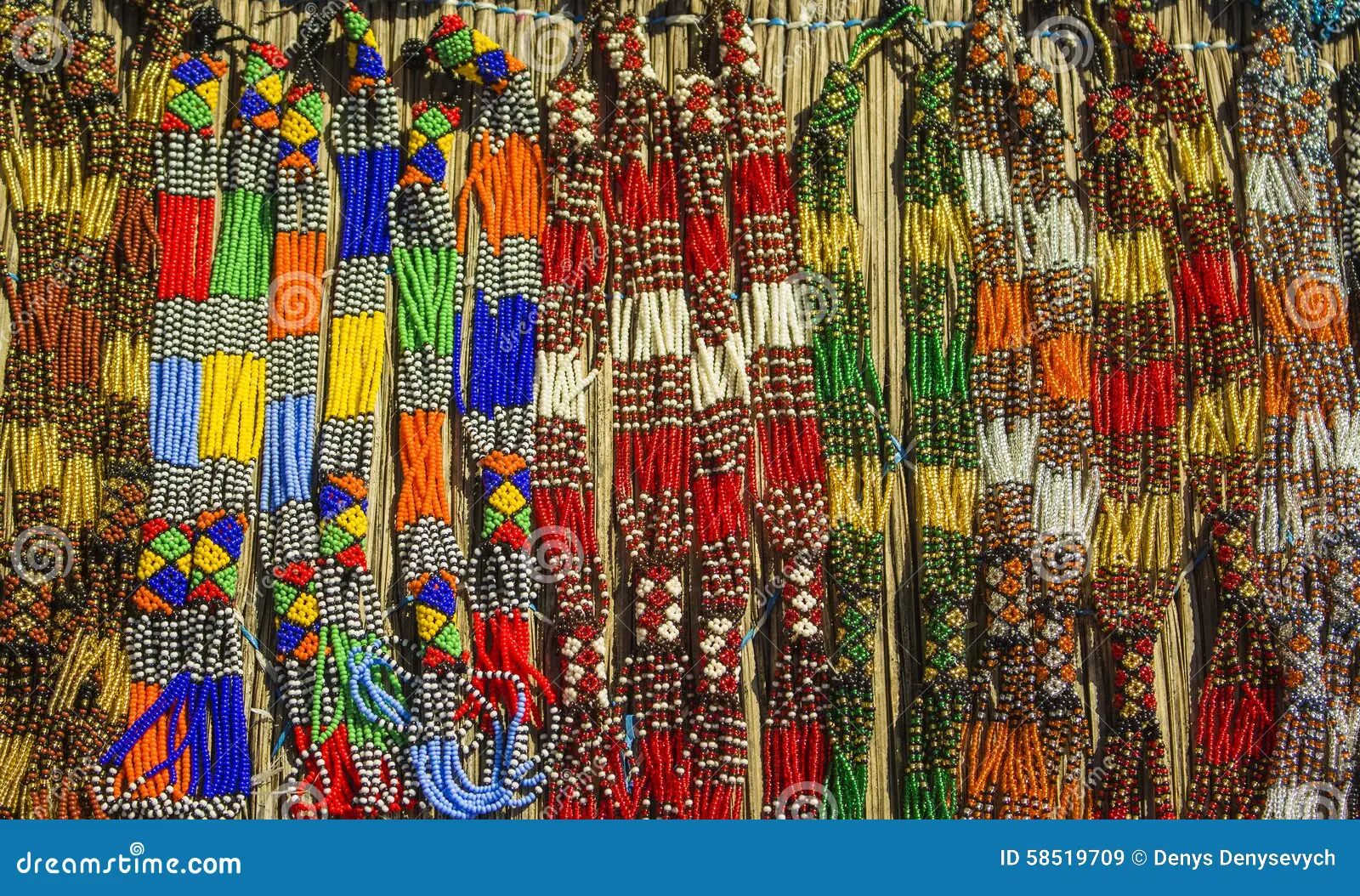
Glass beads, particularly the small, uniformly manufactured “trade beads” that became increasingly available across the continent from the era of extensive European maritime trade onward (roughly the fifteenth century forward, with dramatic expansion during subsequent centuries), transformed African beadwork traditions significantly, providing access to a much broader range of consistent colors and smaller bead sizes than many indigenous materials easily allowed, enabling the intricate, densely patterned beadwork seen in traditions such as Maasai and Zulu ornamentation discussed in previous articles. Venetian glass beads, in particular, became a significant and historically documented trade commodity, with specific bead types and colors acquiring recognized value and status associations within African trading contexts, in some cases developing into what collectors and historians now term “African trade beads” — a category encompassing beads originally manufactured in Europe or elsewhere but which acquired distinctly African cultural meaning, value, and use patterns through their extended incorporation into African adornment traditions, illustrating once again this series’ recurring theme of imported materials being culturally transformed into authentically African expression, echoing the Ankara wax-print story discussed previously.
Coral, particularly significant within Yoruba, Edo (Benin), and related southern Nigerian royal traditions, represents another materially significant and historically fascinating case. Red and orange-hued coral beads, understood within Yoruba and Benin royal tradition as connecting the wearer to ancestral and spiritual authority, became deeply associated with kingship and chieftaincy regalia, with elaborate coral bead collars, crowns, and accessories forming central elements of royal presentation, particularly well-documented within the historical Benin Kingdom’s sophisticated royal court culture and continuing within contemporary Yoruba and Edo traditional royal institutions. Coral’s association with royal authority in this context parallels, in social function though not specific material, the royal-reserved status of certain Kente patterns discussed earlier in this series.
Silver, as discussed extensively regarding Tuareg jewelry traditions in the previous article, holds particular significance within North African and Saharan contexts, worked by specialized artisan communities into elaborate protective and status-marking jewelry forms, while gold historically carried predominant significance within West African contexts, particularly among Akan peoples, where, as discussed regarding Kente symbolism, gold connects directly to royal authority, wealth, and spiritual purity, reflected in elaborate gold jewelry traditions historically produced for and worn by Akan royalty and high-status individuals.
 Beads and Jewelry as Currency and Wealth Storage
Beyond decorative and symbolic function, beads and certain jewelry materials historically served genuine economic functions across various African contexts, functioning as recognized currency, storable wealth, and, in various documented traditions, formal components of bride price and marriage exchange negotiations between families. Cowrie shells, as noted above, achieved formal currency status across extensive trade regions for centuries, with specific quantities of cowries corresponding to recognized values for various goods and services within these trading economies.
Gold and silver jewelry, beyond serving decorative and status functions, historically functioned as portable, storable wealth — a practical consideration of particular importance within societies where formal banking infrastructure did not exist in the contemporary sense, making wearable jewelry a practical mechanism for both displaying and physically safeguarding accumulated family or individual wealth, a function that, notably, persists in various forms across contemporary African societies today, where gold jewelry in particular continues to serve as both adornment and a recognized, culturally significant form of savings and intergenerational wealth transfer, particularly prominent within wedding gift and dowry customs across numerous African cultural contexts.
Beads as Markers of Status and Social Position
As established throughout this series’ examination of specific traditions, beads and jewelry function centrally as markers of social status, wealth, and position within community hierarchies. Royal and chieftaincy contexts across the continent — whether Akan gold jewelry, Yoruba and Benin coral regalia, or the elaborate beaded crowns historically associated with various West African kingship traditions — consistently reserve the most elaborate, materially valuable jewelry forms for the highest-status individuals within their respective social and political hierarchies, mirroring the restricted-access patterns discussed regarding certain Kente designs.
Beyond royal and chieftaincy contexts, jewelry quantity, material quality, and craftsmanship consistently signal general wealth and social standing across many African communities, with accomplished traders, successful farmers or herders, and respected community elders across various traditions typically able to display and, in various contexts, expected to display jewelry appropriate to their accumulated status and resources, making jewelry an immediately legible marker of general social and economic position, readable by community members without requiring detailed personal knowledge of a specific individual’s circumstances.
Beads and the Marking of Life Transitions
As discussed regarding several specific traditions throughout this series, beads and jewelry frequently mark significant life transitions with particular precision and elaboration, often more so than clothing alone, given jewelry’s durability and its frequent function as inherited or gifted items carrying specific familial and ceremonial significance across generations.
Birth and infancy across numerous African traditions involve specific protective beads or small jewelry items, often believed to offer spiritual protection to vulnerable infants, reflecting communal care extended through material and, in many understandings, spiritual protective mechanisms. Coming-of-age and initiation ceremonies, discussed regarding Maasai moranhood and Zulu umemulo traditions specifically, frequently involve significant new jewelry items marking the transition, sometimes crafted or gifted specifically for the occasion by family members or community elders. Marriage represents perhaps the most universally significant jewelry-marking transition across African traditions, with bride price negotiations frequently involving specific jewelry items, wedding ceremonies showcasing elaborate jewelry display (as discussed regarding Zulu and other wedding traditions), and married status itself frequently marked through specific jewelry forms a woman continues wearing throughout her married life, functioning similarly to, though independently of, wedding ring conventions familiar within many other global cultural contexts.
Motherhood, elderhood, and, in various traditions, death and mourning similarly involve specific jewelry conventions, with certain items reserved for or specifically associated with these life stages, reinforcing the broader theme established throughout this series regarding African traditional dress and adornment functioning as a continuously updated, precisely calibrated marker of an individual’s current social position and life-stage status.
Spiritual and Protective Dimensions
Beyond social status and life-transition marking, beads and jewelry across many African traditions carry significant spiritual and protective dimensions, believed in various cultural understandings to offer protection against illness, misfortune, or malevolent spiritual forces, to connect the wearer to ancestral or divine spiritual authority, or to serve specific ritual functions within religious and spiritual practice.
As discussed regarding Tuareg silverwork, specific jewelry forms including the Cross of Agadez carry protective significance believed to safeguard travelers through hazardous desert journeys. Within various West African spiritual traditions, including Yoruba Orisha worship referenced in the opening article of this series, specific bead colors and combinations are associated with particular deities, with devotees of specific Orisha traditionally wearing beads in colors and patterns associated with their particular spiritual devotion — white and clear beads for Obatala, for example, or red and white combinations associated with Shango, illustrating a spiritual color-coding system operating alongside, and in some ways paralleling, the social status and courtship communication systems discussed regarding other traditions throughout this series.
Contemporary Beadwork: Craft Economy and Fashion Integration
Contemporary African beadwork and jewelry traditions demonstrate remarkable ongoing vitality, supporting significant craft economies across numerous countries and communities, particularly benefiting the women artisans who, across many of the specific traditions discussed throughout this series including Maasai and Zulu beadwork, predominantly produce this intricate craft work, providing meaningful economic opportunity and, in many documented cases, an important pathway to female economic participation and, in some contexts, relative financial independence within their communities and households.
International fashion and craft markets have shown significantly expanded interest in African beadwork and jewelry traditions in recent decades, providing both economic opportunity and, as discussed throughout this series regarding textile traditions specifically, raising familiar and important questions regarding fair compensation, appropriate cultural recognition, and the risk of authentic traditional craft being undercut by cheaper, culturally disconnected imitation products that fail to compensate or credit the originating artisan communities and traditions.
Contemporary African and diaspora fashion designers increasingly incorporate traditional beadwork techniques and motifs into contemporary jewelry and fashion collections, and cultural institutions and craft cooperatives across the continent continue active efforts to document traditional bead meanings, train new generations of skilled beadworkers and jewelry artisans, and connect traditional craft producers with expanding domestic and international markets in ways that aim to preserve both the economic viability and the cultural integrity of these traditions moving forward.
Conclusion: The Continent’s Smallest, Most Eloquent Objects
Beads and jewelry, examined across the breadth of traditions explored throughout this series, reveal themselves as perhaps the most flexible, precisely calibrated, and historically layered elements within the broader language of African traditional dress. Small enough to be added, removed, or recombined with ease, yet carrying meanings ranging from immediate social status to intricate coded courtship messages to deep spiritual protection, beads and jewelry demonstrate the remarkable communicative sophistication achievable within African material culture, connecting locally rooted meaning to centuries of global trade history, and continuing to adapt and thrive within contemporary fashion and craft economies today.
As this series turns next to the role of traditional clothing within African ceremonies and rites of passage more broadly, the beads and jewelry examined here — appearing consistently across birth, initiation, marriage, and death ceremonies throughout every tradition discussed in this series — provide an essential thread connecting the specific ethnic traditions explored individually into a broader, continent-wide understanding of how African communities have long used small, carefully chosen, and carefully combined objects to communicate some of life’s largest and most significant meanings.
