
The arrival of Europeans on the African coast is often presented as the beginning of Africa’s interaction with the outside world.
It was not.
Long before Portuguese ships began sailing down the Atlantic coast in the fifteenth century, African societies were already deeply connected to other parts of the world. North African merchants crossed the Sahara. Muslim scholars and traders traveled between West Africa and the Islamic world. East African communities participated in Indian Ocean commerce. The ancient kingdom of Aksum maintained connections with Arabia and the Mediterranean. Egypt and Nubia had interacted with peoples across northeastern Africa and the Near East for thousands of years.
Africa was therefore not an isolated continent waiting to be “discovered.”
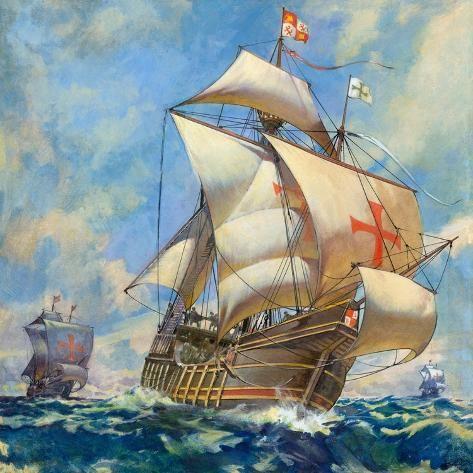
What changed in the fifteenth century was the arrival of new maritime actors from Western Europe, particularly Portugal, who began establishing direct sea connections with African coastal societies and eventually with the wider Indian Ocean world.
Portuguese mariners became the first Europeans to systematically explore large sections of the western African coastline during the mid-fifteenth century. Their objectives included finding new commercial opportunities, reaching Asian markets, gathering information and challenging existing Muslim-controlled trade networks.
The encounters that followed were complex.
African rulers were not passive observers. They negotiated, traded, sent ambassadors, requested military assistance, adopted selected foreign technologies and sometimes embraced Christianity. European merchants, meanwhile, depended heavily on African political authorities and commercial networks.
At first, therefore, contact often looked less like conquest and more like negotiation between different political and commercial worlds.
But those relationships would eventually become entangled with the expansion of the Atlantic slave trade, religious competition, military intervention and European imperial ambitions.
Understanding this early period is essential because it shows how relationships that initially involved diplomacy and commerce gradually helped create a much more unequal Atlantic system.
Africa Before European Maritime Contact
To understand what changed when Portuguese ships arrived, it is important to understand what already existed.
Africa contained powerful states, sophisticated trading systems and long-distance cultural connections.
In West Africa, the Ghana, Mali and Songhai empires had participated in trans-Saharan commerce for centuries. Gold from West Africa moved north, while salt, textiles, horses and other goods moved south.
In the Horn of Africa, Aksum had participated in Red Sea commerce connecting Africa with Arabia and the Mediterranean world.
Along the East African coast, Swahili cities were deeply involved in Indian Ocean trade.
These connections meant that African rulers were already accustomed to dealing with foreign merchants.
They understood diplomacy.
They understood commercial negotiation.
They understood taxation and customs duties.
They understood the political value of controlling ports and trade routes.
The arrival of Portuguese sailors therefore did not introduce Africans to international commerce.
Instead, it introduced new European participants into commercial systems that already existed.
This distinction is crucial.
Why Did the Portuguese Come?
Portuguese expansion along Africa’s Atlantic coast had several motivations.
One was commerce.
European merchants wanted access to gold and other valuable commodities without relying entirely on established trans-Saharan routes.
Another motivation was the search for a maritime route toward Asia.
European powers were interested in Asian luxury goods, particularly spices, but existing commercial routes were influenced by Muslim, Middle Eastern and Mediterranean merchants.
Portuguese voyages therefore formed part of a broader attempt to establish direct maritime connections with markets in Africa and Asia.
Religion was another factor.
Portuguese expansion was also influenced by Christian political and religious ambitions, including opposition to Muslim powers and the desire to establish relationships with Christian communities and potential allies.
Exploration, trade, religion and geopolitical competition were therefore intertwined.
The Portuguese did not sail down the African coast for one simple reason.
Their voyages represented several overlapping ambitions.
The Portuguese Move Down the West African Coast
During the fifteenth century, Portuguese mariners gradually explored farther south along the Atlantic coast.
The voyages were supported by improvements in navigation, shipbuilding and maritime knowledge.
The development and use of vessels such as the caravel made ocean exploration more practical.
Portuguese sailors gradually accumulated knowledge about winds, currents, coastlines and harbors.
By the middle of the fifteenth century, Portuguese voyages had reached substantial portions of the West African coast. National Museums Scotland describes Portuguese mariners as the first Europeans to systematically explore the western African coast, with their voyages beginning a new phase of direct maritime interaction.
But the word “exploration” requires some caution.
European sailors were exploring the coastline from their own perspective.
The African societies they encountered already knew their territories.
For African communities, these ships represented the arrival of unfamiliar foreign merchants and sailors rather than the “discovery” of an unknown continent.
This is one reason modern historians increasingly avoid language that makes European arrival sound as though Africa itself was being discovered for the first time.
First Encounters Were Not Always Hostile
Popular historical images sometimes portray the first encounters as immediately violent.
The reality was more varied.
Some encounters involved conflict.
Others involved trade.
Still others resulted in diplomatic relationships.
European ships needed African ports, African goods and African intermediaries.
African rulers could decide whether foreigners were allowed to trade, where they could operate and what commodities they could acquire.
This gave African political authorities considerable influence during the early stages of contact.
Portuguese merchants therefore had to learn how to negotiate.
They had to understand local political structures.
They needed access to markets.
And they needed relationships with rulers.
The earliest phase of European-African contact was consequently characterized by a mixture of curiosity, commercial negotiation, diplomacy, competition and violence.
Contact With the Kingdom of Benin
One of the most important early relationships developed between the Portuguese and the Kingdom of Benin, centered in present-day southern Nigeria.
Benin was already a powerful and highly organized state before Portuguese contact.
The Oba, or king, occupied the center of its political system.
The kingdom possessed sophisticated court institutions, guild organizations, artistic traditions and extensive regional trade networks.
When Portuguese merchants reached Benin, they encountered a state capable of regulating foreign commerce.
National Museums Scotland notes that diplomatic relations were established between Lisbon and Benin City, with emissaries from Benin sent to the Portuguese court.
This is a significant detail.
It means the relationship was not simply Europeans arriving and Africans receiving them.
Benin itself participated in diplomacy.
African representatives traveled overseas.
African rulers communicated with European monarchs.
Commercial agreements were negotiated.
The relationship therefore had a diplomatic dimension as well as a commercial one.
What Did Benin Trade With the Portuguese?
The Portuguese were interested in valuable African commodities.
These included ivory and forest products, along with textiles, mats, baskets and finely carved ivory objects. Some enslaved people were also transported through the emerging Portuguese commercial system.
Benin’s political authorities controlled organized networks of merchants and craftspeople.
This allowed the kingdom to participate in international commerce while maintaining considerable control over how trade operated.
European merchants could not simply enter the kingdom and take whatever they wanted.
They had to negotiate access.
This demonstrates the strength of African political institutions during the early contact period.
Europeans Appear in Benin Art
Perhaps one of the most fascinating records of early European-African contact survives in the art of Benin.
Benin’s famous cast-brass plaques and other artworks include representations of Portuguese figures.
These images provide visual evidence that Europeans became part of the kingdom’s artistic and political world.
Cambridge research on African perceptions of early Portuguese expeditions notes that representations of Europeans appear in artistic traditions associated with peoples including the Edo of Benin.
This is especially valuable because much of the surviving written documentation from early contact was produced by Europeans.
African artistic representations provide another perspective.
They show that Africans were not simply subjects being described by European observers.
They were also observers.
They looked at Europeans.
They interpreted them.
And they incorporated them into their own artistic language.
The Kingdom of Kongo Enters the Story
Further south, Portuguese explorers eventually reached the region of the Congo River.
There they encountered the Kingdom of Kongo, one of the major political states of Central Africa.
Kongo had its own political institutions, economic systems and royal court.
Portuguese-Kongo relations began in the late fifteenth century and developed into a complex mixture of trade, diplomacy, religion and political negotiation.
Cambridge scholarship notes that the Portuguese reached the mouth of the Zaire/Congo River region in the late fifteenth century and established relations with the Kongo monarchy.
Again, the initial relationship was not simply one of European domination.
The Kongo monarchy had its own interests.
Its rulers sought opportunities to expand diplomatic and commercial connections.
The Portuguese sought access to African markets and resources.
Both sides therefore entered negotiations with their own objectives.
King Nzinga a Nkuwu and Christianity
One of the most consequential developments in Kongo’s relationship with Portugal was the introduction of Christianity to the royal court.
King Nzinga a Nkuwu was baptized in 1491 and took the Christian name João I.
His conversion helped establish a new religious relationship between Kongo and Portugal.
But it is important not to imagine that Christianity immediately replaced existing Kongo religious traditions.
Religious change was complex.
Christian symbols, teachings and institutions interacted with established Kongo beliefs and political structures.
The Kongo monarchy could also use Christianity for diplomatic purposes.
Association with Portugal provided access to a powerful foreign partner and potentially to new forms of technology, education and diplomatic connections.
Christianity was therefore simultaneously a religious development and a political issue.
Afonso I and the Kongo-Portuguese Relationship
The relationship became particularly important under King Afonso I, who ruled Kongo in the early sixteenth century.
Afonso was a committed Christian and corresponded with Portuguese rulers.
Letters associated with his reign provide valuable evidence about the relationship between Kongo and Portugal.
They reveal that the Kongo monarchy was actively trying to manage Portuguese influence.
This is important because the relationship is sometimes portrayed too simply as Portugal dominating Kongo from the beginning.
Historical scholarship has challenged such interpretations.
John Thornton’s research, for example, emphasizes the need to reconsider simplistic narratives of immediate Portuguese subversion and domination of Kongo.
Kongo had its own political agency.
Its rulers made choices.
They negotiated.
They sometimes welcomed foreign assistance.
They sometimes resisted Portuguese demands.
And they attempted to control the consequences of growing foreign involvement.
Diplomacy Across the Atlantic
Early contact produced something more remarkable than commercial exchange.
It created diplomatic networks.
African rulers and European monarchs exchanged ambassadors.
Princes traveled.
Letters crossed the Atlantic and Europe.
The Portuguese sent representatives to African courts.
African rulers sent representatives to Portugal.
Historical records indicate that rulers from Benin, Kongo and other West African states participated in diplomatic exchanges with Portugal.
These diplomatic relationships demonstrate that African states were recognized as political actors.
They were not simply territories awaiting European administration.
They had rulers.
They had foreign policies.
They had diplomatic priorities.
And they were capable of dealing with European monarchies on their own terms—at least during the early stages of contact.
Trade Was at the Center of Early Contact
Despite the importance of diplomacy, commerce remained one of the strongest forces driving contact.
European merchants wanted African commodities.
African rulers wanted foreign goods.
European products entering African markets included textiles, metal goods, weapons and other manufactured items.
African exporters supplied commodities such as ivory, gold, agricultural products and, increasingly, enslaved people.
The nature of this exchange changed over time.
At first, Europeans were one group among several foreign trading partners.
But Portuguese maritime routes offered something new.
They could transport African goods directly across the Atlantic rather than relying entirely on older overland routes through North Africa.
This gradually altered the geography of commerce.
The Beginning of a New Atlantic Economy
The most consequential transformation was the development of the Atlantic commercial system.
Before Portuguese maritime expansion, West African commerce was strongly connected to trans-Saharan and regional networks.
Portuguese ships created new maritime routes linking African coastal societies directly with Atlantic islands, Europe and eventually the Americas.
This did not immediately replace older systems.
Instead, multiple networks operated simultaneously.
But the Atlantic route became increasingly important.
Gold, ivory and other African commodities could be transported by sea.
More tragically, enslaved Africans became a major component of the expanding Atlantic trade.
The Portuguese established sugar-producing colonies on Atlantic islands such as São Tomé, creating an early model of plantation production based heavily on enslaved labor.
This development would have enormous consequences for African history.
Slavery Enters a New Phase
Slavery existed in various forms in Africa before European maritime expansion.
Captives could be taken during warfare, sold through regional markets or incorporated into households and political systems.
However, the expansion of Atlantic plantation economies changed the scale, organization and geographical direction of slave trading.
Portuguese-controlled Atlantic islands became important destinations for enslaved Africans.
From there, the system expanded toward the Americas.
This distinction matters.
The existence of pre-existing forms of slavery does not mean that Africans simply created the Atlantic slave trade independently of European demand.
European colonial expansion created powerful new markets for enslaved labor.
Plantation economies in the Atlantic generated enormous demand.
European ships transported millions of Africans across the ocean over subsequent centuries.
The early contacts of the fifteenth century therefore became connected to a much larger and more destructive system.
African Rulers Were Not All Responding in the Same Way
There was no single African response to Europeans.
Different rulers had different interests.
Some wanted access to foreign weapons.
Some wanted new trade opportunities.
Some wanted diplomatic alliances.
Some were interested in Christianity.
Some attempted to restrict European influence.
Others became involved in the slave trade because it could strengthen their political position against rivals.
African societies were therefore not unified in their response.
This is normal in history.
States make decisions based on their own interests.
A ruler facing a powerful rival may seek an alliance with an overseas partner.
Another ruler may see that same foreign partner as a threat.
Consequently, early African-European relations cannot be reduced to either “Africans welcomed Europeans” or “Africans resisted Europeans.”
Both cooperation and resistance existed.
Weapons and Military Technology
European trade also introduced new military technologies into some African political systems.
Firearms became increasingly important over time.
But the idea that Europeans possessed overwhelming technological superiority from their first encounters is misleading.
European ships had important advantages at sea.
African kingdoms possessed significant military capabilities on land.
The political balance therefore varied from place to place.
In Benin, Kongo and other states, rulers remained capable of controlling substantial territories despite European contact.
European traders often needed African political cooperation to operate successfully.
Technology became one part of a much larger political relationship.
The Importance of African Middlemen
Foreign traders rarely operated alone.
They depended on local merchants and intermediaries.
African traders understood regional languages, markets, customs and political relationships.
They knew where goods could be obtained.
They knew which rulers controlled particular territories.
They could negotiate prices.
They could arrange transportation.
Without these local networks, European merchants would have struggled to participate effectively in African commerce.
This is another reason early contact should not be viewed as a one-sided process.
It was built on African knowledge.
Europeans Had to Adapt to African Conditions
The West African environment posed significant challenges to Europeans.
European visitors faced unfamiliar climates, diseases and geographical conditions.
They depended on coastal African communities for information and supplies.
European ships also could not simply sail inland.
They needed African ports, rivers and local intermediaries.
This limited European territorial control during the earliest period.
The situation would change centuries later with advances in medicine, transportation and military technology.
But during the initial contact period, European influence was often concentrated around commercial and coastal networks rather than extensive territorial conquest.
The Gold Coast and Trading Forts
As maritime commerce expanded, European powers increasingly established coastal trading bases.
The Portuguese constructed Elmina Castle on the Gold Coast in present-day Ghana in the late fifteenth century.
Elmina became an important center for Portuguese commerce.
It connected European merchants with West African trade networks and later became deeply associated with the Atlantic slave trade.
The establishment of forts represented an important change.
A temporary trading relationship could gradually become a permanent European presence.
Fortified settlements gave European powers places to store goods, negotiate with local authorities and protect commercial interests.
Other European powers would later establish their own coastal bases.
Contact Was Not Yet Colonialism
This distinction is extremely important.
The fifteenth and sixteenth centuries should not simply be described as the period when Europeans “colonized Africa.”
Large-scale European territorial colonization of most of Africa occurred much later, particularly during the nineteenth century.
Early European contact was dominated by:
- maritime exploration;
- trade;
- diplomacy;
- missionary activity;
- coastal settlements;
- competition over commerce;
- and the developing Atlantic slave trade.
European powers did not yet control most African territory.
Power remained overwhelmingly in the hands of African states and communities across much of the continent.
This changed dramatically during the nineteenth-century Scramble for Africa, which is the subject of a later section in this series.
African Knowledge Shaped European Understanding
European knowledge of Africa also changed through these encounters.
Sailors returned to Europe with information about coastlines, rivers, political states, products and peoples.
Maps became more detailed.
European geographic knowledge expanded.
But these European accounts were not neutral.
They were shaped by the interests and assumptions of the people who wrote them.
This is why historians must compare European documents with African oral traditions, archaeological evidence, African artworks, local records and other sources whenever possible.
The Cambridge study of African perceptions of early Portuguese contact emphasizes precisely this problem: surviving European accounts are much more numerous than direct African written accounts, requiring historians to interpret them critically.
The historical record is therefore not simply a collection of facts.
It is also a record of who had the power to write things down and preserve them.
African Perspectives Matter
One of the most important developments in modern African historiography has been the effort to recover African perspectives.
Benin’s artistic representations of Europeans are one example.
Kongo’s diplomatic correspondence is another.
African oral traditions provide additional evidence.
Archaeology can reveal trade relationships even when written documents are missing.
These sources help reconstruct African experiences rather than relying entirely on European descriptions.
This matters because the language used by European observers sometimes portrayed African societies through European assumptions.
Modern historians can compare these descriptions with African evidence to produce a more balanced account.
The Religious Dimension
Religion became increasingly important as contact expanded.
Portuguese rulers and missionaries hoped to spread Christianity.
African rulers sometimes saw Christianity as an opportunity to strengthen diplomatic relations with Portugal.
The Kingdom of Kongo became particularly important in this regard.
Christianity also influenced architecture, names, education and court culture.
But conversion was never simply a matter of European religious instruction.
African rulers interpreted Christianity through their own political and cultural circumstances.
Christian ideas entered societies with existing belief systems.
The result was a complex process of adaptation.
Contact With Ethiopia
European interest in Africa was not limited to West and Central Africa.
Ethiopia held particular significance because Europeans knew of the existence of a longstanding Christian kingdom in northeastern Africa.
European travelers and missionaries sought contact with Ethiopian rulers partly because of religious and geopolitical interests.
Ethiopia’s Christian identity made it especially significant to European powers seeking allies against Muslim states.
Yet Ethiopia, like Kongo and Benin, had its own political interests.
Its rulers were not simply waiting for European assistance.
They had long-established diplomatic and military traditions.
This again demonstrates that early contact involved negotiation between established political powers.
The Expanding Portuguese Network
By the sixteenth century, Portuguese commercial activity had expanded considerably.
Portugal established relationships and trading posts in various parts of the African Atlantic world.
Its activities extended beyond West Africa toward Central Africa and eventually around the southern tip of the continent.
Portuguese contact with Kongo, Benin and other African states created a network linking different parts of Africa to Portugal’s growing overseas empire.
But the Portuguese were not alone for long.
Other European powers eventually entered African waters.
Dutch, English and French merchants became increasingly involved.
Competition intensified.
The commercial landscape changed from relatively limited Portuguese participation to a much broader European presence.
From Partnership to Growing Imbalance
Early relationships could appear relatively balanced because African states remained politically strong.
But the balance gradually shifted.
European maritime powers developed increasingly sophisticated commercial and military networks.
The Atlantic slave trade expanded.
European colonial settlements grew.
European demand for African commodities increased.
African political rivalries sometimes became entangled with European competition.
The result was a gradual transformation of the relationship.
What began in many places as trade and diplomacy increasingly became linked to coercion and exploitation.
This transition did not happen overnight.
It unfolded over centuries.
The Myth of a Single Moment of “Arrival”
There was no single day when “Europe arrived in Africa.”
Different European powers reached different African regions at different times.
And different African societies experienced contact differently.
Benin’s relationship with Portugal was different from Kongo’s.
The Portuguese presence in coastal West Africa was different from their activities in East Africa.
Ethiopia’s relationship with European powers followed a different trajectory again.
This is why “early contact” should be understood as a long historical process rather than one event.
Why Early Contact Matters
The history of early African-European contact matters because it provides the foundation for understanding later events.
Without understanding the fifteenth and sixteenth centuries, it is difficult to understand:
- the expansion of Atlantic commerce;
- the growth of the slave trade;
- European missionary activity;
- changing African political alliances;
- the development of coastal forts;
- the growth of European overseas empires;
- and eventually European colonial conquest.
The later Scramble for Africa did not emerge from nowhere.
It developed from centuries of changing relationships.
A More Accurate Way to Tell the Story
The traditional narrative often says:
Europeans arrived → Africans were discovered → Europeans took control.
The historical reality was much more complicated.
A better sequence is:
African societies already had international networks → European maritime powers entered those networks → African and European rulers negotiated → trade expanded → diplomatic and religious relationships developed → Atlantic slavery grew → European commercial and political influence expanded → later imperial conquest transformed the relationship.
That sequence gives African societies their proper place in the story.
They were participants.
They were decision-makers.
They were traders.
They were diplomats.
They were artists.
They were rulers.
And eventually, they were also victims of an increasingly aggressive Atlantic system.
Conclusion: When New Worlds Met Existing Ones
The arrival of Portuguese sailors along the African coast in the fifteenth century marked an important turning point in world history.
But it was not the beginning of Africa’s international history.
Africa already possessed extensive commercial, political and cultural connections stretching across the Sahara, the Red Sea, the Mediterranean and the Indian Ocean.
What Portuguese maritime expansion introduced was a new and increasingly powerful European presence in those networks.
The earliest relationships were often based on trade and diplomacy.
Benin established commercial and diplomatic connections with Portugal.
Kongo developed a significant relationship with Portugal and embraced Christianity at the royal court.
African rulers exchanged ambassadors with European monarchs.
African artists depicted Europeans.
Merchants exchanged commodities.
Missionaries traveled.
Ideas crossed oceans.
These developments demonstrate that early African-European contact was a two-way process.
But the story also contains a darker transformation.
The growing Atlantic economy created enormous demand for enslaved African labor. Portuguese-controlled Atlantic islands became early plantation centers, and African captives increasingly became part of a transoceanic commercial system that would eventually devastate communities across large parts of the continent.
The distinction between early contact and later colonial conquest is therefore essential.
European traders did not immediately conquer Africa.
For centuries, powerful African kingdoms continued to control their territories and negotiate with European powers.
But the relationships established during these early encounters created networks that would eventually contribute to profound economic, religious and political changes.
The history of early contact is consequently neither a simple story of European “discovery” nor a story in which African societies were merely passive victims.
It is a story of encounter.
Of curiosity.
Of commerce.
Of diplomacy.
Of cultural exchange.
Of political calculation.
And eventually, of exploitation.
Understanding that complexity allows us to see the later history of Africa more clearly—and reminds us that when Europeans first arrived by sea, they were entering a continent that already had its own civilizations, rulers, economies, religions and international connections.