

Africa’s Festival Culture: Celebration, Memory, and Identity
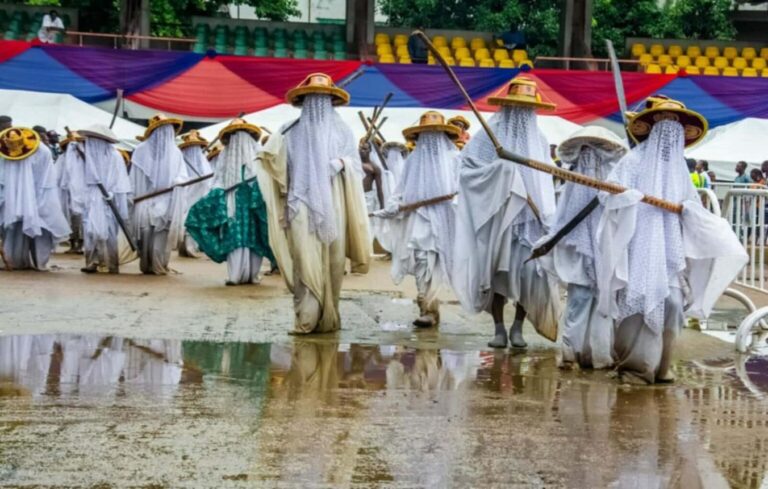
Across the vast geographical expanse of the African continent, festival culture serves as a vital bridge connecting the past, present, and future. Far from being simple recreational gatherings or mere spectacles for entertainment, African festivals operate as comprehensive cultural institutions. They are dynamic spaces where history is actively remembered, social cohesion is continuously renewed, religious devotion is expressed, and individual as well as collective identity is asserted. In societies where oral traditions, performance arts, and communal participation have historically formed the bedrock of knowledge transmission, the festival functions as a living archive. Through music, dance, masquerade, sacred rituals, oral literature, culinary traditions, and visual regalia, festival cultures encode complex historical narratives, philosophical principles, and civic values that are passed down from one generation to the next.
At the fundamental core of Africa’s festival culture lies a profound philosophy of community and interconnectedness. A festival is rarely a passive event where an audience simply observes performers; rather, it relies on total communal participation. The boundaries between performer and spectator are fluid, as citizens, elders, titleholders, religious officiants, and youths all play distinct, interdependent roles in bringing the event to life. Whether marking the turning of agricultural seasons, honoring ancestral lineages, commemorating historical victories, celebrating royal power, or enacting religious rites, festivals serve to re-align human society with the spiritual cosmos and the natural environment. In this sense, the festival is a period of sacred time carved out of the mundane calendar, offering a structured space for reflection, reconciliation, and renewal.
Memory plays an indispensable role in how festivals function across diverse African societies. Because history in many African cultures was historically preserved through oral accounts, performance, and ritual reenactment rather than bound written texts, the festival became the primary venue for historical documentation. During major festivals, praise singers, griots, and oral historians recite lineated genealogies, recount foundational myths, and perform dramatized reenactments of key historic events. By witnessing and participating in these reenactments, younger generations do not merely learn about their ancestors in an abstract sense; they experience that history as a tangible, living reality. The festival environment ensures that historical memory remains active, relevant, and continually reinterpreted in light of contemporary realities, preventing cultural amnesia and reinforcing a shared sense of heritage.
Identity—both individual and collective—is similarly forged and showcased within the festival space. Festivals provide a stage where social roles, age sets, gender identities, occupational guilds, and political hierarchies are formally displayed and affirmed. The elaborate traditional clothing, beadwork, body art, insignia, and textiles worn during these celebrations are rich with symbolic meaning, communicating an individual’s lineage, status, achievements, and cultural affiliation. On a broader scale, festivals consolidate ethnic and national identity, providing a shared platform where dispersed members of a community return home to reconnect with their roots. In an increasingly globalized world, these celebrations offer a powerful assertion of cultural autonomy, allowing communities to celebrate their unique heritage, honor their distinct worldviews, and assert their enduring presence in the contemporary world.
The structural composition of African festivals varies significantly depending on geographical location, ecological environment, religious orientation, and historical trajectory. Across West Africa, festival traditions are frequently characterized by complex masquerades, vibrant drum orchestra rhythms, agricultural harvest rites, and deep ancestral veneration. In North Africa, festival culture blends indigenous Amazigh heritage with Islamic traditions, featuring intricate musical performances, horse displays, and spiritual gatherings. Eastern Africa presents a tapestry of festivals deeply tied to pastoral rhythms, ancient Christian liturgical calendars, and Swahili coastal traditions. In Southern Africa, festival cultures emphasize communal dances, royal celebrations, age-grade initiations, and rites of passage. Despite this extraordinary regional diversity, overarching thematic threads connect them all: the honoring of origins, the strengthening of social bonds, and the celebration of life’s continuous cycles.
In the modern era, Africa’s festival culture continues to evolve, demonstrating remarkable adaptability and resilience. While traditional festivals rooted in indigenous spiritual and agrarian calendars remain vibrant in rural and urban heartlands, new forms of festival culture have also emerged. Contemporary arts, music, film, and literary festivals now sit alongside ancient traditional gatherings, creating spaces where classical heritage intersects with modern artistic experimentation. Moreover, festivals have increasingly become key drivers of cultural tourism, economic development, and international cultural exchange. As African nations navigate the pressures of rapid urbanization and globalization, festival culture stands as a resilient pillar of cultural continuity—a testament to the power of celebration, memory, and identity in shaping the ongoing story of the continent.
 The Concept and Philosophy of the African Festival
To fully appreciate the significance of festivals in Africa, one must look beyond their visual brilliance and explore the underlying philosophical framework that defines them. In many African worldviews, time is not merely a linear progression of identical seconds, minutes, and days; it is cyclical and qualitative, marked by moments of high spiritual and social significance. Festivals mark these pivotal moments, serving as temporal nodes where the past, present, and future converge. They mark transitions in the natural world—such as the arrival of rains, the planting season, and the harvest—as well as transitions in human life, including birth, initiation, title-taking, and ancestral transition.
Central to this festival philosophy is the concept of relationality, often expressed through concepts like Ubuntu in Southern Africa or similar worldview systems across the continent, which emphasize that individual identity is realized through community. The festival is the ultimate institutionalization of this principle. It requires collective effort, shared resources, and mutual participation. Months before a major festival takes place, entire communities engage in collaborative preparations: clearing public square grounds, repairing shrines, rehearsing musical arrangements, crafting masks, sewing regalia, and preparing massive communal feasts. This preparatory phase is as vital to social cohesion as the festival itself, as it requires dialogue, conflict resolution, and shared labor across age groups and social strata.
Furthermore, the African festival operates within a holistic worldview that does not rigidly separate the sacred from the secular. A festival that appears to an outside observer as a lively social carnival is often simultaneously a profound religious ceremony. The drum beats that inspire energetic public dancing are frequently the exact rhythms used to invoke ancestral spirits or divine forces. The food consumed in public feasts is often first offered as a libation or sacrifice to honor the unseen realm. This synthesis of the spiritual and the material reflects an understanding of the universe where the living, the unborn, and the departed ancestors exist in a continuous, interactive continuum.
The festival also serves as a crucial mechanism for political governance and social accountability. Historically, many African political systems utilized festivals as periods of institutional balance and social cleansing. During specific festivals, normal social hierarchies could be temporarily suspended or inverted. Common citizens, court poets, and masqueraders were granted special immunity to criticize chiefs, kings, and political leaders through satire, song, and dramatic performance. This built-in institutional outlet allowed communities to highlight corruption, express public grievances, and keep rulers accountable without destabilizing the state. Once the festival concluded, authority was reinstated, but leaders were made acutely aware of the popular will, ensuring a more responsive and balanced governance structure.
Historical Memory, Orality, and Reenactment
In the absence of widespread written historical records in ancient and medieval times, African societies developed sophisticated alternative methods for storing and transmitting historical knowledge. Chief among these was the festival performance, which functioned as an interactive, multi-sensory history book. Historical memory within an African festival is not stored quietly on a shelf; it is chanted, drummed, danced, dramatized, and physically experienced by the entire community.
Oral literature forms the bedrock of this historical transmission. During major festivals, specialized oral historians—such as the Griots (Jelis) of West Africa—take center stage. Accompanied by instruments like the kora, balafon, or ngoni, these historians recite the epics of ancient empires, the genealogies of royal dynasties, the deeds of heroic ancestors, and the foundational stories of towns and cities. The language used in these recitations is often archaic and highly poetic, containing historical data, philosophical maxims, and moral lessons. Because these recitations occur publicly during annual festivals, the community acts as a collective editor; any significant error or deviation from historical truth can be corrected by knowledgeable elders, ensuring the integrity of the oral record across generations.
Beyond spoken words, historical memory is encoded within specialized musical rhythms and dance movements. In many African cultures, specific drum beats are tied directly to historical events, royal lineages, or military battles. A trained drummer can talk through the instrument, reproducing the tonal contours of indigenous languages to spell out historical proverbs and ancestral names. Dancers, through precise choreography passed down through generations, physically enact historical narratives—mimicking the movements of ancient warriors, the journeys of migrating ancestors, or the labor of foundational founding figures.
Reenactment ceremonies represent one of the most dramatic forms of historical preservation within African festivals. During these performances, key historical turning points are staged as community theater. For example, a festival might feature a dramatized battle representing the defense of the kingdom against historical invaders, or a symbolic re-enactment of the peaceful treaty made between founding lineages. These performances are not mere theatrical entertainment; they are sacred reenactments that reactivate the ancestral energy and remind the living of the sacrifices, agreements, and moral principles upon which their society was built.
Through these combined modes of oral recitation, music, dance, and dramatization, the festival ensures that history remains a shared public resource. It prevents history from becoming the exclusive property of an elite class or being forgotten over time. Every child growing up in the community attends these annual celebrations, absorbing the history of their people through sight, sound, and participation long before they reach adulthood.
Social Cohesion, Identity, and Rites of Passage
At the individual and interpersonal level, African festivals play an irreplaceable role in structuring social life, defining personal identity, and reinforcing communal solidarity. Human communities require periodic mechanisms to resolve internal tensions, celebrate shared values, and integrate individuals into the broader social fabric. The festival serves precisely this purpose, acting as a powerful social glue that binds diverse families, lineages, and interest groups into a unified whole.
One of the primary ways festivals build social cohesion is through communal dining and hospitality. Food and drink are central components of almost every African festival. During harvest celebrations or major annual gatherings, families cook vast quantities of traditional dishes to share with neighbors, visitors, and strangers alike. The act of sharing food breaks down social barriers, fosters goodwill, and creates obligations of mutual respect and friendship. In many cultures, resolving personal disputes and interpersonal conflicts is a prerequisite for participating in festival rituals, ensuring that the community enters the sacred festival period in a state of harmony.
Festivals are also intimately connected with life-cycle transitions and rites of passage. Many traditional societies coordinate initiation ceremonies—such as the transition from childhood to adulthood, entry into age-grade societies, or formal induction into title societies—with the broader annual festival calendar. During these periods, initiates who have undergone weeks or months of seclusion, moral instruction, and physical tests are formally presented to the community. The festival provides the grand public stage where their new identity is celebrated, validated, and integrated into the social hierarchy.
The visual dimensions of festivals—specifically regalia, body ornamentation, and traditional dress—serve as a sophisticated language of identity. During festival celebrations, individuals wear their finest attire, which is deeply coded with social meaning. The type of fabric used (such as handwoven Kente, indigo-dyed Adire, or barkcloth), the specific beadwork patterns, the style of headwear, and the metal ornaments worn all communicate essential information about a person’s age, gender, marital status, title, lineage, and geographic origin. Observing a festival gathering allows a member of the society to immediately read the social composition of the community, reinforcing respect for traditional institutions and personal achievements.
Furthermore, festivals foster a powerful sense of place and belonging, particularly for diaspora populations. In contemporary Africa, millions of people have migrated from rural homelands to bustling urban centers or overseas. Annual festivals act as an irresistible cultural magnet, drawing urban migrants and international diaspora members back to their ancestral villages and towns. This annual migration home during festival season ensures that urbanized individuals maintain strong ties to their rural roots, contribute to local development, support extended family networks, and transmit traditional cultural values to their urban-raised children.
 Spiritual Dimensions and Sacred Geographies
To understand the depth of African festival culture, one must examine its profound spiritual underpinnings. In traditional African worldviews, the physical environment is imbued with spiritual significance, and human well-being depends on maintaining a balanced relationship with the unseen world—including the Supreme Being, nature deities, elemental spirits, and the venerated ancestors. Festivals serve as the primary institutional vehicle for calibrating and maintaining this crucial balance.
Ancestral veneration is a cornerstone of spiritual expression in many African festivals. Ancestors are not viewed as distant or dead figures, but as living, elevated members of the family and community who have passed into the spiritual realm. They are believed to possess the power to protect, guide, and bless their living descendants, provided they are honored and remembered. During festivals, special ceremonies are performed at ancestral shrines, gravesites, and family compounds. Libations of palm wine, water, or spirits are poured onto the earth, accompanying prayers that seek ancestral blessings for health, fertility, prosperity, and peace, while offering thanks for the protections of the past year.
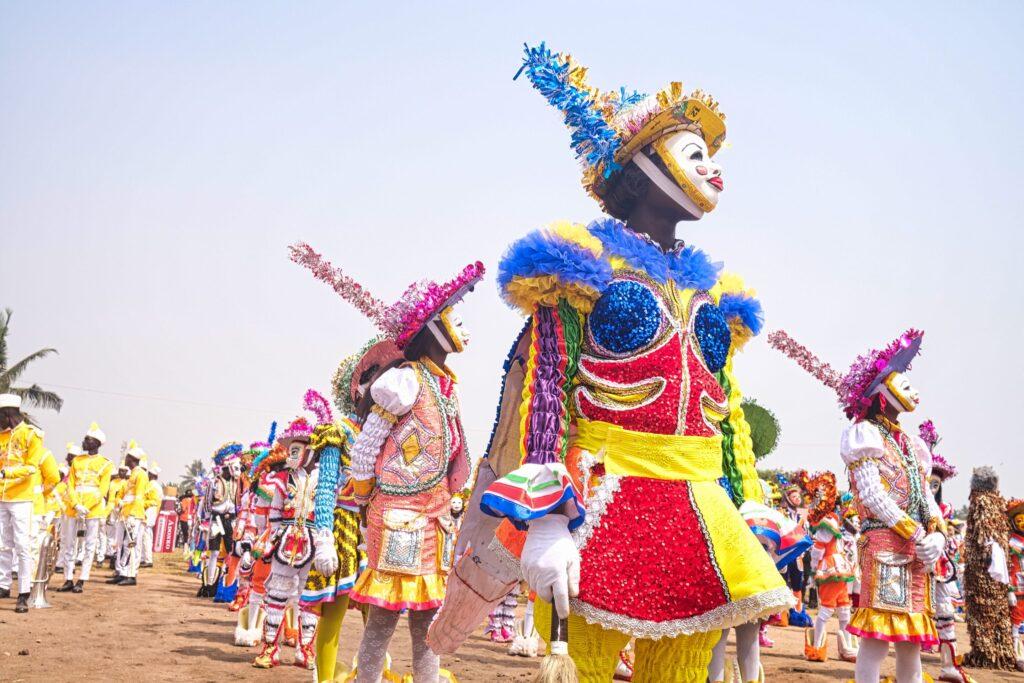
The concept of masquerade—found extensively throughout West, Central, and parts of Southern Africa—represents one of the most powerful spiritual dimensions of festival culture. In these traditions, a masked figure is not merely an actor wearing a costume. Through sacred consecration, ritual preparation, and performative invocation, the person wearing the mask transforms into a medium or physical vessel for an ancestral spirit, deity, or elemental force. When the masquerader enters the festival arena, the spirit world becomes physically present among the living. The masquerade performs dances that embody the power of the spirit, dispenses blessings, cleanses the community of spiritual contamination, enforces social norms, and bridges the gap between the visible and invisible worlds.
Sacred geographies play an equally vital role in festival spirituality. Festivals frequently reactivate sacred sites within the landscape, such as holy groves, rivers, mountains, rocks, caves, and ancient burial grounds. These locations are regarded as points of spiritual intensity where the boundary between realms is thin. During the festival, formal processions travel from the community center to these sacred natural sites to perform rituals, offer gifts to nature spirits, and seek ecological harmony. By connecting spiritual devotion to specific natural features, festival culture fosters a deep environmental ethic, encouraging communities to protect sacred forests, rivers, and ecosystems as essential elements of their cultural and spiritual survival.
Additionally, festivals provide spiritual purification and renewal for the entire community. Over the course of a year, social conflicts, moral transgressions, illness, and tragedy can create spiritual disharmony. Many festivals feature specific rites of purification designed to wash away the accumulated misfortunes and negative energies of the old year. This may involve symbolic sweepings of the town, ritual bathing in sacred rivers, burning symbolic objects, or performing apotropaic dances to drive away evil influences. Through these rites, the community clears its spiritual slate, entering the new year with renewed hope, spiritual clarity, and collective strength.
Regional Survey of Festival Typologies
While shared themes run throughout the continent, the specific manifestations of festival culture reflect the extraordinary diversity of Africa’s regional environments, histories, and cultural traditions. Examining festivals across distinct regions reveals how local ecology, history, and social structures shape unique celebratory forms.
West Africa: Masquerades, Harvests, and Royal Splendor
West Africa is world-renowned for its intense, visually dramatic festival cultures, which feature intricate masquerade institutions, harvest celebrations, and grand royal displays. The region’s agrarian cycles, particularly the cultivation of staples like yams and rice, dictate many major festivals. The Yam Festival—celebrated under various names such as Homowo among the Ga of Ghana, Odwira among the Ashanti, and Iri Ji among the Igbo of Nigeria—marks the first harvest of the staple crop. These festivals combine thanksgiving to deities and ancestors with public feasting, reconciliation rites, and vibrant cultural performances.
Royal court traditions also define West African festival culture. In Nigeria, the Durbar Festival of the northern emirates showcases centuries of Islamic and Hausa-Fulani cavalry heritage, featuring thousands of horsemen dressed in elaborate armor and colorful regalia processing before traditional rulers. In southern Nigeria, the Igue Festival of the Benin Kingdom centers on the spiritual purification of the Oba (King) and the realm. Meanwhile, masquerade festivals like FESTIMA in Burkina Faso celebrate the vast masking traditions of West African nations, where wooden, fiber, and cloth masks represent animals, spirits, and ancestors in dynamic public dances.
North Africa: Islamic Traditions, Amazigh Heritage, and Mystical Music
North African festival culture reflects a rich blending of indigenous Amazigh (Berber) heritage, Arab-Islamic traditions, and Mediterranean historical influences. Major religious occasions on the Islamic calendar—such as Eid al-Fitr, Eid al-Adha, and Mawlid (the Prophet’s Birthday)—are celebrated with immense public devotion, traditional music, street illuminations, and shared family feasts across Morocco, Algeria, Tunisia, Egypt, and Sudan.
Alongside Islamic observances, North Africa boasts deep-rooted indigenous festivals. The Yennayer festival marks the Amazigh New Year, celebrated with traditional agricultural dishes like couscous, family gatherings, and performances of traditional poetry and music that assert Amazigh identity. Morocco is particularly famous for its sacred and music festivals, such as the Fes Festival of World Sacred Music, which highlights Sufi devotional traditions, spiritual chanting, and international sacred arts, as well as the Gnaoua World Music Festival in Essaouira, which celebrates the healing music and spiritual rituals of the Gnaoua people, whose ancestry traces back to Sub-Saharan Africa.
East Africa and the Horn: Faith, Pastoral Rhythms, and Coastal Swahili Heritage
In the Horn of Africa, particularly Ethiopia and Eritrea, festival culture is deeply tied to ancient Christian liturgical traditions that date back to the fourth century. The Timkat festival (Epiphany) is one of the most visually stunning celebrations in the world, featuring massive processions carrying the Tabot (replicas of the Ark of the Covenant) to sacred bodies of water for baptismal re-enactments, accompanied by priests in embroidered robes, colorful umbrellas, and rhythmic chanting. Similarly, Meskel celebrates the discovery of the True Cross with the lighting of massive bonfires (Demera) across public squares.
Along the East African coastline, Swahili festival culture reflects centuries of Indian Ocean trade and maritime interaction. The Lamu Maulidi Festival in Kenya combines Islamic scholarship, Swahili poetry, dhow races, and traditional sword dances in an ancient stone town environment. Further south, inland pastoral communities like the Maasai celebrate rites of passage such as the Eunoto festival, where young warriors (Morans) transition into adulthood through traditional songs, jumping dances (Adumu), and sacred blessings administered by elders.
 Southern Africa: Royal Gatherings, Rites of Passage, and Dance
Southern Africa’s festival culture is marked by grand communal dances, royal celebrations, and age-grade ceremonies that emphasize social cohesion and cultural heritage. In Eswatini and parts of South Africa, the Umhlanga (Reed Dance) festival brings together thousands of young women to pay homage to the Queen Mother, celebrate maidenhood, and promote solidarity among youth. Similarly, the Incwala in Eswatini is a sacred first-fruits and royal purification ceremony that reinforces the nation’s spiritual and political strength.
In South Africa, post-apartheid festival culture reflects both ancient indigenous heritage and dynamic contemporary expressions. Traditional Zulu gatherings, such as the U Umkhosi WoMhlanga, sit alongside modern celebrations of freedom and artistic diversity like the National Arts Festival in Makhanda. In Mozambique, the Goba and Timbila festival traditions feature complex marimba music and athletic dance performances, while Zambia’s Kuomboka festival dramatizes the annual migration of the Lozi king and his people from the flooded Zambezi plain to higher ground aboard a massive, painted royal barge.
Modern Continuity, Transformation, and Challenges
As Africa undergoes rapid social, economic, and technological transformations, its festival culture faces both new opportunities and significant challenges. Urbanization, migration, religious shifts, and globalization have altered the contexts in which traditional festivals were historically practiced. Yet, far from fading into obscurity, African festival culture exhibits extraordinary dynamism, adapting to modern realities while retaining its core function as a vehicle for memory and community.
One of the most notable modern developments is the professionalization and commercialization of traditional festivals. Many annual celebrations that were once strictly local affairs have grown into massive cultural events attracting corporate sponsorship, media coverage, and international visitors. While commercialization provides needed financial resources for hosting large-scale events and supports local economies, it also introduces creative tensions. Cultural custodians must continuously navigate the delicate balance between maintaining the sacred, authentic spiritual integrity of their rituals and accommodating the expectations of tourists, cameras, and commercial sponsors.
Religious transformation has also impacted traditional festival practices. The historical spread and modern growth of Christianity and Islam across Africa have led to complex interactions with indigenous festival traditions. In some instances, convert populations have distanced themselves from traditional festivals that involve ancestral offerings or masquerades, viewing them through a theological lens as incompatible with their new faith. However, in many other cases, creative syncretism and cultural distinction have occurred. Communities often distinguish between religious doctrine and cultural heritage, allowing individuals of various religious faiths to participate enthusiastically in civic and cultural festivals as an assertion of shared ethnic and municipal identity.
Furthermore, contemporary arts festivals have emerged as a powerful force across the continent. Events like the Dak’Art Biennale in Senegal, the Pan-African Film and Television Festival of Ouagadougou (FESPACO) in Burkina Faso, Nyege Nyege in Uganda, and LagosPhoto in Nigeria represent modern extensions of Africa’s festival tradition. These gatherings bring together visual artists, filmmakers, musicians, and thinkers from across the continent and its global diaspora to explore modern African realities, challenge colonial legacies, and imagine future possibilities. They demonstrate that the festival format remains Africa’s premier platform for intellectual exchange, artistic expression, and collective reflection.
In an era of digital connectivity, technology is playing an increasingly vital role in preserving and globalizing African festival culture. High-definition videography, live-streaming platforms, digital archives, and social media allow festival performances to reach millions of viewers worldwide in real time. Dispersed diaspora communities can now virtually participate in their homelands’ celebrations, while digital documentation ensures that delicate oral recitations, musical compositions, and choreographies are recorded for posterity. Through these modern tools, the vibrant sights, sounds, and wisdom of African festivals continue to echo across the globe, asserting the enduring power of celebration, memory, and identity in the twenty-first century.
