


East African cuisine is shaped by an extraordinary combination of geography, agriculture, pastoralism, trade, and cultural exchange. The region stretches from the lofty, cloud-veiled highlands of Ethiopia and Eritrea to the expansive grasslands of Kenya and Tanzania, down to the sun-drenched shores of the Indian Ocean. These diverse environments have produced vastly different food traditions, yet they remain intimately connected by centuries of human movement, trade routes, and social interaction. Among the dishes that best illustrate this incredible regional diversity are injera and nyama choma.
Injera is a spongy, fermented flatbread deeply woven into Ethiopian and Eritrean food traditions. It is soft, delightfully sour, and porous, making it the ultimate foundation for rich stews, braised meats, and spiced vegetable preparations. Nyama choma, which translates directly to “roasted meat” in Swahili, is strongly anchored in the food culture of the East African interior, particularly across Kenya and Tanzania. It represents the historical centrality of livestock, open-flame grilling traditions, and vibrant communal gatherings. At first glance, the two dishes appear completely different: one is a fermented, grain-based staple, while the other is fire-roasted meat. Yet both demonstrate a fundamental truth about East African dining—food is inseparable from community. Meals are shared from central platters, guests are welcomed with generous hospitality, and traditional culinary knowledge continues to adapt as East African societies navigate urbanization and global connectivity.
 The Geography of East African Foodways
Geography has played a defining role in shaping the foodways of East Africa. The region encompasses cooler high-altitude plateaus, sweeping acacia savannas, dense tropical forests, great freshwater lakes, and extensive ocean coastlines. Each distinct environment offers unique possibilities for agriculture and livestock management. Highland communities cultivated hardy grains suited to cooler mountain air, pastoral societies built their livelihoods around cattle, goats, and sheep, while coastal communities drew sustenance from the Indian Ocean, integrating tropical coconuts and aromatic spices into their daily cooking.
In the Ethiopian and Eritrean highlands, settled agriculture has flourished for thousands of years. High-altitude farming supported the cultivation of ancient grains like barley, wheat, and teff. Teff is particularly significant because it serves as the essential grain for traditional injera. This fine, ancient crop thrives in specific highland soils and climate conditions, creating a direct link between regional ecology and national culinary identity.
Teff and the Science of Injera
Teff is a remarkably small grain with a monumental history in the Horn of Africa. Though an individual seed is smaller than a grain of sand, its nutritional value and culinary importance are immense. Teff is naturally rich in iron, protein, fiber, and complex carbohydrates, providing sustained energy for highland farming populations. To transform this tiny grain into injera, cooks grind the seeds into a fine flour, mix it with water, and introduce a starter culture (ersho) to initiate a multi-day fermentation process.
Fermentation is the defining science behind authentic injera. Over two to three days, wild yeasts and lactic acid bacteria break down the starches in the batter. This active fermentation imparts a signature tangy sourness and generates gas bubbles that create thousands of tiny air pockets—known as “eyes” (ayen)—across the bread’s surface. When the aerated batter is poured onto a large, hot clay griddle (mitad), it cooks rapidly without being flipped. The result is a thin, smooth-bottomed, highly porous flatbread that is both supple and resilient.
Injera performs a dual role on the dining table: it acts as the plate, the utensil, and the meal itself. A large piece of injera is laid flat across a wide metal tray (gebeta). Generous portions of richly spiced stews (wots), cooked lentils (misir), split peas (kik), and spiced greens (gomen) are artfully arranged directly on top of the bread. Diners sit together, tearing off small pieces of injera with their right hand to scoop up the stews. The porous texture of the flatbread absorbs the spiced oils and gravies, ensuring that the bottom layer of injera becomes the most flavorful part of the feast.
This style of dining fosters deep communal bonds. In Ethiopian and Eritrean culture, eating from a shared platter reinforces family solidarity and social harmony. A cherished custom known as gursha elevates this connection even further: a host or family member gently places a rolled morsel of injera filled with stew directly into a guest’s or loved one’s mouth. This tactile act of care and hospitality transforms a simple meal into an expression of respect and affection.
The flavors served alongside injera are heavily defined by iconic spice blends, most notably berbere. Berbere is a complex mixture of dried chili peppers, garlic, ginger, basil, korarima (Ethiopian cardamom), rue, fenugreek, and cloves. Its deep heat and warm aromatic layers cut through the tangy sourness of the fermented bread. Additionally, religious fasting traditions within the Ethiopian Orthodox Tewahedo Church have played a major role in shaping the cuisine. During extended fasting periods (fasting/bayenatu), believers abstain from all animal products. Consequently, cooks developed an extraordinary range of flavorful vegetarian and vegan preparations centered on lentils, chickpeas, cabbage, and potatoes, making Ethiopian cuisine one of the world’s most sophisticated plant-based culinary traditions.
Nyama Choma and Pastoral Culture
While injera reflects the highland grain agriculture of the Horn of Africa, nyama choma represents the open-air grilling traditions of the East African savanna. The phrase nyama choma is Swahili for “roasted meat,” a culinary style deeply rooted in the pastoral heritage of Kenya, Tanzania, and neighboring territories. For pastoral communities such as the Maasai, Samburu, and Borana, cattle, goats, and sheep have long represented wealth, social standing, and vital nourishment.
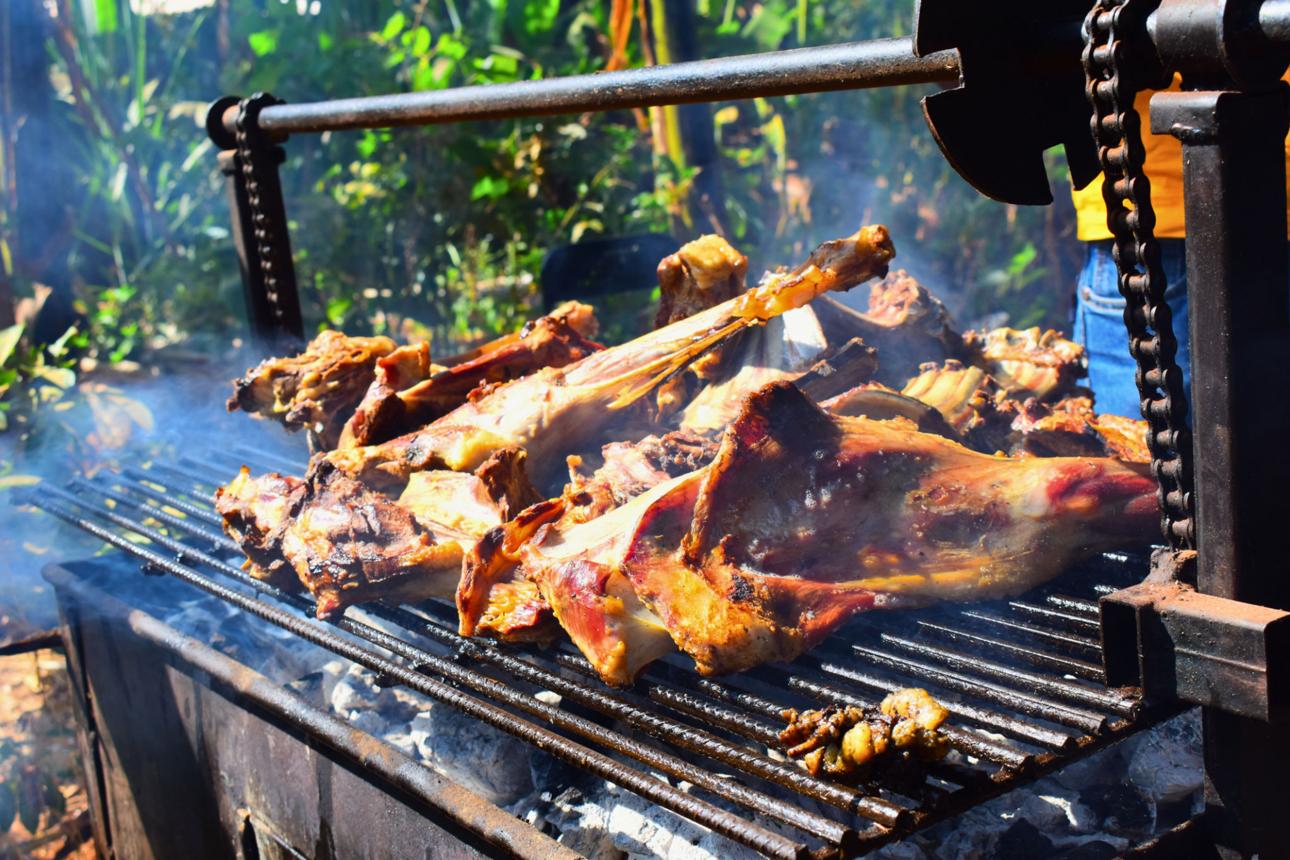
Goat meat is the undisputed favorite for authentic nyama choma, valued for its lean texture and rich flavor, though beef and mutton are also widely enjoyed. The preparation of nyama choma is elegantly simple, relying on quality meat, controlled heat, and patience. Unlike many western barbecue styles that rely on heavy sugary sauces or complex liquid marinades, traditional nyama choma highlights the natural taste of the meat and wood smoke.
The heart of nyama choma lies in the management of the fire. Charcoal or hardwood logs are burned down to radiant embers, providing steady, intense heat without high flames that could char the exterior before the interior is cooked. Skilled grill masters thread large cuts of meat onto metal skewers or lay them directly over metal grates. The meat is turned slowly over the embers, often basted with nothing more than warm saltwater to keep it moist and form a savory, lightly salted crust. The slow roasting process renders the fat, crisps the outer edges, and infuses the meat with a clean, wood-smoke aroma.
In Kenya and Tanzania, nyama choma is much more than a dish; it is a lively social event. Friends, family, and colleagues gather at open-air choma joints, rustic garden eateries, or roadside establishments on weekends and evenings. Customers select their preferred cuts directly from the butcher’s display, ordering by weight—typically in kilograms. While the meat slowly roasts over the charcoal fire, guests sit together, enjoying cold beverages, listening to music, and engaging in long conversations. The wait for the meat to cook is an integral part of the social ritual.
Once roasted, the grill master carves the piping hot meat on a thick wooden board into bite-sized pieces. It is served communal-style alongside two quintessential accompaniments: ugali and kachumbari. Ugali—a dense, firm staple made by cooking white cornmeal in boiling water until it forms a cohesive dough—provides a smooth, filling starch base. Kachumbari is a crisp, refreshing salad made from finely diced raw tomatoes, onions, fresh chili peppers, cilantro, and a splash of lime juice or vinegar. The bright acidity and crunch of the kachumbari cut through the rich, smoky flavors of the roasted meat, creating a perfect balance on the palate.
Coastal Connections: The Swahili Coast and Indian Ocean Trade
East African food culture cannot be fully understood without exploring the Swahili coast, a maritime corridor that has connected the African continent to the wider Indian Ocean world for over a millennium. Coastal trading centers like Zanzibar, Mombasa, Lamu, and Kilwa served as vibrant hubs where African, Arab, Persian, Indian, and European cultures met and blended.
This historical maritime trade transformed regional cooking, particularly through the introduction of spices, coconut, and rice. Along the Swahili coast, fresh coconut cream is used to simmer rice (wali wa nazi), fish curries, and leafy vegetables (mchicha). Spices such as cloves, cardamom, cinnamon, cumin, and turmeric—grown abundantly on the spice islands of Zanzibar—became everyday ingredients in coastal kitchens.
Two dishes demonstrate this history of Indian Ocean exchange particularly well: pilau and chapati. Swahili pilau is a fragrant, one-pot rice dish cooked in a rich broth spiced with cumin, cardamom, cinnamon, and black pepper, often combined with tender beef or goat meat. It remains an essential centerpiece for weddings, Eid celebrations, and formal feasts along the coast. Chapati, a soft, layered, pan-fried flatbread introduced by South Asian immigrants, was enthusiastically adopted across Kenya, Uganda, and Tanzania. Today, East African chapati is a beloved everyday staple eaten alongside stews, tea, or grilled meats.

 Markets, Street Food, and Urban Culinary Life
The open-air market is the economic engine and social heart of East African culinary life. Markets like Gikomba and City Market in Nairobi, Kariakoo in Dar es Salaam, and the bustling open markets of Addis Ababa connect rural farmers with urban consumers. Stalls overflow with fresh teff, dried spices, green plantains, ripe avocados, tropical fruits, fresh fish from Lake Victoria, and local meats.
As East Africa experiences rapid urbanization, street food culture has expanded dramatically. City streets offer quick, affordable meals for workers, students, and travelers. In Uganda, the famous “Rolex”—a warm chapati wrapped around a freshly fried omelet with diced tomatoes and onions—has evolved from a humble street snack into a national culinary icon. In coastal cities, street vendors serve viazi karai (spiced battered potatoes), roasted maize rubbed with chili and lime, and fried cassava chips.
In urban centers like Nairobi, Addis Ababa, and Dar es Salaam, traditional foodways thrive alongside modern dining formats. Traditional nyama choma joints now feature digital ordering and high-end lounge atmospheres, while Ethiopian restaurants serve traditional injera feasts on polished platters paired with local craft beers or traditional honey wine (tej).
The diaspora has also carried East African cuisine to international global hubs. Ethiopian and Eritrean restaurants are widely celebrated in cities across North America and Europe, introducing global diners to the rich flavors of doro wat (spiced chicken stew) served over sour injera. Similarly, Kenyan and Tanzanian communities abroad have established specialized eateries where diaspora families gather for authentic nyama choma, ugali, and pilau, maintaining a vital sensory link to their heritage.
The Enduring Power of Culinary Heritage
As East Africa moves forward into an increasingly digital and interconnected era, traditional food remains an anchor of identity, family life, and cultural pride. While modern kitchen conveniences have sped up prep times, the fundamental principles behind dishes like injera and nyama choma remain unchanged. The meticulous science of fermenting teff batter and the patient art of roasting meat over glowing embers continue to be passed down from generation to generation.
Injera and nyama choma tell two distinct yet complementary stories about East Africa. Injera illustrates the ancient agricultural wisdom of highland farmers, the mastery of natural fermentation, and the sacred nature of communal dining around a single platter. Nyama choma reflects the open spaces of the savanna, the pastoral reverence for livestock, and the joy of gathering around a fire with friends. Together with the aromatic rice dishes of the Swahili coast, these foods showcase a region whose culinary heritage is as rich, diverse, and welcoming as its landscapes.
