

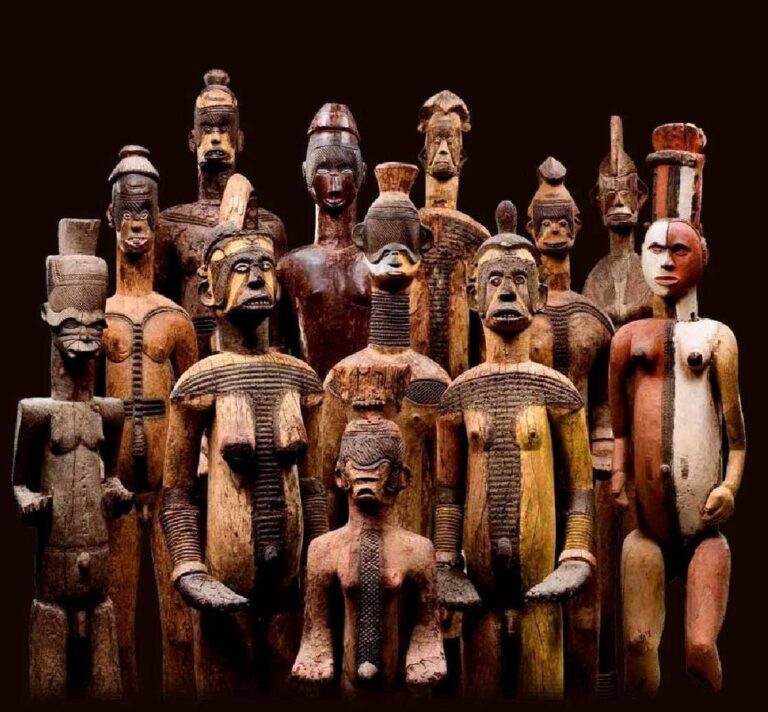
Across many African societies, death has traditionally been
understood as more than the complete disappearance of a person from the
community.
The deceased may no longer participate in ordinary physical life, but
their memory, influence, lineage and spiritual significance can
continue.
This idea lies behind one of the most widely discussed features of
African traditional religious systems: ancestor
veneration.
Ancestor veneration refers broadly to the respect, remembrance and
religious or cultural attention given to deceased family members or
community members who are regarded as continuing to have a relationship
with the living.
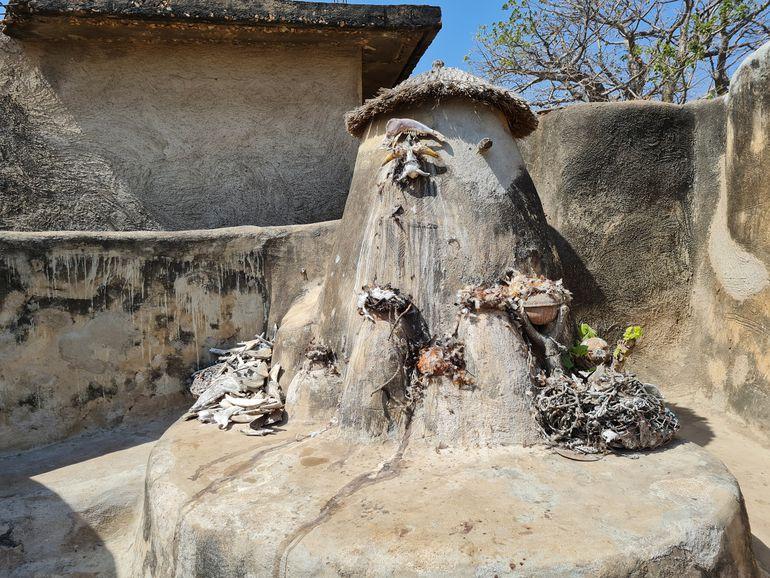
However, the subject requires careful explanation.
There is no single African doctrine concerning ancestors.
Different societies have different understandings of death, the
afterlife, who qualifies as an ancestor, how ancestors relate to the
living and what ceremonies should be performed in their memory.
In some communities, ancestors are understood as members of the
spiritual community who can intercede for or influence the living.
In others, the emphasis may be more strongly placed on remembrance,
lineage and moral example.
Some traditions distinguish between ordinary deceased people and
ancestors who have achieved a particular status.
The phrase “the living dead”, popularized in African
philosophical discussions, captures one aspect of this worldview: the
deceased may continue to exist within the social and spiritual memory of
the community.
The dead may therefore remain part of family identity, history and
moral consciousness.
Understanding this concept provides an important window into African
ideas about family, death, identity and community.
What Does Ancestor
Veneration Mean?
Ancestor veneration is sometimes described using the phrase
ancestor worship.
However, the two expressions should not automatically be treated as
identical.
The word “worship” can imply that ancestors are considered gods.
That is not an accurate description of every African tradition.
In many traditions, ancestors are not considered equal to the Supreme
Being.
They may instead occupy a particular position within a larger
spiritual order.
The relationship can resemble respect for senior members of an
extended family, although with an important spiritual dimension.
People may remember ancestors, mention their names, dedicate
ceremonies to them, make offerings in some traditions or ask for their
blessing or protection.
The exact practice depends on the culture.
Therefore, ancestor veneration is generally a more
useful broad term when discussing the diverse African traditions
surrounding deceased family members.
The Idea of the Living Dead
The expression “living dead” is associated particularly with African
philosophical discussions of personhood and the afterlife.
It does not mean that the deceased are physically alive.
Instead, it describes the continuing social presence of people who
have died recently enough for their descendants to remember them
personally.
A grandparent who died only a few years ago may continue to be
remembered by children and grandchildren.
Their name is known.
Their stories are still told.
Their personality is remembered.
Their advice may still be quoted.
Their role within the family remains part of collective memory.
In this sense, the deceased continue to “live” through relationships,
memory and tradition.
Death Does Not
Necessarily End Relationship
In many traditional African worldviews, death represents a transition
rather than simply an absolute end.
The precise understanding varies considerably.
Some traditions imagine the deceased entering an ancestral realm.
Others describe continued interaction between the spiritual and
physical worlds.
Some emphasize the importance of proper burial and remembrance.
The common theme is that death can transform a person’s relationship
with the community rather than erase it completely.
The deceased person may become part of the history and spiritual
identity of the family.
Who Becomes an Ancestor?
One of the most important questions is whether every deceased person
automatically becomes an ancestor.
The answer is no—not necessarily.
Different traditions have different criteria.
In some societies, age, moral character, family status, manner of
death and having descendants can influence ancestral status.
A person who lived a respected life and contributed positively to the
community may be remembered differently from someone who was regarded as
morally destructive.
Some traditions also place importance on having children or
descendants who continue the family line.
Again, these ideas vary considerably.
There is no universal African rule governing who becomes an
ancestor.
Ancestors and Family Lineage
The connection between ancestors and lineage is fundamental.
A family is not necessarily understood as consisting only of people
who are alive today.
It can be imagined as a chain connecting generations.
Parents connect children to grandparents.
Grandparents connect families to earlier generations.
Names, stories, property, traditions and responsibilities can move
through this chain.
Ancestors therefore become symbols of continuity.
They represent the fact that the present generation inherited a world
from those who came before them.
Ancestry and Identity
Ancestry can contribute strongly to personal identity.
Knowing one’s family history can answer questions such as:
Where did my family come from?
Who were my grandparents?
Which community did my ancestors belong to?
What traditions did they preserve?
What values did they teach?
In societies where oral history remains important, family stories can
preserve these connections for generations.
The ancestor is therefore not only a religious concept.
It can also be an important cultural and historical concept.
The Ancestor as Moral
Example
Ancestors can also function as moral examples.
The lives of respected ancestors may be remembered through
stories.
Children may hear about grandparents who demonstrated courage,
generosity, wisdom or hard work.
These stories can become informal moral education.
The ancestor becomes an example of what the community considers
admirable.
In this sense, remembering the dead can help shape the behavior of
the living.
Moral Conduct and
Ancestral Approval
In some traditional systems, ancestors are believed to be interested
in the behavior of their descendants.
People may therefore understand moral wrongdoing as having
consequences beyond the individual.
Disrespect toward family traditions, dishonesty or serious violations
of community norms can be interpreted within a spiritual framework.
The specific beliefs vary widely.
But the broader principle is significant:
the living may feel accountable not only to other living
people but also to the memory and expectations of those who came before
them.
Ancestors and Community
Harmony
African traditional religions often place strong emphasis on
community harmony.
The individual exists within a network of relationships.
These relationships include family, neighbors, elders and, in some
traditions, ancestors.
A serious conflict within a family may therefore have social and
spiritual dimensions.
Ceremonies and reconciliation can help restore relationships.
The ancestral tradition can reinforce the idea that maintaining
harmony is a responsibility inherited from previous generations.
Funeral Rites
and the Transition to Ancestorhood
Funeral ceremonies can be particularly important because they mark
the transition between physical life and the community’s continuing
relationship with the deceased.
African funeral traditions are extremely diverse.
Some involve several stages.
Others involve elaborate ceremonies lasting multiple days.
Music, dancing, prayer, food, clothing, storytelling and communal
gatherings may all play roles.
The exact practices depend on the culture and the individual’s social
position.
But funerals often accomplish several things simultaneously:
They mourn the deceased.
They support the family.
They bring the community together.
They honor the person’s life.
And in some traditions, they help establish the deceased person’s
proper relationship with the spiritual community.
Burial and Cultural Identity
The way a society buries its dead can reveal much about its
worldview.
Burial practices communicate ideas about family, status, memory,
religion and the relationship between life and death.
Some communities emphasize burial close to family.
Others have specific ancestral locations.
Royal or political figures may have special burial traditions.
The differences demonstrate that African attitudes toward death
cannot be understood through one continental model.
The Importance of Naming the
Dead
Remembering an ancestor’s name can be a powerful act of cultural
continuity.
Names connect generations.
A child may receive the name of a grandparent or another respected
family member.
The name then carries the memory of that person into a new
generation.
This creates a symbolic bridge between the past and present.
In communities where naming has strong cultural importance, the
continuation of names can become one of the ways ancestral memory
survives.
Ancestral Stories
Stories are another major way ancestors remain present.
Families may tell stories about grandparents, community founders,
respected leaders or people who faced extraordinary circumstances.
Over time, these stories can become part of oral history.
Some may contain historical information.
Others may become embellished as they are retold.
This does not necessarily make them worthless.
Oral stories can reveal how communities remember their past and which
qualities they consider important.
Ancestors and Oral Tradition
Because many African societies historically relied heavily on oral
transmission of knowledge, ancestors became part of a much larger system
of memory.
Elders transmitted information to younger generations.
Stories preserved family histories.
Proverbs expressed moral principles.
Songs remembered important events.
Genealogies connected people to previous generations.
Ancestor traditions therefore fit naturally into oral cultures where
remembering the past was an important social responsibility.
Ancestors and the Supreme
Being
The relationship between ancestors and the Supreme Being differs
among African religious traditions.
In many systems, the Supreme Being remains the highest divine
authority.
Ancestors are not equivalent to the creator.
Instead, ancestors occupy another position within the spiritual
order.
Some traditions may understand ancestors as intermediaries.
Others place greater emphasis on direct relationships with the
Supreme Being.
This distinction is important because descriptions of African
religion sometimes incorrectly collapse God, deities, spirits and
ancestors into one category.
They are not necessarily understood in the same way.
Ancestors and Other
Spiritual Beings
Traditional African religious systems can contain multiple categories
of spiritual beings.
Depending on the society, these may include:
the Supreme Being;
deities;
nature spirits;
ancestors;
territorial spirits; and
other supernatural entities.
The boundaries between these categories can vary.
One culture’s terminology may not correspond perfectly with
another’s.
This is why studying each tradition in its own cultural context is
essential.
Offerings and Remembrance
In some African traditions, offerings form part of ancestral
ceremonies.
These may involve food, drink or other culturally meaningful
items.
The purpose and interpretation vary.
An offering may express respect, remembrance, gratitude or a request
for blessing.
It should not automatically be interpreted as an attempt to “feed the
dead” in a literal sense.
Religious symbols often carry meanings that are deeper than their
physical appearance.
Food and Ancestor Ceremonies
Food frequently plays an important role in African cultural
ceremonies.
A communal meal can honor the deceased while also bringing the living
together.
In some traditions, particular foods are associated with ancestral
remembrance.
In others, the emphasis is simply on communal sharing.
The meal therefore serves two functions.
It remembers the dead.
It strengthens relationships among the living.
This illustrates an important principle of African communal
spirituality: ceremonies surrounding the dead can also be ceremonies for
strengthening the living community.
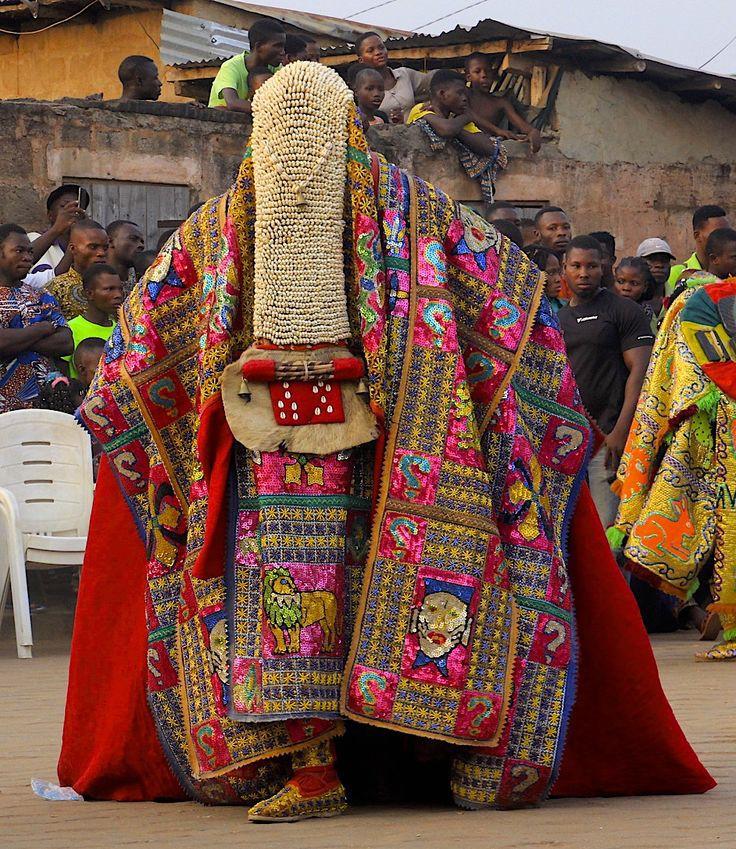
Music, Dance and Ancestral
Memory
Music and dance can also play important roles in ceremonies
associated with death and remembrance.
Drums, songs and dances can communicate grief, honor, celebration and
collective identity.
The meaning varies widely.
Some funeral traditions are solemn.
Others incorporate celebratory elements that emphasize the life of
the deceased.
This diversity challenges the assumption that African funerals can be
understood simply as expressions of sadness.
In some cultures, the funeral is simultaneously a mourning ceremony,
a celebration of life and a communal reaffirmation of identity.
Ancestors and Royalty
In some African societies, ancestors have also been connected to
kingship and political authority.
Royal lineages may trace themselves through generations of
rulers.
Past kings can become important figures in historical memory.
Royal ceremonies may invoke the history of previous rulers.
This can reinforce the legitimacy of a dynasty or political
institution.
However, the relationship between ancestors and political authority
varied widely.
Not every African society had centralized kingship.
Some communities were organized through councils, elders, age grades
or other institutions.
Ancestors and Land
Ancestral traditions can also be connected to land.
Land is not simply an economic resource.
It can represent family history and continuity.
A particular village, farm, forest or burial ground may be associated
with generations of ancestors.
This can give land emotional, cultural and spiritual
significance.
It also helps explain why disputes over land can sometimes become
deeply sensitive.
People may feel that they are defending not merely property but their
connection to family history.
Ancestors and Community
Boundaries
Ancestral traditions can also contribute to the identity of a
community.
A group may identify itself through shared ancestry, historical
migration and common traditions.
Stories about founders can explain how a community came into
existence.
Genealogies can establish relationships between families.
Traditional institutions may preserve these histories.
In this way, ancestors can function as symbols of collective
identity.
Ancestor
Veneration Is Not the Same Everywhere
It is essential to avoid presenting ancestor veneration as a
universal African practice.
Some African societies place strong emphasis on ancestors.
Others give greater prominence to other spiritual concepts.
Some contemporary Africans may have little or no religious connection
to ancestral traditions.
Many Africans identify as Christian or Muslim.
Others practice indigenous religions.
Some combine cultural traditions with contemporary religious
identities.
The diversity of modern Africa is therefore just as important as the
diversity of its historical traditions.
Christianity and Ancestor
Traditions
The arrival and spread of Christianity created complicated
relationships with ancestral traditions.
Some Christian missionaries rejected ancestor veneration because they
viewed it as incompatible with Christian theology.
In some communities, traditional practices declined.
In others, cultural respect for ancestors continued even after
conversion to Christianity.
Some families maintain ancestral customs primarily as cultural
traditions rather than religious practices.
This distinction is important.
A person may honor grandparents, preserve family histories or
participate in traditional funerals without necessarily considering
themselves a practitioner of traditional African religion.
Islam and Ancestral
Traditions
Islam has also interacted with African traditions concerning
ancestors.
Islamic theology has its own teachings concerning death, burial and
the afterlife.
Muslim communities across Africa have developed their own funeral
customs within Islamic frameworks.
At the same time, local cultural traditions can influence the social
way funerals and remembrance are practiced.
As with Christianity, it is important not to assume that every
African Muslim community relates to ancestral traditions in the same
way.
Colonialism
and the Suppression of Ancestral Practices
Colonial administrations and missionary organizations sometimes
attempted to suppress traditional religious practices.
Ancestor-related ceremonies could be described negatively.
Sacred objects could be destroyed.
Traditional religious specialists could lose social authority.
Colonial education systems sometimes taught younger generations to
view indigenous traditions as inferior.
These processes contributed to changes in African religious life.
However, ancestral traditions often proved remarkably resilient.
Ancestors in the Modern
African Family
The modern African family may look very different from the
traditional family structure.
Urbanization has separated relatives across cities and countries.
Migration has created international families.
Technology has transformed communication.
Yet ancestral memory remains important for many families.
People continue to preserve photographs, names, stories, family trees
and memories of relatives who have died.
Modern technology can even strengthen this process.
Family members can share photographs and recordings across
continents.
The way ancestors are remembered may change, but remembrance itself
can remain powerful.
Digital Memory and the
Ancestors
Social media has created a new space for remembering the dead.
Families may create memorial posts.
Photographs can be shared across generations.
Important dates can be remembered digitally.
Video recordings can preserve voices and stories.
This represents an interesting modern development.
The traditional responsibility of remembering previous generations
now has digital tools.
The technology is new.
The underlying human desire to preserve memory is ancient.
Ancestors in African
Literature
African writers have frequently explored relationships between the
living and the dead.
Literary works may portray ancestors as symbols of history, identity,
memory or spiritual presence.
Sometimes ancestral figures represent cultural continuity.
Sometimes they represent unresolved historical trauma.
Sometimes they symbolize the weight of tradition on younger
generations.
Literature therefore provides another way to examine changing African
attitudes toward ancestry.
Ancestors in Film and
Popular Culture
Modern African cinema and television also revisit ancestral
themes.
Stories may involve family histories, traditional communities,
spiritual worlds or conflicts between generations.
Some productions draw directly from traditional beliefs.
Others reinterpret them through fantasy or contemporary
storytelling.
Popular culture should not be confused with historical religious
practice.
However, it demonstrates that ancestral ideas continue to provide
powerful material for African storytelling.
The Ancestor as Memory
Even when people no longer believe that ancestors can influence
events spiritually, ancestors can remain powerful through memory.
A grandfather’s advice may influence a person’s decisions.
A family story may shape identity.
A photograph may preserve a connection to someone who died decades
earlier.
A family name may continue through generations.
In this sense, ancestry remains meaningful even outside formal
religious belief.
The deceased can continue shaping the living through the memories
they leave behind.
The Ancestor as
Responsibility
Ancestral memory can also create a sense of responsibility.
People may feel that they have inherited values, property, traditions
or obligations.
They may believe they should preserve the reputation of their
family.
They may feel responsible for passing traditions to their
children.
This creates a bridge between generations.
The living become temporary custodians of a heritage that existed
before them and may continue after them.
What the
Ancestor Tradition Teaches About Community
Perhaps the most important lesson of ancestral traditions is their
emphasis on continuity.
A person does not exist in isolation.
They belong to a family.
The family belongs to a community.
The community has a history.
That history contains generations of people whose lives contributed
to the present.
Whether understood religiously, culturally or philosophically, this
idea challenges highly individualistic approaches to identity.
It reminds people that the present is built upon the contributions of
those who came before.
The Living and the
Dead as One Continuum
The concept of the “living dead” can therefore be understood as part
of a broader African philosophy of continuity.
The physical death of a person does not necessarily erase their
social existence.
Their name may survive.
Their children may survive.
Their stories may survive.
Their values may survive.
Their contributions may survive.
Their influence may survive.
And in traditions that recognize ancestral spiritual existence, their
relationship with the community may continue on another level.
This creates a worldview in which generations are deeply
connected.
Respecting the
Diversity of African Traditions
When discussing ancestor veneration, it is important to avoid
romanticizing or exaggerating.
Not every African believes ancestors literally communicate with the
living.
Not every traditional African religion has the same ancestral
practices.
Not every funeral is an ancestral ritual.
Not every African cultural practice is religious.
African societies are dynamic.
Beliefs change.
Generations reinterpret traditions.
Religions interact.
Urbanization transforms communities.
Education introduces new perspectives.
Traditional and modern identities can coexist in complex ways.
A responsible study of African spirituality must therefore recognize
both tradition and change.
Why Ancestor Veneration
Still Matters
Ancestor traditions remain important because they provide a powerful
way of thinking about memory, family and identity.
They ask an enduring question:
What responsibility do the living have toward those who came
before them?
Different societies answer that question differently.
Some answer through religious rituals.
Others through family ceremonies.
Others through storytelling.
Others through preserving names and historical records.
And many combine several approaches.
The methods may differ, but the underlying concern with continuity is
remarkably human.
Conclusion:
Remembering Those Who Came Before
Ancestor veneration occupies an important place in the religious and
cultural history of many African societies.
It reflects a worldview in which death may transform a person’s
relationship with the community without necessarily erasing their
importance.
Ancestors can represent family continuity.
They can preserve historical memory.
They can serve as moral examples.
They can be honored through ceremonies, names, stories, music and
communal gatherings.
In some traditions, they occupy an active spiritual role.
In others, ancestral remembrance is more strongly connected to
culture and family identity.
The diversity of these practices is essential to understanding them
correctly.
There is no single African doctrine of ancestors.
Instead, there are numerous traditions shaped by different
communities and histories.
What unites many of them is the powerful idea that the
present generation does not exist alone.
Every family has a past.
Every community has a history.
Every generation inherits something from those who came before.
And through memory, tradition and—within some religious
traditions—spiritual relationship, the dead can continue to influence
the lives of the living.
This is why the study of African ancestors is ultimately about more
than death.
It is about life, identity, responsibility, memory and the
continuing relationship between generations.
