

Here is the reformatted version of your content. It has been structured into flowing, well-organized paragraphs with clear headings, perfect for a blog post, while maintaining every bit of your original content and removing unnecessary line breaks and spacing.
The Story of African Independence and Decolonization
For much of the nineteenth and twentieth centuries, European powers controlled large parts of Africa. But colonial rule was never permanent. By the middle of the twentieth century, a powerful transformation was underway. Across Africa, political movements were demanding self-government, sovereignty, and independence. The struggle that had begun through military resistance in the nineteenth century increasingly developed into political organization, trade-union activism, mass protests, diplomacy, and nationalist movements. Then, one after another, colonial territories began becoming independent states. The process accelerated dramatically after the Second World War.
In 1957, Ghana became the first sub-Saharan African colony to achieve independence from European colonial rule, creating a powerful example for other nationalist movements. By the 1960s, the pace became extraordinary. Nigeria became independent in 1960. The Democratic Republic of the Congo followed in the same year. Tanzania, Uganda, Kenya, Algeria, and numerous other countries gained independence during the following years. By the 1970s, most of the African continent had achieved formal independence.
But independence did not mean that every problem created by colonialism disappeared. New governments inherited colonial borders. Economies remained heavily dependent on commodity exports. Political institutions had been designed for colonial administration rather than democratic self-government. Some countries experienced military coups, civil wars, and political instability. Southern Africa remained under white minority rule for decades longer. The story of African independence is therefore not simply a story of flags being raised. It is the story of a continent attempting to transform colonial territories into sovereign nations.
What Was Decolonization?
Decolonization refers to the process through which colonial territories gained political independence from imperial powers. In Africa, this process occurred at different speeds. Some countries achieved independence through negotiations, while others experienced armed struggles. Some transitions were relatively peaceful; others produced devastating wars. The United Nations became an important international arena for debates about colonialism and self-determination. The postwar international environment increasingly challenged the legitimacy of colonial rule. The U.S. Office of the Historian describes the post-1945 period as a major era of decolonization, with numerous African and Asian territories moving toward independence.
Why Did Independence Movements Grow After World War II?
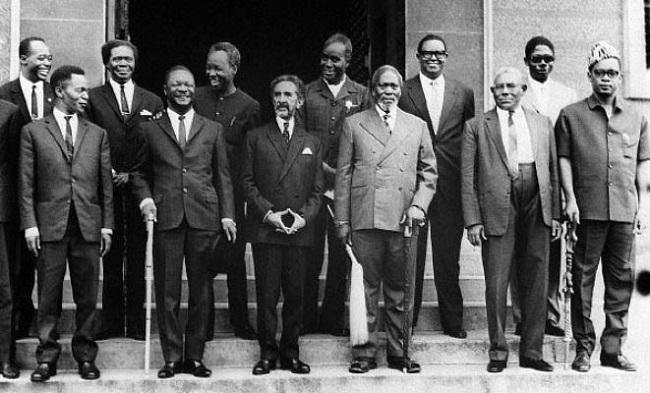
Several forces came together after 1945. European powers had been weakened by two world wars, and Britain and France faced enormous economic pressures. Colonial subjects had contributed soldiers and labor to the war effort, and African political organizations had become stronger. Education had expanded, trade unions had developed, newspapers spread nationalist ideas, Pan-Africanism encouraged solidarity, and the international language of self-determination became increasingly influential. The colonial system was therefore facing pressure from both inside and outside Africa.
African Soldiers and the World Wars
African soldiers played important roles in both World Wars. During the Second World War, hundreds of thousands of Africans served in Allied forces or contributed to wartime economies. These experiences changed political expectations. African soldiers could fight for European governments while remaining colonial subjects at home—a contradiction that became increasingly difficult to defend. After returning from war, some veterans demanded greater political rights. They had experienced societies beyond the colonial system and had witnessed the vulnerability of European powers. The image of European superiority had been weakened.
Education and the New African Elite
Colonial education produced a growing group of African teachers, lawyers, journalists, civil servants, and intellectuals. Some had studied abroad, while others were educated in mission schools and colonial institutions. They began asking increasingly direct questions about political equality: Why should Africans pay taxes without having meaningful political representation? Why should European settlers have privileges denied to Africans? Why should African territories be governed from European capitals? These questions became central to nationalist politics.
Newspapers and Political Consciousness
The press became a powerful instrument of nationalism. African newspapers reported colonial abuses, discussed political reforms, promoted African cultural identity, criticized racial discrimination, and connected local grievances to broader political movements. A newspaper could turn a local issue into a national political debate, helping create a sense of shared political identity.
Trade Unions and Mass Politics
Workers also played a major role. Railway workers, miners, dockworkers, teachers, and civil servants organized trade unions, demanding better wages and working conditions. However, labor activism frequently developed into broader political activism. A strike could become a protest against colonial rule, and economic demands could become demands for political equality. Nationalist leaders increasingly understood that independence required mass participation rather than only elite negotiations.
Ghana and the Beginning of a New Era
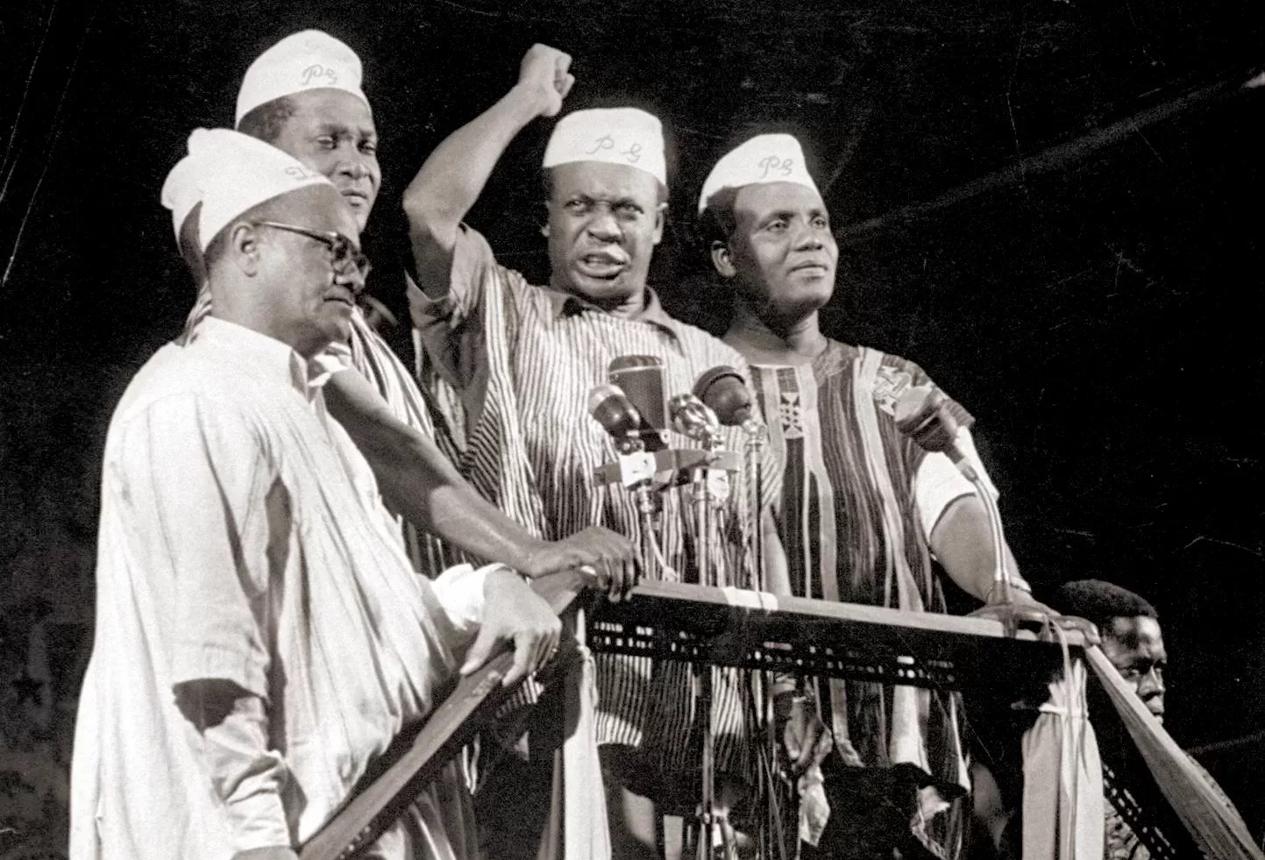
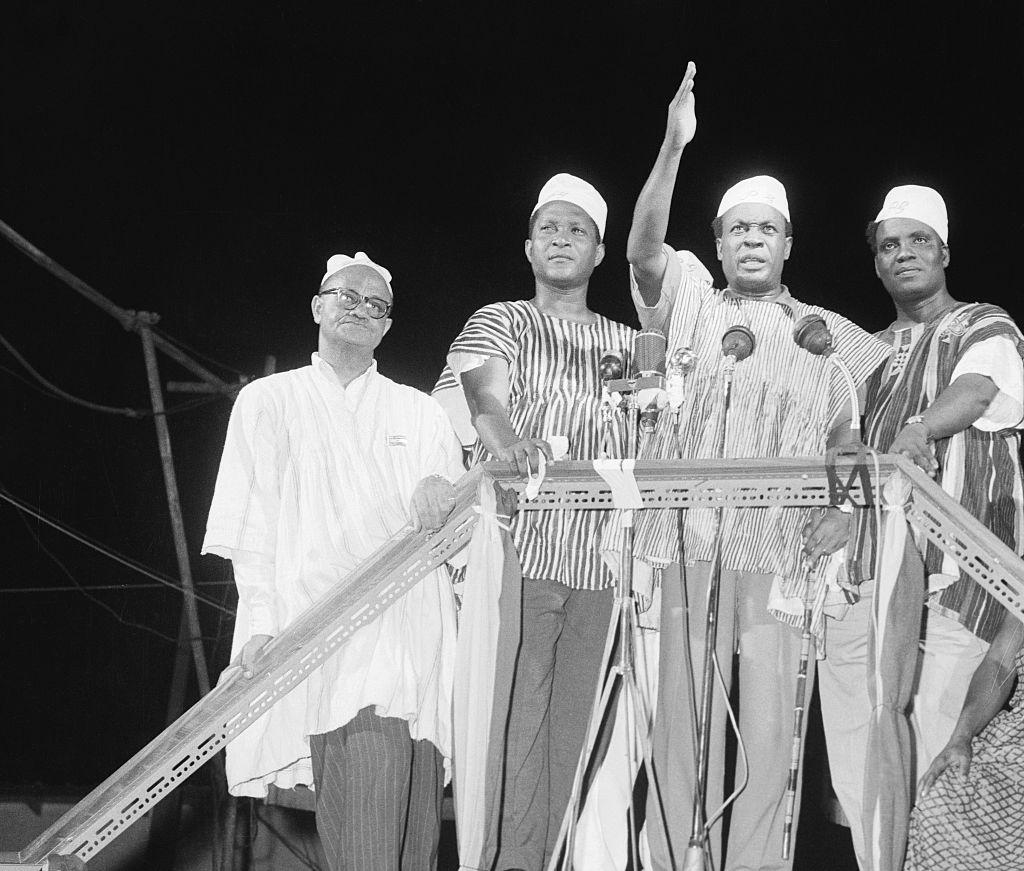
The Gold Coast became the first sub-Saharan African colony to gain independence from European colonial rule in 1957. The country adopted the name Ghana, drawing inspiration from the ancient Ghana Empire. The independence movement was led by Kwame Nkrumah. Ghana’s independence was celebrated across Africa because it demonstrated that colonial rule could be dismantled. Nkrumah famously promoted the idea that Ghana’s independence was connected to the liberation of the entire continent. The achievement therefore had significance far beyond Ghana.
Kwame Nkrumah
Nkrumah became one of the most influential African political leaders of the twentieth century. He promoted African unity and Pan-Africanism, believing that political independence needed to be followed by economic independence. For Nkrumah, simply replacing European officials with African officials was not enough; African countries also needed to control their economies and resources. His ideas influenced nationalist leaders throughout the continent.
 Ghana as a Symbol
Ghana’s independence created enormous excitement. African students and political activists saw the event as proof that freedom was achievable, and nationalist movements elsewhere became more confident. The country became a center of Pan-African political activity where African leaders attended conferences, intellectuals debated the future of the continent, and Ghana became a symbol of what independence could mean. However, it also demonstrated the difficulties of post-colonial nation-building.
The “Year of Africa” — 1960
If 1957 marked the beginning of the major independence wave, 1960 became its defining year. Seventeen African countries became independent in 1960. This extraordinary concentration of independence movements led to the year being remembered as the “Year of Africa.” Among the countries that became independent that year were Nigeria, Congo, Senegal, Mali, Côte d’Ivoire, Niger, Burkina Faso (then Upper Volta), Chad, Central African Republic, Gabon, Cameroon, Somalia, Madagascar, Mauritania, Togo, Benin (then Dahomey), and the Democratic Republic of the Congo. The political map of Africa was changing at extraordinary speed.
Nigeria’s Independence
Nigeria became independent from Britain on October 1, 1960. The transition followed constitutional negotiations rather than a prolonged war of independence. Nigeria inherited a large territory containing numerous ethnic groups, languages, religions, and regional political interests. The challenge was enormous: a colonial territory had to become a functioning sovereign state. The country adopted a federal political structure designed partly to accommodate regional differences. Nigeria’s early independence experience would demonstrate both the possibilities and difficulties of post-colonial nation-building.
The Congo Crisis
The Democratic Republic of the Congo became independent from Belgium in 1960, but the transition was much more turbulent. Belgian colonial rule had provided very limited opportunities for Africans to occupy senior administrative positions. When independence arrived, the new state faced serious institutional weaknesses. Within days, the army mutinied, the mineral-rich province of Katanga declared secession, and foreign powers became involved. Prime Minister Patrice Lumumba was eventually removed and assassinated. The Congo Crisis became one of the most important political crises of the Cold War in Africa.
Patrice Lumumba
Lumumba became an international symbol of African nationalism. He believed independence needed to mean genuine political and economic sovereignty. His famous independence speech challenged the celebratory language of Belgian colonial rule and emphasized the suffering experienced under colonialism. Lumumba’s assassination shocked African nationalists and became associated with the darker side of Cold War intervention in newly independent African states. He remains one of the most remembered figures of African decolonization.
Other Regional Paths to Independence
Senegal and Léopold Sédar Senghor
Senegal achieved independence in 1960. Its first president, Léopold Sédar Senghor, was both a political leader and a major intellectual. He was one of the principal figures associated with the Négritude movement, which celebrated African culture and identity in response to colonial racism and cultural domination. Senghor’s career demonstrated that African nationalism could be expressed through literature, philosophy, and cultural politics as well as political activism.
 Tanzania and Julius Nyerere
Tanganyika achieved independence from Britain in 1961, led by nationalist figure Julius Nyerere. After Tanganyika united with Zanzibar in 1964, the new country became Tanzania. Nyerere promoted Ujamaa, a political and economic philosophy emphasizing African socialism and collective development. He also became an important supporter of liberation movements elsewhere in southern Africa, turning Tanzania into a major base for anti-colonial and anti-apartheid movements.
Kenya’s Independence
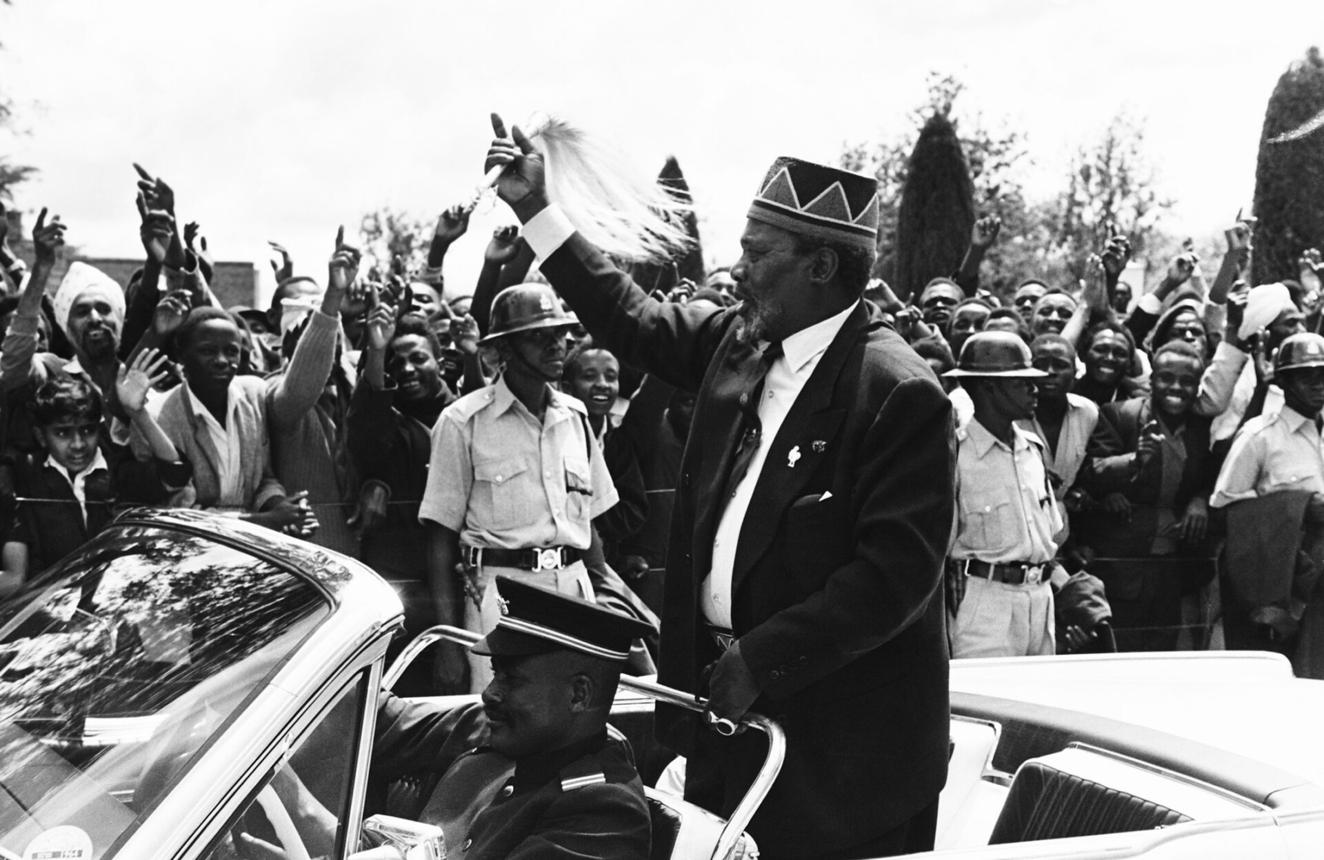
Kenya gained independence in 1963. Its struggle had been complicated by severe conflict during the Mau Mau emergency. Land was a particularly important issue, as large areas had been taken from African communities and allocated to European settlers. Jomo Kenyatta became the country’s first prime minister and later president. Kenya’s independence demonstrated that decolonization could follow years of violent resistance and political negotiation.
Algeria’s War for Independence
Algeria’s struggle was among the bloodiest wars of African decolonization. Unlike many European colonies, Algeria was considered by France to be an integral part of the French state rather than simply an overseas colony, and large numbers of European settlers lived there. The National Liberation Front (FLN) launched an armed struggle in 1954, and French forces responded with a major military campaign involving guerrilla warfare, urban attacks, torture, mass detention, and counterinsurgency operations. After years of fighting and political pressure, Algeria achieved independence in 1962.
Ahmed Ben Bella
Ahmed Ben Bella became Algeria’s first president after independence, representing the revolutionary character of the Algerian independence movement. The country’s struggle inspired liberation movements elsewhere, and Algeria later became a major supporter of anti-colonial movements across Africa.
The Portuguese Colonies
Some African territories remained under European colonial rule long after Ghana’s independence because Portugal resisted decolonization. Armed liberation movements developed in Angola, Mozambique, Guinea-Bissau, and Cape Verde, leading Portugal to fight prolonged wars against them. The Portuguese dictatorship was eventually overthrown during the Carnation Revolution of 1974, opening the way for rapid decolonization.
-
Angola: Angola became independent in 1975, but independence immediately became entangled in a devastating civil war as competing movements (the MPLA, FNLA, and UNITA) fought for power. The Cold War transformed Angola into an international battleground, with the Soviet Union and Cuba supporting the MPLA, while the United States and South Africa supported opposing forces. Angola demonstrated that formal independence did not automatically end foreign interference.
-
Mozambique: Mozambique gained independence from Portugal in 1975, with the liberation movement FRELIMO becoming the governing party. Like Angola, Mozambique later experienced a prolonged civil war. The country had inherited a weak economy and limited educational infrastructure; thus, independence represented both liberation and the beginning of a difficult reconstruction process.
The Extended Struggle in Southern Africa
Zimbabwe and the Struggle Against Minority Rule
Zimbabwe followed a different path. The territory had been under British settler control, and a white minority government declared unilateral independence from Britain in 1965 rather than accept majority rule. African nationalist movements fought for political power, and the conflict eventually ended through negotiations. Zimbabwe achieved internationally recognized independence in 1980, demonstrating that decolonization in southern Africa was continuing long after much of the rest of the continent had become independent.
The Special Case of South Africa
South Africa did not fit neatly into the classic colonial independence timeline because the country had already achieved formal self-government under white minority rule. However, the Black majority remained politically excluded, and apartheid institutionalized racial segregation and discrimination. The African National Congress (ANC) and other movements fought against the system for decades. South Africa’s transition to democracy would not occur until 1994, meaning that the wave of African independence from the 1950s through the 1970s did not mark the absolute end of the continent’s liberation struggles.
Namibia
Namibia remained under South African control after the First World War. The liberation movement SWAPO led a long struggle for independence, which became intertwined with regional wars and Cold War politics. Namibia eventually achieved independence in 1990, demonstrating why the process of African decolonization continued well beyond the 1960s.
International Dimensions and Pan-African Unity
The Role of the United Nations
The United Nations became increasingly important to decolonization. Newly independent African states used the organization to demand international recognition and support for anti-colonial movements. The UN provided a platform where colonialism could be challenged diplomatically, allowing African states to join together to influence international politics and transform the character of the organization.
The Organization of African Unity (OAU)
In 1963, African leaders established the Organization of African Unity (OAU) to promote continental cooperation, unity, sovereignty, territorial integrity, and the eradication of remaining colonial rule. It also supported liberation movements in territories that remained under colonial or minority rule. The organization later evolved into the modern-day African Union.
Solidarity Among African Leaders
Independence leaders understood that colonialism was not disappearing everywhere at the same time—Ghana might be independent while Angola remained Portuguese-controlled, or Nigeria might be sovereign while apartheid continued in South Africa. This created a sense of shared responsibility. Independent African governments increasingly supported liberation movements elsewhere by providing diplomatic backing, training, military, and logistical assistance.
Pan-Africanism After Independence
Political independence gave Pan-Africanism a new objective: How could independent African states cooperate without surrendering their sovereignty? While leaders like Kwame Nkrumah strongly supported immediate continental political union, others preferred cooperation between independent states out of fear that rapid political integration could threaten national sovereignty—a debate that continues to influence African politics today.
Challenges of the Post-Colonial Era
Colonial Borders and Nation-Building
One of the most difficult decisions facing new governments was whether to keep colonial borders. These artificial borders often divided ethnic communities or brought historical rivals into the same state. Yet, changing borders could have triggered endless territorial conflicts, leading African leaders to largely accept existing boundaries.
Beyond borders, independence changed political authority, but governments still had to build nations. They needed to create schools, hospitals, roads, courts, civil services, armies, economic institutions, and political systems from colonial setups that had invested unevenly in these areas.
Economic Dependence and Neocolonialism
Political independence did not necessarily mean economic independence. Many African economies remained dependent on exporting raw commodities like cocoa, coffee, cotton, copper, oil, diamonds, gold, and tea. Infrastructure existed primarily to export these products, leaving manufacturing capacity limited. Kwame Nkrumah argued that colonialism could survive indirectly—a country could possess its own flag and president while remaining economically dependent on foreign powers—a phenomenon he termed neocolonialism.
Cold War Dynamics and Non-Alignment
African independence coincided with the Cold War. Superpowers competed for global influence, making new African states strategically important. In response, African countries became central participants in the Non-Aligned Movement, which sought to avoid becoming subordinate to either major Cold War bloc while protecting national sovereignty.
Political Instability and Ethnic Tensions
The early decades of independence were politically difficult. Some civilian governments were overthrown by military coups justified by corruption, economic problems, or political instability. Additionally, colonial boundaries and uneven regional development meant nationalist leaders had to navigate ethnic and regional political competition to build a shared national identity.
Social and Cultural Decolonization
Education, Africanization, and Reclaiming History
African governments prioritized expanding education—building schools, establishing universities, and funding scholarships to produce local professionals. Many governments pursued the Africanization of public institutions, replacing European officials with local professionals to foster psychological independence.
Simultaneously, a major intellectual movement emerged where African historians challenged colonial narratives. By documenting ancient kingdoms, trade networks, and cultural achievements, the study of African history became a vital tool of national pride and decolonization.
Symbols of Independence
For newly independent countries, national symbols mattered enormously. Flags were designed, national anthems were written, and coats of arms were created. Colonial flags disappeared to make way for vibrant African national colors, visually declaring that these nations now belonged politically to their own people.
Conclusion: Freedom and the Burden of Inheritance
The wave of African independence was the culmination of decades of resistance, political organization, and nationalist activism. Ghana’s independence in 1957 demonstrated that colonial rule could be defeated. The explosion of independence movements in 1960 transformed the political map of Africa. Algeria’s revolution showed that some systems would collapse only after prolonged armed struggle, while liberation struggles in Angola, Mozambique, Zimbabwe, Namibia, and South Africa proved that the end of classical European colonialism was a long, complex process.
Across the continent, African leaders inherited countries designed under colonial rule—borders they had not drawn, economies structured around exports they did not fully control, and institutions built for foreign administration. Yet, they also inherited something far more important: political sovereignty.
The independence generation transformed Africa from a continent largely controlled by European empires into a continent of sovereign states. Their achievement was historic, but their work was only beginning. The next chapter would center on what happened after the flags were raised: how newly independent African nations could build stable states, develop their economies, and overcome the structural legacies of their colonial past.
