

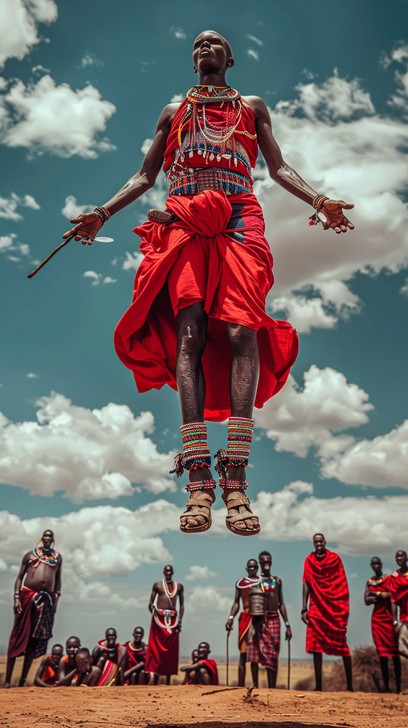
The Red That Announces a People
Few African peoples possess a visual identity as immediately recognizable worldwide as the Maasai. The image of a tall figure draped in vivid red cloth, adorned with elaborate beaded jewelry, standing against the vast grasslands of the East African Rift Valley has become, for better or worse, one of the most globally circulated images of African identity. Yet behind this widely recognized silhouette lies a dress system of remarkable depth, precision, and social function — one intimately tied to the Maasai people’s pastoral way of life, their age-grade social structure, their relationship to cattle and land, and their determined preservation of cultural identity amid significant historical and contemporary pressures.
The Maasai, whose communities span the border regions of southern Kenya and northern Tanzania, are traditionally semi-nomadic pastoralists whose entire cultural, economic, and spiritual life has historically centered on cattle herding across the savanna. This pastoral foundation shapes nearly every aspect of Maasai material culture, including dress, in ways that distinguish it markedly from the textile-weaving and dye-based traditions explored elsewhere in this series. This article examines Maasai clothing’s materials, colors, age-and-gender-based dress distinctions, elaborate beadwork traditions, and the ways this visual system continues to adapt while resisting erasure in the contemporary era.
Materials and Foundations: Shuka and Beyond
The most iconic garment within Maasai dress is the shuka — a rectangular piece of cloth, traditionally wrapped and draped around the body in various configurations depending on the wearer’s age, gender, and the specific occasion. While contemporary shuka are most commonly a commercially produced cotton or cotton-blend fabric, often featuring the recognizable red or red-and-blue plaid pattern associated with Maasai dress internationally, the shuka’s historical predecessors included animal hide, particularly calf hide, treated and softened through traditional tanning processes before the widespread availability of woven cloth through regional trade networks.
The shift from hide to woven cloth occurred gradually over the nineteenth and twentieth centuries as trade cloth became increasingly accessible through expanding regional and, eventually, international trade networks, though the underlying draping techniques, color symbolism, and social meaning attached to the garment persisted through this material transition — an important demonstration that a garment’s cultural significance often resides more in its social function, color coding, and manner of wearing than in the specific raw material from which it is constructed.
Shuka are typically wrapped and secured without tailoring or complex construction, reflecting both the practical demands of a mobile pastoral lifestyle — where garments must be easily adjusted, removed, and reconfigured for herding, walking long distances, and adapting to temperature changes across the day — and an aesthetic tradition that values the elegant simplicity of draped cloth over the tailored garment construction seen in some other African dress traditions.
The Centrality of Red
As introduced in this series’ opening discussion of African dress symbolism, red dominates Maasai visual identity, and its meaning operates on multiple interconnected levels within Maasai cultural understanding. Most fundamentally, red connects to cattle — the central pillar of Maasai economic, social, and spiritual life — through its association with blood, a substance holding deep significance within traditional Maasai practice, including the historical (and in some communities, continuing, though increasingly rare) practice of consuming cattle blood, often mixed with milk, as both nutritional sustenance and a marker of significant occasions or as part of specific rituals.
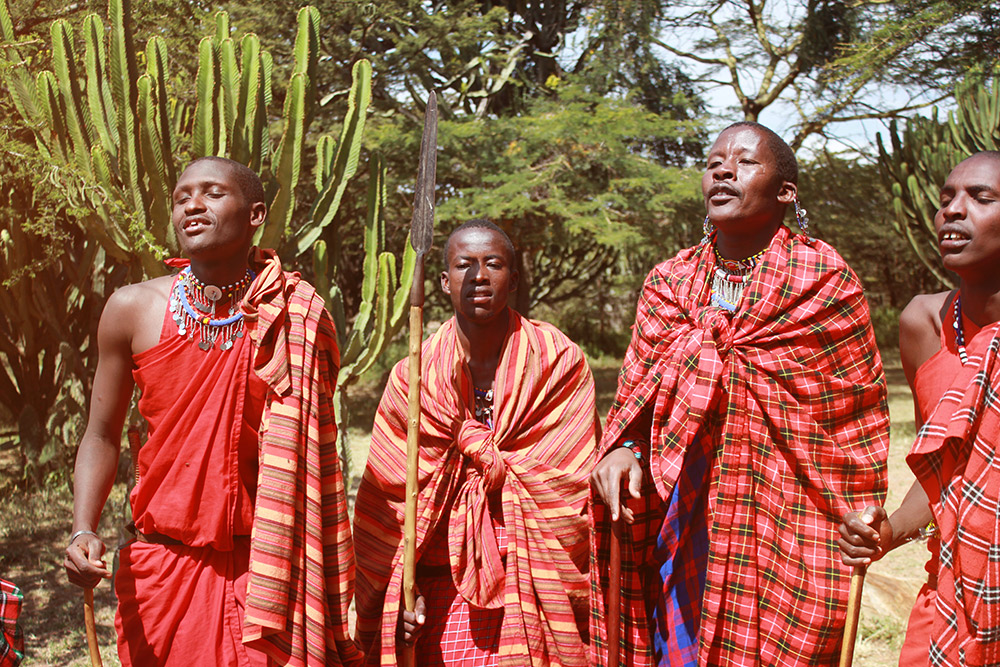 Red also carries strong associations with bravery, strength, and unity, qualities central to the identity of Maasai warriors (moran), for whom red dress historically served practical as well as symbolic purposes: the bold color was believed to help ward off or intimidate predators that might threaten cattle herds, while simultaneously providing immediate visual identification of warrior status to both community members and potential adversaries. The color’s high visibility across the open savanna landscape also carries practical logic, allowing community members to track and identify one another across significant distances in an environment with few visual obstructions.
Beyond these functional and symbolic associations, red has become, particularly through the community’s extensive engagement with tourism and international visibility over recent decades, something of an emblematic marker of Maasai identity itself in the broader public imagination — though it is worth noting that traditional Maasai dress historically incorporated a wider color range, including blue, black, striped, and checked patterns, with red’s current dominance in popular perception partly reflecting both genuine cultural preference and the particular visibility that red-clad Maasai figures have achieved within tourism marketing and international media representation.
Blue, Black, and the Broader Maasai Color System
While red holds particular prominence, Maasai dress traditionally incorporates additional colors, each carrying its own symbolic association within the broader system. Blue, appearing both in shuka patterns and in beadwork, connects symbolically to the sky and, by extension, to the rains upon which pastoral life depends absolutely — a community whose entire economic system rests on adequate rainfall to sustain grazing land naturally imbues the sky and its life-giving rain with deep symbolic reverence, expressed partly through this color choice.
Black carries complex, somewhat dual symbolism within Maasai understanding, at times representing the hardships, struggles, and difficulties of pastoral life — the genuine physical and economic challenges of maintaining cattle herds through droughts, disease, and competition for grazing land — while in other contexts and combinations representing unity and solidarity among the Maasai people as they collectively navigate these shared challenges.
Green and yellow, when present in dress and particularly in beadwork, typically reference the land, vegetation, and the health of grazing pasture upon which cattle — and by extension, the entire community — depend, connecting dress symbolism directly to the ecological foundations of pastoral livelihood. White frequently appears in beadwork associated with purity, peace, and health, sometimes worn or gifted in contexts related to healing or spiritual well-being.
This color system, much like the Akan color symbolism discussed in relation to Kente, is not arbitrary aesthetic preference but a coherent symbolic language directly reflecting the community’s core economic activity, ecological environment, and social values — demonstrating again the broader principle, established in this series’ opening article, that African dress color symbolism must be understood within its specific cultural and environmental context rather than assumed to carry universal meaning across different African communities.
 Age-Set System and Dress Transformation
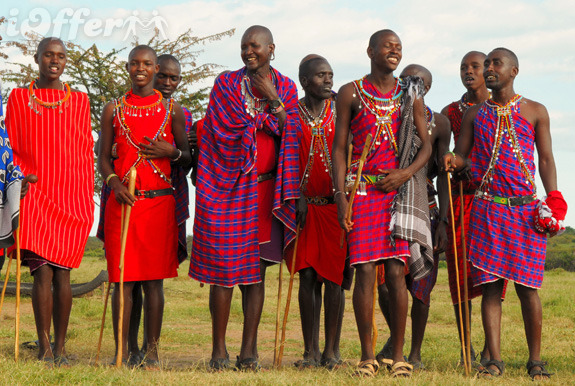
Central to understanding Maasai dress is the community’s elaborate age-set system, which organizes male social life into successive stages, each accompanied by distinct roles, responsibilities, and, crucially, dress and appearance markers that visually communicate an individual’s current social status to the entire community.
Young boys typically wear simpler, more modest dress appropriate to childhood, without the elaborate ornamentation reserved for later life stages. The transition into moranhood — the warrior stage entered through initiation rites, including circumcision ceremonies marking the transition from boyhood — brings dramatic transformation in dress and appearance. Newly initiated moran traditionally observe specific dress and grooming practices during their initial post-circumcision healing and transition period, often including specific garments, body markings, or ornamentation distinct from both childhood dress and the dress of fully established warriors.
Established moran, generally recognized as the most visually elaborate stage of Maasai male dress, wear the vivid red shuka most closely associated with popular perceptions of Maasai identity, combined with elaborate beaded jewelry, distinctive hairstyles (traditionally involving long, ochre-tinted braided hair requiring significant grooming investment and often maintained collaboratively among warrior age-mates), and body ornamentation that collectively signal both individual pride and collective warrior-class identity. This period, traditionally understood as spanning roughly a decade or more depending on specific community timing practices, represents a socially sanctioned period of heightened visual display, physical vigor, and communal warrior identity before the transition into elder status.
The transition to elderhood brings further dress changes, typically toward more subdued, dignified presentation reflecting accumulated wisdom and authority rather than youthful display, though elders retain significant beaded ornamentation appropriate to their status, and senior elders often carry specific staffs, wear particular cloaks, or display other markers of their advanced standing within the community’s leadership and decision-making structures.
Women’s dress, while operating according to somewhat different social logic than the male age-set system, similarly marks significant life transitions — unmarried girls, married women, and mothers of established families each maintain recognizably distinct dress and ornamentation conventions, particularly visible in the specific style, quantity, and arrangement of beaded jewelry, discussed further below.
Beadwork: Maasai Dress’s Most Elaborate Expression
While shuka cloth establishes the foundational silhouette of Maasai dress, it is beadwork that carries the tradition’s most intricate symbolic and artistic expression, a topic this series explores in greater depth in its dedicated discussion of beads and jewelry across African traditions, but which merits substantial attention here given its centrality to Maasai visual identity specifically.
Maasai beadwork, predominantly created and maintained by women within the community, involves elaborate collars, necklaces, bracelets, anklets, earrings, and headpieces constructed from small glass or plastic beads (historically, materials including clay, bone, shell, and locally available seeds and materials preceded the glass beads that became widely available through trade networks from the nineteenth century onward) arranged in intricate patterns communicating age, marital status, social standing, and, in some traditional practices, specific personal or romantic messages between individuals in ways structurally similar to, though independently developed from, the beadwork communication traditions documented among the Zulu, explored in a subsequent article in this series.
Specific beadwork pieces carry recognized social meaning: elaborate, multi-layered flat collar necklaces are strongly associated with married women and signal established family and social status; particular arrangements and color combinations mark different stages of the female life course from girlhood through marriage and motherhood; and warriors’ beaded ornamentation similarly communicates their specific standing within the moran age-set structure. The production of beadwork itself carries social significance, functioning as an important expression of female artistic skill, patience, and social relationship-building, since beadwork is frequently created collaboratively and gifted between women as an expression of social bonds, particularly between mothers, daughters, and close female relatives and friends.
Maasai Dress, Land, and Tourism
The Maasai people’s territory spans some of East Africa’s most internationally recognized wildlife conservation areas and tourism destinations, including regions surrounding the Serengeti and Maasai Mara ecosystems, resulting in a distinctive and, in many respects, complicated relationship between Maasai communities and the global tourism industry over recent decades. Maasai dress has become deeply intertwined with tourism marketing and the broader international visual imagination of “authentic” African identity, generating both economic opportunity and significant cultural tension.
On one hand, tourism has provided important economic opportunities for many Maasai individuals and communities, including through cultural demonstrations, craft sales (particularly beadwork), and employment within tourism and conservation-adjacent industries, and has contributed to broader international awareness of Maasai culture and its sophistication. On the other hand, this relationship has generated substantial and ongoing concern regarding the commodification and, at times, superficial or stereotyped representation of Maasai identity for tourist consumption, alongside more serious and structurally significant concerns regarding land rights, as conservation and tourism development in the region has, in various well-documented historical and contemporary cases, resulted in displacement pressures on traditional Maasai grazing lands and pastoral livelihoods — an issue extending well beyond dress and fashion into fundamental questions of land rights, economic justice, and cultural survival that remain actively contested and advocated upon by Maasai community organizations and allies today.
Contemporary Adaptation and Cultural Persistence
Despite these significant pressures, Maasai dress and the broader cultural system it expresses demonstrate notable resilience and continued vitality. Many Maasai individuals maintain traditional dress as daily wear, particularly within rural pastoral communities, while others adopt traditional dress specifically for ceremonial occasions, cultural celebrations, and significant community events, moving between traditional and contemporary Western-style dress according to context in patterns broadly similar to the code-switching dress practices observed across many African communities navigating contemporary economic and social life alongside sustained traditional cultural commitment.
Maasai beadwork and, increasingly, shuka-inspired textile products have also found expanding markets within both domestic East African and international fashion and craft markets, generating economic opportunity, though this expansion raises familiar questions — echoed throughout this series’ discussion of Kente, Adire, and Ankara — regarding appropriate compensation, cultural respect, and the distinction between genuine cultural exchange and superficial commercial appropriation of Maasai visual identity without corresponding benefit flowing back to Maasai communities and artisans themselves.
Maasai community organizations and cultural advocates have increasingly engaged in efforts to assert greater control over the commercial use of Maasai imagery and cultural products, including notable advocacy around intellectual property and branding rights related to the internationally recognized Maasai name and visual identity, reflecting a broader pattern of African communities across this series’ subjects seeking to ensure that global recognition and commercial success translate into genuine benefit and respect for the originating community, rather than extraction without reciprocity.
Conclusion: A Dress System Rooted in the Land
Maasai clothing offers a distinctive counterpoint within this series to the woven and dyed textile traditions of Kente, Adire, and Ankara: a dress system whose materials, colors, and social meanings emerge directly from a specific pastoral relationship with cattle, land, and an age-structured social organization that remains, despite significant historical and contemporary pressures, actively practiced and defended today. From the practical and symbolic dominance of red, through the elaborate age-set transformations marking a Maasai man’s progression from childhood through moranhood to elderhood, to the intricate beadwork tradition maintained predominantly by Maasai women, this dress system continues to communicate identity, status, and belonging with remarkable precision and continuity.
As this series turns next to Zulu dress and its own sophisticated beadwork communication system, the Maasai example reinforces a central theme established throughout this exploration of African traditional clothing: that dress systems across the continent, however varied in material, technique, and specific symbolism, consistently function as sophisticated, actively maintained languages of identity — languages that communities continue to speak, adapt, and defend against both historical disruption and contemporary commercial pressure.
