

A Beaded Language of the Heart
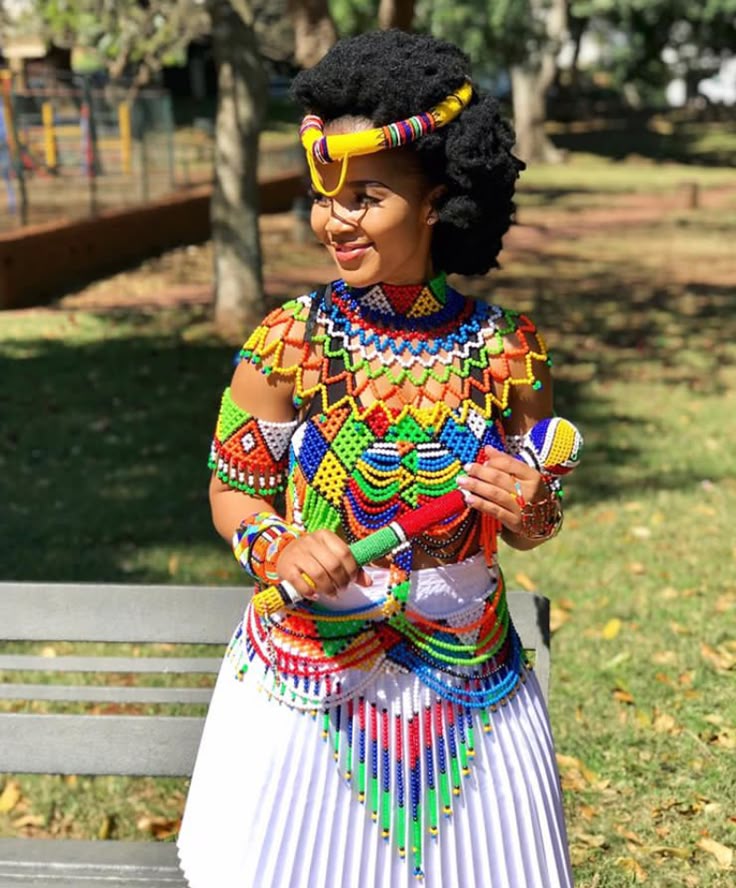
Among the many sophisticated dress traditions explored throughout this series, Zulu traditional attire stands out for a particular reason: its beadwork functions not merely as decoration or general status marker, but as a documented, historically structured system of coded communication — sometimes described as “the language of the beads” — through which individuals, particularly young women, could convey specific personal, romantic, and social messages to recipients trained to interpret the colors, patterns, and arrangements involved. This precision transforms Zulu dress from a general marker of identity into something closer to a genuine written correspondence rendered in glass beads rather than ink.
The Zulu people, the largest ethnic group in South Africa, primarily concentrated in the KwaZulu-Natal province, maintain a dress tradition shaped by their history as a powerful, centralized kingdom under leaders such as Shaka Zulu in the early nineteenth century, their subsequent experience of colonial conquest and apartheid-era oppression, and their post-apartheid cultural resurgence. This article examines the structure, materials, symbolism, and social function of Zulu traditional dress, with particular attention to its renowned beadwork communication system, its ceremonial significance, and its continued vitality in contemporary South African life.
Historical Foundations: The Zulu Kingdom and Dress as Political Symbol
Zulu dress traditions developed within the context of a powerful, militarily organized kingdom that unified numerous smaller chiefdoms under centralized rule in the early nineteenth century. This political consolidation brought with it a degree of standardization and elaboration in royal and military dress, as the Zulu monarchy under Shaka and his successors developed distinctive regalia marking military rank, royal status, and regional or clan identity within the newly unified kingdom — dress functioning, much as discussed regarding Kente’s royal associations, as a visible marker of position within a structured political and military hierarchy.
Traditional Zulu warrior regalia, historically worn in military and ceremonial contexts, included items such as cowhide shields, spears, and elaborate headdresses incorporating feathers (often from specific birds carrying symbolic or status significance) and animal skins, particularly leopard skin, historically reserved for royalty and high-ranking individuals given the animal’s association with power, stealth, and prestige within Zulu symbolic understanding. This restriction of certain materials to specific status levels parallels the restricted-pattern system discussed regarding royal Kente cloth, demonstrating a broader African pattern wherein specific dress elements function as formally recognized markers of rank rather than freely available fashion choices.
Following British colonial conquest in the late nineteenth century and the subsequent decades of segregationist and apartheid rule through much of the twentieth century, Zulu traditional dress, like many African traditions across the continent, faced significant pressure toward suppression and marginalization in favor of Western dress norms, particularly within urban, educational, and formal economic contexts where colonial and apartheid authorities actively promoted Western dress as a marker of “civilized” status. Despite this pressure, Zulu traditional dress persisted robustly within rural communities, cultural and ceremonial contexts, and as an active marker of resistance identity, and experienced significant resurgence and renewed public pride following South Africa’s transition to democracy in the 1990s, paralleling the broader post-independence cultural resurgence discussed throughout this series regarding other African dress traditions.
 Core Garments and Materials
Traditional Zulu dress historically relied heavily on locally available natural materials, reflecting both the practical resources of the region and deep symbolic associations with land, cattle, and natural elements central to Zulu cultural and economic life, not unlike the cattle-centered symbolism discussed regarding Maasai dress, though expressed through markedly different specific garments and materials given the distinct historical and ecological context.
For men, traditional dress historically centered on the ibheshu — a rear apron typically made from cowhide or calfskin, worn to cover the buttocks and upper thighs, often paired with a front apron (umutsha) providing additional coverage. The specific length, style, and material quality of these garments could indicate age, marital status, and social standing, with married men and those holding recognized social status typically wearing more elaborate versions than unmarried younger men. Warriors historically added additional regalia, including cowhide shields, spears, and elaborate ceremonial headdresses for significant occasions, military contexts, or important ceremonial performances.
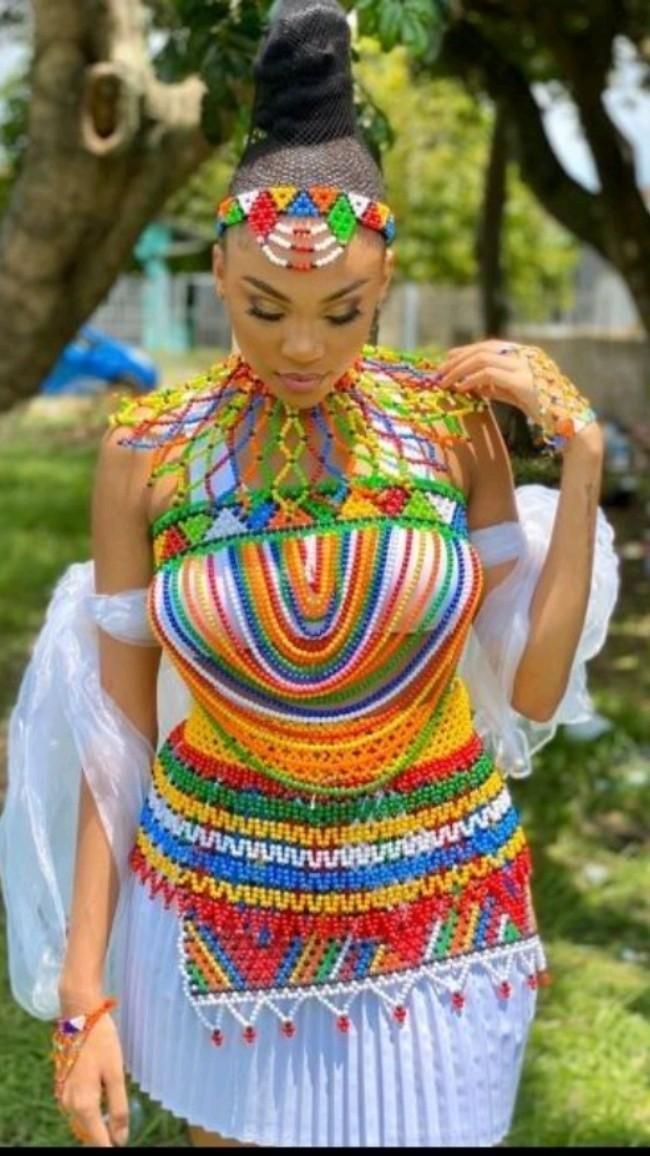
For women, traditional dress varied significantly according to marital and life-stage status, forming one of the clearest examples across this series of dress functioning as a precise, immediately legible marker of a woman’s specific social position. Unmarried girls traditionally wore minimal upper body covering with beaded ornamentation and a short beaded skirt (isigege), reflecting both practical considerations and the cultural understanding that unmarried girls’ dress should reflect youthful simplicity. As young women progressed toward marriageable age, dress became somewhat more elaborate, incorporating increased beadwork signaling availability for courtship, connecting directly to the beadwork communication system discussed in detail below.
Married women’s traditional dress underwent the most dramatic transformation, most notably through the adoption of the isidwaba — a traditional skirt made from treated cowhide, historically prepared through an extensive softening and treatment process, worn as a marker of married status and often retained as a woman’s primary traditional garment throughout her married life, sometimes passed down or specially prepared as part of marriage negotiations and ceremonies between families. Married women also traditionally adopted covered upper bodies, reflecting the shift in social status and modesty expectations associated with marriage within traditional Zulu social structure.
The Isicholo: A Crown for Married Women
Perhaps the most visually distinctive marker of married Zulu women’s status is the isicholo — a distinctive, wide-brimmed hat traditionally woven from grass and cotton, or in contemporary versions often constructed with wire frames covered in fabric or beaded material, worn specifically by married women as an unmistakable visual declaration of their marital status. The isicholo’s distinctive flared, disc-like shape makes it immediately recognizable, and its significance extends beyond simple marital marking to broader symbolism regarding a married woman’s dignity, respectability, and established position within her husband’s family and community.
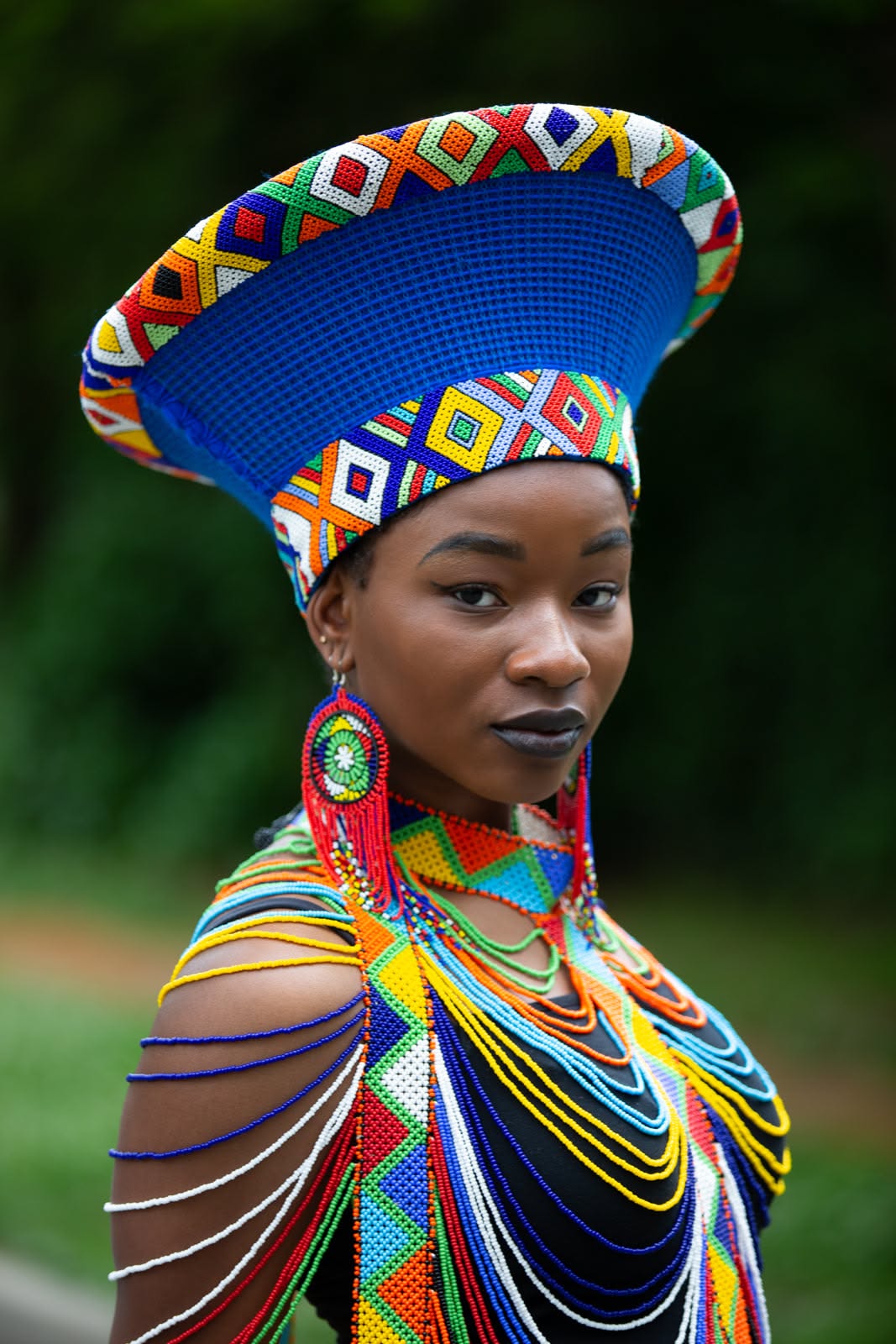 The isicholo has remained a particularly resilient element of Zulu traditional dress, prominently featured at contemporary traditional weddings, and has, in recent years, experienced notable revitalization and even international visibility, including celebrated appearances at high-profile public events where South African women have worn elaborate, often colorfully beaded versions of the isicholo as a proud assertion of Zulu cultural identity on prominent public and international stages, contributing to renewed contemporary interest in and appreciation for the garment among younger generations who might otherwise engage primarily with Western bridal dress conventions.
Beadwork: The Documented Language of Ucu
Zulu beadwork, known in the Zulu language partly through terms including ucu, represents one of the most thoroughly documented examples of African dress functioning as literal coded communication, extending well beyond the general status and identity signaling common across the dress traditions discussed throughout this series into something approaching an actual symbolic writing system historically used, in particular, for communication between young men and women during courtship.
Historically, and to varying degrees within contemporary practice, specific bead colors carried recognized, relatively standardized meanings within Zulu cultural understanding, allowing a beaded item’s color combination to convey a specific message from its maker (typically a young woman) to its intended recipient (typically a young man she was courting or considering for courtship). White commonly symbolized purity, love, and spiritual devotion. Black could represent marriage, but depending on combination and context, could also signal sorrow or difficulty, illustrating the same context-dependent color complexity discussed regarding other traditions in this series. Red frequently signaled passionate love or longing, but in certain combinations could also communicate anger, heartbreak, or a rejection message — meaning the same color could carry dramatically different meaning depending on its specific combination with other colors and the overall pattern structure, requiring genuine fluency in the system’s “grammar” to interpret correctly, much as discussed regarding pattern-based meaning systems in Kente and Adire.
Blue traditionally could indicate fidelity or, in some interpretations, indicate that the wearer had encountered difficulty or was facing a challenging situation requiring support. Green often related to themes of contentment, domestic harmony, or, in some readings, illness or jealousy depending on specific combination context. Yellow frequently connected to wealth or, alternately, could carry connotations related to a warning regarding fickleness or inconstancy in a relationship, again depending heavily on surrounding color context.
Beyond individual colors, the specific patterns, geometric arrangements, and combinations in which beads were assembled carried further layered meaning, allowing skilled beadworkers to compose increasingly specific and nuanced messages — a system requiring both technical beadworking skill and genuine fluency in the color-and-pattern vocabulary to compose or accurately interpret. This system historically allowed young people, particularly within social contexts where direct verbal expression of romantic feelings might be considered inappropriate or overly forward, to communicate courtship interest, acceptance, rejection, or relationship status through carefully composed beaded gifts — a genuinely remarkable example of textile and craft tradition functioning as literal correspondence.
While contemporary practice has evolved considerably, with direct verbal communication and modern technology naturally supplementing or replacing beaded courtship messages in many contexts, the beadwork tradition itself remains vibrant, and awareness of its historical communicative function continues to be documented, taught, and celebrated as an important element of Zulu cultural heritage and craft artistry, appearing prominently in contemporary fashion, cultural tourism, and craft markets both within South Africa and internationally.
Ceremonial Dress: Weddings and the Umemulo
Zulu traditional dress reaches its most elaborate expression during significant ceremonial occasions, particularly traditional weddings, which showcase the full range of traditional garments, beadwork, and status markers discussed throughout this article in concentrated, celebratory display. Traditional Zulu weddings typically involve multiple ceremonial phases, each potentially calling for distinct traditional dress, with brides often wearing elaborate combinations of traditional skirts, extensive beadwork, and status markers reflecting both their family’s heritage and their new status as a married woman, often incorporating the isicholo discussed above as a central element of bridal presentation.
Beyond weddings, the umemulo ceremony — a coming-of-age ceremony traditionally marking a young woman’s transition into adulthood and, historically, her eligibility for marriage — similarly calls for elaborate traditional dress, typically organized by the young woman’s family as a significant celebration marking this life transition, with the young woman’s dress and presentation during the ceremony reflecting both her family’s status and her own readiness for this new life stage. These ceremonial contexts collectively demonstrate the broader theme, established across this series’ discussion of dress and life-stage transitions, wherein African traditional clothing frequently reaches its most elaborate and symbolically dense expression precisely at moments of significant social transition.
Contemporary Zulu Dress: Persistence and Innovation
Contemporary Zulu traditional dress demonstrates notable vitality within present-day South African cultural life, appearing prominently not only within explicitly traditional or ceremonial contexts but increasingly within contemporary South African fashion design, cultural celebration events such as Heritage Day (a South African public holiday specifically dedicated to celebrating the country’s cultural diversity, during which traditional dress from Zulu and other South African cultural traditions is prominently and proudly displayed nationwide), and within growing global interest in South African fashion and craft traditions.
South African fashion designers increasingly incorporate traditional Zulu beadwork techniques, isicholo-inspired silhouettes, and traditional color symbolism into contemporary fashion collections, positioning Zulu dress heritage within global fashion conversation while, ideally, maintaining meaningful connection to and collaboration with traditional Zulu craftspeople and cultural knowledge holders, reflecting the broader tension and opportunity discussed throughout this series regarding the balance between global commercial fashion interest and genuine cultural preservation and community benefit.
Zulu cultural institutions, community organizations, and individual cultural custodians continue active efforts to document, teach, and transmit traditional beadwork techniques, dress conventions, and their associated meanings to younger generations, recognizing both the genuine risk of knowledge loss amid rapid social change and the significant cultural and, increasingly, economic value inherent in this sophisticated traditional dress and communication system.
Conclusion: Beads That Speak
Zulu traditional dress offers this series one of its clearest demonstrations of the precision and sophistication possible within African dress as a communicative system — a tradition in which beadwork functioned not merely as a general marker of identity or status, as seen across many traditions discussed throughout this series, but as an actual structured code capable of conveying specific, nuanced personal messages between individuals. From the isidwaba marking married status, through the distinctive isicholo crowning married women’s dignity, to the extraordinary color-and-pattern vocabulary of courtship beadwork, Zulu dress demonstrates the remarkable heights of symbolic precision African traditional clothing can achieve.
As this series moves next to the Tuareg of the Sahara — a dress tradition shaped by an entirely different environment and way of life — the Zulu example reinforces this series’ central argument: that African traditional dress across dramatically different environments, materials, and specific techniques consistently reveals itself, upon careful examination, to be a sophisticated, actively maintained language, spoken fluently by those raised within its specific cultural grammar and increasingly documented, celebrated, and reinterpreted for new generations and new global audiences.
