

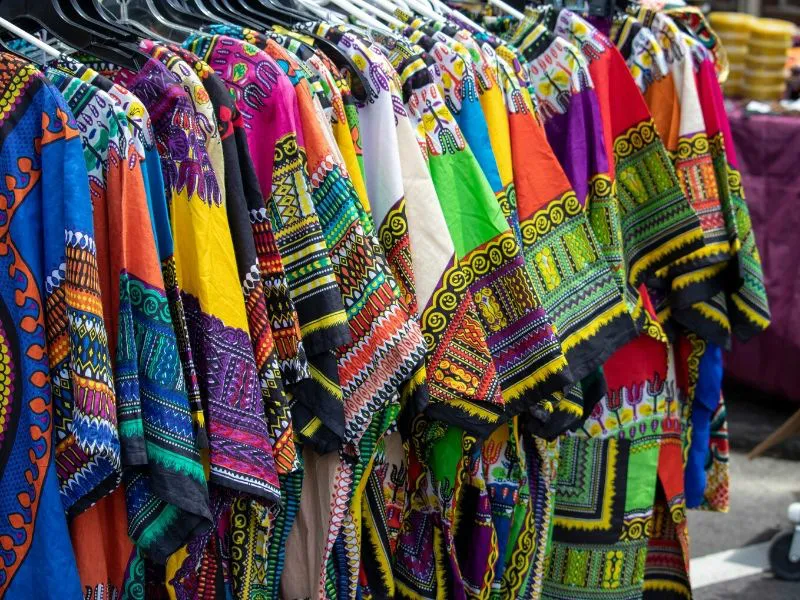
Introduction: Cloth as a Second Tongue
Long before a single word is spoken, African traditional clothing has already introduced the person wearing it. A stranger walking into a village square in northern Nigeria, a wedding hall in Accra, or a cattle post in the Kalahari can, in many cases, be “read” simply by looking at what covers their body. The weave of a cloth, the direction of a wrapper’s knot, the height of a headwrap, the color of a bead, or the pattern stamped into cotton can announce a person’s ethnic group, marital status, age grade, spiritual role, wealth, mourning state, or even the specific message they wish to send to onlookers that day. This is why scholars and elders alike often describe African dress not merely as clothing, but as a language — a visual grammar with its own vocabulary, syntax, and dialects that varies from one community to the next, yet shares deep structural threads across the continent.
To understand African traditional clothing only as “costume” or “fashion” in the Western sense is to miss most of what it is actually doing. In many African societies, garments function the way a formal letter, a passport, or a public announcement might function elsewhere. They carry information intended to be read by a community that has been trained since childhood to interpret it. This article explores that language in depth: how color, pattern, fabric, and form combine to communicate identity, status, spirituality, and history, and why this sartorial language remains vital — and is even expanding — in the twenty-first century.
Clothing as Communication: The Core Idea
Every human society uses dress to communicate something. What distinguishes many African traditions is the density and precision of the coding involved. In several cultures, an item of clothing is not considered “finished” or appropriate until it correctly signals the wearer’s status within a recognized system. A young Maasai moran (warrior) does not simply choose red because he likes the color; the shuka he wears situates him within an age-set system that the entire community recognizes at a glance. A Yoruba chief’s agbada is not merely large and flowing because grandeur looks impressive; its volume, embroidery, and the way it is draped communicate rank within a chieftaincy structure that has existed for centuries.
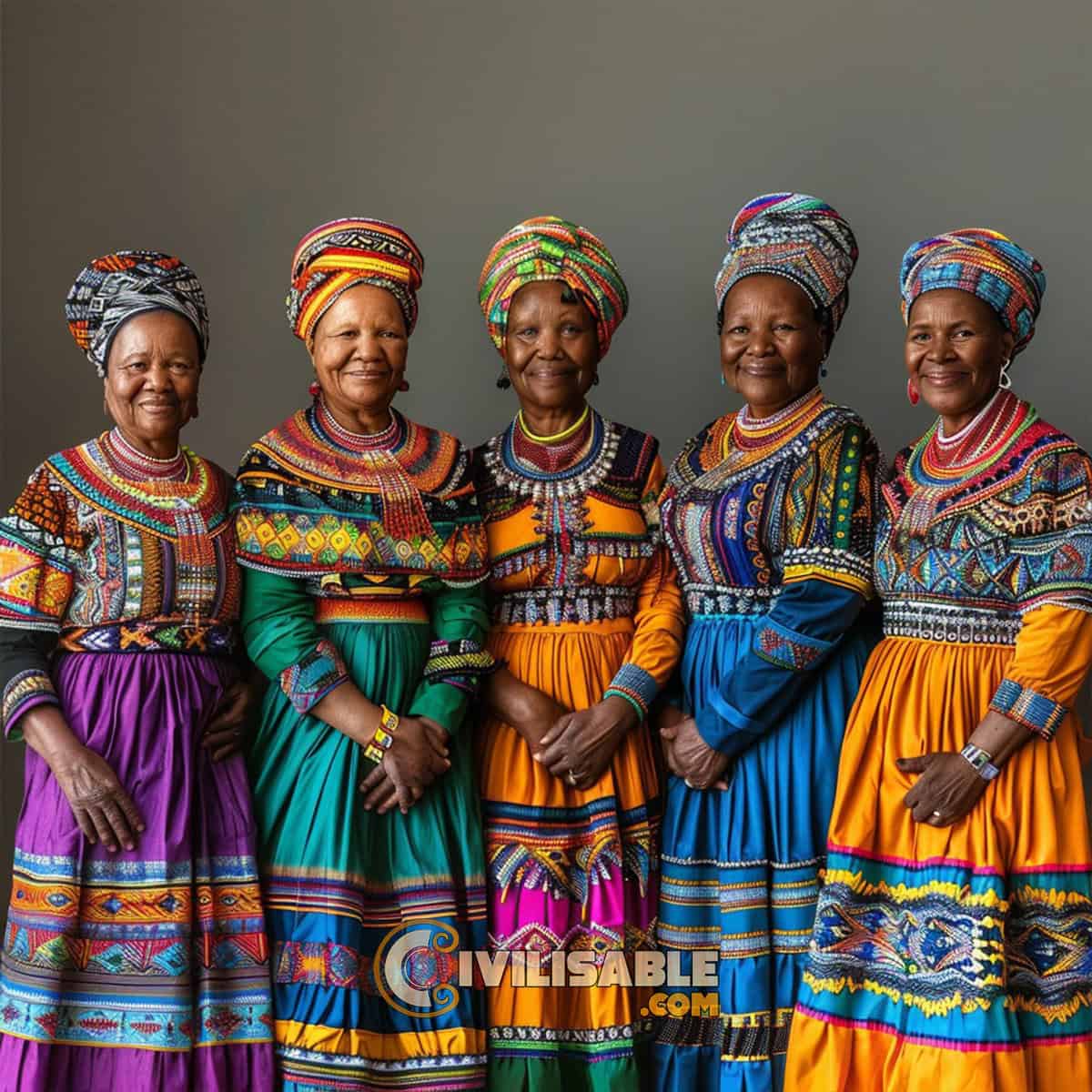 This communicative function operates on several layers simultaneously:
Identity layer — Clothing signals which ethnic group, clan, or lineage a person belongs to. Patterns like Kente strips, Adire indigo motifs, or Ndebele geometric designs are visual signatures as recognizable to insiders as a surname.
Status layer — Clothing often indicates a person’s position within a social hierarchy: royalty, chieftaincy, priesthood, elder status, warrior class, or commoner status. Materials, colors, and the sheer quantity of cloth used can all signal rank.
Life-stage layer — Many traditional systems use dress to mark transitions: childhood, initiation into adulthood, marriage, motherhood, elderhood, and death. A change of dress often accompanies a change of social role.
Occasion layer — The same person might wear entirely different garments for a funeral, a harvest festival, a wedding, or an ordinary market day, each carrying its own coded meaning.
Spiritual layer — Certain colors, patterns, or materials are believed to carry protective, ancestral, or religious significance, connecting the wearer to unseen forces or deceased forebears.
Because these layers operate together, a single outfit can communicate several messages at once — much like a sentence carries subject, verb, and tone simultaneously.
The Vocabulary of Color
Color is perhaps the most immediately legible element of this visual language, though its meanings shift significantly from one culture to another, making fluency in the “dialect” of a specific people essential to correct interpretation.
Among the Akan people of Ghana, whose Kente cloth will be explored more fully in a companion article, color carries strict symbolic weight. Gold represents royalty, wealth, and spiritual purity. Yellow symbolizes fertility and the vitality of nature. Green stands for growth, renewal, and harvest. Blue evokes peace, harmony, and love. Red is tied to political and spiritual strength, but also to sacrifice, bloodshed, and mourning — meaning the same color can carry celebratory or solemn weight depending entirely on context. Black, far from being simply somber, often represents spiritual maturity, ancestral connection, and antiquity; it is frequently worn or incorporated during rites that honor the dead, not out of despair but out of reverence.
Among the Maasai of Kenya and Tanzania, red dominates traditional dress, and its meaning is equally layered. Red is associated with the blood of cattle — the community’s central source of wealth and sustenance — as well as bravery, strength, and unity. Warriors historically wore red to intimidate predators and rival groups and to visually project courage. Blue, sometimes present in Maasai shuka, references the sky and the source of rain that sustains the herds on which the community depends. Black can represent the hardship of life or, alternately, the unity of the people.
Among the Zulu of South Africa, color choices in beadwork and dress historically formed part of an elaborate, almost telegraphic system in which a beaded item’s colors and patterns could communicate romantic interest, marital availability, or specific personal messages between individuals — a topic explored in greater depth elsewhere in this series. White frequently symbolizes purity, spirituality, and a connection to ancestors, and is prominent in garments worn during religious or ceremonial occasions. Black can denote marriage or a settled union. Red, again, often carries connotations of both passion and, in some contexts, mourning or emotional intensity.
The Yoruba of southwestern Nigeria layer color with fabric type as much as with dye choice. White (aso funfun) is closely associated with purity, the Orisha (deities) such as Obatala, and spiritual cleanliness, often worn during religious festivals and by devotees undergoing periods of ritual observance. Indigo, produced through the Adire dyeing tradition, historically signaled depth, mystery, night, and in some interpretations, the ancestral realm.
What becomes clear across these examples is that no single “African” meaning attaches to any given color. Just as the word “bank” means something different depending on whether one is speaking of rivers or money, red among the Maasai and red among the Akan operate as different words entirely, even though they share the same hue. Understanding African traditional dress therefore requires cultural specificity, not continental generalization — a caution scholars and cultural custodians frequently repeat.
The Grammar of Pattern and Motif
If color functions as vocabulary, pattern functions as grammar — the structural rules that organize meaning into coherent statements. Across the continent, textile patterns are rarely decorative for decoration’s sake. They are frequently narrative, proverbial, or genealogical.
In Kente weaving, each strip pattern (called nsibidi in some naming systems, though Akan weavers use their own terminology) carries a specific name and an associated proverb or historical reference. A particular arrangement of interlocking shapes might reference a historical king’s wisdom, a proverb about patience, or a spiritual concept regarding balance between opposing forces. Traditionally, certain patterns were reserved exclusively for royalty, and wearing them without the appropriate status was a serious social transgression.
Adire cloth from southwestern Nigeria uses resist-dyeing techniques — tying, stitching, or applying cassava-starch paste before dipping fabric in indigo — to create motifs that often reference proverbs, natural elements, or significant objects. A pattern might depict cowry shells (symbolizing wealth and femininity), stars (aspiration or destiny), or geometric abstractions of everyday tools and animals, each carrying connotations recognizable within the originating community.
Ndebele patterning from South Africa uses bold, symmetrical geometric shapes, often in bright, contrasting colors, applied to both wall murals and beadwork or garments. These patterns historically responded to and reflected social and political circumstances; some designs emerged as coded expressions of resistance and identity during periods of oppression, allowing a community to assert its distinctiveness even under external pressure that sought to erase it.
Among the Tuareg of the Sahara, indigo-dyed cloth (which stains the skin over time, earning Tuareg men the nickname “Blue Men of the Sahara”) is paired with silver jewelry bearing geometric and often talismanic engravings believed to offer protection during desert travel. The patterns embedded in leatherwork, jewelry, and cloth trims often reference specific clans, lineages, and the individual craftsman’s signature style, functioning almost like a maker’s mark combined with a family crest.
This “grammar” of pattern means that an educated eye within a given culture does not merely see beauty in traditional cloth; they read content — a proverb, a historical reference, a clan identifier, or a spiritual concept — embedded directly into the visual field.
Fabric, Texture, and Material as Meaning
Beyond color and pattern, the material itself communicates. Handwoven cloth typically carries more prestige than machine-woven cloth, not because of aesthetic superiority alone, but because of the labor, time, and skill embedded within it. A hand-loomed strip of Kente, woven over days or weeks by a trained weaver, communicates wealth and patience in a way that a printed imitation cannot, regardless of how visually similar the pattern might appear.
Similarly, the weight and density of a Maasai shuka, the tightly beaded surface of a Zulu isidwaba (leather skirt), or the layered silver ornamentation of Tuareg dress each require material investment that signals resource access. In many pastoral communities, leather itself — its tanning, softness, and the number of hides used — historically indicated a family’s herd size and, by extension, its wealth.
Texture also carries symbolic and even spiritual weight. Rough, unrefined materials might be reserved for mourning periods or initiation rites that emphasize humility and transformation, while smooth, richly dyed, or elaborately beaded materials are reserved for celebratory or high-status occasions. The physical sensation of cloth against skin, and its visual texture to onlookers, becomes part of the coded message.
Clothing Across the Life Course
One of the clearest demonstrations of clothing’s communicative power is how dramatically it changes across an individual’s life stages in many traditional systems.
Childhood often involves minimal, practical dress, sometimes with protective amulets or beads believed to ward off illness or misfortune, reflecting a community’s care for its most vulnerable members rather than an emphasis on status display.
Initiation frequently triggers the most dramatic transformation in dress. Among many groups, initiates entering adulthood wear specific garments, body paint, or ornamentation exclusive to that liminal period — often stripped of the finery of full adulthood to symbolize the humility of transition, then dramatically re-clothed at the initiation’s conclusion to mark rebirth into a new social status. Maasai moranhood, various West African age-grade societies, and southern African initiation schools all use dress as the visible marker of an otherwise invisible internal transformation.
Marriage typically involves the most elaborate dress a person will wear, layered with symbolic items: beadwork indicating the bride’s new status among the Zulu, richly patterned aso-oke among the Yoruba, or elaborately dyed and embroidered garments in numerous other traditions. Marriage dress often incorporates items gifted by both families, visually representing the union of two lineages.
Motherhood and elderhood bring further shifts — often toward garments emphasizing dignity, authority, and accumulated wisdom rather than youthful display. Elders across many cultures wear specific cloths, headwraps, or staffs of office that younger community members are not entitled to wear, regardless of personal wealth, because the clothing communicates earned status rather than purchased status.
Death and mourning involve their own dress codes, frequently favoring white or black depending on cultural context, sometimes involving deliberately unfinished or torn garments to symbolize the rupture of loss, and often followed by a structured sequence of dress changes marking the mourning period’s progression back toward normal social life.
Clothing for Occasion: Festivals, Rites, and Everyday Life
Beyond the life course, clothing shifts according to occasion, and this too forms part of the coded system. Harvest festivals often call for garments emphasizing abundance — bright colors, elaborate patterns, and an overall visual statement of prosperity. Religious festivals frequently call for specific colors associated with particular deities or spiritual observances, as seen in Yoruba Orisha festivals where devotees of different deities wear distinctly coded colors. Political or chieftaincy events call for garments that assert authority and continuity with ancestral leadership, often incorporating regalia passed down through generations. Everyday market or domestic dress, by contrast, tends toward practicality, though even here, subtle choices in wrapper pattern or headwrap style often continue to communicate identity and mood to those trained to notice.
This companion article on the broader language of African dress sets the stage for the deeper explorations that follow in this series — into Kente’s royal symbolism, Adire’s indigo storytelling, Ankara’s modern evolution, Maasai identity, Zulu beadwork communication, Tuareg desert dress, the social meanings embedded in beads and jewelry, ceremonial dress traditions, and African fashion’s contemporary global rise.
 Colonial Disruption and the Struggle to Preserve Meaning
No honest account of this visual language can ignore the disruptive impact of colonialism. European colonial administrations frequently viewed traditional dress as “primitive,” actively discouraging or outright banning it in schools, churches, and administrative settings in favor of Western clothing, which was framed as a marker of “civilization” and Christian conversion. This was not a neutral aesthetic preference; it was a deliberate strategy of cultural erasure, since suppressing a community’s visual vocabulary weakens its capacity to transmit identity, history, and values across generations.
Despite this pressure, traditional dress persisted, often retreating into specific protected spaces — royal courts, religious ceremonies, rural communities less exposed to colonial administration, and moments of resistance where wearing traditional cloth became a deliberate political statement. In the post-independence era, many African nations experienced a resurgence of traditional dress as a marker of reclaimed identity and anti-colonial pride, with leaders and citizens alike deliberately choosing traditional garments for state functions, festivals, and daily life as an assertion of cultural sovereignty.
The Living Language Today
Far from being a relic confined to museums or ceremonial occasions, this sartorial language continues to evolve. Contemporary African designers increasingly draw on traditional patterns, colors, and construction techniques while adapting them to global fashion contexts, ensuring the vocabulary continues to be spoken, even as new “accents” and dialects emerge through cross-cultural exchange, diaspora reinterpretation, and global visibility on runways from Lagos to Paris to New York.
Younger generations, both on the continent and across the diaspora, are increasingly seeking out this knowledge — learning what a particular Kente pattern signifies, understanding why a Zulu bead color carries romantic meaning, or discovering the proverb encoded in an Adire motif — not merely as historical curiosity, but as an active reclamation of identity and heritage. Social media has, in many respects, accelerated this transmission, allowing elders, cultural custodians, and researchers to document and share meanings that might otherwise have remained confined to specific communities or oral transmission alone.
Conclusion: Reading the Cloth
To walk through a West African market, a Maasai boma, a Zulu ceremony, or a Tuareg encampment with informed eyes is to read an entire library of information encoded in cloth, color, bead, and pattern. African traditional clothing does not merely decorate the body; it speaks — announcing lineage, status, life stage, spiritual conviction, and communal belonging with a precision that spoken language sometimes struggles to match. This is the foundation upon which the rest of this series builds: an exploration of specific traditions, specific patterns, and specific communities, each contributing its own dialect to a continental language that has survived disruption, adapted to modernity, and continues to be spoken — thread by thread, color by color — today.
