


The Digital Frontier: African Languages and the Struggle for Cultural Preservation
The history of African languages has never been a static story. Languages have always evolved dynamically as communities migrated, traded, intermarried, built institutions, and synthesized new cultural encounters. Today, however, the forces influencing African speech communities are accelerating at an unprecedented velocity.
A smartphone in Lagos can instantaneously connect a speaker with another member of their linguistic diaspora thousands of kilometers away. A social media video can launch a hyper-local expression into international parlance within hours. A musician can blend an indigenous language with English, French, or Swahili to reach millions of global listeners, while a researcher can record an elder’s oral narrative to secure that ancestral knowledge inside a digital repository indefinitely.
Consequently, the digital age presents African languages with a fundamental paradox:
- The Threat: Global digital infrastructure can accelerate language shift and erosion by encouraging populations to communicate exclusively in dominant, high-resource global languages.
- The Opportunity: The exact same technological ecosystem provides unprecedented capabilities for archival preservation, educational scalability, and cultural revitalization.
The ultimate trajectory will not be determined by technology alone, but by how communities, educators, governments, researchers, and software developers leverage these tools. The central question is no longer merely whether African languages will survive, but whether they will command a functional, meaningful presence in the digital world.
The Internet as a New Linguistic Space
The internet has fundamentally restructured human communication. Communities that previously communicated exclusively within local physical geography can now engage with global audiences, altering the survival mechanics of minority and regional languages.
Prior to widespread digital connectivity, smaller language communities had access to limited public domains—primarily the home, the local marketplace, or traditional ceremonies—with sparse access to print publishing or broadcast media. Digital communication changes this structural equation entirely.
A speaker can now establish a digital platform in an indigenous language to publish narratives, record oral histories, design educational software, stream traditional compositions, and maintain active daily dialogues with diaspora communities. Digital infrastructure effectively transforms geographically bound speech communities into globally connected digital networks.


 Social Media, Identity, and the Content Economy
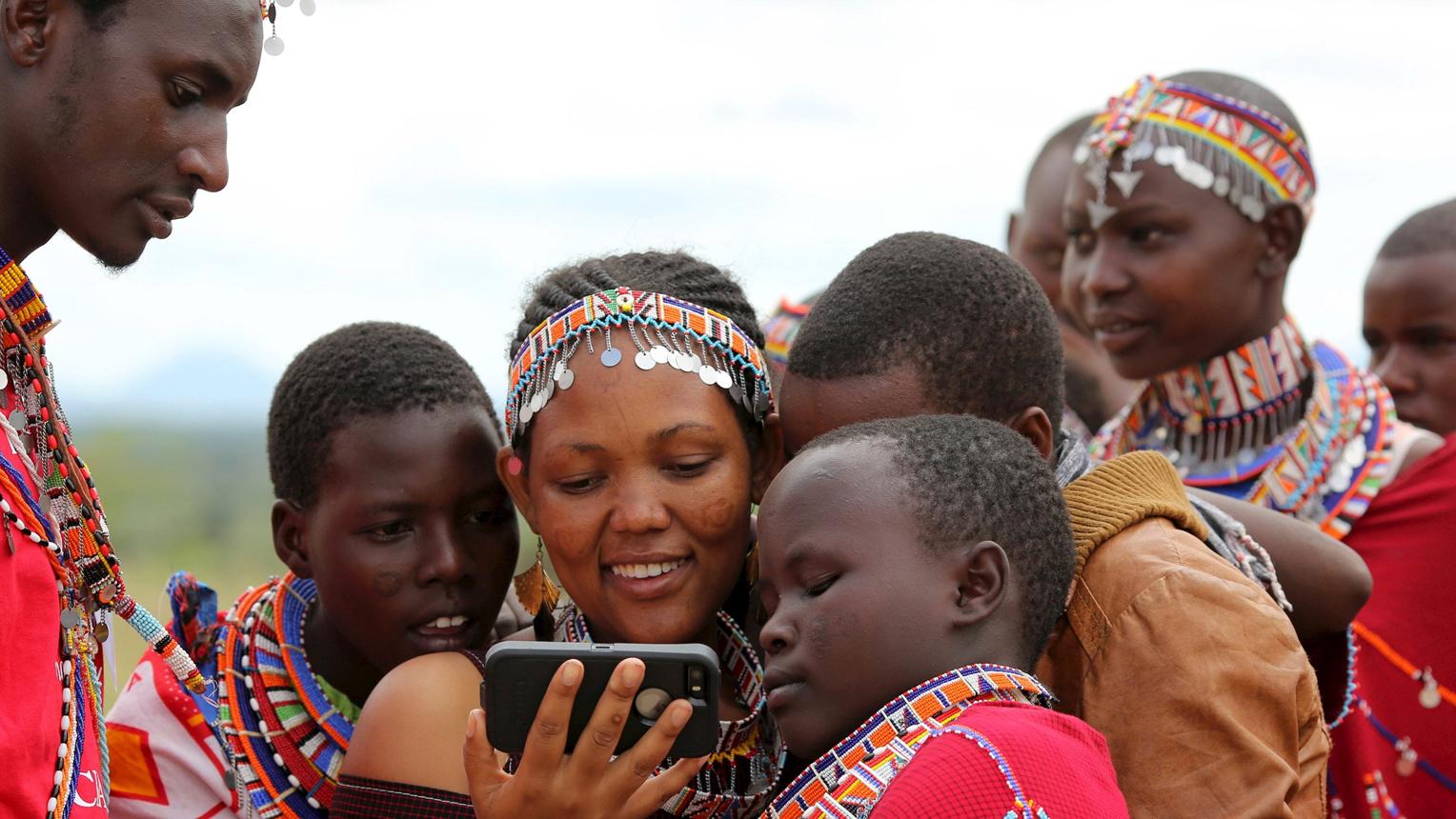
Social media platforms have emerged as some of the most vibrant arenas for contemporary African language use. Communication across text, image, audio, and short-form video has enabled speakers to adapt traditional linguistic forms into modern digital expressions.
The Dynamics of Youth-Driven Revitalization
Languages remain resilient when younger generations actively adapt them to express their immediate realities. Social media validates local speech by integrating it directly into youth culture:
- Humor and Slang: Content creators leverage culturally specific idioms, proverbs, and hyper-local puns that lose their nuance when translated into imperial languages.
- Linguistic Creativity: Young speakers continuously synthesize new urban registers—such as Sheng in Kenya, Nigerian Pidgin, or South African Township Lingo—demonstrating that indigenous linguistic roots can flexibly adapt to modern life.
- Digital Identity: Deliberate use of mother tongues online serves as a declaration of cultural sovereignty and heritage, allowing creators to cultivate highly engaged regional and diaspora audiences.
- Creator Ecosystems: Comedians preserve nuance and cultural norms through hyper-local expressions; musicians expand global reach by combining indigenous tongues with international genres like Afrobeats and Amapiano; educators democratize STEM and history lessons in native tongues; and religious organizations maintain formal registers across broad demographics through live-streamed broadcasts.
Preservation Mechanics: Dictionaries, Audio, and Archives
Preserving a language requires more than storing written manuscripts; it requires capturing the acoustic, contextual, and performative dimensions of natural speech.
Beyond Text: Interactive Digital Resources
- Enhanced Digital Dictionaries: Unlike static print dictionaries, modern digital lexicography supports embedded audio pronunciation, contextual video examples, search metadata, cross-dialectal comparisons, and dynamic semantic mapping.
- Acoustic and Phonetic Preservation: Tonal contours, click consonants, and subtle stress patterns cannot be fully rendered via standard alphabets. High-fidelity digital audio allows communities to preserve the exact phonetics of native speakers across generations.
- Digital Archives and Community Sovereignty: Cloud archives can store thousands of hours of oral literature, historical interviews, music, and manuscripts. However, preservation efforts must honor community intellectual property rights, ensuring local elders retain control over access and distribution of sacred or sensitive cultural data.
Artificial Intelligence and the Digital Language Gap
Artificial intelligence represents the most consequential frontier in contemporary language technology. Modern machine learning models process vast quantities of textual and audio data to perform automated translation, speech recognition, sentiment analysis, and text generation. However, these capabilities remain unequally distributed across the world’s languages.
The Structural Data Deficit
AI architectures require massive datasets for training. High-resource languages like English, Mandarin, or Spanish benefit from billions of web pages, extensive news archives, and massive audio datasets that fuel comprehensive AI integration. Conversely, many African languages—despite having tens of millions of native speakers—suffer from a severe deficit of digitized text, sparse online news, limited educational software, and rare speech recognition datasets.
Without deliberate intervention, this data asymmetry creates a form of digital inequality, where speakers of low-resource languages are forced to assimilate into dominant global languages to utilize modern computing tools, smart devices, and artificial intelligence.
Overcoming Technological Barriers
To ensure African languages remain functional in automated systems, technical infrastructure must be developed collaboratively by computer scientists, linguists, and native speech communities.
Key Technical Pillars for Integration
- Standardization and Character Encodings (Unicode): Digital systems require consistent encoding standards. Unicode compliance ensures that special characters, diacritics, and non-Latin scripts (such as N’Ko, Ethiopic/Ge’ez, or Vai) render accurately across all operating systems and mobile devices.
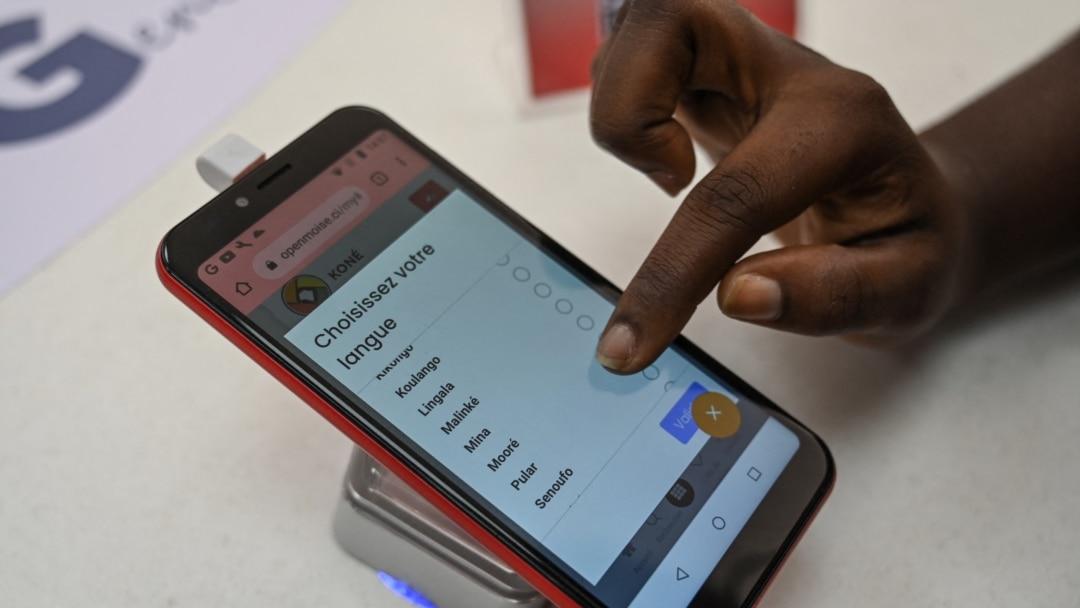
- Custom Input Methods (Keyboards): If mobile keyboards do not support native orthographies or diacritic marks easily, users default to simplified spellings or switch to global languages. Modern keyboard software must natively support local character layouts.
- Speech Recognition and Machine Translation: Developing robust Automatic Speech Recognition (ASR) enables voice-to-text systems, assisting users who prefer oral communication over typing. However, machine translation must account for cultural context, proverbs, and non-literal idioms rather than relying on naive word-for-word substitution.
- Building Open Corpora (e.g., Masakhane Collective): Grassroots research organizations and university departments are building open-source parallel text and speech datasets to train public machine learning models specifically optimized for African linguistic structures.
Digital Pedagogy, Entertainment, and Gamification
Digital technology allows educators to transform language acquisition from a passive academic exercise into an interactive experience for children and adult learners alike.
- Gamified Learning Apps: Mobile applications incorporate game design mechanics—rewards, sound effects, and interactive storytelling—to introduce vocabulary and grammar intuitively to young learners.
- Animation and Digital Storytelling: Adapting traditional oral narratives into high-quality animated series allows children to absorb heritage vocabulary and moral frameworks through modern visual media.
- Interactive Open Knowledge (Wikipedia): African-language editions of open-knowledge platforms democratize information, allowing students to study history, science, and geography directly in their mother tongues.
Strategic Imperatives for the Digital Era
To transition African languages from endangered heritage assets to thriving modern communication systems, several coordinated actions are required:
- Eradicate Digital Colonialism: Software developers and governments must ensure public services, mobile interfaces, and AI utilities are accessible in regional African languages, preventing structural language erasure.
- Empower Young Content Creators: Youth-driven media—including streaming, social media commentary, music production, and digital art—must be backed by investment to build sustainable linguistic economies.
- Promote Multilingual Digital Commerce: Integrating indigenous language support into mobile banking, agricultural tech apps, and e-commerce platforms validates the economic utility of local speech.
- Shift from Preservation to Innovation: Preservation stores the past; innovation secures the future. Languages must continually generate new terminology to describe modern phenomena—from computational science and climate change to digital ethics and space exploration.
Conclusion: Living Memory in the Silicon Age
African languages are not fragile relics of a bygone epoch; they are resilient, living systems fully capable of expressing the complexities of contemporary human experience. Technology itself is neutral: it can serve as an engine of linguistic homogenization, or it can provide the ultimate platform for cultural self-determination.
When a child watches an animation in Yoruba, a developer trains an AI model on Kiswahili speech data, a musician streams a track in isiZulu, or a researcher archives an elder’s oral history in Wolof, they are actively constructing a multilingual digital future. By uniting ancient oral traditions with cutting-edge digital infrastructure, African languages will continue to carry the living memory of ancestors while articulating the boldest innovations of tomorrow.
