

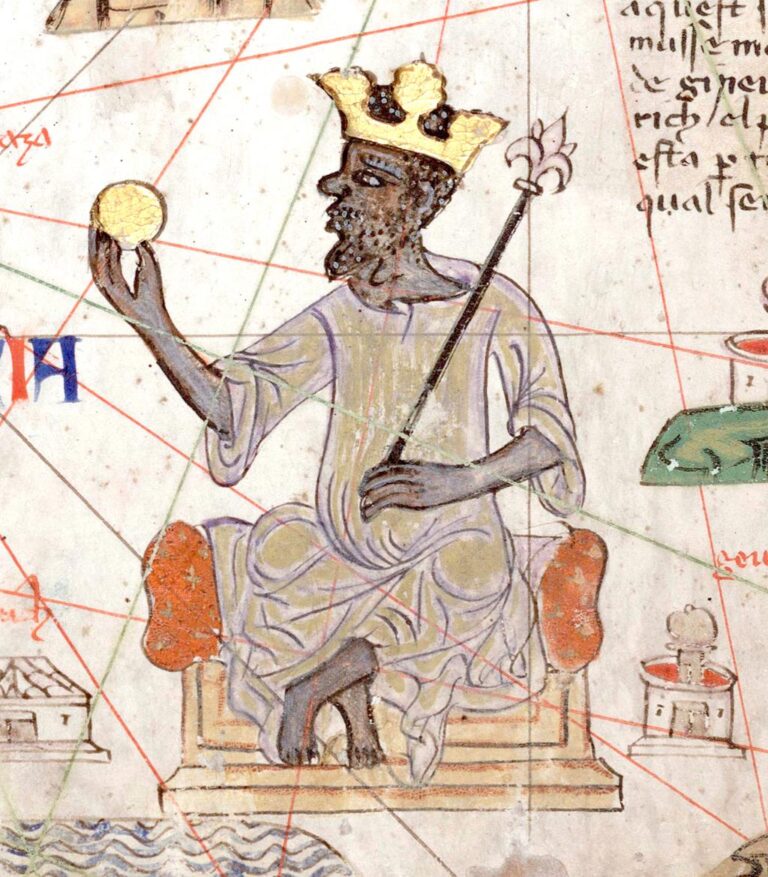
When people imagine the great empires of world history, they often picture Rome, Persia, China, or the Ottoman Empire, yet Africa produced powerful states that controlled enormous territories, commanded armies, dominated regional trade, developed sophisticated political institutions, supported scholarship, and maintained diplomatic relationships across long distances. Among the most remarkable were the Mali Empire, the Songhai Empire, and the Kingdom of Aksum. These three powers emerged in different parts of Africa and belonged to different historical periods; Mali and Songhai dominated major parts of West Africa, while Aksum developed in the Horn of Africa and became a major power connecting Africa with Arabia and the wider Mediterranean world. Their stories were not identical, as each empire rose because of a particular combination of geography, political leadership, economic opportunity, military organization, trade, and relationships with neighboring societies. The Mali Empire emerged in the thirteenth century from the political world of the Mande peoples and eventually became one of the most influential states in West Africa. The Songhai Empire later rose along the Niger River and succeeded Mali as the dominant political force across much of the western Sudan. Aksum, meanwhile, had already become a major eastern African power centuries earlier, occupying a strategic position between the African interior, the Red Sea, Arabia, and the wider ancient world, with UNESCO describing Aksum as a civilization whose importance was closely tied to its position at the crossroads of Africa, Arabia, and the Greco-Roman world. Together, these empires demonstrate that African history was shaped by powerful states with their own political ambitions, economic systems, intellectual traditions, and international connections.
An empire is more than simply a large kingdom, generally emerging when a political authority is able to extend its influence over multiple territories and communities through conquest, tribute, alliances, trade, diplomacy, marriage, religious authority, or a combination of several methods. For Mali, Songhai, and Aksum, geography was particularly important as rivers provided transportation and agricultural opportunities, trade routes connected resource-producing regions with distant markets, and strategic cities became centers where merchants, scholars, artisans, soldiers, and political officials interacted. Gold was especially important in the history of the great West African empires, while salt was another valuable commodity essential for human consumption and food preservation, alongside other goods moving through regional and long-distance networks including textiles, agricultural products, ivory, horses, metals, and manufactured goods. Wealth alone did not create an empire, as a ruler needed the ability to collect taxes or tribute, maintain political relationships, protect trade routes, organize armies, administer territory, and manage competing interests. The rise of Mali and Songhai illustrates how economic power could support political expansion, while Aksum demonstrates how control over strategic trade connections could turn a regional kingdom into an international power.
The Mali Empire emerged in West Africa during the thirteenth century, with origins associated with the Mande-speaking peoples and the political landscape around the upper Niger and Senegal river regions as the earlier Ghana Empire (also known as Wagadu) declined and political and commercial power shifted within the western Sudan. The founder most strongly associated with the Mali Empire is Sundiata Keita, whose historical memory was preserved through oral traditions—such as the famous Epic of Sundiata describing his childhood, struggles, military achievements, and the establishment of Mali—as well as later written accounts. While historical reconstruction must distinguish between the epic tradition and independently corroborated historical evidence, both written sources and oral traditions point to Sundiata as a central figure in Mali’s emergence. Around the middle of the thirteenth century, Sundiata consolidated power over the Mande heartland and defeated the Sosso ruler Sumanguru Kante, with OpenStax describing this political consolidation around 1235 and noting that Mali expanded into territories connected to the former Ghanaian sphere and major Sahelian trading towns, providing the political foundation from which Mali could expand.
Sundiata’s achievement was not simply military, as creating a durable empire required integrating different communities and territories through systems where conquered or affiliated territories could remain under local leadership while acknowledging the authority of the mansa (the title used by Mali’s rulers). This approach helped Mali govern a large and diverse region through tribute, political loyalty, military obligations, and control of strategic economic centers rather than requiring every community to become culturally identical, which was particularly valuable where different peoples spoke different languages and maintained distinct local traditions. The Niger River provided agricultural opportunities, functioned as a transportation corridor, and allowed the empire to connect productive agricultural zones farther south with commercial networks crossing the Sahel and Sahara. As Mali expanded, its rulers increasingly benefited from controlling important trading centers and gold-producing regions, creating the economic foundation for the empire’s greatest period of power.
The Mali Empire reached one of its most famous periods under Mansa Musa in the fourteenth century, who became famous far beyond West Africa because of his extraordinary wealth and his pilgrimage to Mecca. Although his reputation has sometimes been exaggerated in popular culture through modern claims that he was literally the “richest person who ever lived”—a monetary comparison impossible to calculate with precision because medieval wealth does not translate neatly into modern personal net worth—Mansa Musa unequivocally controlled a remarkably wealthy empire benefiting from gold-producing regions and major trade routes. OpenStax notes that Mali’s wealth helped attract scholars and jurists, that Mansa Musa supported mosques and schools in Timbuktu, and that his famous pilgrimage to Mecca in the 1320s introduced Mali’s royal wealth to a wider international audience. This journey demonstrated Mali’s participation in the wider Islamic world as Mansa Musa traveled through North Africa and Egypt before continuing toward Arabia, establishing diplomatic and cultural connections while widely circulating accounts of his pilgrimage strengthened the image of Mali as an extraordinarily wealthy kingdom.
Mali’s economic power was closely tied to its position between different ecological zones, as southern regions of West Africa contained important gold-producing areas while the Sahara provided salt, allowing the empire to benefit from controlling or influencing the exchange where gold moved northward and salt moved southward. While agriculture, livestock, fishing, crafts, taxation, and local commerce were fundamental to survival, gold gave Mali exceptional importance in long-distance commerce; World History Encyclopedia notes that Mali’s rulers benefited from access to gold-producing regions such as Bambuk and Bure and from taxes on trade passing through imperial territory. This illustrates the principle that trade routes did not merely enrich empires but helped create them, as controlling strategic markets, river crossings, goldfields, caravan routes, or salt sources provided resources to support armies and administration.
Supported by trade, agriculture, political organization, and access to gold-producing regions, Mali fostered centers like Timbuktu, whose location near the Niger River and trans-Saharan trade routes transformed it into an important commercial and intellectual center where merchants, scholars, and religious teachers gathered. Over time, Timbuktu became associated with Islamic scholarship, manuscript culture, law, theology, literature, astronomy, mathematics, and other fields of learning organized through scholars, mosques, study circles, schools, and individual teachers rather than a modern institutional university. The city’s scholarly importance illustrates how political power and intellectual life could reinforce one another, as rulers who protected scholars and supported religious institutions increased the prestige of their capitals, attracted educated people, and strengthened diplomatic connections.
No empire remains permanently dominant, and Mali eventually faced challenges from internal political struggles, competing states, changing trade patterns, and the rise of new powers, most notably Songhai. Songhai had existed as a political force around the Niger River for centuries with its capital at Gao—occasionally coming under Mali’s influence—but gained independence as Mali’s power weakened. By the fifteenth century, Songhai transformed from a regional kingdom into a major empire through decades of political competition, military expansion, control of trade routes, and struggles over cities such as Timbuktu and Djenné.
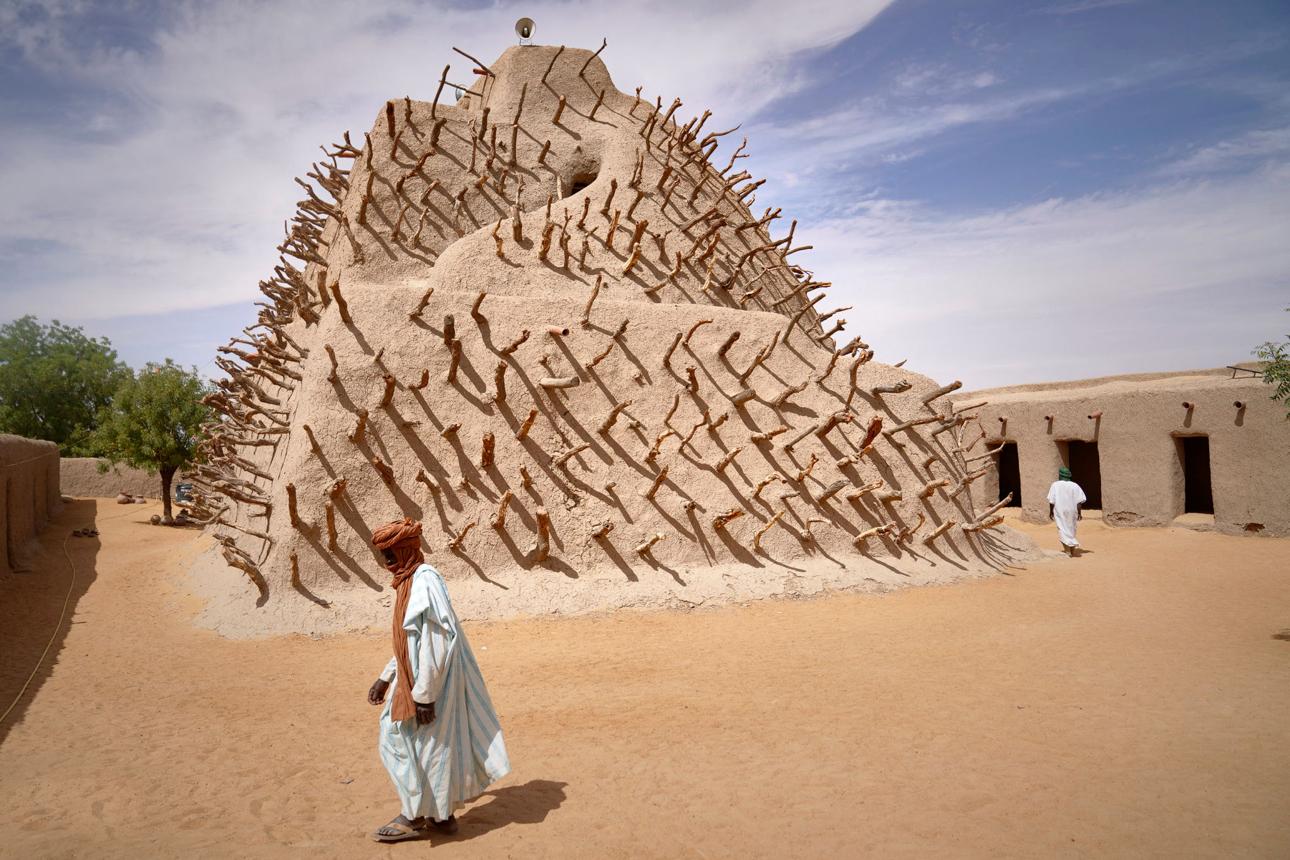
The great expansion of Songhai is closely associated with Sunni Ali, who became ruler in the late fifteenth century and embarked on an aggressive campaign of expansion; OpenStax describes him as the leader who transformed Songhai into an imperial power using cavalry and a fleet of war canoes to expand across territories along the Niger and into neighboring regions. Controlling the Niger River was central to his strategy as a transportation highway, allowing him to capture major commercial and strategic centers like Timbuktu and Djenné. Despite his military achievements, Sunni Ali’s reign reveals complex religious dynamics; while Islam was important in commercial cities, Songhai society included diverse traditions, leading to a tense relationship with Muslim scholars that resulted in strongly contrasting historical portrayals written from the perspectives of scholarly communities and political rivals.
After Sunni Ali died in 1492, his son Sonni Baru briefly succeeded him before being defeated in 1493 by Askia Muhammad (also known as Muhammad Ture), who established the Askia dynasty and brought Songhai to an even greater level of political organization. OpenStax describes Songhai under Askia as stretching over an enormous area from the Atlantic region of Senegal in the west toward Kano in Hausaland and the salt-producing region of Taghaza in the north, encompassing diverse populations including Songhai, Mande, Fulbe, Tuareg, and Mossi communities. Managing such a territory required a centralized administrative structure where provincial governors were appointed by the ruler to collect taxes, maintain authority, and support imperial administration rather than relying solely on hereditary local leaders.
Askia Muhammad made Islam an important component of his political legitimacy by traveling to Mecca for the hajj, establishing relationships with Islamic authorities, and appointing qadis (Islamic judges) in important cities. However, traditional religious practices continued among many communities, illustrating that while Islam spread through trade, scholarship, political patronage, and urban life, conversion was not always immediate or complete. Muslim rulers governed populations that retained older cultural and religious traditions, creating a mixture of systems that contributed to the distinctive character of medieval West African empires.
The rise of both Mali and Songhai was fundamentally connected to the Niger River as an economic artery that supported agriculture, fishing, transportation, communication, and commerce. Major cities like Djenné, Timbuktu, and Gao developed around its floodplains as nodes connecting inland West Africa to trans-Saharan commerce. The struggle between Mali and Songhai was therefore a competition for vital economic resources, access to people, markets, agricultural zones, river transportation, gold, salt, and long-distance trade.
Centuries before Mali and Songhai rose in West Africa, the Kingdom of Aksum developed in northern Ethiopia and parts of present-day Eritrea, with UNESCO identifying it as the center of a civilization lasting roughly from the first to the eighth centuries CE as one of the region’s most powerful states. Aksum stood near the Red Sea connected to the port of Adulis, where commercial routes linked the African interior to Arabia, the Mediterranean, and the Roman and later Byzantine worlds. UNESCO describes Aksum as being at a crossroads between Africa, Arabia, and the Greco-Roman world, providing strong evidence that African kingdoms participated in international systems of trade and diplomacy long before European colonial expansion.
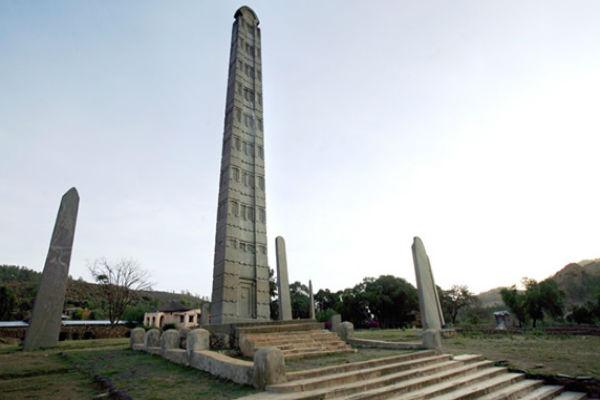
Aksum’s economic strength relied on long-distance commerce, while its architectural achievements were highlighted by monumental stone structures. The enormous stelae of Aksum were carved from single blocks of stone and erected as monumental structures associated with elite burial traditions, forming part of an archaeological site that UNESCO describes as including monolithic obelisks, royal tombs, ancient castles, and monumental remains. These structures demonstrated sophisticated stone-working skills, resource mobilization, and political power, serving as statements of authority that proved rulers possessed the resources necessary to organize labor and construct enduring monuments.
During the fourth century CE, Christianity was adopted by the royal court under King Ezana, making Aksum one of the earliest major Christian kingdoms outside the Roman world. This development deeply embedded Christian traditions into the region, eventually giving rise to distinctive Ethiopian Christian institutions, literature, art, architecture, and religious practices that demonstrated how African societies adapted outside ideas into local traditions.
Comparing Mali, Songhai, and Aksum reveals that while they existed in different periods and regions, all three were shaped by geography, trade, strong leadership, and cultural exchange. Mali and Songhai benefited from the Niger River and trans-Saharan trade, while Aksum leveraged its position near the Red Sea; trade in all three cases generated wealth that financed political authority, supported by prominent leaders like Sundiata, Mansa Musa, Sunni Ali, Askia Muhammad, and Aksum’s line of monarchs. Furthermore, none existed in isolation, interacting extensively with North Africa, the Islamic world, Arabia, and the Mediterranean.
These empires were multicultural rather than modern nation-states with defined borders, containing numerous communities that maintained local languages, customs, and identities alongside their imperial subject status. Their wealth was not mysterious but rooted in geography, natural resources, agriculture, labor, taxation, commerce, and political control. Rulers collected taxes and tribute to support armies, officials, religious institutions, public works, diplomatic missions, and royal courts, creating a continuous cycle where resources yielded trade, revenue, political power, military protection, territorial control, and ultimately more trade.
The decline of the Mali Empire was gradual, driven by succession disputes, political fragmentation, and the loss of important trade centers to the growing power of Songhai, though its political traditions continued to influence successor states. Songhai faced a more direct military end in 1591 when Moroccan forces under Sultan Ahmad al-Mansur crossed the Sahara and defeated Songhai at the Battle of Tondibi using firearms like arquebuses; as the University of Ghana notes, this invasion was a decisive event in the collapse of Songhai’s imperial structure, ending the succession of great western Sudan empires without ending complex African state-building. Aksum’s political importance weakened over time due to changing trade routes, environmental pressures, and political competition, yet as UNESCO’s dating of its primary period (first to eighth centuries CE) implies, the shift of political authority did not erase Ethiopian civilization, Christian traditions, or Aksum’s enduring cultural identity.
The legacies of these states remain visible today in West African oral traditions, Timbuktu’s manuscripts, architectural monuments, and the historical identity of the Manding and Songhai peoples, as well as in Ethiopia’s monumental stelae, archaeological remains, and Christian heritage. These legacies challenge older historical narratives that presented Africa as lacking large-scale political organization prior to European colonialism, proving instead that Africa had many overlapping centers of power across the Nile Valley, the Maghreb, West Africa, the Horn of Africa, and Central and Southern Africa.
Ultimately, these empires demonstrate that African history was deeply intertwined with global history long before modern globalization. Through trade, Mansa Musa’s pilgrimage, Timbuktu’s scholars, and Aksum’s international diplomacy, people, goods, languages, religions, and ideas moved fluidly. The rise of Mali, Songhai, and Aksum reveals a rich African past defined by state-building, commerce, scholarship, cultural exchange, and political transformation long before European colonial domination.
